
Sauna Tent Fit Tool + Evidence-Backed Buyer Report
This page is designed for ambiguous sauna-tent intent: use the tool first to get a route and immediate next action, then use the report layers for evidence, boundaries, risk control, and final decision quality.
Published April 21, 2026. This page does not provide medical advice. Review cadence: refresh evidence and assumptions every 6-12 months or sooner when regulator recalls or guidance updates are published.
On mobile, start with priority chips in green: tool bridge, summary, key numbers, risk matrix, FAQ, and final CTA.
This checker does not provide medical advice and does not replace local code, product-manual, or certification verification.
Tool-to-Report Bridge
Use this bridge to map tool output into report sections and next decisions without guesswork.
Swipe horizontally on smaller screens to read every table column.
| Result state | Interpretation | Where to verify | Immediate next move |
|---|---|---|---|
| Ready to shortlist | Space, budget, power, and proof assumptions are stable enough to compare live models. | Key numbers + source ledger + comparison grid | Email support with your score snapshot and two model links for final boundary review. |
| Conditional path | At least one assumption is weak (proof quality, humidity control, or circuit headroom). | Fit boundary + risk matrix + scenarios | Fix one highest-impact blocker and rerun before paying any deposit. |
| Boundary hit | Current setup breaks a non-negotiable fit or power boundary. | Method + risk matrix + known vs unknown | Switch to the route-specific page suggested by the tool and request a fallback plan. |
| Stop and screen | Health or combustion context overrides normal shopping intent. | Risk matrix + FAQ safety cluster | Pause heat escalation and send constraints to support for conservative triage. |
Report Summary: Decision Conclusions
These conclusions are scoped for decision quality. Each statement ties to dated sources or explicit uncertainty markers.
Search intent is mixed and unstable
SERP mix: commerce + UGC + editorial + video in top results
For "sauna tent", users want to buy quickly but still need safety and proof checks before checkout.
Source: Firecrawl web search snapshot for "sauna tent" on April 21, 2026.
Household power economics remain a first-order filter
EIA residential average: 17.45 cents/kWh (January 2026)
Operating cost can look small per session, but annual usage changes quickly with session frequency and heater class.
Source: EIA Electricity Monthly Update, accessed April 21, 2026.
CO and heat constraints must stay explicit
CDC baseline: 400+ accidental CO deaths, 100,000+ ED visits, 14,000+ hospitalizations per year
Combustion choices and medication-sensitive profiles can override a seemingly good fit score.
Source: CDC carbon monoxide poisoning basics and heat-medication guidance, checked April 21, 2026.
Humidity discipline is a durability gate
EPA guideline: keep RH under 60%, ideally 30%-50%; dry wet items in 24-48 hours
A viable sauna tent plan includes a repeatable dry-out and moisture logging routine.
Source: EPA mold course chapter 2 and indoor air quality guidance, checked April 21, 2026.
Public recall evidence is real but incomplete
3 sauna-adjacent CPSC recalls in this report sample: 79,675 units, 84 incident reports, 33 reported injuries
Use recall data as directional risk signal, not as market-wide risk rate. Denominator-normalized incident rates remain unavailable.
Source: CPSC recall notices 26-036, 26-040, 26-349, checked April 21, 2026.
Certification marks need file-level verification
OSHA NRTL program recognizes testing labs and scopes, not blanket approval of individual products
A logo alone is insufficient for high-confidence purchase decisions. Ask for listing file number and verify in the certifier database.
Source: OSHA NRTL program scope statement, checked April 21, 2026.
Key Numbers
SERP composition (top 8 sample)
Commerce 3, UGC 1, Editorial 2, Video 2
Firecrawl query: sauna tent (April 21, 2026)
US residential electricity benchmark
17.45 cents/kWh
EIA Electricity Monthly Update (Jan 2026 retail revenue/sales)
CO annual burden signal
400+ deaths, 100k+ ED visits, 14k+ hospitalizations
CDC carbon monoxide poisoning basics
Indoor humidity target
Under 60%, ideally 30%-50%
EPA mold and IAQ guidance
Drying boundary
Dry wet materials within 24-48 hours
EPA mold course chapter 2
Evidence gap marker
No public denominator-normalized sauna tent incident dataset
Open evidence gap retained in this report
Recall sample (3 notices in this report)
79,675 units; 84 incident reports; 33 reported injuries
CPSC notices 26-036, 26-040, 26-349
Clinical evidence-transfer boundary
40 studies in one review, only 13 RCTs; mostly non-tent settings
PMC systematic review on regular dry sauna bathing (2018)
Fit / Not-Fit Audience Boundaries
Swipe horizontally on smaller screens to read every table column.
| Audience profile | Suitable when | Not suitable when |
|---|---|---|
| Apartment or condo users with one dedicated outlet | Electric format, documented outlet load, and humidity plan are all verified before purchase. | Trying to use combustion setups indoors or relying on extension-strip workflows. |
| Backyard users with covered outdoor area | Weather, storage, and pack-down routines are explicit and repeatable. | No clear storm, moisture, and post-session drying routine exists. |
| Two-person shared households | Room envelope and budget can support larger tent class without circuit overload. | Only one small room is available with uncertain outlet and ventilation conditions. |
| Users with medication or heat sensitivity | Clinician-informed thresholds and stop conditions are documented before escalation. | Session intensity increases without individualized guidance. |
| Marketplace-first buyers | Listings provide model manual, certification scope, and post-sale support details. | Decision is based only on price and star ratings without evidence packet. |
| DIY route explorers | You can validate code, power, and moisture controls with explicit build boundaries. | DIY is used to bypass safety checks or documentation requirements. |
SERP Intent Snapshot (April 21, 2026)
The live query still blends commercial urgency with trust-seeking validation. That is why this page keeps tool and report in one canonical URL.
Swipe horizontally on smaller screens to read every table column.
| Pos | Result | Type | Decision signal |
|---|---|---|---|
| 1 | Portable Sauna Tent Packages | Commerce | Direct shopping intent appears first, confirming users want immediate product path. |
| 2 | Sweat Tent homepage | Commerce | High-heat marketing claims surface before neutral risk frameworks. |
| 3 | Reddit community thread | UGC | Users seek peer validation quickly, usually with inconsistent safety framing. |
| 4 | Field Mag portable sauna tent guide | Editorial | Independent-style guide appears early as trust-building layer. |
| 5 | YouTube setup test | Video | Visual proof formats are used to validate claims before users commit capital. |
| 6 | Amazon WILLOWYBE listing | Marketplace | Price framing appears, but model-level compliance and warranty detail can be thin. |
| 7 | Outside Online review | Editorial | Experience-focused content enters the path quickly after direct product pages. |
| 8 | YouTube long-term opinion video | Video | Long-run usage discussions indicate users worry about durability and routine friction. |
Methodology and Assumption Logic
Intent classification
Treat "sauna tent" as mixed do/know intent, so the page must produce immediate output and decision trust in one URL.
Constraint scoring
Tool score combines space, circuit, budget, proof quality, humidity plan, and heat-risk profile.
Route mapping
Result maps to indoor, outdoor, infrared, or two-person route to avoid generic one-size-fits-all advice.
Evidence ledger check
Claims are cross-checked against regulator and primary-source references with explicit date markers.
Risk-first actioning
Every result band has concrete next actions, fallback path, and explicit non-applicability boundary.
Source Ledger
This ledger exposes source type, usage scope, and date checks. Unknowns remain visible and are not replaced with fabricated precision.
Swipe horizontally on smaller screens to read every table column.
| Source | Type | Used for | Key data | Checked |
|---|---|---|---|---|
| EIA Electricity Monthly Update | Primary regulator dataset | Residential electricity baseline and cost sensitivity framing. | January 2026 residential average revenue/sales: 17.45 cents/kWh. | April 21, 2026 |
| CDC Carbon Monoxide Poisoning Basics | Public health authority | CO risk baseline and household safety boundary. | 400+ accidental deaths, 100,000+ emergency visits, 14,000+ hospitalizations annually. | April 21, 2026 |
| CDC Heat and Medications Guidance | Clinical guidance | Medication-sensitive escalation and pause conditions. | Reviewed September 18, 2025; outlines heat-risk mechanisms (thermoregulation, sweating, thirst, clearance) and advises against abrupt medication stoppage. | April 21, 2026 |
| EPA Mold Course Chapter 2 | Federal environmental guidance | Humidity and dry-out operational boundary. | Indoor RH below 60% (ideally 30%-50%); dry wet materials within 24-48 hours. | April 21, 2026 |
| EPA Care for Your Air | Federal IAQ guide | Repeatability checks for indoor moisture and ventilation assumptions. | Humidity target reiteration and mold prevention action steps. | April 21, 2026 |
| OSHA's NRTL Program | Federal safety program scope | Certification boundary framing for proof-quality checks in buying decisions. | OSHA recognizes testing labs and their scope; OSHA does not approve or certify individual products. | April 21, 2026 |
| PMC Systematic Review (ECAM 2018) | Peer-reviewed evidence synthesis | Health-evidence transferability and uncertainty boundaries. | 40 studies included, 13 RCTs; heterogeneous methods and mostly non-tent settings limit direct transfer to all portable tent formats. | April 21, 2026 |
| CPSC Recall 26-036 | Product safety recall notice | Burn-risk evidence for sauna-adjacent category products. | Dated October 23, 2025; about 78,000 units; 65 overheating reports; 32 burn injuries reported. | April 21, 2026 |
| CPSC Recall 26-040 | Product safety recall notice | Structural failure and injury risk signal for sauna-class products. | Dated October 23, 2025; about 1,000 units; 7 bench-break reports; 1 head/neck injury reported. | April 21, 2026 |
| CPSC Recall 26-349 | Product safety recall notice | Fire hazard signal tied to DIY heater-kit pattern. | Dated March 26, 2026; about 675 units in U.S.; 12 overheating reports; no injuries reported at notice date. | April 21, 2026 |
Pre-Payment Verification Pack
This checklist converts generic "looks safe" assumptions into a minimum evidence packet you can actually verify before paying.
Swipe horizontally on smaller screens to read every table column.
| Artifact | Why it matters | Minimum evidence | Fail signal | Next action |
|---|---|---|---|---|
| Model manual + electrical nameplate photo | Marketing pages can omit critical setup constraints; manual and nameplate anchor real power and use boundaries. | Exact model number, input voltage, wattage/amp draw, operating warnings, and clearance guidance. | Seller provides only listing bullets, influencer screenshots, or partial manual snippets. | Pause payment. Request full manual PDF and nameplate image before proceeding. |
| Certification trace (UL/ETL mark + file number) | OSHA's NRTL program recognizes testing labs and standards scope; it does not directly certify products. | Visible certification mark plus listing/control number that resolves in certifier lookup. | Mark present but file number missing, invalid, or non-resolving. | Downgrade proof quality to conditional and request corrected documentation packet. |
| Recall screening snapshot | Recent sauna-adjacent recalls include overheating, burn, fire, and fall hazards with non-trivial incident counts. | CPSC recall search check by brand + model with date-stamped screenshot. | No documented recall check before checkout. | Run recall check first; include result screenshot in decision packet. |
| Written remedy and support path | Repair/refund clarity determines downtime and risk exposure if hazards appear after delivery. | Written return window, warranty scope, repair channel, and spare-parts policy. | Only verbal promises or inconsistent policy versions across channels. | Treat as elevated operational risk and prefer vendors with explicit written remedy terms. |
Concept Boundaries and Counterexamples
These rows show where common claims fail under real constraints. When evidence scope is narrow, this page keeps the limitation explicit instead of forcing certainty.
Swipe horizontally on smaller screens to read every table column.
| Common claim | What evidence covers | Boundary / counterexample | Decision rule |
|---|---|---|---|
| General sauna health claims can be copied directly to all portable sauna tents. | A 2018 systematic review includes 40 studies across Finnish, infrared, and Waon modalities. | Only 13 RCTs; heterogeneous design and mostly non-tent settings limit direct transferability. | Use health evidence as directional context; do not market guaranteed outcomes for all tent formats. |
| If room and budget fit are good, medication-related heat risk can be ignored. | CDC clinical guidance details multiple medication-heat interaction mechanisms and counseling actions. | Heat tolerance can shift via thirst, sweating, thermoregulation, or clearance effects despite strong logistical fit. | Use stop-and-screen logic and clinician-aware progression when medication-sensitive factors exist. |
| CO risk only matters when smoke is obvious. | CDC states CO is odorless and colorless, with 400+ deaths and 100,000+ ED visits annually. | Users can be exposed before visible warning cues appear, especially in combustion misuse scenarios. | Keep combustion setups outdoor-only and place battery-operated or battery back-up CO detectors near sleeping areas. |
Recall Signal Board (Dated)
Recall events here are decision signals, not market-wide risk rates. No reliable public denominator dataset exists for normalized sauna tent incident rates. Status: pending confirmation for denominator-grade exposure data.
Swipe horizontally on smaller screens to read every table column.
| Recall ID | Date | Product | Units | Incidents | Injuries | Hazard |
|---|---|---|---|---|---|---|
| 26-036 | October 23, 2025 | Bioremedy infrared sauna blankets | About 78,000 | 65 overheating reports | 32 burn injuries | Overheating burn hazard |
| 26-040 | October 23, 2025 | Tylö Halmstad/Kiruna hybrid saunas | About 1,000 | 7 bench-break reports | 1 reported injury | Bench collapse fall hazard |
| 26-349 | March 26, 2026 | DIY sauna heater kits | About 675 U.S. units | 12 overheating reports | No injuries reported at notice date | Electrical fire hazard |
Route Comparison Grid
Swipe horizontally on smaller screens to read every table column.
| Route | Best for | Strongest signal | Tradeoff |
|---|---|---|---|
| /learn/sauna-tent (this page) | Mixed intent users who need immediate triage + deeper decision context. | One-page tool + evidence + risk + route handoff. | Not a SKU ranking page; it is a decision router. |
| /learn/indoor-sauna-tent | Indoor deployment and moisture-control planning. | Indoor fit + humidity boundary depth. | Less focus on open-outdoor weather and storage workflows. |
| /learn/outdoor-sauna-tent | Outdoor-only operation with weather and site constraints. | Outdoor route map and weather-exposure controls. | Not optimized for indoor apartment or condo constraints. |
| /learn/infrared-sauna-tent | Infrared-specific buyers needing spectrum and electrical checks. | Infrared format assumptions and claim-boundary handling. | Steam and mixed-format comparisons are less central. |
| /learn/sauna-tent-2-person | Shared use with larger envelope and higher load requirements. | Two-person footprint and dual-user workflow details. | Over-specific for solo users with compact rooms. |
| /best/best-sauna-tent | Users who already passed fit checks and now want ranking-style shortlist. | Model tiering and shortlist framing. | Less emphasis on first-pass boundary triage. |
Risk Matrix
Risks are mapped to explicit triggers and mitigations so users can execute next steps instead of collecting abstract warnings.
Swipe horizontally on smaller screens to read every table column.
| Risk | Probability | Impact | Trigger | Mitigation |
|---|---|---|---|---|
| Electrical overload risk | Medium | High | Shared outlet, long sessions, and no headroom check for heater demand. | Use dedicated circuit assumptions, re-run tool, then verify with manual and electrician when needed. |
| Moisture and mold risk | Medium | High | Indoor use without fan-assisted dry-out and humidity logging. | Keep RH under target boundary and complete 24-48 hour drying for wet materials. |
| Health-context mismatch | Low to medium | High | Heat-sensitive medication, pregnancy/postpartum, or prior intolerance without action plan. | Use pause-and-screen path, document limits, and keep clinician-aware escalation rules. |
| Evidence-quality risk | High | Medium to high | Marketplace listing without model manual or certification scope. | Request documentation packet before checkout and downgrade confidence until provided. |
| Cost assumption risk | Medium | Medium | Using generic cost assumptions without local utility rate and session cadence stress test. | Run baseline + high-frequency scenarios and compare annual impact before purchase. |
| Route mismatch risk | Medium | Medium | Using outdoor assumptions for indoor setup (or inverse) due to generic advice. | Follow route-specific page after tool output and keep assumptions consistent across comparisons. |
Scenario Lab
Scenario A: Apartment solo buyer
Premise: Small indoor room, 1500W steam tent candidate, dedicated 15A, moderate budget.
Process: Tool returns conditional path due to tight clearance and average humidity control.
Outcome: Action: improve dry-out protocol, verify documentation quality, rerun, then email support before purchase.
Scenario B: Backyard mixed-use household
Premise: Covered patio option, two users, stronger budget, but listing-only documentation.
Process: Tool suggests two-person route with boundary note tied to low proof quality.
Outcome: Action: request manual/certification packet first, then compare shortlist options.
Scenario C: Infrared-first user with high frequency
Premise: Infrared chair tent preference, high weekly cadence, uncertain humidity controls.
Process: Tool routes to infrared page and flags moisture discipline risk.
Outcome: Action: set humidity logging and fan workflow before increasing session frequency.
Scenario D: Medication-sensitive profile
Premise: Good room and budget metrics, but heat-sensitive medication profile present.
Process: Tool returns stop-and-screen regardless of nominal fit score.
Outcome: Action: keep low-intensity fallback path and request clinician-aware support guidance.
Known vs Unknown Registry
Swipe horizontally on smaller screens to read every table column.
| Decision question | Known | Unknown | Decision rule |
|---|---|---|---|
| Do we have a denominator-normalized sauna tent incident rate dataset? | No public regulator-grade dataset identified in this round. | Installed-base denominator and exposure-hours normalization remain unavailable. | Treat incident counts as directional only; require model-level proof for purchase decisions. |
| Can broad sauna studies prove tent-format outcomes? | Traditional sauna studies exist and can provide context. | Direct transferability to all portable tent formats and user profiles remains limited. | Do not market generalized health certainty from non-tent evidence. |
| Are marketplace specs always stable over time? | Listings can change and often vary in detail depth. | Version-by-version spec integrity is not guaranteed publicly. | Capture documentation snapshots and verify again at checkout stage. |
| Does one route fit every user intent for "sauna tent"? | Intent splits across indoor, outdoor, infrared, and shared-use scenarios. | User-specific constraints cannot be inferred from keyword alone. | Use route mapping and avoid one-template recommendations. |
| Can a high score replace professional checks? | No. Score is a triage layer, not a substitute for code or medical guidance. | Local rule enforcement and individualized health response vary by context. | Keep support handoff and specialized review in final decision loop. |
Product Visual Deck
Visual references are included to ground setup discussions in real deployment contexts. These images are selected from current repository product assets.
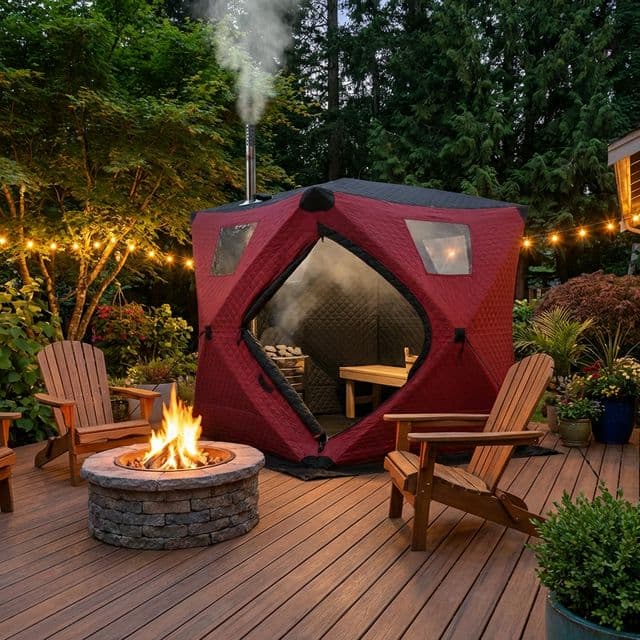
Backyard deployment reference for outdoor route checks.
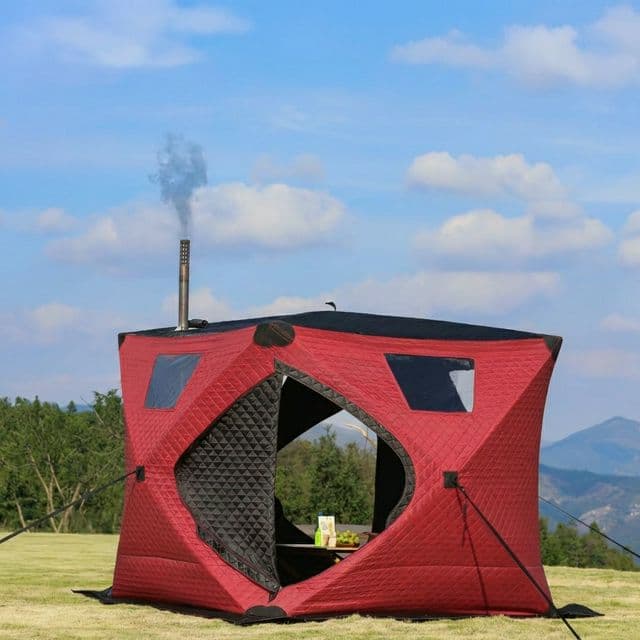
Indoor hygiene and dry-out workflow reference.
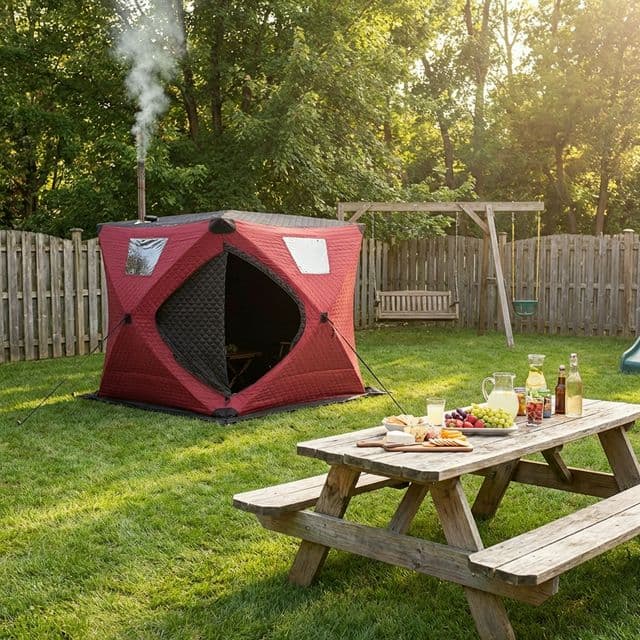
Two-person or family rotation planning context.
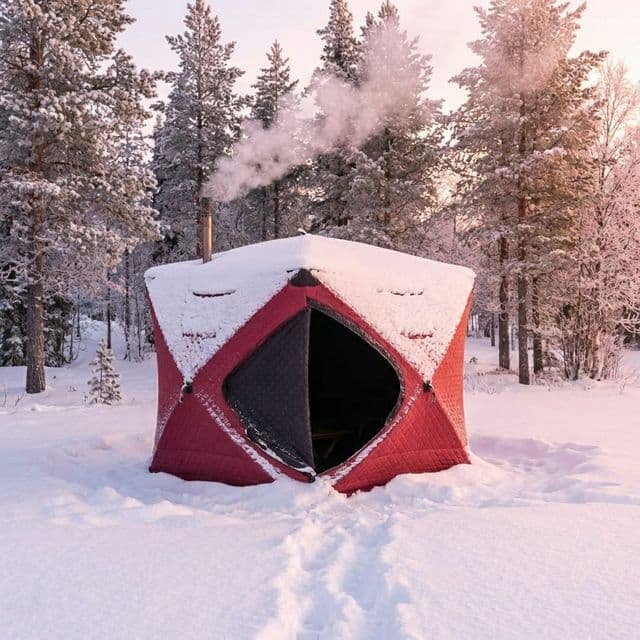
Cold-weather route requires stronger envelope and storage planning.
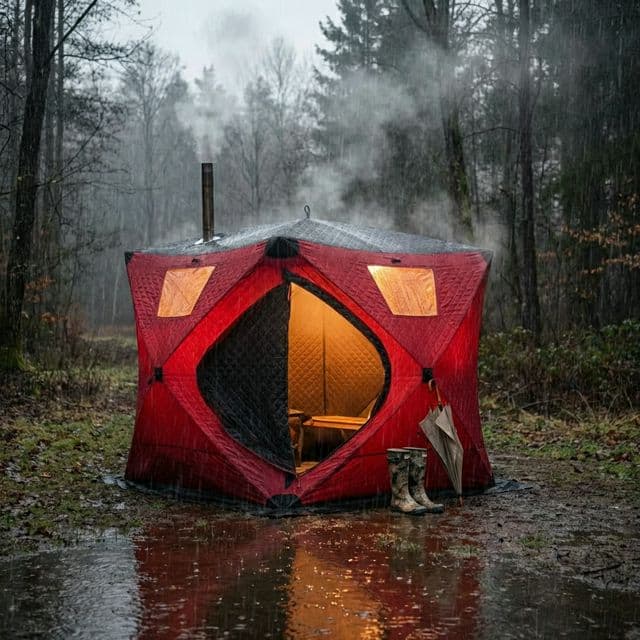
Covered-outdoor scenario for weather and moisture management.
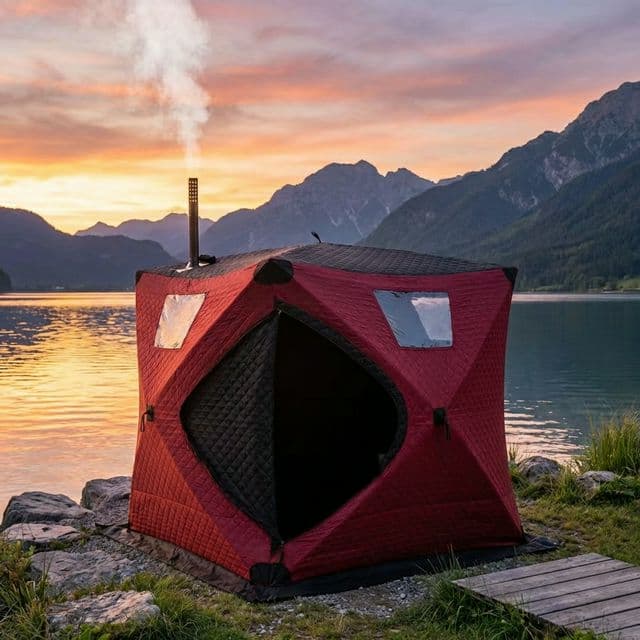
Open-outdoor setting illustrates wind and setup-stability concerns.
Need a manual route review?
Send your tool result, room dimensions, preferred format, and two candidate model links. Support will map your assumptions to a safer next-step plan.
Email [email protected]FAQ
Final Step: Send Your Sauna Tent Decision Packet
Include your result band, route recommendation, room footprint, outlet type, humidity plan, and model links. This keeps the final review actionable and prevents generic advice loops.