
Sauna Tent With Stove Checker + Decision Report
Run the tool first for an immediate fit band and next-step action. Then use the report to validate evidence, risk boundaries, tradeoffs, and fallback routes before paying for a stove-tent package.
Published April 22, 2026. This page is decision-support content, not medical advice. Evidence review cadence: every 6-12 months or earlier when new regulator or safety updates appear.
On mobile, start with priority chips in amber: tool bridge, summary, stop thresholds, risk matrix, FAQ, and final CTA.
Sauna Tent With Stove Fit Selector
Input your volume, use pattern, fuel-quality assumptions, and readiness state. The tool returns Strong Fit, Conditional Fit, or Boundary Hit with executable next-step guidance.
Default profile: 10 m3 tent-hybrid setup, 3 sessions/week, 40 minutes/session, $6 fuel/session, and 18% moisture fuel.
Boundary reminder: unresolved flue readiness, wet firewood, or strict local burn restrictions should force a conditional or pause decision before checkout.
Tool-to-Report Bridge
Use this bridge immediately after running the checker so each result maps to the right evidence and action block.
Swipe horizontally on smaller screens to read every table column.
| Result state | Interpretation | Where to verify | Immediate next move |
|---|---|---|---|
| Strong Fit | Your current assumptions can support a shortlist, but only after proof and safety checks stay explicit. | Key numbers + fit boundaries + source ledger + risk matrix | Email support with your result snapshot, site dimensions, and two candidate kits before placing an order. |
| Conditional Fit | One or more boundaries are weak (clearance, proof depth, fuel quality, or CO planning). | Method + comparison grid + scenario lab + known vs unknown | Fix the highest-impact blocker, rerun the tool, then request a manual review. |
| Boundary Hit | Current setup is not purchase-ready for a tent + stove path. | Risk matrix + FAQ safety cluster + related fallback routes | Pause checkout and shift to a lower-risk route until the blocker is resolved. |
Report Summary: Core Conclusions
These cards summarize what changes decisions in practice. Each conclusion includes source traceability or explicit uncertainty.
This query is mixed intent by default
Live SERP snapshot shows commerce, marketplace, and UGC mixed in the top 6
A single page has to satisfy immediate shopping intent and trust checks in the same session.
Source: Firecrawl web search for "sauna tent with stove", checked April 22, 2026.
CO risk is a hard-stop issue, not a soft warning
CDC (Jan 12, 2026): each year >400 deaths, >100,000 ED visits, >14,000 hospitalizations from non-fire unintentional CO poisoning
CPSC also gives ppm bands (about 1-70, >70, >150-200) that make shutdown decisions executable.
Source: CDC CO basics + CPSC CO Q&A, checked April 22, 2026.
Heat injury threshold is now explicit in this route
CDC NIOSH (Mar 3, 2026): heat stroke can reach 106F+ within 10-15 minutes
The page now treats severe heat symptoms and emergency response as immediate stop conditions.
Source: CDC NIOSH heat-related illnesses page, checked April 22, 2026.
Regulatory scope boundaries are now explicit
OSHA NRTL recognition is for workplace product acceptance and is not product endorsement
This page differentiates workplace certification logic from consumer listing claims.
Source: OSHA NRTL FAQ + program overview, checked April 22, 2026.
Combustion quality has testable thresholds
EPA moisture and emissions boundaries: firewood <=20% moisture, NSPS room-heater limits 2.0/2.5 g/hr
Moisture and emission limits are now tied to specific decision checkpoints, not generic advice.
Source: EPA Burn Wise and certified wood-stove pages, checked April 22, 2026.
Cost planning needs a seasonality guardrail
EIA release Apr 1, 2026: U.S. residential propane benchmark $2.674/gal (03/30/26 week), collection is October-March
When weekly surveys pause in offseason, decisions should use stress-tested ranges instead of a single stale point estimate.
Source: EIA Heating Oil and Propane Update, checked April 22, 2026.
Key Numbers
Observed advertised entry-to-flagship spread (sampled pages)
$349 to $1,699
Overland builder, SaunaTent collection, and SweatTent listing checked April 22, 2026
Public heat-up claim (vendor sample)
Up to 200F in about 15 minutes
Vendor claims from SweatTent/SaunaTent/Overland pages; not independent lab validation
CDC annual non-fire CO burden (U.S.)
>400 deaths, >100,000 ED visits, >14,000 hospitalizations
CDC Carbon Monoxide Poisoning Basics (Jan 12, 2026)
CPSC CO concentration bands
About 1-70 ppm, >70 ppm, >150-200 ppm
CPSC Carbon Monoxide Q&A (health effect ranges)
Heat-stroke escalation benchmark
Body temperature can rise to 106F+ in 10-15 minutes
CDC NIOSH Heat-related Illnesses (Mar 3, 2026)
Firewood moisture gate
At or below 20% moisture
EPA Burn Wise moisture-meter flyer and guidance page
EPA NSPS room-heater emission limits
2.0 g/hr (crib wood) or 2.5 g/hr (cord wood)
EPA Certified Wood Stoves page (updated Nov 12, 2025)
Propane benchmark + data cadence
$2.674/gal U.S. average; weekly collection Oct-March
EIA Heating Oil and Propane Update (release Apr 1, 2026)
Stop Thresholds and Trigger Actions
This table converts risk language into explicit thresholds and minimum actions so the page remains executable under stress.
Swipe horizontally on smaller screens to read every table column.
| Trigger | Threshold | Why it matters | Minimum action |
|---|---|---|---|
| CO symptoms or alarm activation | Any alarm event, or headache/dizziness/nausea/confusion during operation | CDC/CPSC treat this as a potential poisoning event, not routine discomfort. | Move to fresh air immediately, call emergency services, and do not re-enter until cleared. |
| Measured CO concentration | About 1-70 ppm often asymptomatic, above 70 ppm symptoms rise, above 150-200 ppm severe harm possible | Turns vague safety language into quantitative stop bands for tent-stove sessions. | Stop combustion, ventilate, inspect stove path and fuel before any restart. |
| Heat-stroke progression | Core body temperature can reach 106F+ within 10-15 minutes | Heat injury can escalate quickly in enclosed hot environments when tolerance is overestimated. | Call 911, start active cooling, and treat as emergency (no wait-and-see). |
| Fuel moisture quality | Above 20% moisture content | Wet fuel increases smoke and unstable combustion, degrading thermal control and air quality. | Delay session, dry wood, retest with moisture meter, and document fuel lot before use. |
| Certification evidence gap | Listing claim has no model-level file evidence or searchable identifier | Badge-only claims are not enough to verify scope, applicability, or compliance status. | Mark listing as conditional, request model files, and verify in regulator/certifier databases. |
Suitable / Not-Suitable Boundaries
Swipe horizontally on smaller screens to read every table column.
| Audience profile | Suitable when | Not suitable when |
|---|---|---|
| Backyard users with shelter, spacing, and dry storage | Can document clearance, fuel plan, CO detector coverage near sleeping zones, and post-session dry-out routine. | Relying only on marketplace claims without manual-level operating proof or CO plan. |
| Winter or windy deployment users | Assume slower heat-up, stronger anchoring, and weather-triggered shutdown thresholds. | Treating headline heat-up claims as guaranteed in high wind or snow. |
| Budget-sensitive first-time buyers | Include accessory and maintenance spend, not only the tent bundle sticker price. | Using minimum listing price as total-cost proxy while ignoring seasonal fuel variance. |
| Users with heat-risk or medication concerns | Clinical risk screening is done before escalating session heat or frequency. | Attempting unsupervised high-heat sessions under unresolved risk conditions. |
| Camp-style or off-grid deployments | Your equipment is explicitly rated for enclosed-space use and setup follows the manual exactly. | Portable fuel-burning camping equipment is used in a tent without enclosed-use instructions. |
SERP Snapshot (April 22, 2026)
Commerce listings dominate early ranking positions, but trust validation sources appear quickly. This mixed pattern justifies one hybrid URL instead of splitting tool and report pages.
Swipe horizontally on smaller screens to read every table column.
| Pos | Result | Type | Decision signal |
|---|---|---|---|
| 1 | SweatTent flagship listing | Commerce | Strong product-first intent signal with direct claim language and accessory framing. |
| 2 | Amazon tent + stove listing | Commerce | Marketplace inventory appears early, increasing model-proof and certification-check burden. |
| 3 | SaunaTent stove product page | Commerce | Dedicated stove product intent confirms users want immediate buyable components. |
| 4 | Reddit requirement-check thread | UGC | Risk and requirement questions appear directly in first-page behavior. |
| 5 | Superior Saunas collection | Commerce | Multi-brand storefronts compete with direct brands, expanding due-diligence requirements. |
| 6 | YouTube review content | Video editorial | Users seek social proof and hands-on validation before paying for combustion hardware. |
Methodology and Decision Logic
Step 1: Tool score first
Run the interactive checker to classify immediate purchase readiness into Strong Fit, Conditional Fit, or Boundary Hit.
Step 2: Boundary validation
Map your result to fit boundaries, hard-stop conditions, and uncertainty notes before considering checkout.
Step 3: Evidence cross-check
Use dated public sources to test claims about fuel, safety, and cost exposure.
Step 4: Alternative path compare
Compare tent + stove against lower-complexity alternatives when one boundary stays unresolved.
Step 5: Manual handoff
Send the decision packet to support for a final human review before any irreversible payment.
Regulatory Scope and Applicability Boundaries
This section prevents scope errors, such as treating a workplace certification label as a universal consumer safety endorsement.
Swipe horizontally on smaller screens to read every table column.
| Framework | What it covers | What it does not cover | Decision impact |
|---|---|---|---|
| OSHA NRTL program | Testing/certification acceptance for specific product categories used in workplaces. | A blanket consumer endorsement for every outdoor or residential tent-sauna configuration. | Treat NRTL marks as scope-bound evidence and still verify model/file context. |
| EPA certified wood-heater framework | Appliances subject to NSPS wood-heater standards, with searchable model-level compliance records. | A universal approval layer for every tent, accessory, or combo listing in marketplaces. | If seller cannot provide model identifiers, keep listing status as conditional. |
| CDC/CPSC CO guidance | Household poisoning burden, detector placement, and emergency-response behavior. | A model-by-model ranking of all tent-stove kits sold online. | Use CO readiness as a purchase gate before comparing comfort or speed claims. |
| CDC NIOSH heat-illness guidance | Symptom progression, emergency first-aid actions, and high-heat escalation risk. | Individual medical clearance for a specific user profile. | Escalate to clinical review when heat tolerance is uncertain or risk factors are present. |
Source Ledger
Sources are shown with usage scope and date markers. Unknowns are not filled with synthetic precision.
Swipe horizontally on smaller screens to read every table column.
| Source | Type | Used for | Key data | Checked |
|---|---|---|---|---|
| CDC Carbon Monoxide Poisoning Basics | Federal public-health guidance | CO burden and household prevention baseline | Jan 12, 2026 page states >400 deaths, >100,000 ED visits, and >14,000 hospitalizations each year from non-fire unintentional CO poisoning. | April 22, 2026 |
| CPSC Carbon Monoxide Questions and Answers | Consumer safety regulator guidance | CO ppm bands and enclosed-space use boundaries | Lists approximate ppm effect bands and says never use portable fuel-burning camping equipment in a tent unless designed for enclosed-space use. | April 22, 2026 |
| CDC NIOSH Heat-related Illnesses | Federal occupational-health guidance | Heat-risk escalation thresholds | Mar 3, 2026 page states heat stroke can reach 106F or higher within 10-15 minutes and requires emergency response. | April 22, 2026 |
| EPA Burn Wise moisture guidance | Regulatory education guidance (archived program) | Fuel moisture workflow and update status | EPA states Burn Wise is a historical record with no updates after Oct 30, 2025 and links to moisture-meter method. | April 22, 2026 |
| EPA moisture-meter flyer (PDF) | EPA technical handout | Explicit moisture threshold | States dry wood should read 20% moisture or less before burning. | April 22, 2026 |
| EPA Certified Wood Stoves | Federal emissions standard summary | Combustion emissions boundaries | NSPS room-heater limits are 2.0 g/hr (crib wood) or 2.5 g/hr (cord wood). | April 22, 2026 |
| EPA Certified Wood Heater Database | Federal compliance database | Model-level verification path | Searchable by manufacturer/model and includes emissions, efficiency, and carbon-monoxide values for applicable appliances. | April 22, 2026 |
| OSHA NRTL FAQ | Regulatory framework | Certification interpretation boundary | OSHA states NRTL recognition is not product endorsement and is scoped to workplace acceptance. | April 22, 2026 |
| EIA Heating Oil and Propane Update | Federal market data | Reference fuel-price baseline and data cadence | Release Apr 1, 2026: U.S. residential propane average is $2.674/gal for week 03/30/26; weekly collection is October-March. | April 22, 2026 |
| NFPA Home Heating Safety | Standards and fire-safety research organization | Heating fire risk calibration | 2020-2024 averages: 37,365 heating-equipment fires/year, 417 deaths, 1,260 injuries, and $1.2B property damage. | April 22, 2026 |
| SweatTent product listing | Vendor listing (secondary evidence) | Current commerce claim snapshot | Shows price and heat-up marketing claim used in buyer journeys. | April 22, 2026 |
| SaunaTent package collection | Vendor collection (secondary evidence) | Price-envelope sampling | Collection snapshot shows price points from $539.10 to $1,199. | April 22, 2026 |
| Overland Sauna kit builder | Vendor configurator (secondary evidence) | Entry-price sampling | Builder snapshot includes entry package cues such as "From $349". | April 22, 2026 |
Route Comparison Grid
Swipe horizontally on smaller screens to read every table column.
| Route | Best for | Strongest signal | Tradeoff |
|---|---|---|---|
| Tent + wood stove (this route) | Buyers who accept combustion setup complexity for off-grid style sessions. | High thermal experience potential with portability. | Strict safety routine, fuel handling, and weather constraints. |
| Propane sauna stove | Users prioritizing controllable fuel logistics over wood prep. | Fast scheduling and less wood handling friction. | Permit and ventilation readiness become central blockers. |
| Electric sauna stove | Households with stable electrical infrastructure and lower combustion tolerance. | Simpler ongoing operation and cleaner indoor envelope. | Circuit capacity and electrician cost can be the dominant constraint. |
| General sauna tent route | Users still choosing between steam, infrared, and outdoor formats. | Broader route triage before selecting stove class. | Less specific for stove-only execution planning. |
| Best sauna tent for home | Home-first users who need shortlist-level model ranking after constraints are resolved. | Commerce-ready comparison once risk profile is stable. | Not a replacement for combustion safety and compliance checks. |
Risk Matrix
Each risk is mapped to trigger and mitigation so the output remains operational instead of abstract.
Swipe horizontally on smaller screens to read every table column.
| Risk | Probability | Impact | Trigger | Mitigation |
|---|---|---|---|---|
| CO accumulation from weak alarm/supervision plan | Medium | High | No detector coverage, ignored alarms, or symptom pattern during operation. | Install alarms near sleeping zones, define supervision protocol, and treat any alarm/symptom event as a stop signal. |
| Heat illness escalation | Medium | High | User shows confusion, severe weakness, or signs aligned with heat stroke progression. | End session, begin active cooling, and escalate to emergency care immediately. |
| Fire risk from clearance mismatch | Medium | High | Tent placement too close to structures, unstable surfaces, or uncontrolled wind exposure. | Follow manufacturer spacing rules, use heat-safe base plans, and enforce weather stop thresholds. |
| Poor combustion from wet wood | High | Medium | Fuel moisture above 20% or inconsistent storage quality. | Measure moisture before sessions, maintain dry storage, and reject wet fuel lots. |
| Budget drift after accessories and maintenance | High | Medium | Decision made from headline listing price only. | Plan for anchoring, alarms, dry-out gear, replacement parts, and fuel stress scenarios. |
| Certification-scope mismatch | Medium | Medium | Relying on badge screenshots or generic claims without model-level verification. | Request model IDs, verify in regulator/certifier systems, and keep unresolved claims as pending. |
Scenario Lab
Scenario A: Backyard starter shortlist
Premise: User has sheltered yard space, dry storage, and consistent session cadence.
Process: Tool returns Strong Fit. Buyer verifies manual, moisture routine, and alarm plan before payment.
Outcome: Shortlist proceeds with bounded risk and explicit maintenance routine.
Scenario B: Windy seasonal cabin
Premise: User expects winter operation with variable wind and occasional snow load.
Process: Tool flags Conditional Fit due to weather and setup assumptions.
Outcome: User delays purchase and tests sheltered setup assumptions first.
Scenario C: Budget-first marketplace buyer
Premise: User selects lowest listing price without model-level proof documents.
Process: Tool and evidence sections highlight documentation and safety gaps.
Outcome: Buyer requests files, removes low-proof listings, and reruns decision package.
Scenario D: Heat-risk profile present
Premise: User reports heat-sensitive medication and uncertain tolerance history.
Process: Result path is Boundary Hit and escalates to conservative alternatives.
Outcome: Purchase paused until individualized medical boundary is clarified.
Known vs Unknown Registry
Swipe horizontally on smaller screens to read every table column.
| Decision question | Known | Unknown | Decision rule |
|---|---|---|---|
| Can I trust all listing heat-up claims equally? | Vendors publish headline claims and some operational notes, but proof depth varies materially. | No universal independent test dataset across all tent/stove combinations and climates. | Treat claim-only listings as conditional until manual and setup constraints are verified. |
| Is low sticker price equal to low total cost? | Accessory, maintenance, and fuel routines can materially increase real operating cost. | No universal all-in cost benchmark fits every climate and usage profile. | Run stress-cost assumptions and include non-bundle line items before checkout. |
| Do certification marks fully de-risk purchase? | Certification context matters and often requires model/file-level verification. | Listing screenshots rarely show full certifier file context. | Request listing file details and verify using certifier or regulator database. |
| Can I infer safety from other sauna formats? | Evidence transfer from traditional or non-tent formats is limited. | No reliable public denominator dataset for incident rate per portable tent-stove session. | Apply conservative boundaries and label this as pending confirmation instead of estimating. |
| Can this page replace professional review? | The page improves decision quality but does not replace local or clinical authority. | Final site-specific compliance outcomes depend on local context and the exact product package. | Use this page for structured triage, then request manual review before irreversible spend. |
| Are all source pages actively maintained in 2026? | Some guidance pages are explicitly marked as historical records (for example, EPA Burn Wise archive status). | No single continuously updated public source covers every tent-stove risk dimension. | Use archive sources for bounded facts only and prioritize currently updated regulator/public-health pages for critical decisions. |
Evidence Confidence and Open Gaps
Claims with insufficient public evidence are explicitly marked as pending instead of being forced into false precision.
Swipe horizontally on smaller screens to read every table column.
| Claim | Confidence | Status | Review note |
|---|---|---|---|
| Annual CO burden for non-fire unintentional poisoning | High | Actionable | CDC page reviewed Jan 12, 2026 with explicit national counts. |
| Model-level combustion compliance verification | High | Actionable | EPA database supports direct manufacturer/model lookup and emissions fields. |
| Portable tent + stove incident rate per 10,000 sessions | Low | Pending confirmation (no reliable public denominator) | No robust public dataset links nationwide incidents to total tent-stove exposure hours or sessions. |
| Exact heat-up performance for a specific buyer setup | Medium-Low | Conditional | Vendor claims are useful for triage, but climate, wind, fuel, and setup variance remain large. |
| Offseason propane price certainty | Medium | Conditional | EIA weekly residential collection is seasonal; offseason decisions should use stress ranges. |
Product Visual Deck
These six product images are selected from repository assets to keep setup and environment assumptions visual, not abstract.
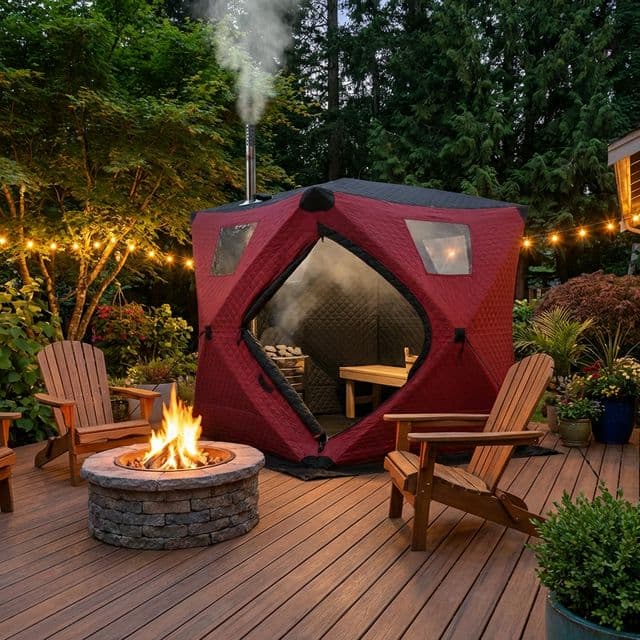
Backyard context: useful for discussing spacing, weather exposure, and routine maintenance assumptions.
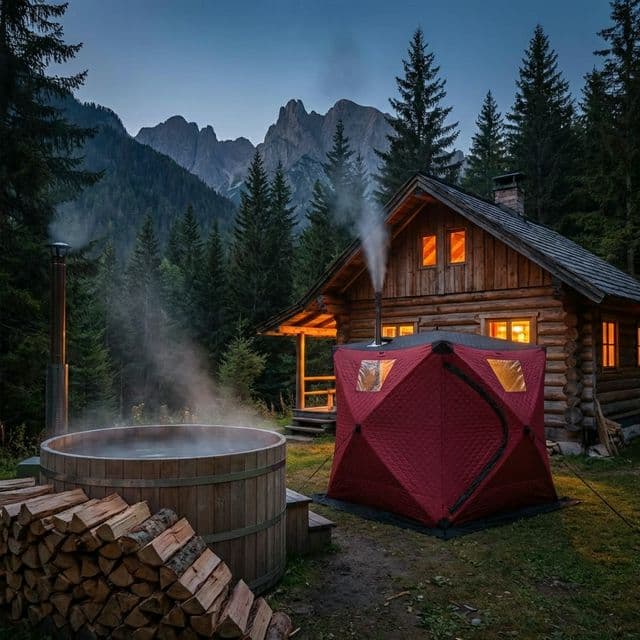
Cabin-adjacent context: highlights mixed-use setups where shelter quality can materially change risk.
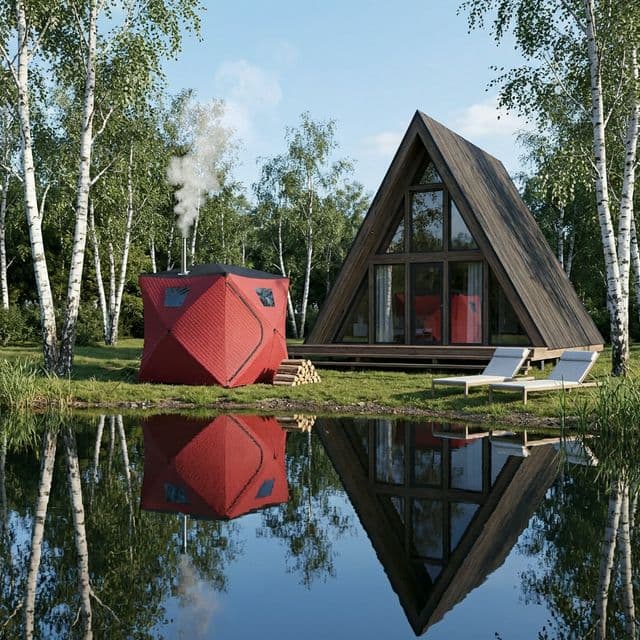
Comparative context for buyers evaluating tent portability against more permanent structures.
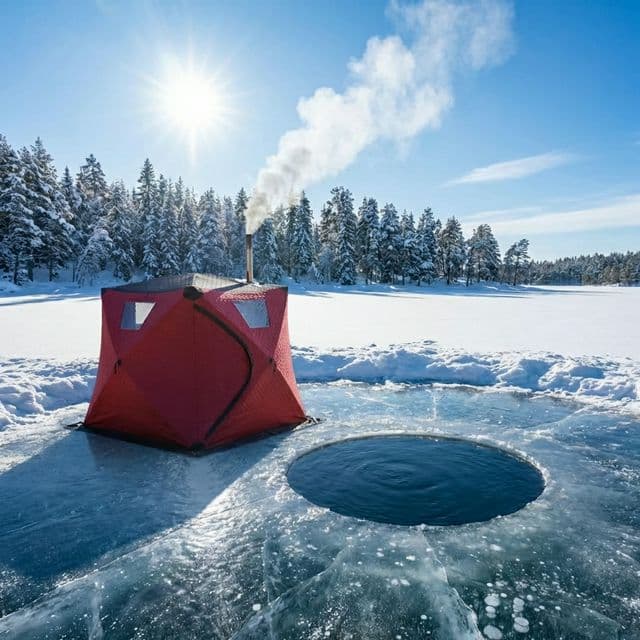
Winter condition context: shows why wind, surface, and heat-up assumptions need conservative buffers.
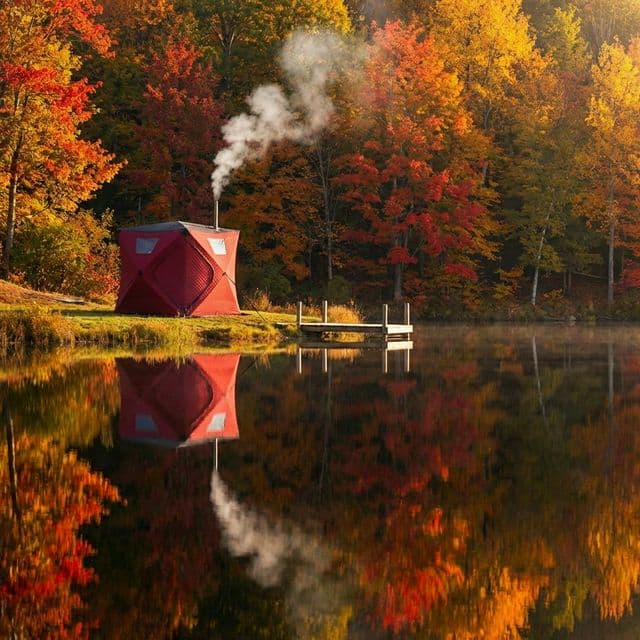
Seasonal operation context: useful for planning dry-out and storage routines after sessions.
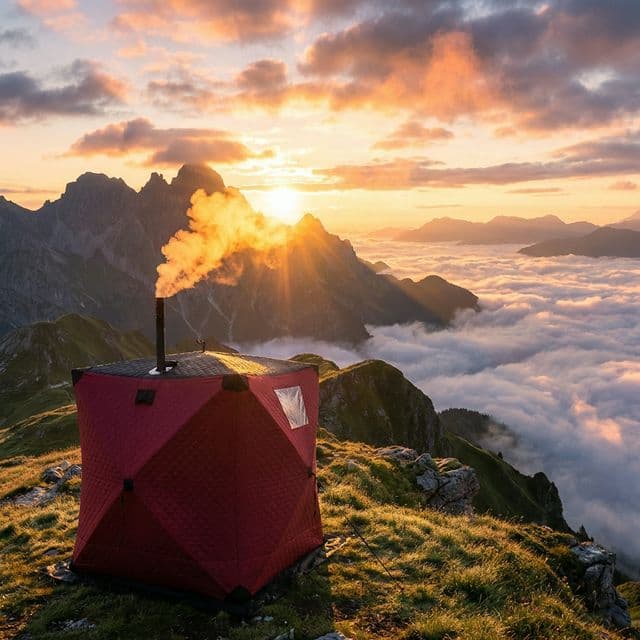
Remote-use context: portability value can be high, but safety process still governs viability.
Need a manual route review?
Send your result band, site dimensions, target usage cadence, and two candidate listings. Support will return a boundary-first next-step plan.
Email [email protected]FAQ
Final Step: Send Your Sauna Tent With Stove Decision Packet
Include your result band, volume assumption, fuel notes, boundary blockers, and shortlist links. This keeps final review concrete and prevents generic advice loops.