
DIY Sauna Tent Planner
Enter your budget, space, electrical setup, and usage goal to get an immediate format recommendation. Then use the report layer below to verify risks, evidence, and alternatives before purchase.
Default profile: 4 sessions/week, 25-minute sessions, dedicated 15A circuit, direct wall-outlet plan, no pregnancy heat boundary, and 17.3 cents/kWh electricity reference.
Safety boundary: if you are pregnant, heat-intolerant, or on medications that raise heat risk, use conservative assumptions and clinician guidance before increasing session intensity.
Input baseline
Room area, budget, circuit, and usage intensity drive score.
Result baseline
Every output includes fit band, cost estimate, and required next action.
Safety baseline
If output is inconclusive, use the fallback path and request manual screening.
Tool output to report verification bridge
Use this table immediately after running the selector. Match your tool band with the validation section, then execute the recommended next action before making a purchase decision.
| Tool status | Interpretation | Verify in report | Next move |
|---|---|---|---|
| Strong Fit | Inputs clear room, circuit, and budget boundaries for a primary format choice with manageable uncertainty. | Comparison grid + risk matrix + evidence ledger | Shortlist 2-3 models and email [email protected] for final spec cross-check before checkout. |
| Conditional Fit | At least one boundary is near threshold, so assumptions need stress-testing before commitment. | Methodology + fit boundaries + scenario lab | Re-run with conservative assumptions and compare one lower-load alternative tier. |
| Boundary Hit | Current inputs indicate elevated implementation or safety risk and do not support immediate purchase. | Risk matrix + FAQ safety cluster | Pause checkout, resolve infrastructure or heat-risk blockers, then re-run the selector. |
Stage1b gap audit and remediation map
This audit captures where baseline content was weak and what was added in this research-enhance round.
| Gap category | Observed weakness | Stage1b remediation |
|---|---|---|
| Evidence coverage gap | FAQ-level claims about acute metabolic response and US listing confidence were not explicitly tied to citable primary references. | Added PubMed counterexample rows (PMID 39209309, PMID 37650138) and OSHA NRTL CE-mark boundary evidence with date context. |
| Policy drift gap | Tax-credit guidance can change quickly; prior copy did not reflect 2026 filing-window implications for new purchases. | Added IRS Form 5695 (2025) update context and QPIN documentation conditions so ROI modeling now defaults to credit-neutral assumptions. |
| Regulatory risk gap | Baseline narrative discussed claim overreach but lacked a concrete enforcement case buyers could audit quickly. | Added FDA warning-letter enforcement example (sauna treatment claims) as a practical red-flag benchmark. |
| Concept boundary gap | Baseline content still risked over-generalizing city permit thresholds as if they were nationally consistent. | Added Portland permit counterexample alongside Seattle/Austin thresholds to show why city-level verification remains mandatory. |
| Operations burden gap | Shared-facility alternative analysis lacked explicit maintenance-log workload and water-testing cadence boundaries. | Added CDC public hot-tub operating guidance (test-and-log cadence plus chemistry bounds) to quantify hidden operational friction. |
| Decision-risk gap | Baseline recommendations underweighted user-facing downside (recall exposure, heat-risk profile mismatch, uncertain health-claim transferability). | Added claim-boundary matrix, risk matrix, and known-unknown disclosures with interim fallback actions. |
DIY sauna tent conclusions with decision-grade context
Published February 25, 2026. Last updated February 27, 2026 (stage2 seo-geo-checklist closure). These conclusions summarize what the selector cannot express alone: evidence quality, constraints, and tradeoff boundaries.
Review cadence: refresh this page every 6-12 months, or earlier when safety recalls, federal policy, or utility-cost baselines change.
Most DIY failures happen after purchase when outlet use, dry-out, and routine friction were not validated before checkout.
Source: TentSaunaSupply method refresh with CPSC, EPA, CDC, and USFA checks (updated February 25, 2026)
DIY payback claims that ignore local tariff data can understate monthly cost, especially in high-rate states.
Source: EIA Electric Power Monthly Table 5.3 and 5.6.B, released February 24, 2026
CPSC incident narratives include overheating/burn signals and structural injury reports, so serial-level checks should happen before purchase.
Source: CPSC recall notices published October 23, 2025 (reviewed February 25, 2026)
DIY sauna tent plans should treat electrical integrity and supervision as non-negotiable controls, not optional upgrades.
Source: USFA residential heating-fire trend pages (last updated December 9, 2025)
DIY users often confuse structure exemptions with electrical exemptions. Wiring changes can still require permits and inspections.
Source: Seattle SDCI and Austin permit guidance reviewed February 25, 2026
Steam-tent routines without repeatable dry-out protocol increase mold and abandonment risk even when upfront cost looks attractive.
Source: EPA mold course and moisture guide reviewed February 25, 2026
Traditional-sauna findings are useful context but cannot be marketed as guaranteed DIY sauna-tent outcomes across all users.
Source: PMID 25705824 and 2018 systematic review (PMC5941775) reviewed February 25, 2026
DIY ROI models for new 2026 purchases should remain credit-neutral unless new legislation or updated IRS effective dates are published.
Source: IRS Form 5695 instructions and IRS qualified-manufacturer FAQ reviewed February 27, 2026
Ask for recognized NRTL listing evidence and model-level certificate traceability before accepting premium safety claims.
Source: OSHA NRTL FAQ reviewed February 27, 2026
Treat one-session or short-program metabolic/cardiovascular promises as low-confidence unless product-relevant and population-matched evidence is shown.
Source: PubMed records reviewed February 27, 2026
Use recall logs and known hazards for risk control, but avoid false precision in annual failure-rate comparisons.
Source: Pending confirmation status retained in evidence-gaps section
Key numbers that shape format choice
Time-sensitive numbers are date-labeled for reproducibility.
| Dimension | Value | Decision implication | Source |
|---|---|---|---|
| US electricity annual baseline | 17.30 cents/kWh (2025 US residential annual average) | Use this as a fallback assumption only when your utility tariff is not yet available. | EIA Table 5.3 |
| US state electricity spread | 11.81-40.59 cents/kWh (2025 annual state spread) | State tariff differences can swing identical DIY usage cost by more than 3x. | EIA Table 5.6.B |
| DIY energy-estimate formula | Wattage x hours used / 1000 = kWh | Use this formula to audit vendor monthly-cost screenshots and your own planner output. | DOE Energy Saver |
| Lifepro recall scale | About 78,000 units; 65 overheating reports and 32 burn reports (published October 23, 2025) | Serial-level recall checks should happen before checkout, not after first use. | CPSC recall notice |
| Sauna360 structural recall signal | About 1,000 units; 7 bench incidents and 1 injury (published October 23, 2025) | Not all risk is thermal. Structural verification matters in DIY and mixed-use setups. | CPSC recall notice |
| Residential heating-fire context | USFA 2023: 34,200 fires, 165 deaths, 1,350 injuries, $1.36B estimated loss | DIY installation discipline and supervision should outrank comfort add-ons in decision order. | USFA heating trends |
| CPSC extension-cord boundary | UL 817 is mandatory for extension cords made/imported after Jan 1, 2015 | If heater operation depends on unknown cord quality, treat setup as no-go until corrected. | CPSC extension-cord guidance |
| Seattle permit threshold example | Detached sheds <=120 sq ft generally do not need building permit | Structure exemption does not automatically waive electrical permitting when wiring work is added. | Seattle SDCI permits page |
| Austin permit threshold example | Detached structures <=200 sq ft may be exempt from building permit | Local exemptions vary; verify your jurisdiction before committing to a DIY build path. | Austin permit exemptions |
| Portland membrane-structure counterexample | Portland notes some rigid-frame fabric-membrane accessory structures up to 500 sq ft can be permit-exempt | Permit boundaries differ materially by city and structure type, so one-city assumptions are unsafe. | Portland permit guidance |
| EPA moisture boundary | Target indoor RH around 30-50%; mold risk tends to rise above 60% RH | Humidity control is part of feasibility, not a post-purchase detail. | EPA mold course |
| EPA moisture response window | Dry wet materials within 24-48 hours | If your routine cannot meet this recovery window, downgrade steam-heavy usage assumptions. | EPA moisture guide |
| FTC enforcement trend | FTC announced >200 health-related actions from Jan 2021 to Sept 2024 | Treat disease, detox, and guaranteed-result marketing claims as high-risk until substantiated. | FTC health products guidance |
| Federal tax-credit effective-date boundary | IRS Form 5695 (2025) instructions updated January 29, 2026: no credit for expenditures made after December 31, 2025 | Model 2026 DIY payback without 25C credit unless new law or updated IRS instructions explicitly restore eligibility. | IRS Form 5695 instructions |
| IRS documentation requirement | For items placed in service after January 1, 2025, IRS requires qualified-manufacturer and product identification number details for specified products | If seller documentation is missing, downgrade credit assumptions and keep ROI scenarios credit-neutral. | IRS QM requirements |
| US listing verification boundary | OSHA NRTL FAQ: a CE mark does not mean a product is NRTL approved or tested to US standards | Do not treat CE-only labeling as equivalent to recognized US listing proof. | OSHA NRTL FAQ |
| Acute glycemic counterexample | PMID 39209309: 12 adults with type 2 diabetes, 40-minute 60 C session showed no postprandial glucose benefit (iAUC 17.7 vs 14.8 mmol/L x h) | Single-session metabolic claims should be treated as low-confidence unless protocol-matched product data exists. | PMID 39209309 |
| Medium-term vascular counterexample | PMID 37650138: 8-week infrared-sauna trial in 41 CAD adults found no improvement in vascular function, blood pressure, lipids, or glycemic profile | Medium-term outcomes are not guaranteed even in supervised protocols, so promises should stay conservative. | PMID 37650138 |
| Shared-facility maintenance load | CDC public hot-tub guidance: test disinfectant and pH at least twice daily and keep operation records | Studio/hotel alternatives reduce ownership burden but still require verification of operator process quality. | CDC operating guidance |
| CDC CO poisoning burden | Each year: >400 deaths, >100,000 ED visits, >14,000 hospitalizations | Any DIY plan involving combustion heat requires strict CO controls and ventilation protocol. | CDC carbon monoxide basics |
Pre-purchase go / no-go gates
Pass these gates before paying; they prevent avoidable setup, safety, and ROI errors.
| Gate | Pass condition | Fail signal | Why this matters | Source |
|---|---|---|---|---|
| Electrical loading and outlet discipline | Model demand fits dedicated-circuit plan and the heater plugs directly into a wall outlet. | Reliance on extension cords, power strips, or unknown branch sharing for routine sessions. | CPSC consumer guidance treats direct-wall connection and clearance controls as core heating-safety behaviors. | CPSC News Release 22-065 |
| Moisture recovery capacity | Room and tent can be dried on each use cycle, with humidity managed below 60% and ideally 30-50%. | No repeatable dry-out workflow, visible condensation persistence, or recurring damp storage. | EPA guidance highlights mold growth risk when moisture is not corrected quickly. | EPA mold guidance |
| Heat-risk medication and device screen | Clinician confirms medication stack and heat plan, including storage controls for heat-sensitive medications/devices. | Unreviewed use of diuretics, antihypertensives, or psychotropics in high-heat routines. | CDC notes certain medication classes and combinations can raise heat vulnerability and that heat can damage medication efficacy. | CDC Heat and Medications |
| Federal incentive effective-date check | ROI baseline treats 2026 purchases as credit-neutral unless new legislation or updated IRS effective dates are published. | Payback math still assumes automatic 25C credits after December 31, 2025 without legal update proof. | IRS Form 5695 (2025) instructions were updated on January 29, 2026 and specify no credit for expenditures made after December 31, 2025. | IRS Form 5695 instructions |
| IRS documentation traceability | Seller can provide qualified-manufacturer details and product identification number data when a filing scenario still depends on 25C documentation. | No QPIN/manufacturer packet is available but ROI assumes filing success. | IRS qualified-manufacturer rules tightened documentation requirements for qualifying products placed in service after January 1, 2025. | IRS QM requirements |
| US listing evidence gate | Model-level listing proof maps to a recognized NRTL certificate and mark. | Listing claims rely on CE-only screenshots, generic logos, or non-traceable lab names. | OSHA NRTL FAQ states CE marking does not mean NRTL approval or testing to US standards. | OSHA NRTL FAQ |
| Health-claim evidence quality | Major outcomes are supported by product-relevant data and claims stay within wellness scope. | Purchase premium depends on disease-treatment, detox, or single-session conversion claims. | Recent evidence synthesis shows mixed effect size and many non-significant pooled outcomes across RCTs. | Meta-analysis (PMID 41049507) |
| Claim-enforcement red-flag screen | Sales copy avoids disease-treatment framing unless there is product-specific legal and scientific substantiation. | Listing language promises treatment or cure outcomes without transparent evidence packets. | FDA warning-letter actions show sauna-marketing language can trigger enforcement when treatment claims exceed substantiated scope. | FDA warning letter example |
| Shared-facility verification gate | Facility can show recent chemistry and operation logs that meet CDC hot-tub guidance. | Temperature, disinfectant, and pH readings are absent, stale, or inconsistent. | CDC public hot-tub operations guidance requires regular testing, corrective action workflows, and records. | CDC public hot-tub operations |
Applicable vs not-applicable boundaries
| Audience pattern | Fit status | Why | Recommended action |
|---|---|---|---|
| Home users with 18-35 sq ft area and at least a dedicated 15A | Applicable now | Most sauna tent kits can run without major electrical rework. | Use comparison grid and shortlist 2-3 sauna tent models for manual support review. |
| Users planning to power tents through extension cords or multi-outlet strips | Not applicable yet | CPSC heating-safety guidance emphasizes direct wall-outlet connection, especially for high-heat devices. | Rework placement so the main heater can run from a direct outlet, then rerun the selector with updated constraints. |
| Renters or shared-circuit users prioritizing low setup friction | Conditional | Shared circuits and lease constraints often require compact sauna tent tiers plus stricter session limits. | Start with lower-demand formats and validate landlord permission before any high-load upgrade path. |
| Users extrapolating one-city permit exemptions nationwide | Conditional | Seattle (120 sq ft), Austin (200 sq ft), and Portland membrane examples (up to 500 sq ft) illustrate large local variance. | Treat permit assumptions as city-specific; verify both structure and trade-permit pages before budgeting. |
| Buyers targeting premium bundles without warranty and recall proof | Conditional | Accessory-heavy listings often hide critical controller revisions and remedy eligibility. | Confirm serial range, controller generation, and replacement-part SLA before ordering. |
| Users with unresolved heat-risk medication concerns | Not applicable yet | CDC clinician guidance lists multiple medication classes that can amplify heat stress risk. | Pause purchase and request clinician-safe protocol guidance first. |
| Pregnant users or pregnancy-planning households | Not applicable yet | CDC states heat can harm in any trimester and even one high-heat day may increase pregnancy risk. | Use non-heat recovery alternatives and resume sauna planning only after clinician-specific heat guidance. |
| Users relying on studio or hotel facilities instead of ownership | Conditional | Safety depends on day-to-day operator controls for water chemistry and temperature. | Check CDC-aligned logs before each session (max 104 degrees F, chlorine >=3 ppm or bromine 4-8 ppm, pH 7.0-7.8). |
Methodology and assumptions
Boundary: Risk penalties reduce scores when heat-risk profile and session intensity conflict.
Why it matters: Best-format quality depends on implementation feasibility, not marketing claims.
Boundary: Scores degrade when budget is significantly outside realistic purchase bands.
Why it matters: Budget mismatch is a leading source of abandoned or regret-driven purchases.
Boundary: Circuit ratio below 0.8 is treated as unstable for routine use.
Why it matters: Nuisance trips and underheated sessions are common failure modes in weak circuits.
Boundary: Any routine plan that depends on extension cords or power strips is downgraded until layout is corrected.
Why it matters: This reduces avoidable overload and contact-heating failures in real home setups.
Boundary: CE-only evidence is treated as insufficient because CE does not confirm NRTL approval or US-standard testing.
Why it matters: This filters out non-traceable safety claims before purchase decisions.
Boundary: High-risk profile plus high-frequency sessions can force boundary-hit even when fit score is high.
Why it matters: Safety screening must be parallel to convenience and cost optimization.
Boundary: If dry-out cannot be completed promptly after use, high-humidity formats are treated as conditional or not-fit.
Why it matters: EPA moisture guidance shows unresolved dampness can create operational and indoor-air penalties.
Boundary: Output excludes fixed utility fees and assumes stable tariff throughout the month.
Why it matters: Operating-cost claims become more reliable when assumptions are transparent.
Boundary: When claims rely on testimonials, tradition, or non-product-specific citations, they are downgraded to low confidence.
Why it matters: This prevents overpaying for marketing narratives that do not have decision-grade substantiation.
Boundary: When modality, population, or heat protocol differs from sauna tent use, confidence is reduced and claims are treated as directional.
Why it matters: This prevents overconfident extrapolation from non-tent studies.
Boundary: ROI remains credit-neutral for new 2026 purchases unless a later legislative/IRS update explicitly changes the effective date.
Why it matters: Payback estimates become more realistic when uncertain incentives are excluded from baseline math.
Boundary: No national shortcut table is treated as universally authoritative for municipal permit triggers.
Why it matters: This prevents scope and timeline failures from over-generalized permit assumptions.
Boundary: Single-session or short-program claims stay low confidence unless product-specific, protocol-matched evidence is available.
Why it matters: This protects decisions from selective citation and optimistic marketing extrapolation.
Boundary: Evidence gaps are explicitly marked instead of hidden behind generic marketing copy.
Why it matters: Decision trust depends on knowing what is proven versus what remains uncertain.
Evidence ledger and date context
| Evidence item | Date context | How used in this page | Source link |
|---|---|---|---|
| EIA annual residential electricity benchmark | Table 5.3 released February 24, 2026 (covers 2025 annual values) | Anchors baseline operating-cost assumptions and invalidates stale 2024-only screenshots. | EIA Table 5.3 |
| EIA state-by-state electricity spread | Table 5.6.B reviewed February 25, 2026 | Quantifies location-driven cost variance for DIY scenario comparisons and fallback plans. | EIA Table 5.6.B |
| DOE appliance-energy calculation method | Referenced February 25, 2026 | Defines transparent math behind tool energy cards and monthly-cost sensitivity checks. | DOE Energy Saver |
| CPSC Lifepro recall incident detail | Published October 23, 2025; reviewed February 25, 2026 | Supports hard gate for serial-level recall checks before DIY purchase decisions. | CPSC recall (Lifepro) |
| CPSC Sauna360 structural recall | Published October 23, 2025; reviewed February 25, 2026 | Adds non-thermal hazard evidence to risk matrix and verification checklist. | CPSC recall (Sauna360) |
| USFA heating-fire residential trend data | Page updated December 9, 2025; reviewed February 25, 2026 | Sets severity context for electrical shortcuts, placement errors, and supervision lapses. | USFA heating trend |
| USFA fire-cause distribution | Page updated December 9, 2025; reviewed February 25, 2026 | Supports decision to prioritize installation quality over feature list inflation. | USFA cause profile |
| EPA mold and humidity boundaries | Mold course reviewed February 25, 2026 | Defines moisture-control cutoffs in methodology and fit-boundary sections. | EPA mold course |
| EPA 24-48 hour drying window | Guide reviewed February 25, 2026 | Drives go/no-go gate for humidity-heavy DIY usage routines. | EPA brief guide |
| Seattle permit-threshold page | Seattle page reviewed February 27, 2026 | Builds concept boundary between structure-size exemptions and potential trade-permit scope. | Seattle permit guidance |
| Portland permit-threshold counterexample | Portland page reviewed February 27, 2026 | Adds a third municipal example showing that permit triggers can shift by structure type and city policy. | Portland permit guidance |
| Portland electrical-permit requirement language | Portland residential permit page reviewed February 27, 2026 | Supports warning that wiring changes generally trigger permit/inspection workflow. | Portland residential permits page |
| IRS 25C effective-date boundary for 2026 planning | Instructions for Form 5695 (2025) updated January 29, 2026; reviewed February 27, 2026 | Replaces ambiguous credit assumptions with credit-neutral ROI modeling for new 2026 expenditures. | IRS Form 5695 instructions |
| IRS qualified-manufacturer and QPIN requirements | IRS page last reviewed November 24, 2025 | Defines documentation gate when any scenario still models a filing path tied to 25C products. | IRS QM requirements |
| OSHA NRTL CE-mark boundary | OSHA FAQ reviewed February 27, 2026 | Sets compliance rule that CE-only claims do not substitute for recognized US listing evidence. | OSHA NRTL FAQ |
| FTC health-product compliance enforcement context | Guidance page reviewed February 27, 2026 | Anchors claim-boundary section and filters unsupported detox/treatment copy. | FTC guidance |
| FDA warning-letter enforcement example for sauna claims | Warning letter issued July 5, 2022; reviewed February 27, 2026 | Provides concrete enforcement precedent when listings drift into treatment or cure language. | FDA warning letter |
| CDC carbon-monoxide burden and prevention cues | Page updated January 12, 2026; reviewed February 27, 2026 | Informs combustion-risk scenarios and no-exception stop rules. | CDC CO basics |
| CDC public hot-tub operations and log cadence | CDC page reviewed February 27, 2026 | Adds verifiable operation/logging standards for studio and hotel alternatives in fit and risk sections. | CDC operating guidance |
| Acute type-2-diabetes heat-session crossover trial | PMID 39209309, published 2024; reviewed February 27, 2026 | Adds counterexample against one-session metabolic-improvement marketing claims. | PMID 39209309 |
| Coronary-disease infrared-sauna randomized trial | PMID 37650138, published 2023; reviewed February 27, 2026 | Adds medium-term counterexample where vascular and metabolic markers did not materially improve. | PMID 37650138 |
| Recent RCT synthesis of sauna interventions | PMID 41049507, published 2025; reviewed February 27, 2026 | Supports conservative confidence scoring when pooled outcomes are mixed or non-significant. | PMID 41049507 |
| PubMed cohort evidence (traditional sauna) | Published 2015; reviewed February 27, 2026 | Used as contextual, not transferable, evidence in claim-boundary table. | PMID 25705824 |
| Systematic review applicability limit | Published 2018; reviewed February 27, 2026 | Documents that steam interventions were excluded, limiting direct DIY steam-tent inference. | PMC5941775 |
Known unknowns and pending confirmations
Evidence gaps stay visible so planning does not depend on false certainty.
| Evidence gap | Current status | Decision impact | Interim action |
|---|---|---|---|
| Sauna-tent incident denominator by exposure hours | Pending confirmation: no reliable public US dataset normalizes sauna-tent incidents by active units or operating hours (as of February 27, 2026). | Absolute recall or incident counts cannot produce reliable risk-rate rankings across formats. | Use conservative controls, track your own session-hour log, and prioritize brands with transparent remedy channels. |
| Cross-brand durability and warranty-claim transparency | Pending confirmation: warranty terms are public, but standardized claim-rate disclosure is still sparse in open datasets. | Premium price does not guarantee lower failure probability over 12-24 months. | Request written warranty scope, replacement-part SLA, and controller revision history before payment. |
| Head-to-head clinical outcomes for DIY tent formats | Pending confirmation: no robust public RCT set directly compares major DIY sauna-tent format classes. | Format recommendations should prioritize implementation fit, safety, and adherence over promised health superiority. | Treat health outcomes as secondary context and validate real-world adherence in a 4-week pilot window. |
| Market-wide listing-certificate transparency by model | Pending confirmation: no centralized public dataset maps every consumer sauna-tent SKU to verified NRTL certificates. | Buyers can mistake CE logos or generic badges for US safety listing evidence, creating hidden compliance risk. | Request model-specific listing files and verify identifiers before payment. |
| Permit-rule comparability across US municipalities | Partial coverage only: city examples are available, but no single official source normalizes all local permit thresholds and trade-permit triggers. | DIY users risk false assumptions when extrapolating one city rule to another jurisdiction. | Verify your city/county building and electrical pages before finalizing budget and timeline assumptions. |
Claim boundaries and transferability checks
Use this table to avoid importing evidence beyond its tested population, modality, or regulatory claim scope.
| Claim framing | Evidence boundary | Portable applicability | Decision rule | Source |
|---|---|---|---|---|
| One-session glucose-control improvement promises | PMID 39209309 crossover trial in 12 adults with type 2 diabetes found no postprandial glucose benefit after one 40-minute 60 C session (glucose iAUC was higher in heat condition). | Very low confidence for acute metabolic promises in DIY sales messaging. | Treat one-session metabolic claims as marketing risk unless product-specific trials reproduce benefits in comparable users. | PMID 39209309 |
| Medium-term cardiovascular improvement guarantees | PMID 37650138 randomized trial in 41 adults with coronary artery disease reported no improvement in vascular function, blood pressure, lipids, or glycemic profile after 8 weeks. | Low confidence when marketing language implies predictable medium-term cardiometabolic gains. | Prioritize adherence and safety fit; downgrade guaranteed-outcome pricing premiums without population-matched evidence. | PMID 37650138 |
| Cardiovascular and longevity benefit language | 2015 cohort evidence comes from 2,315 Finnish men aged 42-60 using traditional sauna exposure, not consumer DIY sauna tents. | Directional context only; not a guaranteed outcome model for all DIY users. | Use cohort findings as background rationale, while prioritizing implementation safety and routine adherence in purchase decisions. | PMID 25705824 |
| Steam-tent outcomes inferred from mixed sauna literature | A 2018 review excluded steam-sauna interventions, limiting direct transfer to steam-heavy DIY tent routines. | Low-to-medium confidence unless protocol and modality match your intended setup. | Downgrade strong steam-specific health promises unless product-relevant human evidence is disclosed. | PMC5941775 review |
| Disease-treatment, detox, or guaranteed-result marketing | FTC requires competent and reliable scientific evidence and reported more than 200 related law-enforcement actions from Jan 2021 to Sept 2024. | High compliance and trust risk when claims overreach available evidence. | Treat over-claimed listings as conditional or no-go until specific substantiation documents are provided. | FTC health guidance |
| Treatment/cure language in sauna product pages | FDA warning-letter enforcement shows claims such as treating autoimmune disease, chronic pain, or cancer can trigger action when substantiation and legal status are insufficient. | High enforcement risk when claims move beyond wellness framing into disease treatment language. | Treat treatment/cure wording as no-go until legal and scientific substantiation documents are verified. | FDA warning letter |
| Combustion DIY plans marketed as low-risk by default | CDC reports annual CO burden (>400 deaths, >100,000 ED visits, >14,000 hospitalizations), and this risk persists when ventilation controls fail. | Combustion configurations remain conditional even when cost and comfort inputs look attractive. | Require documented CO controls and supervised fuel protocol; otherwise downgrade to electric alternatives. | CDC carbon monoxide basics |
Counterevidence and limit conditions
These examples prevent selective citation and force claims to stay within tested scope.
| Marketing claim | Counterevidence signal | Boundary condition | Decision action | Source |
|---|---|---|---|---|
| One session can improve glucose control immediately | PMID 39209309 crossover trial (n=12, type 2 diabetes) found no postprandial glucose benefit after a single 40-minute 60 C session. | Acute-response results are protocol-specific and should not be generalized to all users or products. | Avoid paying a premium for single-session metabolic promises without product-specific replication. | PMID 39209309 |
| Short programs guarantee vascular and metabolic gains | PMID 37650138 randomized trial (n=41 CAD adults) reported no meaningful changes in vascular function, blood pressure, lipids, or glycemic markers over 8 weeks. | Even supervised interventions in at-risk groups may not produce broad biomarker improvements. | Treat medium-term outcomes as uncertain and prioritize sustainable routine adherence over headline promises. | PMID 37650138 |
| Most sauna-health outcomes are consistently significant | PMID 41049507 meta-analysis (20 RCTs; 567 participants) reported no significant pooled effects for most outcomes. | Pooled evidence remains mixed and heterogeneity is high across protocols, populations, and endpoints. | Use conservative benefit assumptions and require transparent limitations in model comparisons. | PMID 41049507 |
Format comparison grid
| Format | Budget band | Electrical profile | Strength | Limit | Best-fit scenario | Evidence maturity | Verification gate before payment |
|---|---|---|---|---|---|---|---|
| Compact sauna tent (1000-1200W) | $220-$560 | Usually 120V / 9A-11A equivalent load | Fastest low-cost entry and broad outlet compatibility | Lower max heat and higher moisture-management burden | First-time buyers needing low capex and easy replacement parts | Implementation and cost evidence is stronger than tent-specific clinical-outcome evidence. | Confirm zipper durability, seam warranty term, steam-pot auto-shutoff behavior, direct wall-outlet placement, and model-level US listing proof. |
| Balanced sauna tent (1500W class) | $360-$980 | Usually 120V / 12A-15A class | Best comfort-to-cost ratio in most apartment and condo setups | Can overload shared 15A branches during concurrent appliance use | Daily home users with dedicated 15A or 20A outlet access | Good home-use fit evidence; still limited head-to-head clinical data versus other sauna tent formats. | Require dedicated-outlet plan, avoid extension-cord/power-strip operation, document nearby clearance, and reject CE-only safety screenshots. |
| Infrared chair sauna tent | $680-$1,880 | Mostly 120V / 13A-15A class | Seated-session comfort with dry-heat profile and modest power demand | Durability variance and lower premium finish quality | Balanced portability with repeatable home sessions | Sauna-tent outcome evidence remains sparse; rely on fit and safety documents over health-promise language. | Require NRTL listing documentation, verify controller thermal cutoff logic, and confirm medication-heat risk screening when applicable. |
| Oxford-canvas sauna tent | $920-$1,980 | Usually 120V / 14A-15A class | Higher frame durability and better zipper life for frequent weekly use | More floor area and stronger ventilation plan required | Households planning frequent tent sessions with consistent setup area | Durability claims vary by brand; verify frame and fabric warranty terms before relying on premium pricing. | Request frame gauge, waterproof seam spec, replacement-part lead times, listing certificate identifiers, and a 24-48 hour moisture dry-out plan. |
| Insulated family sauna tent | $1,180-$2,860 | 120V / 15A to 20A class depending on steam unit | Best heat retention and interior comfort for multi-user schedules | Highest footprint and setup-time burden among tent tiers | Families sharing sessions and prioritizing heat consistency over portability | Strong implementation value for households, but still limited independent long-term outcome trials. | Require insulated-layer material specs, heater duty-cycle limits, warranty SLA, listing traceability, and documented post-session ventilation workflow before payment. |
Need manual verification before purchase?
Send your selector inputs and target models to [email protected] for a human review of format fit, electrical assumptions, and risk boundaries.
Risk matrix with mitigation paths
| Risk | Probability | Impact | Mitigation action |
|---|---|---|---|
| Electrical overload, contact heating, or nuisance tripping | Medium | High | Check dedicated-circuit capacity against model demand, use direct wall-outlet connection, and avoid extension-cord/power-strip operation. |
| Heat-related adverse symptoms | Medium | High | Start with shorter sessions, hydrate, and clinician-screen high-risk medication profiles (including diuretics, antihypertensives, and psychotropics). |
| Pregnancy-related heat mismatch | Low to medium | High | CDC clinical guidance flags pregnancy heat risk across all trimesters; require clinician-approved protocol before sauna use. |
| Product safety defect or recall exposure | Low to medium | High | Check recall history, serial ranges, and remedy process before payment. |
| Ventilation and moisture mismatch | Medium | Medium | Maintain airflow design and humidity boundaries; dry wet materials promptly and avoid storing tents damp after sessions. |
| Tax-credit assumption error | Medium | Medium | Model new 2026 purchases as credit-neutral and only add incentives when a current law/IRS effective date explicitly supports the scenario. |
| False safety-certification confidence | Medium | High | Request model-level NRTL listing files and reject CE-only screenshots as listing proof in US purchase decisions. |
| Claim overreach from marketing copy | Medium | Medium | Apply FTC substantiation standard and treat treatment/cure wording as no-go until evidence and compliance documents are verified. |
| Shared-facility water-quality mismatch | Medium | Medium | For studio and hotel alternatives, verify readings and recent logs against CDC thresholds (<=104 degrees F, chlorine >=3 ppm or bromine 4-8 ppm, pH 7.0-7.8). |
Alternatives and tradeoff pathways
| Path | Setup cost | Recurring cost | Tradeoff | Choose when |
|---|---|---|---|---|
| Sauna tent ownership (home use) | $220-$2,860 | Electricity + maintenance | Highest control and routine consistency, but still requires setup discipline and post-session dry-out. | Best when you can commit to a stable weekly routine and have reliable outlet headroom. |
| Studio or spa membership access | $0 upfront | Monthly membership or per-session fees | No installation burden, but recurring cost, schedule friction, and facility-quality variability can limit outcomes. | Best for trial phase when the facility publishes reliable temperature and chemistry logs. |
| Traditional sauna access | Gym, spa, or facility dependent | Membership plus travel/time cost | Higher ambient heat and social access; less private and less schedule-flexible. | Best when humidity profile and high-heat preference are prioritized over home convenience. |
| No-heat recovery alternatives | Low to moderate | Varies by modality | Lower heat risk but different recovery profile and routine experience. | Best when heat tolerance is uncertain or contraindicated. |
Scenario lab: four practical decision paths
Premise: Budget $2,000, 24 sq ft available area, shared 15A, goal is stress relief.
Process: Selector downgraded 1500W and insulated options due to electrical ratio and flagged compact steam-tent path as conditional fit.
Outcome: User selected basic steam tent trial plan and requested manual support checklist before upgrading.
Premise: Budget $950, 30 sq ft area, dedicated 20A, daily-wellness goal.
Process: 1500W steam tent scored highest with strong-fit band and moderate operating-cost profile.
Outcome: User proceeded to shortlist two steam-tent models and requested final electrical sheet review via support email.
Premise: Budget $1,900, 28 sq ft area, dedicated 15A, family-sharing goal.
Process: Insulated family tent scored high on comfort but remained conditional due to unresolved warranty and recall-check assumptions.
Outcome: Purchase paused pending serial-level recall check and controller generation confirmation.
Premise: Household budget and room were sufficient, but the primary user was pregnant and planning high-frequency sessions.
Process: Tool returned boundary-hit despite acceptable infrastructure metrics because pregnancy-risk boundary overrides convenience scoring.
Outcome: User paused purchase, shifted to no-heat alternatives, and requested clinician-specific heat guidance before future reevaluation.
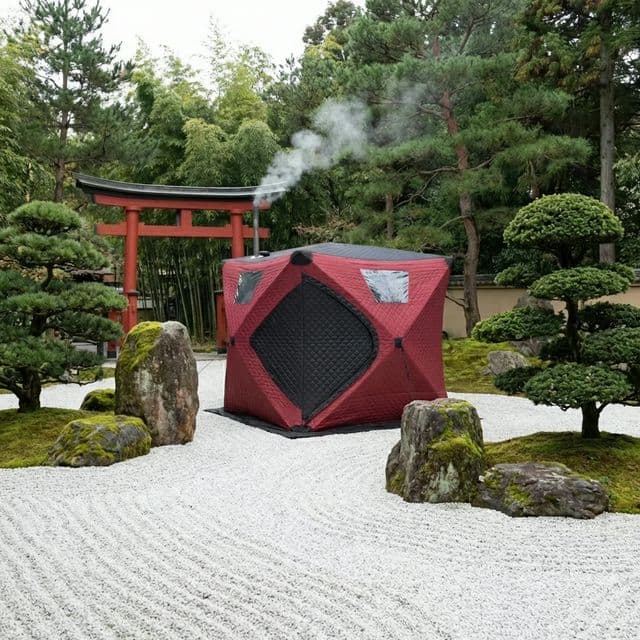
Product-image context for format decisions
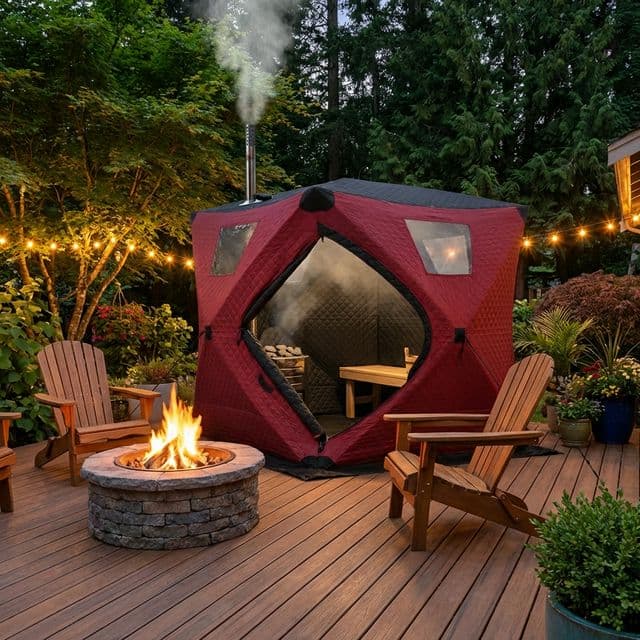
Use this path when installation friction and flexibility matter more than cabin permanence.
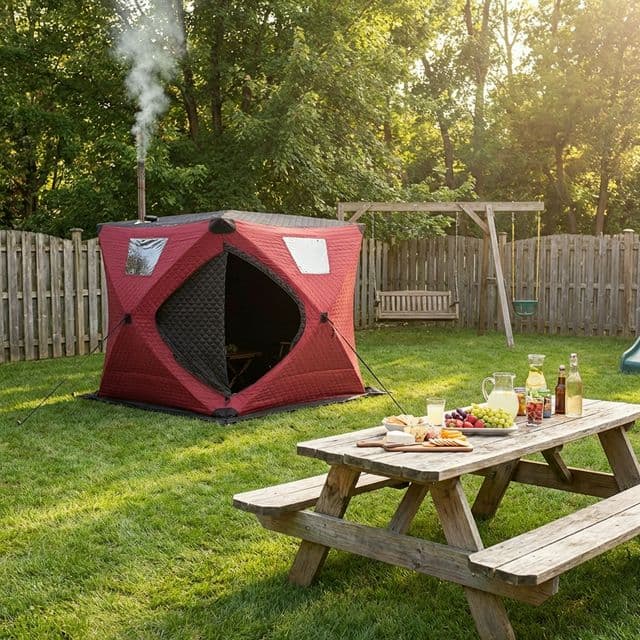
Balanced routine users usually benefit from stable weekly scheduling and moderate operating cost.
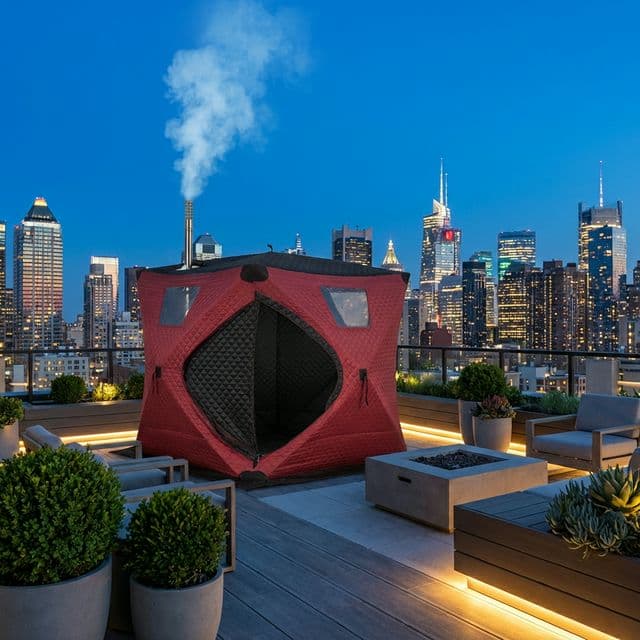
Higher-capacity upgrades should follow verified circuit headroom and ventilation plan.
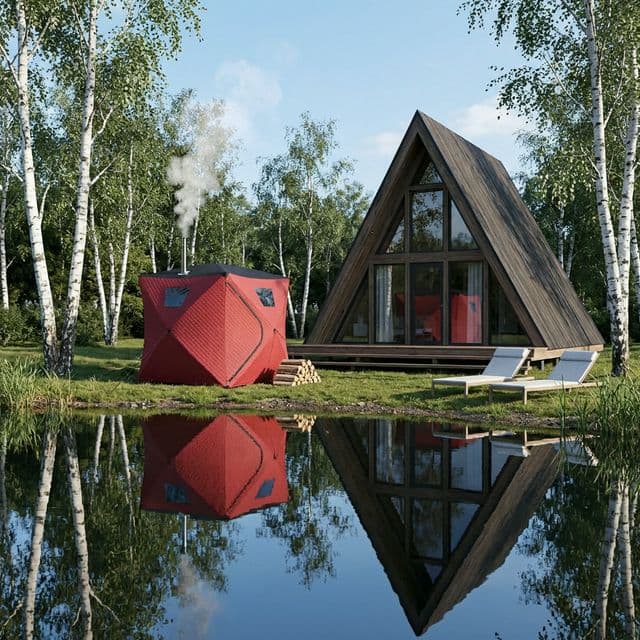
Related internal pages
Frequently asked decision questions
Send your shortlist for manual verification
Include tool inputs, desired budget tier, and candidate formats. We will help you verify electrical scope, risk boundaries, and final model-selection assumptions.