
Best Portable Sauna Fit Selector
Enter your budget, space, electrical setup, and usage goal to get an immediate best-format recommendation. Then use the report layer below to verify risks, evidence, and alternatives before purchase.
Quick answer: start with a 1,500W steam tent for an enclosed routine when the circuit has enough headroom; choose a sauna blanket for compact solo storage or an infrared chair tent for dry seated heat. This is a format-fit guide, not a hands-on ranking of named models.
Default profile: 4 sessions/week, 25-minute sessions, dedicated 15A circuit, and 18.31 cents/kWh EIA reference (July 2026).
Safety boundary: if you are pregnant, heat-intolerant, or on medications that raise heat risk, use conservative assumptions and clinician guidance before increasing session intensity.
Input baseline
Room area, budget, circuit, and usage intensity drive score.
Result baseline
Every output includes fit band, cost estimate, and required next action.
Safety baseline
If output is inconclusive, use the fallback path and request manual screening.
Tool output to report verification bridge
Use this table immediately after running the selector. Match your tool band with the validation section, then execute the recommended next action before making a purchase decision.
| Tool status | Interpretation | Verify in report | Next move |
|---|---|---|---|
| Strong Fit | Inputs clear room, circuit, and budget boundaries for a primary format choice with manageable uncertainty. | Comparison grid + proof checklist + risk matrix + evidence ledger | Shortlist 2-3 models and email [email protected] for a final spec cross-check before checkout. |
| Conditional Fit | At least one boundary is near threshold, so assumptions need stress-testing before commitment. | Cost stress test + methodology + fit boundaries + scenario lab | Re-run with conservative assumptions and compare one lower-load alternative tier. |
| Boundary Hit | Current inputs indicate elevated implementation or safety risk and do not support immediate purchase. | Risk matrix + FAQ safety cluster | Pause checkout, resolve infrastructure or heat-risk blockers, then re-run the selector. |
Best portable sauna conclusions with decision-grade context
Published February 23, 2026. Last updated October 8, 2026 (EIA rates and CPSC recall records reviewed). These conclusions summarize what the selector cannot express alone: evidence quality, constraints, and tradeoff boundaries.
Review cadence: refresh this page every 6 months, or earlier when safety recalls, federal policy, or utility-cost baselines change.
The most expensive or hottest option is not automatically best. Top outcomes happen when shortlist logic starts with room, circuit, and use pattern constraints.
Source: TentSaunaSupply selector method + CPSC/CDC boundary checks, revalidated February 24, 2026
Tariff spread is large, but absolute spend is usage-sensitive. At 1.5kW, the state-rate range is about $1.45-$5.20/month at 4x25 minutes weekly and $12.19-$43.65/month at 14x60 minutes weekly, before fixed fees.
Source: EIA Electric Power Monthly Table 5.6.A (July 2026 data; released September 24, 2026)
The latest published July comparison is about 4.9% higher year over year; use your utility tariff for a personal estimate.
Source: EIA Electric Power Monthly Table 5.6.A (July 2026 vs July 2025)
Recent alerts include Lifepro and Tzumi sauna blankets and Giantex/Costway portable steam saunas; confirm model eligibility and remedy before purchase.
Source: CPSC recalls 26-036, 26-506 and 26-511 (reviewed October 8, 2026)
Even a strong room and electrical score can become conditional when medication or heat-tolerance factors are present.
Source: CDC Heat and Medications guidance for clinicians
Require a recognized US listing mark and traceable test-lab evidence before buying to reduce downstream safety and insurance friction.
Source: OSHA NRTL Program FAQ (accessed February 22, 2026)
Capture return-window screenshots, seller legal identity, and order records before payment. Without those records, recall or refund execution is harder when listings change.
Source: FTC Cooling-Off Rule explainer (October 2024, accessed February 23, 2026) + CPSC final order against Amazon (January 17, 2025)
The rule raises enforcement risk for fake or manipulated review practices, but buyers still need multi-source verification because legal rules do not automatically validate each listing page.
Source: FTC Rule on Reviews and Testimonials FAQ (September 17, 2024, accessed February 23, 2026)
Do not use extension cords or power strips and keep at least 3 feet of clearance from combustibles in home heat-equipment layouts.
Source: CPSC winter safety release, January 23, 2026 (portable electric heater safety guidance)
Transfer to portable steam tents, chair tents, or blankets is uncertain because modality, population, and exposure conditions differ.
Source: JAMA Intern Med 2015 (PMID 25705824) + systematic review limitations (PMID 29849692)
Treat disease, detox, or weight-loss promises as low confidence unless product-specific evidence and compliant claim language are documented.
Source: FDA warning letter 622648 (July 5, 2022) and FTC Health Products Compliance Guidance (December 2022)
Do not assume a portable sauna purchase qualifies; the credit window has ended for new 2026 placements and sauna equipment is not an explicitly listed category.
Source: IRS Section 25C update under Public Law 119-21
Key numbers that shape format choice
Time-sensitive numbers are date-labeled for reproducibility.
| Dimension | Value | Decision implication | Source |
|---|---|---|---|
| US residential electricity benchmark | 18.31 cents/kWh (July 2026 US average; 17.45 cents/kWh in July 2025) | Use this as a first-pass baseline only when your utility tariff sheet is not yet available. | EIA Table 5.6.A |
| State electricity spread | 13.41 to 48.00 cents/kWh (North Dakota to Hawaii, July 2026) | The July 2026 state-rate range is about 3.6x; use your utility tariff rather than a national average for a personal estimate. | EIA Table 5.6.A |
| Latest year-over-year price drift | 18.31 vs 17.45 cents/kWh (July 2026 vs July 2025 US average) | About a 4.9% increase year over year; rerun estimates with your current utility tariff. | EIA Table 5.6.A |
| Energy formula baseline | (Wattage x hours) / 1000 = kWh | Use this formula to validate calculator output and vendor operating-cost claims. | DOE Energy Saver |
| Residential heating fire context | USFA 2023 estimate: 27,900 fires, 115 deaths, 525 injuries, $488M loss | High-heat home equipment decisions need placement, clearance, and supervision controls. | USFA residential heating fire trends |
| Portable-format CPSC recall examples | 2025–26 alerts include Lifepro and Tzumi sauna blankets and Giantex/Costway steam saunas; check exact model and serial number. | The examples are not a complete or permanent recall list. Check the live CPSC recall center before purchase. | CPSC recall center |
| Medication-related heat risk guidance | Guidance reviewed September 18, 2025 | Heat routine intensity should be clinician-screened when medication risk factors exist. | CDC Heat and Medications |
| US listing-mark boundary | OSHA FAQ: CE mark alone is generally not accepted as US NRTL approval; OSHA also notes NRTLs certify products across 39 categories | Ask for recognized US listing documentation, mark traceability, and test scope before payment. | OSHA NRTL FAQ |
| Portable electric-heater incident baseline | CPSC annual estimate (2020-2022): 1,600 fires, 70 deaths, 150 injuries | Apply heater-grade setup discipline: avoid extension cords/power strips and keep at least 3 feet of clearance from combustibles. | CPSC winter safety release |
| Claim substantiation baseline | FTC: objective health claims require competent and reliable scientific evidence | Do not treat testimonials or influencer narratives as decision-grade proof for outcomes. | FTC Health Products Compliance Guidance |
| FDA enforcement boundary for sauna-like claims | FDA warning letter 622648 cites disease and weight-loss claims beyond cleared indication scope | Treat product pages with treatment-style claims as high-risk until regulatory pathway and claim language are verified. | FDA warning letter 622648 |
| Review-manipulation compliance boundary | FTC reviews-and-testimonials rule became effective October 21, 2024 | Review fraud is explicitly enforceable, but buyers still need review-quality checks and external evidence because compliance risk does not guarantee review authenticity. | FTC rule FAQ |
| Marketplace recall execution precedent | CPSC final order against Amazon covers over 400,000 recalled/hazardous products (effective January 26, 2025) | Save order IDs, seller details, and payment records so recall and refund workflows are executable if listings disappear or sellers change. | CPSC final order against Amazon |
| Online cancellation-rights boundary | FTC cooling-off rule generally does not cover online, mail, or phone purchases | Do not assume a universal 3-day cancellation right for ecommerce sauna orders; screenshot return terms before checkout. | FTC Cooling-Off Rule explainer |
| IRS 25C timeline boundary | IRS states Section 25C is unavailable for property placed in service after December 31, 2025 | Do not assume sauna products qualify; the 2025 category list focused on building-envelope, HVAC, and water-heating equipment. | IRS Section 25C update |
| Indoor humidity boundary | Keep indoor relative humidity below 60% (ideal 30-50%) | Ventilation and moisture management remain operational requirements for repeat sessions. | EPA mold guidance |
| Public hot tub safety thresholds | CDC: maximum 104 degrees F; free chlorine >=3 ppm or bromine 4-8 ppm; pH 7.0-7.8 | If studio access is your fallback path, confirm posted chemistry and temperature logs before sessions. | CDC healthy hot tub guidance |
| Shared-facility child and alcohol boundary | CDC hot-tub safety guidance: do not let children under age 5 use hot tubs and avoid alcohol use before/during/after hot-tub sessions | Family fallback plans should include age gating and substance-use boundaries, not just temperature checks. | CDC healthy hot tub guidance |
| Recreational-water outbreak signal | CDC reports Legionella among the top causes of waterborne disease outbreaks linked to environmental exposure in the U.S. (1971-2020 data context) | When using shared facilities as a fallback path, ventilation, water management, and operator logs are mandatory checks. | CDC annual waterborne report summary |
| Heat-and-pregnancy boundary | CDC (reviewed September 18, 2025): heat can affect pregnancy in any trimester and even one high-heat day may increase risk | Pregnancy-related households should use clinician-reviewed heat plans instead of self-optimized routines. | CDC clinical overview: heat and pregnant women |
| Heat-session metabolic-claim counterexample | 2024 crossover trial (n=12, type 2 diabetes): single 40-minute 60C heat session did not improve postprandial glucose handling | Avoid buying decisions based on one-session metabolic promises; require stronger longitudinal evidence. | PubMed PMID 39209309 |
| Overall clinical evidence depth boundary | 2018 dry-sauna systematic review found 40 studies, but only 13 RCTs and most RCTs had n<40 | Long-term health claims remain directional for portable consumer products because high-quality, portable-specific trials are limited. | Systematic review PMID 29849692 |
Usage-driven cost stress test
Cost assumptions below use July 2026 EIA state rates and the DOE kWh formula with a 16% warm-up margin shown in parentheses.
| Usage profile | Session schedule | Monthly runtime (h) | Monthly kWh (1.5kW) | Cost range (ND to CA) | Boundary interpretation |
|---|---|---|---|---|---|
| Baseline routine | 4 sessions/week x 25 minutes | 7.22 | 10.82 | $1.45-$5.20 at 1.5kW ($1.68-$6.03 with 16% warm-up margin) | This is often lower than headline claims and is valid only for moderate usage frequency. |
| Consistency routine | 7 sessions/week x 35 minutes | 17.68 | 26.52 | $3.56-$12.73 at 1.5kW ($4.13-$14.77 with 16% warm-up margin) | Daily 35-minute sessions can move this example into low double digits in high-tariff states. |
| High-frequency routine | 14 sessions/week x 60 minutes | 60.62 | 90.93 | $12.19-$43.65 at 1.5kW ($14.14-$50.63 with 16% warm-up margin) | At 14 one-hour sessions per week, this example can exceed $40/month in the highest-rate states before fixed utility fees. |
Applicable vs not-applicable boundaries
| Audience pattern | Fit status | Why | Recommended action |
|---|---|---|---|
| Home users with 18-35 sq ft area and at least a dedicated 15A | Applicable now | Most portable steam tents and infrared chair tents can run without major electrical rework. | Use comparison grid and shortlist 2-3 portable models for manual support review. |
| Renters or shared-circuit users prioritizing low setup friction | Conditional | Shared circuits and lease constraints often require blanket or basic steam tiers plus stricter session limits. | Start with lower-demand formats and validate landlord permission before any high-load upgrade path. |
| Buyers targeting premium bundles without warranty and recall proof | Conditional | Accessory-heavy listings often hide critical controller revisions and remedy eligibility. | Confirm serial range, controller generation, and replacement-part SLA before ordering. |
| Users with unresolved heat-risk medication concerns | Not applicable yet | CDC clinician guidance lists multiple medication classes that can amplify heat stress risk. | Pause purchase and request clinician-safe protocol guidance first. |
| Pregnant users or pregnancy-planning households | Not applicable yet | CDC states heat can harm in any trimester and even one high-heat day may increase pregnancy risk. | Use non-heat recovery alternatives and resume sauna planning only after clinician-specific heat guidance. |
| Users relying on studio or hotel facilities instead of ownership | Conditional | Safety depends on day-to-day operator controls for water chemistry and temperature. | Check CDC-aligned logs before each session (max 104 degrees F, chlorine >=3 ppm or bromine 4-8 ppm, pH 7.0-7.8). |
| Households planning shared-facility fallback with children under age 5 | Not applicable for hot-tub fallback | CDC guidance explicitly says children under age 5 should not use hot tubs. | Use age-appropriate non-hot-tub recovery options and keep family plans separate from adult heat-session protocols. |
Methodology and assumptions
Boundary: Risk penalties reduce scores when heat-risk profile and session intensity conflict.
Why it matters: Best-format quality depends on implementation feasibility, not marketing claims.
Boundary: Scores degrade when budget is significantly outside realistic purchase bands.
Why it matters: Budget mismatch is a leading source of abandoned or regret-driven purchases.
Boundary: A circuit ratio below 0.8 is an internal screening flag, not an electrical-code threshold or proof of circuit approval.
Why it matters: Nuisance trips and underheated sessions are common failure modes in weak circuits.
Boundary: High-risk profile plus high-frequency sessions can force boundary-hit even when fit score is high.
Why it matters: Safety screening must be parallel to convenience and cost optimization.
Boundary: Output excludes fixed utility fees and assumes stable tariff throughout the month.
Why it matters: Operating-cost claims become more reliable when assumptions are transparent.
Boundary: Low-cost narratives fail when session volume rises; high-frequency plans can move from single-digit to high-double-digit monthly spend.
Why it matters: This prevents under-budgeting from one-profile screenshots or low-usage marketing examples.
Boundary: When claims rely on testimonials, tradition, or non-product-specific citations, they are downgraded to low confidence.
Why it matters: This prevents overpaying for marketing narratives that do not have decision-grade substantiation.
Boundary: When modality, population, or heat protocol differs from portable use, confidence is reduced and claims are treated as directional.
Why it matters: This prevents overconfident extrapolation from non-portable studies.
Boundary: Sauna equipment is not explicitly listed in current 25C categories, so ROI is modeled without automatic credit assumptions.
Why it matters: Payback estimates become more realistic when uncertain incentives are excluded from baseline math.
Boundary: If critical proof is missing before payment, recommendations are downgraded to conditional even when fit score is high.
Why it matters: Order-traceability and policy evidence reduce refund, recall, and warranty execution failure.
Boundary: Evidence gaps are explicitly marked instead of hidden behind generic marketing copy.
Why it matters: Decision trust depends on knowing what is proven versus what remains uncertain.
Evidence ledger and date context
| Evidence item | Date context | How used in this page | Source link |
|---|---|---|---|
| EIA latest monthly residential benchmark and state spread table | July 2026 data; released September 24, 2026; checked October 8, 2026 | US average benchmark and state-level spread checks in key numbers and cost interpretation | EIA Table 5.6.A |
| EIA July year-over-year residential price comparison | July 2026 vs July 2025; checked October 8, 2026 | Shows operating-cost drift using the latest published month available at review time | EIA Table 5.6.A |
| CPSC blanket recall with incident and injury counts | Recall released October 23, 2025 | Pre-purchase serial-number check and remedy workflow for blanket tier | CPSC recall 26-036 |
| CPSC hybrid-sauna recall with model and injury context | Recall released October 23, 2025 | Verification-gate rules in risk and comparison sections for mixed-format buyers | CPSC recall 26-040 |
| CPSC Giantex/Costway portable steam-sauna recall | Recall released May 28, 2026; checked October 8, 2026 | Model-level steam diffuser and burn-hazard check before buying a portable steam tent | CPSC recall 26-506 |
| CPSC Tzumi sauna-blanket recall | Recall released May 28, 2026; checked October 8, 2026 | Model and serial verification for a portable infrared blanket before purchase | CPSC recall 26-511 |
| USFA residential heating fire trend baseline | Published February 14, 2025 (2023 estimate) | Context for electrical, placement, and supervision discipline in risk planning | USFA heating fire trends |
| CPSC portable-electric-heater incident dataset and safety tips | Released January 23, 2026 (2020-2022 annual averages) | Supports clearance and extension-cord boundaries in key numbers and risk matrix | CPSC heater safety release |
| CDC heat and medication guidance for clinicians | Last reviewed September 18, 2025 | Heat-risk profile boundaries and FAQ safety recommendations | CDC Heat and Medications |
| OSHA NRTL FAQ CE-only boundary | Accessed February 22, 2026 | Compliance checks in evidence and risk sections | OSHA NRTL Program FAQ |
| FTC substantiation standard for health-product claims | Guidance issued December 2022, accessed February 22, 2026 | Claim-evidence filter in methodology and FAQ to reduce marketing overreach risk | FTC Health Products Compliance Guidance |
| FTC reviews-and-testimonials trade regulation rule | Rule announced August 14, 2024, effective October 21, 2024 | Adds review-integrity gate for procurement and claim-confidence screening | FTC reviews rule FAQ |
| FDA warning letter on unsupported sauna-therapy claims | Issued July 5, 2022, accessed February 22, 2026 | Regulatory-pathway boundary for disease-treatment and weight-loss claim language | FDA warning letter 622648 |
| IRS 25C timeline and category boundaries | Section 25C termination confirmed October 8, 2026 | Tax-credit caution in methodology and FAQ | IRS Section 25C update |
| FTC cooling-off rule online-scope exclusions | FTC explainer updated October 2024, accessed February 23, 2026 | Defines return-policy proof gate for ecommerce checkout decisions | FTC Cooling-Off Rule explainer |
| CPSC final order requiring Amazon recall/refund execution | Order issued January 17, 2025; effective January 26, 2025 | Supports order-traceability and marketplace-proof checklist requirements | CPSC final order against Amazon |
| CDC hot tub safety thresholds (temperature and chemistry) | Page reviewed August 8, 2025 | Fallback-path checks for users choosing studio or shared facilities, including child (<5) and alcohol boundaries | CDC healthy hot tub safety |
| CDC annual waterborne disease trend summary | Page updated May 28, 2025 | Adds outbreak-cause context when comparing home ownership versus shared-facility fallback paths | CDC annual summary |
| CDC clinical heat and pregnancy boundary | Last reviewed September 18, 2025 | Not-applicable guidance for pregnancy-related scenarios in fit boundaries and risk matrix | CDC heat and pregnant women clinical overview |
| DOE appliance-energy estimation formula | Accessed February 22, 2026 | Tool equation transparency and monthly cost interpretation | DOE Energy Saver |
| Traditional-sauna cohort outcome evidence boundary | Published February 2015 | Separates observational Finnish traditional-sauna evidence from portable-format certainty | JAMA Intern Med cohort (PMID 25705824) |
| Infrared one-session metabolic counterexample (type 2 diabetes) | Published August 31, 2024 | Counterexample to one-session outcome claims in key numbers and FAQ | PubMed PMID 39209309 |
| Dry-sauna systematic review quality limits | Published June 19, 2018 | Evidence-depth qualifier (13 RCTs, mostly small samples) for claim-confidence scoring | Systematic review (PMID 29849692) |
Known unknowns and pending confirmations
Evidence gaps stay visible so planning does not depend on false certainty.
| Evidence gap | Current status | Decision impact | Interim action |
|---|---|---|---|
| Cross-brand long-term failure-rate denominator | Pending confirmation: no reliable public dataset normalizes failures by installed units or usage hours (as of February 22, 2026). | Durability rankings remain directional and should not be treated as statistically complete. | Request model-level warranty claim history, spare-parts lead time, and service-SLA terms before final selection. |
| Standardized EMF test comparability across brands | Pending confirmation: no universal public registry publishes model-level EMF results under one shared protocol. | Cross-brand low-EMF claims are hard to verify apples-to-apples from public sources alone. | Ask for test-lab method details (distance, sensor type, load condition) and treat missing methods as low-confidence. |
| Product-level mapping of wellness claims to regulatory pathway | Pending confirmation: no complete public index links each marketing claim to substantiation and regulatory context. | Buyers can overestimate certainty when brands mix general wellness language with implied treatment outcomes. | Use FTC substantiation principles and keep purchase logic separate from disease-treatment expectations. |
| Head-to-head portable format outcome trials | Pending confirmation: no reliable public RCT set directly compares steam tent, infrared chair tent, and blanket formats on long-term outcomes (as of February 22, 2026). | Format rankings are strongest for implementation fit and cost; they are not strong evidence for superior clinical outcomes by format. | Use outcome claims as secondary tie-breakers and prioritize fit, safety documentation, and adherence feasibility. |
| Real-world adherence and dropout data by portable format | Pending confirmation: no open multi-brand dataset reports 3-12 month adherence by format with transparent denominators. | A high-scoring format can still fail in practice if setup friction or comfort mismatch reduces weekly usage. | Pilot for 4 weeks, log completed sessions, then promote or downgrade the format based on real adherence before higher-capex upgrades. |
| Post-rule fake-review prevalence by sauna keyword cluster | Pending confirmation: after the FTC reviews rule took effect in October 2024, no reliable public dataset quantifies current fake-review prevalence specifically for sauna products (as of February 23, 2026). | Review sentiment can still distort shortlist confidence even when legal enforcement exists. | Use review text as a usability signal only and require independent safety/compliance artifacts before final ranking. |
| Marketplace recall-remedy completion rates by product category | Pending confirmation: no public series reports completion rates for recall remedies segmented by marketplace channel and sauna-like products. | Buyers may underestimate post-purchase friction if they do not preserve order and seller traceability records. | Archive invoices, seller identity, and payment receipts at checkout to support future recall or refund actions. |
Claim boundaries and transferability checks
Use this table to avoid importing evidence beyond its tested population, modality, or regulatory claim scope.
| Claim framing | Evidence boundary | Portable applicability | Decision rule | Source |
|---|---|---|---|---|
| Long-term cardiovascular and mortality improvement claims | Frequent-sauna association evidence is strongest in a Finnish male cohort (2,315 participants, ages 42-60) using traditional sauna exposure. | Directional only; portable steam tents and blankets should not inherit these outcomes as guaranteed. | Treat these claims as context, not ROI certainty. Prioritize safety, adherence, and cost realism in purchase logic. | JAMA Intern Med (PMID 25705824) |
| Immediate metabolic-improvement claims from single sessions | A 2024 crossover trial in type 2 diabetes (n=12) found no postprandial glucose improvement after one 40-minute 60C heat session. | Low confidence for one-session conversion promises on product pages. | Downgrade one-session metabolic claims unless replicated with larger samples and portable-format protocols. | Trial counterexample (PMID 39209309) |
| Exercise-equivalence claims for far-infrared sessions | A randomized trial in women (n=10) reported no significant blood-pressure or arterial-stiffness differences after intervention. | Insufficient evidence to market portable infrared sessions as a substitute for exercise adaptation. | Use infrared as optional adjunct for comfort/recovery, not as replacement for exercise programming. | Randomized trial (PMID 36365092) |
| Disease-treatment, detox, and weight-loss claim language | FDA warning letters and FTC guidance both flag unsupported disease/performance claims without adequate substantiation. | High enforcement and trust risk when claims exceed wellness language and documented evidence scope. | Require product-specific substantiation and compliant wording before using claim-driven premium pricing logic. | FDA warning letter 622648 + FTC guidance |
| Five-star reviews prove product safety and effectiveness | FTC reviews rule prohibits deceptive review and testimonial practices, but legal prohibition does not certify individual review authenticity or clinical outcomes. | Review sentiment is useful for logistics/usability signals, not standalone proof of safety or health effects. | Use reviews as secondary evidence only after listing marks, recall status, and claim substantiation are validated. | FTC reviews rule FAQ |
| Online checkout always includes a 3-day cancellation right | FTC cooling-off rule generally excludes online, mail, and phone sales from the federal 3-day cancellation framework. | Return and cancellation rights depend on seller policy and payment-channel protections. | Capture written return terms before payment and treat missing terms as a procurement risk signal. | FTC Cooling-Off Rule explainer |
Format comparison grid
Budget bands and electrical profiles below are planning assumptions, not live product listings or an electrical-code assessment. Verify each model’s current price, accessories, delivery, nameplate rating, and circuit conditions before purchase; consult a qualified electrician when circuit suitability is uncertain.
| Format | Budget band | Electrical profile | Strength | Limit | Best-fit scenario | Evidence maturity | Verification gate before payment |
|---|---|---|---|---|---|---|---|
| Portable steam tent (1000-1200W) | $200-$520 | Usually 120V / 9A-11A equivalent load | Fastest low-cost entry and broad outlet compatibility | Lower max heat and higher moisture-management burden | First-time buyers needing low capex and easy replacement parts | Implementation and cost evidence is stronger than portable clinical-outcome evidence. | Confirm zipper durability, seam warranty term, and steam-pot auto-shutoff behavior. |
| Portable steam tent (1500W class) | $320-$920 | Usually 120V / 12A-15A class | Best comfort-to-cost ratio in most apartment and condo setups | Can overload shared 15A branches during concurrent appliance use | Daily home users with dedicated 15A or 20A outlet access | Good home-use fit evidence; still limited head-to-head clinical data versus other portable formats. | Require dedicated-outlet plan and avoid extension-cord/power-strip operation. |
| Portable infrared chair tent | $760-$1,950 | Mostly 120V / 13A-15A class | Seated-session comfort with dry-heat profile and modest power demand | Durability variance and lower premium finish quality | Balanced portability with repeatable home sessions | Portable-format outcome evidence remains sparse; rely on fit and safety documents over health-promise language. | Require NRTL listing documentation and verify controller thermal cutoff logic. |
| Portable sauna blanket | $260-$1,080 | Typically 120V / 8A-12A equivalent load | Smallest footprint and easiest storage turnaround | Single-user comfort limits and higher adherence drop-off in long routines | Space-limited users needing low-friction entry path | Recent recall activity increases need for model-level verification before trusting premium claims. | Check exact model and serial against current CPSC notices, including blanket recalls 26-036 and 26-511. |
| Portable blanket + accessory bundle | $680-$2,100 | Usually 120V / 10A-13A with add-on device load | Higher perceived comfort and modality options without fixed install | Higher capital risk when add-ons lack durable evidence | Solo users wanting premium portability with strict verification discipline | Claim density is high while independent cross-brand evidence is often limited or non-comparable. | Require itemized warranty matrix and independent safety documentation for each add-on module. |
Pre-checkout proof checklist
Use this gate before payment to convert tool output into an executable purchase plan with lower recall and refund friction.
| Gate | Required evidence | If missing, what can fail | Minimum executable action | Source |
|---|---|---|---|---|
| US listing and scope proof | Photo of UL/ETL/CSA mark plus cert reference and applicable product-standard scope. | CE-only or unverifiable marks can trigger insurance/safety compliance friction after purchase. | Request documentation before checkout; treat missing proof as boundary hit for premium bundles. | OSHA NRTL FAQ |
| Recall and remedy traceability | CPSC recall search screenshot and model/serial confirmation with remedy instructions. | Unverified listings can hide affected serial ranges, increasing injury and replacement delays. | Pause payment until recall status is confirmed and remedy workflow is documented. | CPSC recall center |
| Marketplace order provenance | Order ID, seller legal name, invoice, and payment receipt archived at checkout. | Missing records can slow recall notifications, refunds, and dispute handling when listings are removed. | Capture proof bundle during purchase and keep it with warranty files. | CPSC final order against Amazon |
| Return-window certainty | Screenshot of store return policy, restocking terms, and seller-specific exclusions. | Buyers may incorrectly rely on a universal 3-day cancellation right for online purchases. | Treat return policy as a hard gate before payment, especially on marketplace listings. | FTC Cooling-Off Rule explainer |
| Review-integrity screen | Review-date distribution check, verified-purchase mix, and independent-source cross-check. | Manipulated testimonials can inflate confidence in safety or outcome claims without hard evidence. | Use reviews for usability signals only; validate safety and claim evidence separately. | FTC reviews/testimonials rule FAQ |
| Shared-facility fallback safety log | Latest facility log for temperature, disinfectant, pH, and child-use restrictions. | Without verified logs, fallback plans can increase infection or heat-risk exposure. | Use only facilities that publish and maintain CDC-aligned safety records. | CDC healthy hot tub guidance |
Need manual verification before purchase?
Send your selector inputs and target models to [email protected] for a human review of format fit, electrical assumptions, and risk boundaries.
Risk matrix with mitigation paths
| Risk | Probability | Impact | Mitigation action |
|---|---|---|---|
| Electrical overload or nuisance tripping | Medium | High | Check dedicated-circuit capacity against model demand and avoid sharing high-load appliances. |
| Improper portable-heater placement or extension-cord usage | Medium | High | Follow CPSC heater safety rules: plug directly into wall outlets and keep at least 3 feet from combustibles. |
| Heat-related adverse symptoms | Medium | High | Start with shorter sessions, hydrate, and clinician-screen high-risk medication profiles. |
| Pregnancy-related heat mismatch | Low to medium | High | CDC clinical guidance flags pregnancy heat risk across all trimesters; require clinician-approved protocol before sauna use. |
| Product safety defect or recall exposure | Low to medium | High | Check recall history, serial ranges, and remedy process before payment. |
| Marketplace record-loss during recall/refund events | Medium | High | Archive order IDs, seller identity, invoices, and payment records so recall and refund actions stay executable. |
| Ventilation and moisture mismatch | Medium | Medium | Maintain airflow design and humidity boundaries; do not skip post-session moisture control. |
| Tax-credit assumption error | Medium | Medium | Treat tax credits as unconfirmed until category-specific eligibility is validated with a tax professional. |
| Claim overreach from marketing copy | Medium | Medium | Apply FTC substantiation standard and screen for FDA warning-letter style language before accepting disease or weight-loss promises. |
| Manipulated review signals | Medium | Medium | Cross-check review patterns and rely on compliance artifacts (listing marks, recall status, documentation) before trusting star ratings. |
| Shared-facility water-quality mismatch | Medium | Medium | For studio and hotel alternatives, verify posted readings against CDC thresholds (<=104 degrees F, chlorine >=3 ppm or bromine 4-8 ppm, pH 7.0-7.8). |
| Shared-facility child-safety mismatch | Low to medium | High | CDC guidance says children under age 5 should not use hot tubs; keep family fallback plans age-segmented. |
Alternatives and tradeoff pathways
| Path | Setup cost | Recurring cost | Tradeoff | Choose when |
|---|---|---|---|---|
| Portable sauna ownership (home use) | $200-$2,100 | Electricity + maintenance | Highest control and routine consistency, but still requires setup discipline and post-session dry-out. | Best when you can commit to a stable weekly routine and have reliable outlet headroom. |
| Studio or spa membership access | $0 upfront | Monthly membership or per-session fees | No installation burden, but recurring cost, schedule friction, and facility-quality variability can limit outcomes. | Best for trial phase when the facility publishes reliable temperature and chemistry logs. |
| Traditional sauna access | Gym, spa, or facility dependent | Membership plus travel/time cost | Higher ambient heat and social access; less private and less schedule-flexible. | Best when humidity profile and high-heat preference are prioritized over home convenience. |
| No-heat recovery alternatives | Low to moderate | Varies by modality | Lower heat risk but different recovery profile and routine experience. | Best when heat tolerance is uncertain or contraindicated. |
Scenario lab: five practical decision paths
Premise: Budget $2,000, 24 sq ft available area, shared 15A, goal is stress relief.
Process: The selector model downgrades 1500W and accessory-heavy options when the shared-circuit assumption leaves limited headroom.
Outcome: Modeled next step: compare a lower-load format and verify the circuit; this is not a reported customer outcome.
Premise: Budget $950, 30 sq ft area, dedicated 20A, daily-wellness goal.
Process: Under these assumptions, the 1500W steam-tent profile ranks highest and returns a strong-fit band.
Outcome: Modeled next step: shortlist two actual models and verify their electrical labels; this is not a reported customer outcome.
Premise: Budget $1,900, 28 sq ft area, dedicated 15A, family-sharing goal.
Process: Accessory-heavy bundle scored high on comfort but remained conditional due to unresolved warranty and recall-check assumptions.
Outcome: Modeled next step: pause the decision until serial-level recall and controller-generation checks are complete; no purchase event is claimed.
Premise: Household budget and room were sufficient, but the primary user was pregnant and planning high-frequency sessions.
Process: Selector input was set to high heat-risk with high-frequency sessions, triggering a boundary-hit even though infrastructure metrics were acceptable.
Outcome: Modeled next step: defer heat-use decisions and consult a clinician; this is not medical advice or a reported customer outcome.
Premise: Assume a discounted premium bundle listing lacks clear return terms and a verifiable seller identity.
Process: Proof-checklist gate flagged missing order-traceability and return-policy artifacts even though fit score remained strong.
Outcome: Modeled next step: request written policy and compliance records before checkout; no buyer action is represented.
Product-image context for format decisions
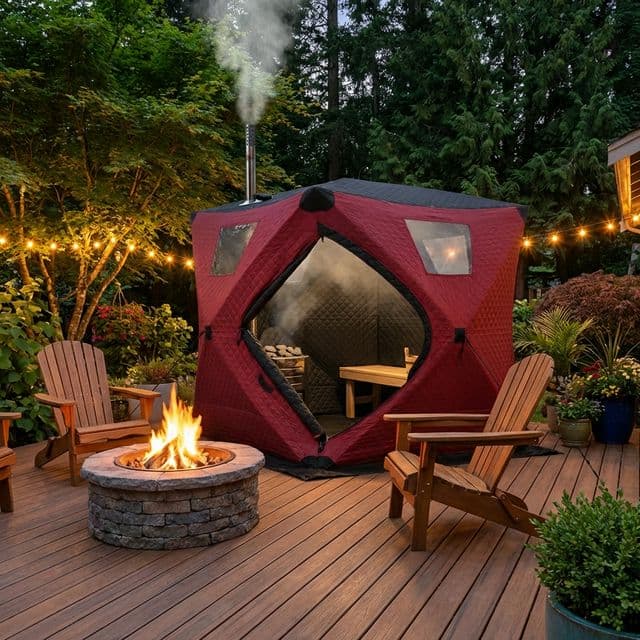
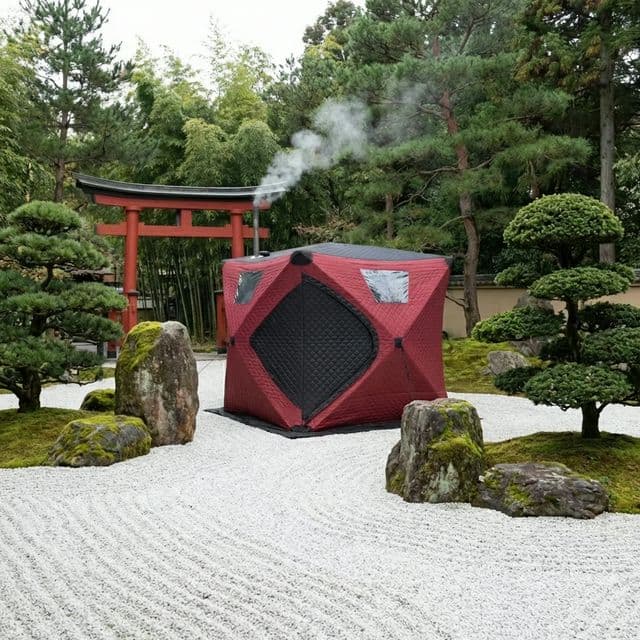
Use this path when installation friction and flexibility matter more than cabin permanence.
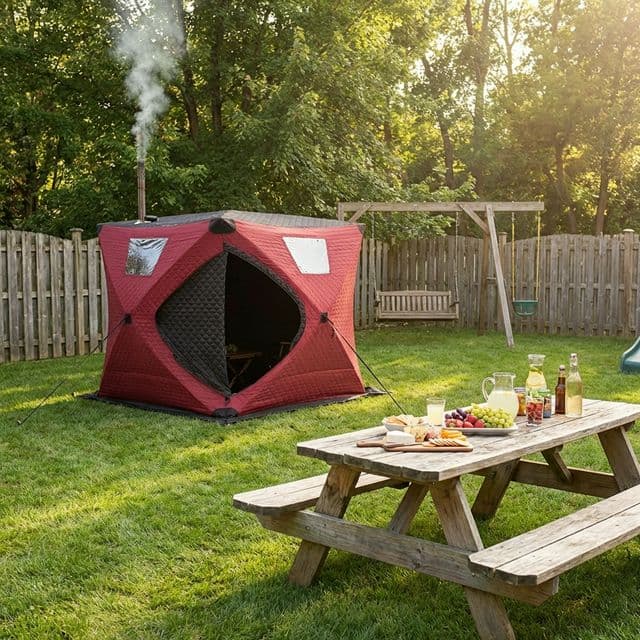
Balanced routine users usually benefit from stable weekly scheduling and moderate operating cost.
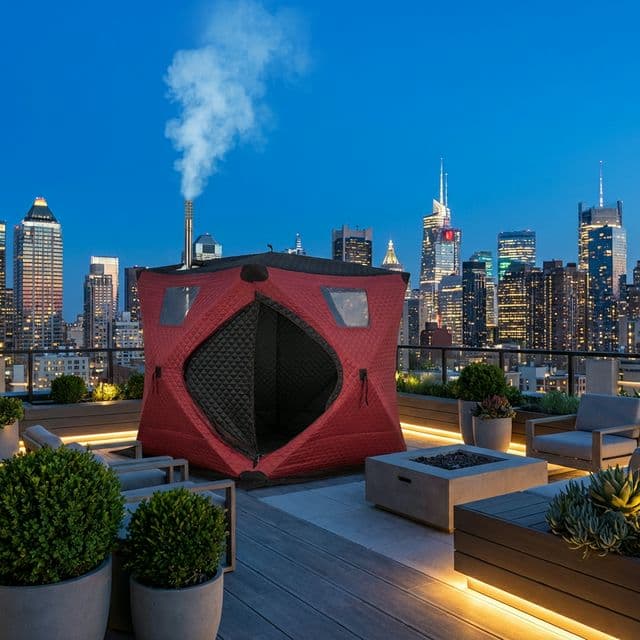
Higher-capacity upgrades should follow verified circuit headroom and ventilation plan.
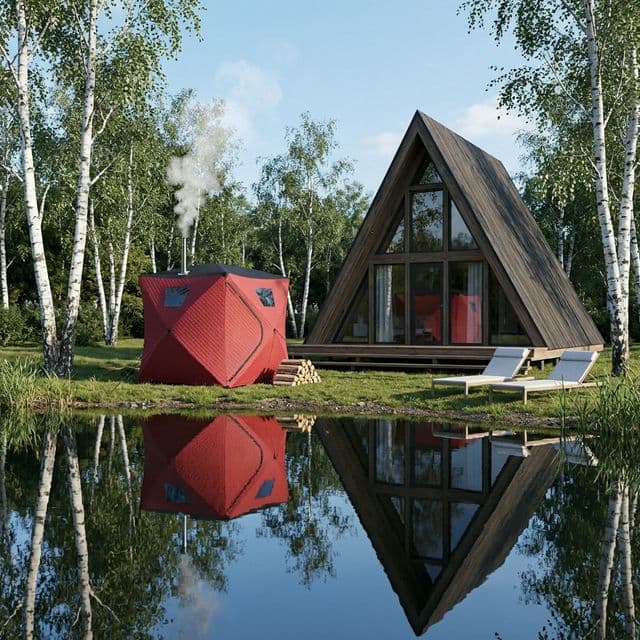
Related internal pages
Frequently asked decision questions
Send your shortlist for manual verification
Include tool inputs, desired budget tier, and candidate formats. We will help you verify electrical scope, risk boundaries, and final model-selection assumptions.