
How to Fold a Sauna Tent Safety Checker
Empty state
Fill the form and run the checker to get a model-aware fold sequence, risk boundary, and storage action list.
Tool-output to report verification bridge
Run the checker first. Then use this matrix to validate your result against the right sections before final storage.
Mobile tip: swipe horizontally to inspect all columns in tables.
| Tool status | Interpretation | Verify section | Next move |
|---|---|---|---|
| Ready to Fold | Heat and moisture boundaries are inside safe ranges and your selected frame path is likely executable now. | Fold comparison + risk matrix + FAQ | Run the protocol top-to-bottom and email your result summary for a final model-level check. |
| Dry-First Boundary | At least one blocker is unresolved (usually damp fabric, missing manual detail, or tight timeline). | Gap audit + boundaries + known vs unknown | Correct the blocker first, then rerun the checker before any long-term storage. |
| Stop and Cool | Folding now likely increases injury or damage risk because heat-state and moisture conditions are not yet safe. | Risk matrix + scenario lab + safety FAQ | Pause immediately and follow the cooldown sequence before touching frame fold points. |
Stage1b research-enhance gap audit
This pass focuses on evidence quality, boundary clarity, and decision utility. All rows below reflect concrete additions, not synonym rewrites.
Mobile tip: swipe horizontally to inspect all columns in tables.
| Gap area | Before | Stage1b enhancement | Status |
|---|---|---|---|
| Source quality on fold sequence | Generic blog-style fold advice without model-manual anchors caused low trust and unclear step order. | Upgraded core protocol to manual-derived steps (Nordik owner manual) and explicitly labeled lower-confidence generic guidance. | Closed |
| Boundary conditions and counterexamples | No explicit fail conditions for hot steamer state, sub-50°F operation, or enclosed fuel-heater misuse. | Added hard-stop boundaries with source-backed triggers from CDC/CPSC and manufacturer notes. | Closed |
| Decision tradeoffs | Users had no structured comparison between fast fold, dry-first fold, and model-specific disassembly paths. | Added fold-method comparison table with applicable conditions, counterexamples, and practical fallback actions. | Closed |
| Evidence uncertainty disclosure | No explicit statement for missing public reliability datasets on seam/fold-cycle failure rates by brand. | Introduced a known-vs-unknown section and marked unsupported claims as pending confirmation instead of false precision. | Closed |
Decision-grade conclusions
Published March 3, 2026. Last updated March 3, 2026 (stage2 seo-geo closure pass). Each conclusion ties to a source with explicit date context. Review cadence: rerun this page every 6-12 months or sooner when safety guidance changes.
Manual signal: steam unit warmup is 3-6 minutes, but maintenance/folding starts only after complete cooldown
Manual workflow requires turning off, unplugging, draining residual water, and waiting for complete cool-down before cleaning or packing.
Source: Nordik Portable Sauna owner manual PDF (support article updated April 4, 2025; checked March 3, 2026).
EPA baseline: dry wet areas within 24-48 hours; indoor RH should stay below 60% (ideally 30%-50%)
Packing damp fabric increases mold, odor, and coating damage risk. Fold decisions should be linked to moisture checks, not only convenience.
Source: EPA mold guidance (last updated February 18, 2026) + Nordik storage section.
REI tent-care guidance: long-term loose storage outperforms tight stuff-sack compression
A compact travel fold may be acceptable for transport, but long-term storage should prioritize loose-bag breathing and tension relief.
Source: REI Expert Advice: How to Store a Tent (checked March 3, 2026).
CDC: each year >400 unintentional non-fire CO deaths, >100,000 ED visits, >14,000 hospitalizations
CPSC specifically warns against portable heaters/lanterns/stoves in enclosed tents and campers. Electric-only enclosed workflows are the safe baseline.
Source: CDC Carbon Monoxide Poisoning Basics (reviewed January 12, 2026) + CPSC Portable Heaters & Camping Equipment center.
Model FAQ boundary: avoid outdoor operation below 10°C / 50°F
Sub-50°F sessions can reduce thermal performance and increase condensation-related pack-down complexity. Move to a ventilated indoor staging area before final fold.
Source: Nordik portable sauna FAQ (updated November 5, 2025; checked March 3, 2026).
No reliable public dataset yet: national fold-cycle failure rates by sauna tent frame type
Public sources provide safety rules and incident counts, but not denominator-normalized fold-damage rates by brand/material. Treat lifespan claims as directional.
Source: Known-unknown register refreshed March 3, 2026.
New facts and time-stamped data points
Mobile tip: swipe horizontally to inspect all columns in tables.
| Dimension | Value | Decision implication | Source |
|---|---|---|---|
| Steamer rated power | 1,500 W (110-120V household class) | High-watt load means outlet quality, cooldown discipline, and wire routing are non-trivial safety factors. | Nordik owner manual technical data (checked March 3, 2026). |
| Warmup window | 3-6 minutes to begin steam output | Users who finish a session quickly may underestimate remaining heat in generator and pipes before fold prep. | Nordik owner manual operation section (checked March 3, 2026). |
| Mold prevention window | Dry wet materials within 24-48 hours | If you cannot complete dry-down soon, treat fold as temporary transport only and reopen for ventilation immediately. | EPA mold guide (updated February 18, 2026). |
| Humidity boundary | Indoor RH below 60%, ideally 30%-50% | Storage room humidity should be measured when possible, otherwise mold risk assumptions are weak. | EPA mold guide (updated February 18, 2026). |
| CO burden (U.S.) | >400 deaths/year, >100,000 emergency visits, >14,000 hospitalizations | Any enclosed fold workflow that introduces fuel-burning heat is a reject condition, not a "maybe" tradeoff. | CDC CO poisoning basics (January 12, 2026). |
| Generator placement rule | Operate >20 feet away from windows, doors, and vents | If fold/staging happens near backup-power equipment, site layout must prevent exhaust migration toward indoor spaces. | CDC CO poisoning basics (January 12, 2026). |
| Example folded footprint | 180 x 80 x 26 cm (model-specific FAQ example) | Storage planning should use your exact model dimensions; do not assume all tents collapse to this profile. | Nordik portable sauna FAQ (updated November 5, 2025; checked March 3, 2026). |
Fold-path comparison with counterexamples
Mobile tip: swipe horizontally to inspect all columns in tables.
| Method | Works when | Fails when | Counterexample / limit | Next action |
|---|---|---|---|---|
| Quick-fold C-tube path | Model uses foldable C-tube joints and steamer is cool + disconnected. | Hot steamer, attached hoses, or forced one-side collapse causes asymmetry and joint stress. | If your model is not a C-tube architecture, this sequence can damage frame geometry. | Use manual-confirmed joint map before first fold cycle. |
| Pole-frame reverse disassembly | Fabric is dry and poles can be collapsed center-to-end without snagging cover tension. | Poles are collapsed from one end repeatedly; shock-cord tension becomes uneven over time. | Travel-only quick compression works short term but is weak for long-term storage. | Break down in reverse setup order and use loose-bag storage for multi-day downtime. |
| Rigid/semi-rigid panel breakdown | Product manual treats it as disassembly transport rather than true foldable tent behavior. | User attempts to bend panel edges to imitate a soft-tent fold pattern. | Some marketing pages call products "foldable" but actual manual requires panel separation. | Treat as panel-kit transport; protect edges and label panel order. |
| Fast transport fold (same-day move) | Move time is short and tent can be reopened within hours for complete dry-out. | Packed unit stays closed overnight while still damp. | A "quick fold and forget" pattern is where mildew and coating breakdown typically start. | Schedule a reopen + ventilation window on the same day. |
| Long-term storage fold | Fabric and accessories are fully dry, bag is breathable, and storage area is cool + dry. | Stored in hot trunk, humid basement, or tightly compressed sack for weeks. | Clean fold lines do not guarantee material health if humidity remains high. | Use humidity-aware storage and periodic check intervals. |
Concept boundaries and applicable conditions
Mobile tip: swipe horizontally to inspect all columns in tables.
| Condition | Applies when | Do now | Avoid | Source |
|---|---|---|---|---|
| Steamer or hose still warm/hot | Any heat source remains above safe touch level | Stop folding, unplug, drain residual water, and wait for full cooldown. | Do not detach pipes or collapse frame while heat is active. | Nordik owner manual maintenance section. |
| Fabric is damp or wet | Visible moisture, cool clammy feel, or condensation near seams | Wipe dry, ventilate, and keep tent open until full dryness before overnight storage. | Do not seal in carry bag for multi-day storage. | EPA mold guidance + Nordik storage instructions. |
| No model-specific instructions available | Only generic videos/blogs are available for your model | Run low-force partial fold and request official fold diagram from support. | Do not force unknown hinge paths or twist geometry. | Manual-dependency audit, stage1b evidence policy. |
| Outdoor temperature below 50°F | Cold-weather breakdown or winter transport staging | Move to a sheltered, ventilated indoor area before final pack-down. | Do not rely on outdoor quick fold as final storage in freezing conditions. | Nordik FAQ temperature boundary. |
| Fuel-burning heater considered for enclosed tent use | Camping heater/lantern/stove planned near enclosed fold area | Reject the setup. Keep enclosed workflows electric-only and CO-alarm protected. | Never sleep with portable fuel-burning heaters in enclosed tents/campers. | CPSC portable heaters & camping equipment + CDC CO basics. |
Tool methodology and explainability
Normalize frame type, moisture state, heat state, storage horizon, and time constraints before scoring.
Output: Clean input vector with boundary validation.
Hard-stop rules run before convenience scoring. Hot-state and enclosed fuel-heater misuse auto-trigger stop pathways.
Output: Readiness band: Ready / Dry-first / Stop.
Map to frame-specific fold sequence and attach source tags to each critical motion.
Output: Actionable fold checklist with source references.
If evidence is generic or model-specific manual is missing, confidence is downgraded and fallback path is mandatory.
Output: Confidence label + explicit unknowns.
Evidence ledger with dates and confidence labels
Mobile tip: swipe horizontally to inspect all columns in tables.
| Source | Date / freshness | How used | Confidence |
|---|---|---|---|
| Nordik Recovery Portable Sauna Owner Manual (PDF)Open source | Support article updated April 4, 2025 (checked March 3, 2026) | Used for cooldown-before-maintenance rule, foldable C-tube sequence, dry-before-storage rule, and 1,500W electrical context. | High (manufacturer primary manual) |
| Nordik Recovery Portable Sauna FAQOpen source | Updated November 5, 2025 (checked March 3, 2026) | Used for below-50°F outdoor boundary and model-specific folded footprint examples. | Medium-high (manufacturer support FAQ) |
| EPA: A Brief Guide to Mold, Moisture and Your HomeOpen source | Last updated February 18, 2026 | Used for 24-48h dry window and humidity threshold (<60%, ideally 30%-50%). | High (.gov guidance) |
| CDC: Carbon Monoxide Poisoning BasicsOpen source | Last reviewed January 12, 2026 | Used for national burden metrics and 20-foot generator placement boundary. | High (.gov public-health guidance) |
| CPSC: Portable Heaters & Camping EquipmentOpen source | Checked March 3, 2026 (page date not explicitly shown) | Used for explicit warning against fuel-burning heaters/lanterns/stoves in enclosed tents and campers. | High (.gov safety center) |
| CPSC press release: Keep Warm and Safe This Winter (Release 26-217)Open source | January 23, 2026 | Used for extension-cord warning on space heaters and supporting annual fire/injury context. | High (.gov newsroom release) |
| REI Expert Advice: How to Store a TentOpen source | Checked March 3, 2026 (publication date not clearly surfaced) | Used for loose-storage recommendation and center-to-end pole breakdown practice. | Medium (expert retail guidance, non-regulatory) |
| CPSC Carbon Monoxide Information CenterOpen source | Checked March 3, 2026 | Used for consumer-product CO death baseline context and alarm placement reminders. | High (.gov safety center) |
Risk and tradeoff matrix
Mobile tip: swipe horizontally to inspect all columns in tables.
| Risk | Trigger | Impact | Mitigation | Evidence |
|---|---|---|---|---|
| Burn/scald during fold | Steamer still hot, hoses still pressurized, or user reaches into steam path too early. | Injury + rushed fold + damaged connectors. | Cool-down gate first, then detach/empty sequence before any frame movement. | Nordik owner manual. |
| Mold and odor after storage | Tent packed damp or stored in humid room for days. | Material degradation, smell, and potential health irritation. | Dry within 24-48h, monitor humidity, and prefer breathable long-term storage. | EPA mold guide + REI tent storage guidance. |
| Frame fatigue from forceful folds | Wrong fold geometry or repetitive hard crease with non-matching frame architecture. | Warped joints, reduced stability, and setup failures. | Use model manual path and rotate fold stress points when possible. | Manufacturer manual + uncertainty disclosure. |
| CO poisoning from fuel appliances | Portable camping heater, lantern, or stove used in enclosed tent/camper workflow. | Severe illness or death risk. | Reject fuel-burning enclosed setups; use electric-only indoor workflow with CO alarms. | CPSC camping-equipment safety guidance + CDC CO basics. |
| Electrical overload/fire | High-watt heater on extension cord/power strip or damaged outlet. | Fire risk and unstable heating. | Prefer direct wall outlet and electrician review for uncertain circuits. | CPSC release 26-217 + manufacturer electrical notes. |
| False confidence from missing data | Assuming generic lifespan or failure rates apply to every tent model. | Overconfident maintenance schedule and delayed intervention. | Track your own fold-cycle logs and treat market-wide precision claims as provisional. | Known unknown: no public normalized fold-failure dataset. |
Need a model-specific fold checklist?
Send your tool result, frame type, and storage constraints to [email protected] for a manual fold-path confirmation before your next pack-down.
Scenario lab: assumptions, process, outcomes
Premise: C-tube frame, steamer warm, fabric slightly damp, 18 minutes available, long-term storage planned.
Process: Tool returns Dry-first boundary. User adds 20-minute cooldown and reopen ventilation period before final bagging.
Outcome: Damage risk reduced by converting rushed single-pass fold into staged cooldown + dry workflow.
Premise: Ambient 34°F, damp seams, user wants immediate vehicle storage overnight.
Process: Boundary note triggers due to sub-50°F context and moisture state. User relocates to ventilated garage for dry reset.
Outcome: Avoids cold-weather moisture lock-in and reduces mildew probability.
Premise: User has second-hand tent with unknown frame architecture and generic video only.
Process: Tool confidence drops to low and recommends minimal-force partial fold + support verification.
Outcome: Protects against irreversible frame damage from mismatched fold geometry assumptions.
Known vs unknown register
Where evidence is incomplete, this page labels uncertainty directly instead of fabricating precision.
Mobile tip: swipe horizontally to inspect all columns in tables.
| Item | Known | Unknown | Status |
|---|---|---|---|
| Public fold-cycle failure rates by sauna tent brand | Manuals specify safe handling rules, but do not publish normalized long-horizon breakage rates. | National denominator-based reliability dataset. | Pending confirmation / no reliable public dataset yet |
| Material life impact of repeated quick-fold compression | Tent-care guidance warns against long-term tight compression and damp storage. | Cross-brand lab dataset quantifying seam/coating life delta by storage method. | Insufficient public evidence |
| CO detector placement compliance in sauna tent users | CDC/CPSC provide alarm placement and fuel-device boundaries for homes/camping contexts. | Adoption rate among portable sauna tent owners in real-world home use. | Insufficient public evidence |
| Model-specific folded dimensions across the market | Some manufacturers disclose folded footprint examples. | Comprehensive standardized registry for all tent models and frame variants. | Pending confirmation |
Update and freshness policy
| Rule | Cadence | Owner |
|---|---|---|
| Regulatory/health safety sources | Quarterly or after major weather/safety advisories | Content + research |
| Manufacturer manual and FAQ links | Monthly broken-link and revision scan | Product operations |
| Tool boundary thresholds | When new high-confidence source changes baseline | Tool logic maintainer |
| Known-unknown register | Every stage1b and stage1c pass | OpenSpec change owner |
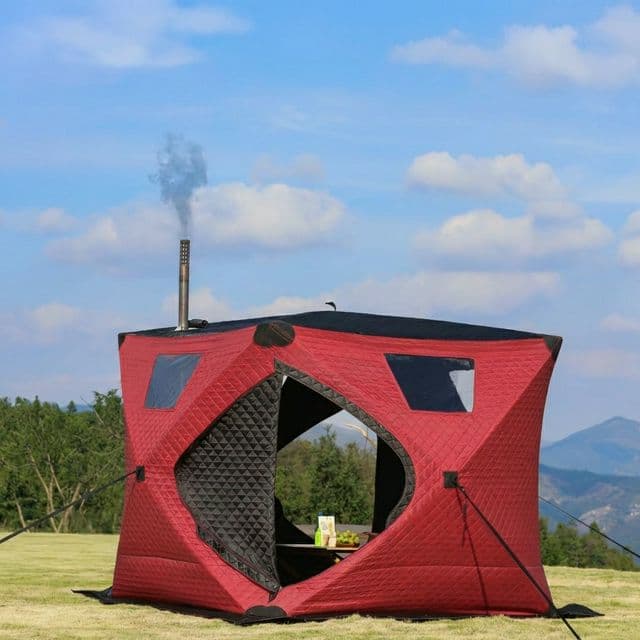
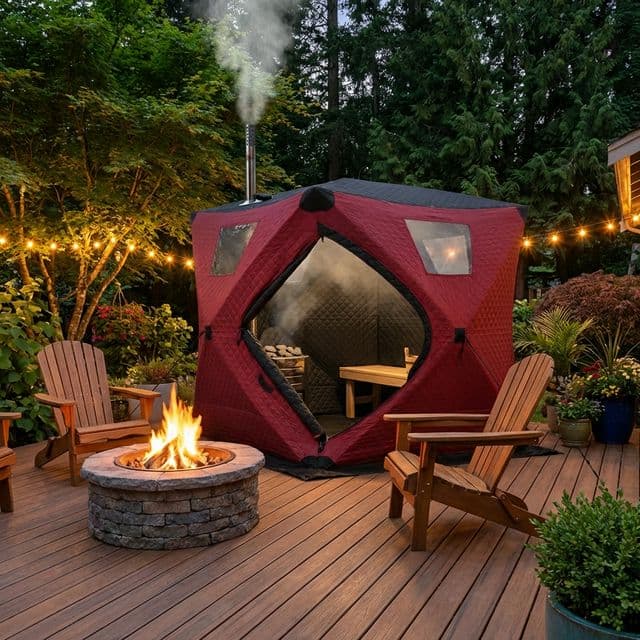
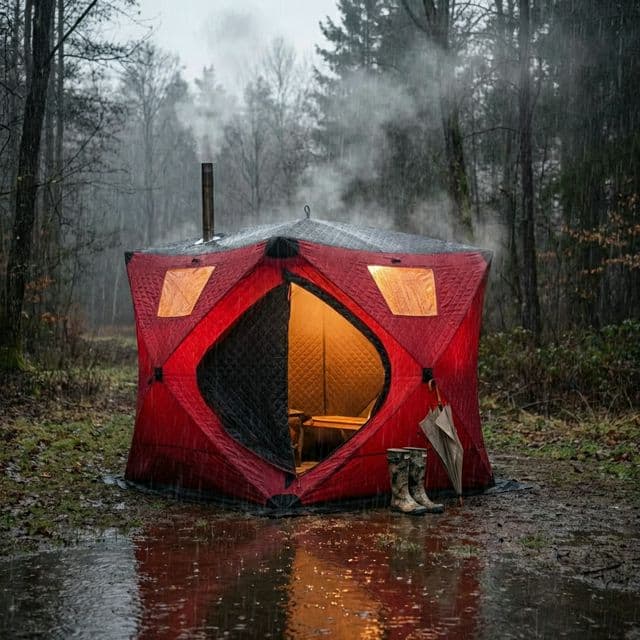
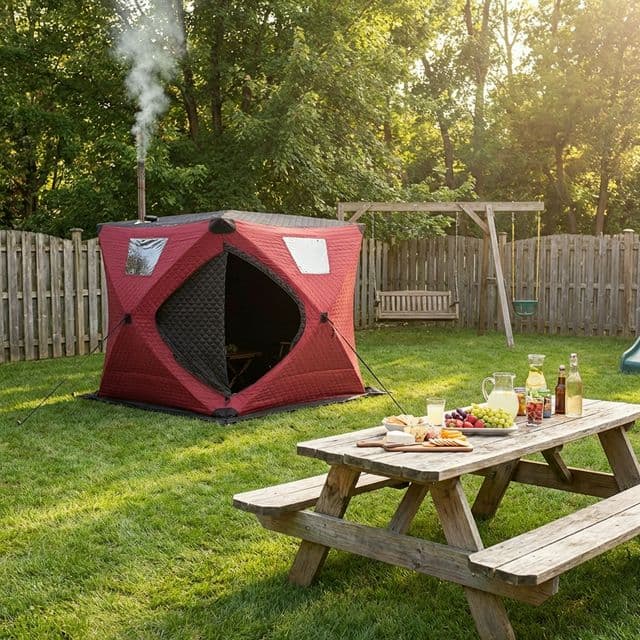
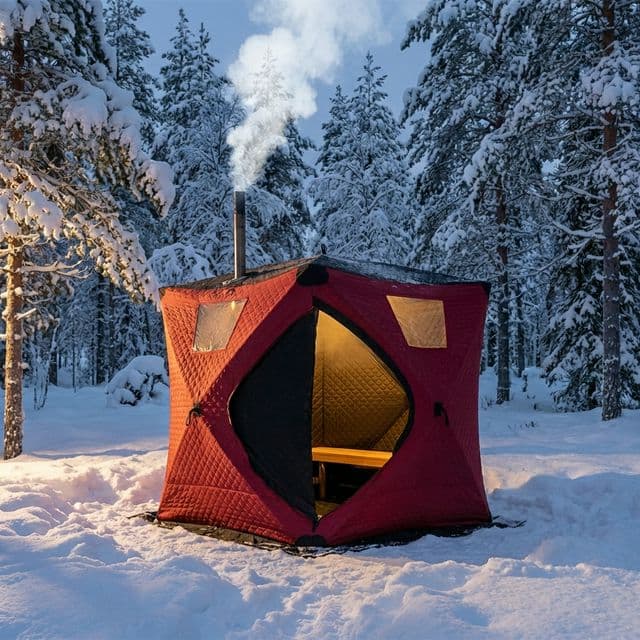
Visual fold and storage contexts
FAQ by decision intent
Ready to lock your fold SOP?
Send your frame type, moisture state, and tool output to [email protected]. We will return a model-specific fold checklist and risk notes before your next storage cycle.