
Indoor Sauna Tent Readiness Planner
Result states are decision aids, not permit or medical clearance. Confirm local code and personal health boundaries before heat escalation.
Include room dimensions, panel details, and planner score for faster review.
Tool output to report bridge
Map each planner state to the exact report modules you should verify next. This keeps execution fast without skipping due diligence.
Mobile tip: swipe horizontally to see all comparison columns and evidence notes.
| Planner status | Interpretation | Verify in report | Immediate next move |
|---|---|---|---|
| Ready to Compare Models | Room envelope, circuit headroom, and humidity controls look stable enough to move from feasibility to purchase shortlist. | Key numbers + evidence + comparisons | Email support with two target tent classes plus photos of your outlet and ventilation path for final confirmation. |
| Conditional Plan | One or more indoor boundaries remain thin (usually power sharing, moisture exit, or budget floor). | Fit boundary + risk matrix + scenarios | Close the highest-impact gap first, then rerun with conservative assumptions before paying deposits. |
| Not Ready Yet | Current inputs indicate a high probability of safety misfit, avoidable rework, or buyer regret. | Risk matrix + known vs unknown + FAQ safety group | Pause spend and request a staged indoor-safe pathway via support email. |
Executive summary: seven conclusions that change decisions
This section translates tool mechanics into decision language with dated evidence context and explicit uncertainty markers.
CDC reports >400 U.S. CO deaths, >100,000 emergency visits, and >14,000 hospitalizations each year
Any indoor workaround involving fuel-burning camp heaters, stoves, grills, or generators is a hard stop. Even with electric setups, CO detectors near sleeping areas remain a practical household safeguard.
CDC carbon monoxide poisoning overview (updated January 12, 2026), checked March 3, 2026.
EIA December 2025 residential average: 17.24 cents/kWh (released February 24, 2026)
Indoor tent sessions look cheap at headline wattage, but monthly utility baselines still shift. The same EIA update package shows state-level retail spreads that materially change cost outcomes.
EIA Electricity Monthly Update archive (February 2026 issue with December 2025 data package).
CPSC estimates ~1,600 annual fires, 70 deaths, and 160 injuries tied to portable electric heaters (2019-2021 average)
Indoor heat appliances should plug directly into wall outlets, stay away from extension cords/power strips, and keep at least 3 feet of clearance from combustibles. These rules reduce preventable overload and ignition risk.
CPSC home heating safety release (published January 22, 2025), checked March 3, 2026.
EPA and ENERGY STAR guidance converge on keeping indoor RH below 55% (30%-50% ideal range)
If post-session humidity repeatedly stays high, you need a stronger exhaust routine or dehumidification plan. ENERGY STAR notes certified dehumidifiers use nearly 20% less energy than standard units under the 2025 specification.
EPA mold/moisture guidance + ENERGY STAR dehumidifier guidance (spec effective October 1, 2025), checked March 3, 2026.
CDC clinician heat-medication guidance last reviewed September 18, 2025
Medication combinations, prior heat intolerance, and pregnancy-related limits can override an otherwise good room score. Escalate slowly and use clinician-informed boundaries.
CDC Heat and Medications guidance for clinicians checked March 3, 2026.
Recall 26-036: 65 incidents / 32 burns / ~78,000 units; Recall 26-040: 7 incidents / 1 injury / ~1,120 units
Raw incident counts alone can overstate or understate relative risk. Use both incident severity and recalled-unit counts, then still demand listing and warranty evidence before checkout.
CPSC recall notices 26-036 and 26-040 (both issued October 23, 2025), checked March 3, 2026.
Unknown: regulator-grade US failure-rate and install-cost benchmark dataset
Incident counts are useful, but installed-base denominator data is still missing. This page flags unknowns directly instead of presenting false precision.
Evidence gap log refreshed March 3, 2026.
Score-band interpretation for action speed
- 75-100: shortlist and sequencing can proceed, but keep recall and permit checks active.
- 54-74: treat as conditional; close one high-impact gap before spending heavily.
- 0-53: pause purchase path and execute minimum upgrade path first.
Key numbers with dated baselines
Numeric statements include context and source date so cost, safety, and moisture assumptions stay auditable.
US residential electricity baseline
Use as the neutral planning anchor before substituting your local utility rate.
Source: EIA EMU archive February 2026 issue (December 2025 key indicators)
Utility-rate spread
Same EIA data package shows a wide Lower-48 spread (North Dakota to California), so cost projections need ranges, not one-number promises.
Source: EIA EMU December 2025 table package (state retail price spread)
Portable-heater fire baseline
CPSC safety guidance uses these averages (2019-2021) to justify strict outlet and clearance rules for indoor heating appliances.
Source: CPSC home heating safety release (published Jan 22, 2025)
Power-path rule
CPSC recommends direct wall-outlet use, no power strips, and no unattended operation while sleeping.
Source: CPSC home heating safety release and winter storms release
Exhaust baseline
Cross-check with 20 cfm continuous option when using always-on ventilation strategy.
Source: DOE/PNNL BASC bathroom fan guide citing IRC M1507 + ASHRAE 62.2
Indoor humidity target
EPA and ENERGY STAR both position humidity control as core mold prevention; if RH remains high, add better exhaust or dehumidification.
Source: EPA mold guidance + ENERGY STAR dehumidifier guidance
CO burden marker
Even electric-only workflows should keep household CO alarms active as a baseline indoor safety layer.
Source: CDC carbon monoxide overview (updated Jan 12, 2026)
Heat safety refresh
CDC clinician guidance highlights medication interactions and warns against abrupt medication changes on hot days.
Source: CDC Heat and Medications guidance for clinicians
Recent recall signal
Lifepro recall 26-036 adds denominator context for burn-risk screening instead of incident counts alone.
Source: CPSC Recall 26-036 (issued Oct 23, 2025)
Second recall comparator
Sauna360 recall 26-040 shows structural-failure risk can differ by product class and unit count.
Source: CPSC Recall 26-040 (issued Oct 23, 2025)
Stage1b gap audit and evidence upgrades
This pass targets weak-evidence zones from the previous version and records what was fixed versus what is still uncertain.
Mobile tip: swipe horizontally to see all comparison columns and evidence notes.
| Gap found | Decision risk | Stage1b enhancement | Status |
|---|---|---|---|
| Electrical misuse boundaries were not explicit enough | Users can overfocus on wattage and ignore extension-cord, clearance, and unattended-operation hazards. | Added CPSC-backed electrical behavior boundaries (direct wall outlet, 3-foot clearance, no sleep/unattended use) across conclusions, boundaries, risk matrix, and FAQ. | Closed in stage1b deep pass (Mar 3, 2026) |
| Utility-rate baseline was stale | Old baseline rates can understate monthly ownership cost and mislead budgeting. | Updated key numbers and evidence ledger to EIA February 2026 release data (December 2025 baseline and state spread). | Closed in stage1b deep pass (Mar 3, 2026) |
| Moisture-remediation tradeoffs were underexplained | Users may under-budget ventilation/dehumidification effort and abandon routines after week two. | Added EPA + ENERGY STAR humidity thresholds and dehumidifier-efficiency context so moisture control appears as an explicit cost/effort tradeoff. | Closed in stage1b deep pass (Mar 3, 2026) |
| Recall comparisons lacked denominator context | Public recall counts can be misread as full reliability benchmarks without denominator context. | Added recalled-unit counts beside incident counts and kept a visible warning that this is still not a full failure-rate benchmark. | Closed in stage1b deep pass (Mar 3, 2026) |
| No public indoor-sauna-tent denominator dataset | Users may still mistake directional evidence for complete reliability benchmarking. | Kept this gap explicitly open in known-vs-unknown register and comparison caveats; marked as pending until regulator-grade data exists. | Open: pending reliable public dataset (as of Mar 3, 2026) |
Who this page is for (and not for)
Fit boundaries prevent overconfident decisions by separating viable scenarios from high-friction scenarios before purchase.
Mobile tip: swipe horizontally to see all comparison columns and evidence notes.
| Profile | Typical signs | Risk if ignored | Recommended path |
|---|---|---|---|
| Likely fit profile | Dedicated 20A outlet, timed ventilation, clear dry-out routine, and realistic weekly cadence. | Skipping recall and listing checks can still introduce avoidable risk despite good infrastructure. | Proceed to shortlist + recall/warranty verification, then request a final support review. |
| Conditional fit profile | Room and budget can work, but one gate (power sharing, vent runout, or humidity control) is weak. | Likely rework costs and timeline slips after purchase commitment. | Fix the highest-risk boundary first, then re-run with conservative assumptions. |
| Not-fit-right-now profile | Fuel-heater indoor plan, overloaded shared circuit, or high-risk health profile without screening. | Elevated probability of safety incidents, forced returns, or early abandonment. | Pause spend and use lower-risk alternatives while core constraints are resolved. |
Concept boundaries, counterexamples, and applicability
Each boundary below defines where a conclusion applies, where it can fail, and the minimum next action to reduce decision risk.
Mobile tip: swipe horizontally to see all comparison columns and evidence notes.
| Boundary | Applies when | Counterexample / limit | Minimum next action |
|---|---|---|---|
| Electric-only indoor boundary | Any tent session happens in enclosed home space (bathroom, spare room, garage, apartment). | Fuel-burning heaters can be used outdoors in open-air contexts, but that condition does not transfer indoors. | Reject any fuel-burning workaround for indoor use and keep workflow electric-only. |
| Circuit-headroom boundary | Selected tent draw approaches branch capacity, especially on shared 15A lines. | A strong room score cannot compensate for negative electrical headroom. | Move to dedicated 20A or lower-load class before increasing cadence. |
| Outlet-path and clearance boundary | Any indoor setup uses a portable electric heating appliance in enclosed rooms. | A large room does not remove the risk created by extension cords, power strips, or combustibles near heat output. | Use direct wall-outlet power, keep at least 3 feet from combustibles, and reject cord-routing shortcuts. |
| Ventilation and humidity boundary | Weekly indoor sessions create repeat moisture load in walls, textiles, and corners. | Short sessions without a dry-out routine can still leave moisture accumulation over time. | Pair timed exhaust with post-session dry-out and keep RH inside EPA guidance range. |
| Unattended-operation boundary | Users plan late-night sessions, multitasking use, or run heat cycles while sleeping. | Short session duration does not eliminate overheat or confined-space hazard if operation is unattended. | Never run enclosed heating sessions while sleeping or away from the room; shut down and inspect before leaving. |
| Heat-risk profile boundary | User has a heat-sensitive profile, medication interactions, or pregnancy-related contraindication. | Absence of flagged conditions lowers risk, but hydration and pacing controls still apply. | Use conservative session ramp and clinician-informed plan instead of duration escalation by trial-and-error. |
| Code, landlord, and insurance boundary | Rental agreements, HOA rules, or insurance language restrict high-heat appliances indoors. | Online seller claims do not replace local property or policy constraints. | Confirm written permission/policy before purchase to avoid forced returns or denied claims. |
10-minute indoor preflight checklist
Run this checklist before sessions or purchases. It translates evidence-backed boundaries into pass/fail checks with minimum corrective actions.
Mobile tip: swipe horizontally to see all comparison columns and evidence notes.
| Checkpoint | Minimum pass condition | Fail signal | Minimum fix | Source marker |
|---|---|---|---|---|
| Power path discipline | Heater plugs directly into a wall receptacle; no extension cord or power strip in the heat path. | Power-strip chaining, extension-cord routing, or warm plug/cord touch after sessions. | Pause usage and move to direct-outlet routing before next session. | CPSC home heating safety release (Jan 22, 2025) + winter storms guidance (Dec 12, 2025). |
| Combustible clearance | At least 3 feet of clearance from curtains, towels, paper, furniture, and storage bins. | Textiles, cardboard, or clutter entering the 3-foot zone during setup or teardown. | Reposition tent and household items before activating any heat cycle. | CPSC home heating safety release (Jan 22, 2025) and related USFA heater guidance. |
| Humidity control loop | Post-session RH returns below 55% with timed exhaust and dry-out workflow. | RH stays elevated for prolonged periods, or recurring condensation appears on nearby finishes. | Extend fan runout, add moisture-removal steps, and evaluate dehumidification if drift persists. | EPA mold guidance + ENERGY STAR dehumidifier guidance (spec effective Oct 1, 2025). |
| CO and indoor-air baseline | Indoor workflow remains electric-only and household CO alarms are active near sleeping areas. | Fuel-burning workaround is proposed, or detector coverage/maintenance is unknown. | Block combustion devices for indoor use and verify detector placement/status before ongoing routines. | CDC carbon monoxide overview (updated Jan 12, 2026). |
| Recall and listing check | Model is screened against active recalls, listing marks, and written warranty/claim process. | No traceable listing evidence, unclear serial traceability, or unsupported seller warranty language. | Delay purchase and request traceable compliance documents before checkout. | CPSC recalls 26-036 and 26-040 + OSHA NRTL FAQ. |
Methodology and scoring logic
The planner combines five layers so output states are explainable, reproducible, and tied to actionable next steps.
Calculate available area against setup footprint plus clearance allowance for access and maintenance.
Output: Space ratio and base fit pressure
Match setup demand to existing circuit type and quantify positive or negative headroom.
Output: Circuit risk pressure
Combine tent humidity load, exhaust mode, and post-session dry-out discipline into a moisture risk score.
Output: Moisture-control confidence band
Estimate monthly and annual operating cost from warmup + session runtime with local rate sensitivity.
Output: Operating-cost range + budget delta
Blend fit, cost, and risk into a score band with an explicit primary action and fallback path.
Output: Ready / Conditional / Not Ready state
Flow summary: fit mechanics and risk mechanics are computed separately, then merged into a decision band to avoid single-metric bias.
Evidence ledger and source traceability
Core claims are linked to high-trust sources. If evidence is incomplete, this page labels that uncertainty explicitly.
Mobile tip: swipe horizontally to see all comparison columns and evidence notes.
| Claim focus | Source | Source date | Checked on | Decision value |
|---|---|---|---|---|
| US residential electricity baseline refresh for current cost modeling | EIA Electricity Monthly Update archive (February 2026 issue) | Release date February 24, 2026 (with data for December 2025) | March 3, 2026 | Refreshes the default electricity baseline from stale values and keeps cost scenarios tied to the latest published month. |
| US residential baseline value used in this planner (17.24 cents/kWh) | EIA December 2025 EMU data package (key indicators CSV) | Published with February 24, 2026 EMU release | March 3, 2026 | Provides an auditable numeric default for tool inputs before users replace it with their local tariff. |
| State spread reference used for scenario ranges (North Dakota 8.12; California 28.18) | EIA December 2025 EMU data package (table 2-2 CSV) | Published with February 24, 2026 EMU release | March 3, 2026 | Prevents false precision by forcing users to evaluate low/high utility-rate scenarios. |
| Bathroom exhaust baseline for indoor moisture-heavy routines | DOE/PNNL BASC bathroom exhaust fan guide | Accessed March 3, 2026 | March 3, 2026 | Documents the 50 cfm intermittent / 20 cfm continuous reference used in planning checks. |
| Indoor humidity target range for mold-risk control | EPA mold, moisture, and humidity recommendations | Updated December 1, 2025 | March 3, 2026 | Links tent-session routines to practical humidity boundaries in homes. |
| Humidity control tradeoff and dehumidifier efficiency boundary | ENERGY STAR certified dehumidifiers guidance | Updated January 7, 2026; specification effective October 1, 2025 | March 3, 2026 | Adds the <=55% RH operating target and confirms that efficient dehumidifiers can reduce energy penalty versus standard units. |
| Heat-risk protocol and medication-aware caution | CDC Heat and Medications guidance for clinicians | Last reviewed September 18, 2025 | March 3, 2026 | Adds medication-combination risk context (for example ACEi/ARB + diuretic) to pacing decisions. |
| Indoor electric-only safety baseline | CDC carbon monoxide poisoning overview | Updated January 12, 2026 | March 3, 2026 | Supports electric-only indoor planning and adds household detector guidance near sleeping areas. |
| Portable electric-heater fire and injury baseline for behavior rules | CPSC Home Heating Safety release | Published January 22, 2025 | March 3, 2026 | Adds explicit support for direct wall-outlet use, avoiding extension cords, and maintaining at least 3 feet of clearance. |
| Unattended confined-space heating hazard warning | CPSC Winter Storms and Extreme Cold safety release | Published December 12, 2025 | March 3, 2026 | Reinforces that unattended heating in confined spaces can create severe hyperthermia and fire risk. |
| Recall incident intensity (burn-hazard case) | CPSC Recall 26-036 (Lifepro Bioremedy Sauna Blankets) | Issued October 23, 2025 | March 3, 2026 | Quantifies burn-hazard severity with denominator context (~78,000 units recalled). |
| Recall incident intensity (structural failure case) | CPSC Recall 26-040 (Sauna360 Tylö Halmstad/Kiruna) | Issued October 23, 2025 | March 3, 2026 | Adds non-burn structural risk context with denominator context (~1,120 units recalled). |
| US product listing boundary for electrical safety claims | OSHA NRTL Program FAQ | Accessed March 3, 2026 | March 3, 2026 | Clarifies that CE marking alone is generally not accepted as U.S. listing evidence for workplace electrical products. |
Indoor sauna tent option comparison
Compare setup classes by modeled budget, operating burden, infrastructure demand, and evidence confidence to avoid mismatched purchase paths.
Mobile tip: swipe horizontally to see all comparison columns and evidence notes.
| Option | Install budget | Operating cost | Infrastructure demand | Best for | Watchouts | Evidence confidence |
|---|---|---|---|---|---|---|
| Compact indoor steam tent (1000W) | $220-$560 (planner band) | $4-$34 / month (modeled) | Low (often works on stable 120V lines) | First-time users validating adherence before larger spend | Lower insulation and narrower comfort envelope | Medium: power class is reproducible; market pricing is not a regulator dataset. |
| Balanced indoor steam tent (1500W) | $360-$980 (planner band) | $6-$56 / month (modeled) | Low-medium (best on dedicated 20A circuit) | Most indoor households balancing cost and comfort | Moisture control becomes non-negotiable at higher cadence | Medium: demand and fit are reproducible; lifespan varies by materials and use discipline. |
| Indoor infrared chair tent (1650W) | $680-$1,880 (planner band) | $7-$62 / month (modeled) | Medium (power + seat clearance + vent discipline) | Users preferring lower humidity with seated routines | Narrow posture flexibility and mixed product quality tiers | Medium-low: market claims vary and standardized third-party comparisons are limited. |
| Insulated family indoor tent (2200W) | $980-$2,860 (planner band) | $10-$88 / month (modeled) | Medium-high (dedicated circuit strongly recommended) | Multi-user households with high weekly usage consistency | Outlet stress and warm-up cost rise if power planning is weak | Medium-low: modeled costs are useful, but market reliability denominator is unknown. |
| Membership-first + occasional home use | $0-$1,000 (planner band) | $40-$240 / month (modeled) | Low home infrastructure; travel dependency | Renters, uncertain adherence, or unresolved indoor constraints | Recurring fee exposure and schedule friction | Low-medium: membership fees and travel burden vary by market and cadence. |
Risk matrix with mitigation and fallback
Every major risk includes trigger, impact, mitigation, and fallback so output states can be executed safely.
Mobile tip: swipe horizontally to see all comparison columns and evidence notes.
| Risk | Trigger | Impact | Mitigation | Fallback |
|---|---|---|---|---|
| Indoor combustion and CO risk | Fuel-burning heaters or generators considered for enclosed tent sessions | Acute safety hazard and severe injury/death exposure | Keep indoor workflows electric-only and reject combustion devices for enclosed use | Use outdoor/open-air setup classes only where combustion devices are designed and permitted |
| Extension-cord and power-strip overload risk | Using extension cords/power strips or routing cords under rugs for indoor heat sessions | Higher overload and ignition exposure, plus hidden cord damage that degrades over time | Use direct wall-outlet power and keep cords visible and undamaged | Pause use until outlet routing is corrected and electrical path is verified |
| Electrical headroom risk | Shared branch circuits with high concurrent load | Breaker trips, plug heating, or blocked routine adoption | Confirm circuit headroom before purchase and prefer dedicated 20A where possible | Downshift to lower-watt tent class and reduce session cadence temporarily |
| Clearance and unattended-operation risk | Combustibles inside 3-foot zone or heater left running while sleeping/away | Elevated fire and confined-space heat hazard, including severe overheat outcomes | Maintain 3-foot clearance and never run heated sessions unattended | Use supervised shorter sessions only after room layout and behavior controls are fixed |
| Moisture accumulation risk | Window-only ventilation with no repeatable dry-out routine | Condensation persistence, mold growth, and premature fabric/material wear | Pair timed fan runout with post-session wipe-down and humidity monitoring | Reduce weekly sessions and add dehumidification if RH remains above 55% |
| Health-boundary risk | Heat-sensitive profile or medication combinations without protocol screening | Heat intolerance events or unsafe session escalation | Use CDC clinician guidance, start conservative protocols, and seek clinician clearance when needed | Pause escalation and switch to lower-heat alternatives until cleared |
| Recall and quality-control risk | No pre-purchase check of CPSC recalls, warranty terms, or listing marks | Higher probability of unsafe products, poor support response, and avoidable returns | Check recalls, listing evidence, and warranty claim path before checkout | Delay purchase and use known supported alternatives while evidence is gathered |
| Execution-drift risk | Users skip teardown, dry-out, and storage routines after week 2 | Higher abandonment, odor/moisture issues, and reduced perceived value | Use a written post-session checklist and calendar cadence review every 2 weeks | Move to lower-frequency schedule or membership-first model |
Risk disclosure: this page is an implementation planning aid and does not replace local code interpretation, contractor scope design, or medical advice.
Scenario lab: four realistic planning paths
Use these scenarios to map your own household constraints and identify the minimum viable next step.
Premise: 8 x 9 ft spare room, dedicated 20A line, timed bath fan, weekly 4-session target, $1,100 budget.
Outcome: Often lands in Ready to Compare Models with manageable cost variance and low infrastructure friction.
Decision: Proceed with balanced 1500W class and lock a repeatable dry-out checklist before purchase.
Premise: Shared 15A branch, extension-cord routing to reach tent, no fan runout, launch target in two weeks.
Outcome: Scores Not Ready Yet because outlet-path misuse and moisture controls both violate minimum indoor safety boundaries.
Decision: Delay launch, move to direct wall-outlet routing, add timed exhaust, then rerun with conservative cadence.
Premise: Garage retrofit, dedicated 20A line, but only window ventilation and no humidity tracking.
Outcome: Usually lands in Conditional Plan because moisture controls lag behind electrical readiness.
Decision: Add inline fan and humidity meter before scaling to high-frequency usage.
Premise: 6 sessions/week, local rate above 24 cents/kWh, RH remains above 55% after sessions.
Outcome: Fit may be technically feasible but humidity remediation effort and operating-cost variance dominate confidence.
Decision: Reduce cadence, add dehumidification plan, and compare with membership-first fallback if moisture burden stays high.
Known vs unknown register
Separating known, partial, and unknown evidence helps avoid fake precision and improves decision quality.
| Evidence state | What we know | How to use in decisions |
|---|---|---|
| Known with usable confidence | Electricity-rate baseline, outlet/clearance safety rules, humidity thresholds, and recent CPSC recall notices have public source support. | Use these as hard guardrails for budget, airflow, and safety-check planning. |
| Partially known | Long-term durability varies by material quality, usage cadence, and teardown discipline; public comparability is fragmented. | Model maintenance with conservative buffers and verify installer workmanship controls. |
| Unknown / insufficient public evidence | No regulator-grade, denominator-based US dataset exists for indoor sauna tent failure rates, normalized ownership lifecycle cost, or insurer-claim outcomes by tent class. | Treat reliability and cost claims as provisional and demand written warranty/service evidence before checkout. |
Product visual deck (planning references)
Visual examples help compare footprint and context assumptions before finalizing installer scope.
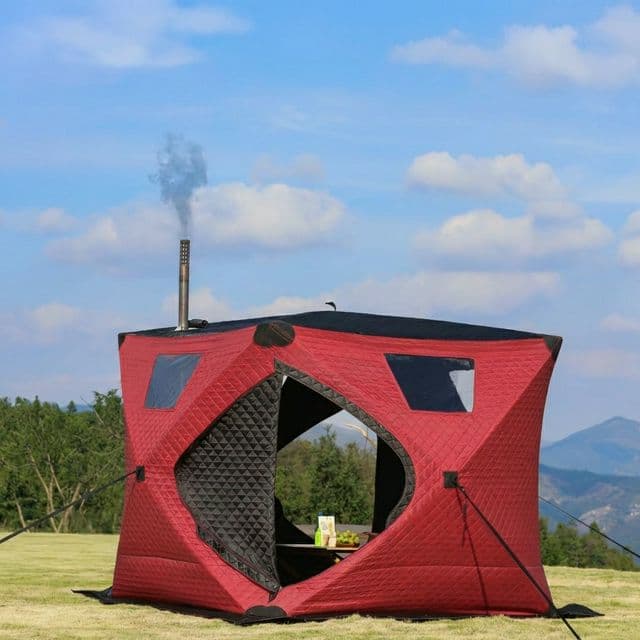
Indoor sauna tent clean setup reference for compact room planning
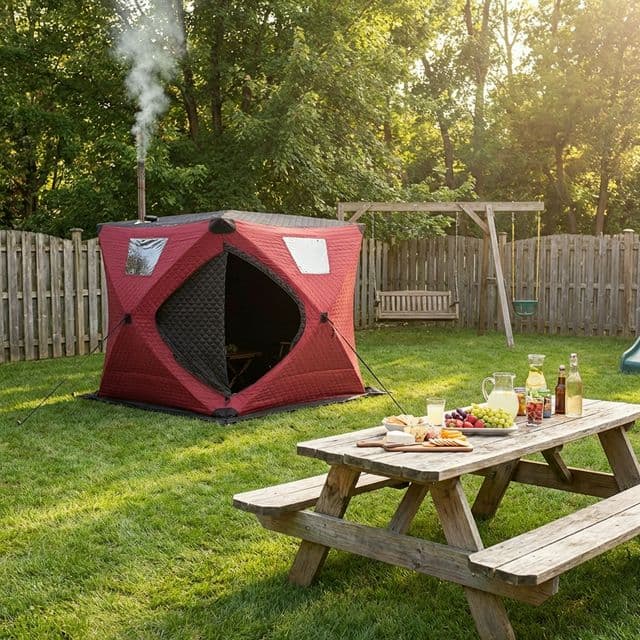
Family-scale tent format reference for multi-user indoor scheduling
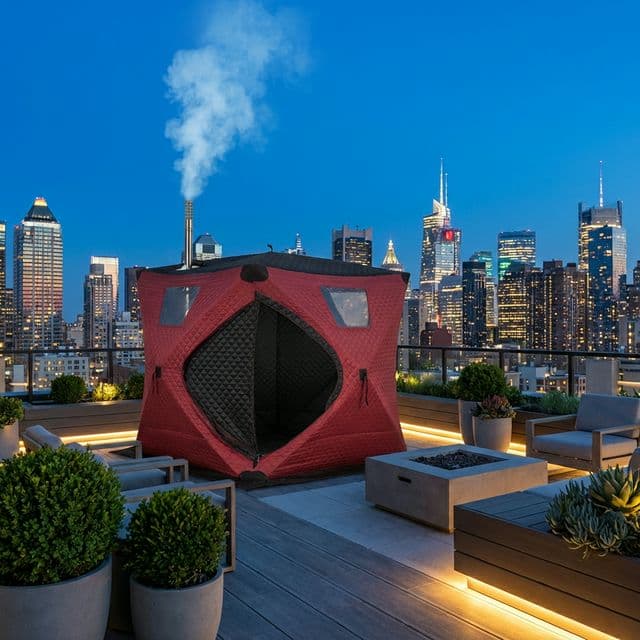
Urban footprint reference for constrained indoor-adjacent placements
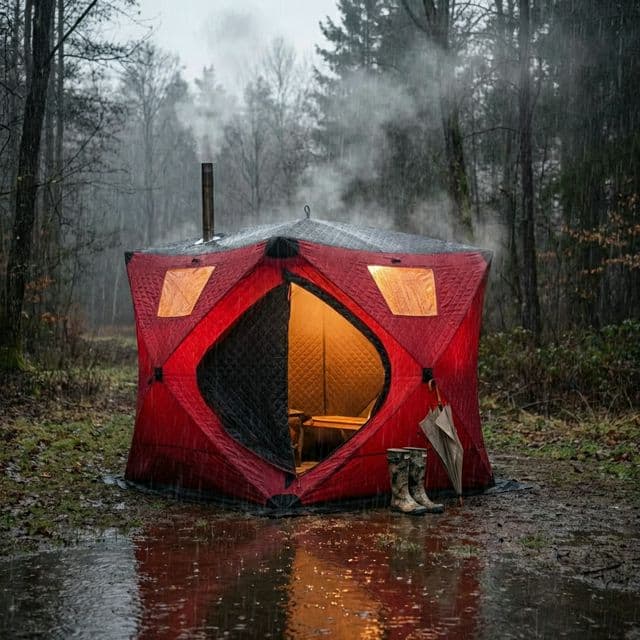
Moisture-heavy weather context reference for post-session dry-out planning
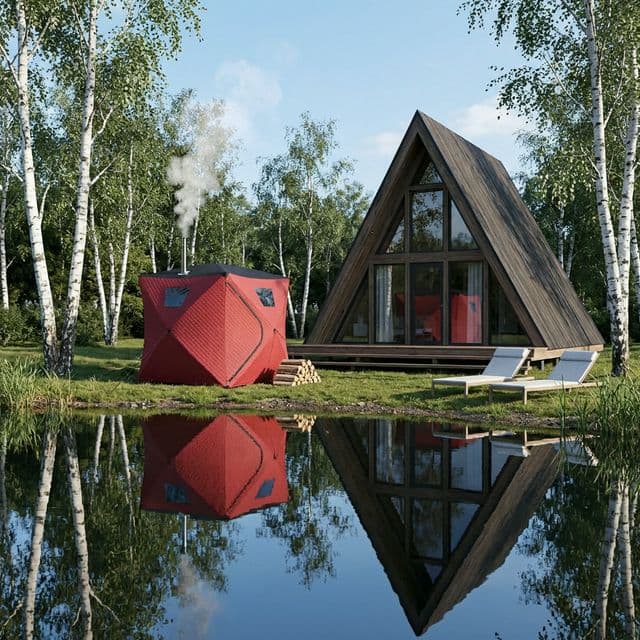
Cabin-style insulated tent reference for higher-comfort setups
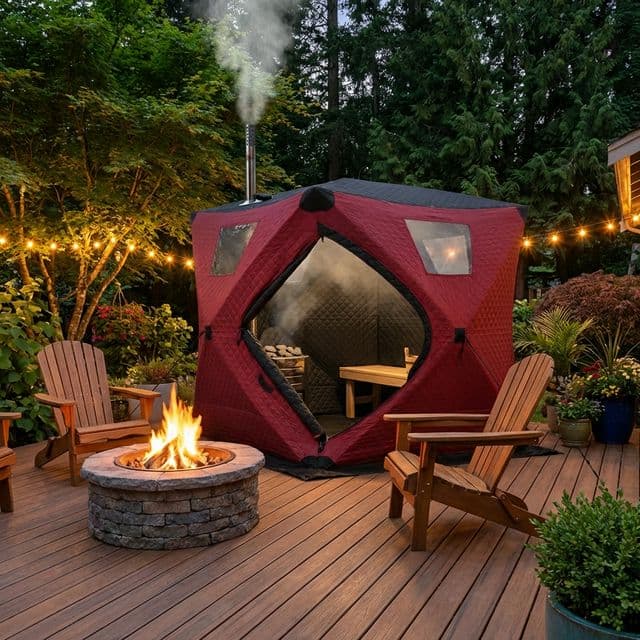
General tent sauna placement reference for entry-level setup comparisons
Need a manual review of your indoor sauna tent plan?
Send your tool status, room dimensions, panel details, and timeline. We reply with a practical sequence and fallback path.
FAQ: high-frequency decision questions
Questions are grouped by setup, safety, cost, and next-step decisions so users can move from uncertainty to action.
Indoor sauna tent next step
Use your planner status as the lead signal, verify the linked evidence and risk sections, then send your project constraints for a manual recommendation.
Report published: March 3, 2026. Last updated: March 3, 2026 (stage2 seo-geo closure pass: checklist re-audit + automation guard + launch gate verification). This page is informational and does not replace contractor, code, or medical guidance. Review cadence: refresh key assumptions every 6-12 months or whenever utility, code, or health constraints shift.