
Outdoor sauna tent checker for real-world setup, wind, and proof gaps
This tool does one thing first: tell you whether an outdoor sauna tent deserves a live shortlist now, needs a safer fallback, or should be paused until the operating boundary is fixed.
What the result returns
Immediate route decision first. Evidence verification lives in the report below.
This page keeps the dated source coverage added in stage1b for carbon-monoxide burden, heat-sensitive medications, pregnancy heat risk, moisture control, current vendor storm-storage guidance, and a portable tent-sauna misuse case report. The current stage2 pass refreshes the live SERP snapshot, hardens mobile tap targets in the tool/CTA path, and adds a route-level SEO guard so freshness and structural regressions are caught before release.
Review cadence: recheck this route every 6-12 months, or sooner if search-result mix, vendor manuals, or CDC / EPA boundary guidance changes materially.
Tool output to report verification bridge
The checker solves the transactional question first. The report below explains why the output is trustworthy, where the public web is thin, and when a different route is smarter than forcing an outdoor tent purchase.
Swipe horizontally on smaller screens to read every table column.
| Tool state | Immediate interpretation | Verify in report | Next move |
|---|---|---|---|
| Outdoor Ready | You have enough site, proof, and routine control to compare live listings instead of staying in generic browsing. | Key numbers, listing snapshot, route map, and evidence ledger. | Shortlist two kits, keep your assumptions fixed, and send your result to support for a manual second pass. |
| Weather Limited | The category can still work, but one operational boundary is too weak for a clean purchase decision. | Decision gates, risk matrix, scenarios, and known-vs-unknown register. | Fix the weak link first, then rerun the tool before you compare kits again. |
| Borrow Before Buy | Ownership is likely to create friction, but the format may still be worth testing before you commit capital. | Route map, listing snapshot, and scenario lab. | Test the format with a borrowed or rented setup, or downshift to the easier route first. |
| Do Not Run Yet | Medical or combustion boundaries are currently stronger than the shopping case. | Risk matrix, FAQ safety group, and evidence ledger. | Pause the purchase, close the blocker, and only then return to live listing comparison. |
Core conclusions and trust layer
This page exists to stop two common mistakes: treating a commerce-heavy SERP like trustworthy buying proof, and treating a portable outdoor tent like a permanent backyard sauna.
The first visible results are dominated by product pages, collections, and brand-owned listings, so the page must answer the shopping intent first.
The gap is almost always the outdoor operating stack: clearance, surface, anchoring, CO planning, storm storage, and a dry-out routine.
Some sellers now expose manuals, weather-storage rules, and heat claims; other listings still blend pack dimensions, heat-up language, and incomplete kit detail.
CDC and EPA boundary guidance now turns pregnancy, medication, CO planning, and wet-pack storage into explicit stop conditions rather than soft cautions.
Search pattern
Firecrawl web search for `outdoor sauna tent` on March 22, 2026 still showed purchase-led results near the top, with UGC, editorial, and video proof layers mixed in immediately after.
Visible price spread
Observed across the current open-web sample below, before outdoor-only accessory spend is added.
Published operating claim
SweatTent currently markets this on the flagship product page. Treat it as a vendor claim, not an independent winter performance guarantee.
Outdoor rule sample
One current operating guide states outdoor-only use with minimum clearance from structures and low-hanging branches.
SERP snapshot: what the buyer sees first
The commercial skew is why this is a hybrid page rather than a pure guide. The first question is route viability, not abstract history or culture.
Swipe horizontally on smaller screens to read every table column.
| Position | Result | Type | Role in buying journey |
|---|---|---|---|
| 1 | Portable Sauna Tent Packages | Commerce | Package and bundle browsing for outdoor tent buyers. |
| 2 | Sweat Tent product page | Commerce | Brand-owned flagship listing with strong heat and setup claims. |
| 3 | Reddit discussion thread | UGC | Community sentiment, not purchase-grade operating proof. |
| 4 | Outside Online backyard review | Editorial | Experience-based trust layer for the format. |
| 5 | Field Mag Sweat Tent review | Editorial | Hands-on commentary and material notes from a gear publication. |
| 6 | North Shore portable sauna tent video | Video | Shows how quickly the query moves from product pages into buyer-validation content formats. |
| 7 | Amazon WILLOWYBE Outdoor Sauna Tent Pro | Marketplace | Fast price and capacity signal, but proof depth depends on the listing. |
| 8 | Camping Sauna Tents portable sauna listing | Commerce | Confirms the query still closes on shopping pages even after editorial and UGC results enter the set. |
Key numbers that actually change the purchase
These are the numbers worth carrying into a shortlist. They move the decision more than generic lifestyle language.
3 direct commerce + 1 marketplace result in the first 8
Shopping results still lead the query, but editorial, UGC, and video proof layers arrive quickly. The page has to translate proof quality instead of repeating product claims.
Firecrawl search snapshot for `outdoor sauna tent`, captured March 22, 2026
$799 to $1,699 in the current open-web sample
Observed public prices cover the tent or package headline, not always the outdoor-ready stack like mat, anchoring, CO alarm, and drying support.
SweatTent product page + Nova 4 / Nova 6 product pages + North Shore Dome listing, accessed March 22, 2026
200°F in 15 minutes and “over 200°F”
These numbers are useful for route comparison, but they are not independent winter-field test data and should not be treated as universal outcomes.
SweatTent product page + North Shore Dome listing, accessed March 22, 2026
2 ft minimum spacing in one operating guide
If you cannot maintain clearances from structures and low-hanging branches, the kit is not purchase-ready no matter how attractive the price looks.
SweatTent operating instructions page, accessed March 22, 2026
0 long-term portable-tent cohort datasets cited here
Long-term cardiovascular and mortality evidence widely cited in sauna marketing comes from traditional sauna contexts, not portable outdoor tent use.
JAMA Intern Med 2015 PMID 25705824 + review PMID 29849692
>400 deaths, >100,000 ED visits, and >14,000 hospitalizations annually
CDC’s current carbon-monoxide basics page makes combustion risk concrete. A wood-fired outdoor tent route still needs an alarm, symptom awareness, and a supervised routine before checkout.
CDC Carbon Monoxide Poisoning Basics, updated Jan. 12, 2026
Dry wet items within 24-48 hours
EPA moisture guidance turns storage from a vague housekeeping issue into a route filter. If you cannot dry the tent promptly, the route is weaker than the headline price suggests.
EPA A Brief Guide to Mold, Moisture and Your Home, updated Feb. 18, 2026
Research refresh: what changed in this pass
This stage1b round focused on the content gaps that still made the page too soft: medical boundary clarity, wet-pack timing, extreme-weather assumptions, and misuse risk that the first pass did not evidence strongly enough.
Swipe horizontally on smaller screens to read every table column.
| Boundary | New dated fact | Why it changes the decision | Source |
|---|---|---|---|
| CO burden and symptom recognition | CDC says more than 400 Americans die from unintentional CO poisoning not linked to fires each year, more than 100,000 visit an emergency department, and more than 14,000 are hospitalized. Common symptoms include headache, dizziness, weakness, upset stomach, vomiting, chest pain, and confusion. | CO planning cannot be a checkbox. A wood-fired outdoor tent route still needs an alarm, a supervised routine, and an exit-now symptom rule before purchase. | CDC Carbon Monoxide Poisoning Basics, updated Jan. 12, 2026 |
| Medication-related heat risk | CDC clinician guidance flags several heat-risk medication classes, including diuretics, anticholinergics, psychotropic medications, ACE inhibitors, ARBs, SSRIs, and tricyclic antidepressants. | Medication-related heat tolerance is a screening issue, not a “just lower the temperature” tweak. The tool should treat this as a route-quality downgrade until a clinician reviews the plan. | CDC Heat and Medications – Guidance for Clinicians, Sept. 18, 2025 |
| Pregnancy heat boundary | CDC says pregnancy can increase the likelihood of heat exhaustion, heat stroke, dehydration, and elevated core body temperature, and recommends creating a heat action plan with a doctor. | Pregnancy or unresolved postpartum heat tolerance should stay in pause-and-screen territory rather than moving forward on convenience marketing. | CDC Heat and Pregnancy, reviewed June 25, 2024 |
| Wet-pack dry-out window | EPA guidance says wet items should be dried within 24-48 hours and water problems should be fixed as soon as possible. | If you cannot dry the tent promptly after each session, ownership friction and mold risk rise fast even when the purchase price looks reasonable. | EPA A Brief Guide to Mold, Moisture and Your Home, updated Feb. 18, 2026 |
| Extreme-weather storage reality | Current vendor guidance says to pack the tent up and store it indoors during extreme weather like heavy snow or wind storms. | A portable outdoor sauna tent should not be bought or used as if it were a leave-up backyard cabin structure. | SweatTent product page + operating instructions, accessed March 22, 2026 |
| Ignition shortcut misuse | A tent-sauna case report indexed on PubMed describes acute lung injury after kerosene inhalation during wood-stove ignition. | Accelerants are not a harmless speed hack. Fire-start routine belongs in the risk decision before checkout, and evidence here is limited to a case report rather than an incidence benchmark. | PubMed PMID 40399093, citation date Dec. 1, 2025 |
Six decision gates before you compare listings
If you cannot clear these gates, the right action is to pause or downshift, not to keep browsing prices.
Swipe horizontally on smaller screens to read every table column.
| Gate | Pass signal | Fail signal | Why it matters | Next move |
|---|---|---|---|---|
| Clearance and overhead space | You can maintain at least 2 feet from structures and low-hanging branches for every session. | You are relying on a tight fence line, roof edge, or tree cover you cannot consistently clear. | Outdoor tent sauna performance is irrelevant if the operating guide geometry cannot be met. | Treat this as a stop condition, not a “be careful” condition. |
| Surface and heat management | You have stone, gravel, or a deck with a real heat-protection plan. | You are hoping soft ground, decorative decking, or snow alone will absorb stove and ember risk. | The surface choice changes stability, heat shielding, and post-session cleanup. | Budget for the mat and heat shield before you compare two tents on price. |
| Wind control and anchoring | Your session site is sheltered or you already plan stakes, weights, and conservative operating days. | Your real use case is lakeside, exposed, or gusty, but your buying workflow ignores this. | Wind changes heat retention, setup time, and the risk of treating a portable tent like a fixed cabin. | Do not buy the biggest tent first if your site is the unstable variable. |
| Proof and parts | The seller can show the operating instructions, replacement-parts path, and what is included in the package. | The listing relies on marketplace images, generic claims, or seller chat without a manual. | Proof depth is what separates a route you can operate safely from a cheap but opaque listing. | If proof is thin, move into borrow-before-buy or a more documented route. |
| Storm storage and dry-out discipline | You can pack the tent up for heavy snow or wind events and dry it fast enough to stay inside EPA’s 24-48 hour wet-material window. | You plan to leave the tent outside through storms or you do not know where it dries after a wet session. | Vendor weather guidance and EPA moisture guidance both turn pack-down and dry-out into purchase filters rather than post-purchase details. | If you cannot store and dry it reliably, downshift to an indoor-electric or permanent route. |
| Medical and heat screening | No pregnancy boundary, unresolved prior heat illness, or heat-sensitive medication issue remains, or a clinician has reviewed the plan. | Pregnancy, prior heat illness, or a heat-sensitive medication question is still unresolved. | CDC treats pregnancy and several medication classes as real heat-risk contexts, so the route cannot be cleared by price or lifestyle appeal alone. | Treat this as a screening stop condition, not a “shop a safer kit” task. |
Public listing snapshot
These are not recommendations. They are current public examples that show what the buyer can and cannot verify from the open web.
Swipe horizontally on smaller screens to read every table column.
| Listing | Route | Capacity | Setup | Heat claim | Dimensions | Weight | Price | Decision note |
|---|---|---|---|---|---|---|---|---|
| Sweat Tent | Flagship outdoor package | Up to 6 adults | 15 minutes | 200°F | 6 ft x 6 ft x 7 ft | 30 lbs | $1,699 | Best current proof density in the sample: the page surfaces a physical instruction manual and tells buyers to store indoors during heavy snow or wind storms. It is still a brand-owned source, not an independent field test. |
| Nova 4 Sauna Tent | Entry 4-person route | 4 people | Under 10 minutes | 200°F+ | 54 in x 10 in diameter shown (appears pack-size, not clearly the live footprint) | 42 lbs | $799 | Manual is surfaced on-page, but the dimension presentation still needs a buyer to verify whether they are reading packed size or the assembled footprint. |
| Nova 6 Sauna Tent | Mid-size 6-person route | 6 people | Page pairs “~30 minutes” with the 200°F+ heat claim | 200°F+ | 7.5 ft x 9 ft footprint | ~48 lbs | $999 | The page now surfaces an instruction manual, but it still blends heat-up language with setup expectations. Buyers need to separate assembly labor from temperature claims. |
| North Shore Dome | Large dome / event-style route | 8 people | Not clearly stated on listing page | Over 200°F | Approx. 10 ft point-to-point | 38 lbs | $1,199 | Large-capacity route with stronger cold-weather marketing plus package-detail cues, but buyers still need to verify which stove and accessory options are actually included. |
Route map: outdoor tent versus adjacent alternatives
Outdoor sauna tent is only one route. The right answer can still be a different format if the operating burden is the true blocker.
Swipe horizontally on smaller screens to read every table column.
| Route | Best when | Typical planning spend | Proof burden | Main risk | Next page |
|---|---|---|---|---|---|
| Outdoor sauna tent | You need outdoor operation and portable ownership without jumping straight to a hard-shell build. | $900-$2,300 plus outdoor setup support | High. You need manual, accessories, site geometry, and a CO plan before checkout. | Buyers often price only the tent and ignore clearance, wind, dry-out, and proof gaps. | Current page |
| Indoor electric sauna tent | You want a lower-friction fallback with no wood-fire workflow and easier repeat use. | $500-$1,900 | Medium. Room airflow, outlet load, and moisture still matter, but the outdoor stack is smaller. | Users can underestimate indoor humidity, room size, or circuit limits. | Open indoor sauna tent |
| Permanent outdoor sauna | You already have site readiness and want a heavier, less portable backyard installation. | $7,000+ with site work | High, but more infrastructure-oriented than portable-operation oriented. | Project scope, permit, and freight complexity rise fast. | Open outdoor sauna |
| DIY / custom tent route | You want to tune the format yourself and accept higher assembly and trial-and-error risk. | $500-$1,500 before rework | Very high. You own the failure modes, sourcing variance, and missing instructions. | Custom work can erase the original price advantage once fixes begin. | Open DIY sauna tent |
Spend bands here are planning ranges for route comparison, not live quotes. Public listings cited above and adjacent site routes informed the bands.
Methodology and scoring logic
The report exists so the tool can be challenged and understood. Nothing here should behave like hidden magic.
Swipe horizontally on smaller screens to read every table column.
| Layer | What we used | Why it matters | Limit |
|---|---|---|---|
| SERP intent audit | Current web search snapshot for `outdoor sauna tent` on March 22, 2026. | Confirms the page must solve shopping intent first, then backfill proof and decision boundaries. | SERP rankings move over time. We use it as directional intent evidence, not a permanent ranking claim. |
| Public listing sample | SweatTent, SaunaTent.com, and North Shore Dome public listings. | Provides the visible pricing, capacity, and operating-claim layer buyers actually see first. | Brand-owned pages are not independent tests and do not guarantee the same field result at your site. |
| Combustion boundary layer | CDC carbon monoxide basics, CPSC camping equipment safety alert, and current operating instructions pages. | Separates purchase signals from real combustion, fire, and CO boundaries, including symptom-recognition and alarm planning. | Public guidance is generic. Your local rules and the exact model manual still govern final use. |
| Medical and moisture boundary layer | CDC heat-and-medications guidance, CDC heat-and-pregnancy guidance, and EPA moisture guidance. | Turns pregnancy, medication-related heat risk, and wet-pack storage from vague cautions into explicit route gates. | These are boundary sources, not individualized medical advice or sauna-tent-specific fabric tests. |
| Tent-specific misuse evidence | PubMed-indexed tent-sauna case report involving kerosene inhalation during wood-stove ignition. | Adds a real-world misuse example so ignition shortcuts are not framed as hypothetical edge cases. | Single case-report evidence cannot be used as a denominator-based incident benchmark. |
| Health-claim boundary | Traditional-sauna cohort evidence and a later review used only as claim-boundary context. | Prevents portable outdoor tent listings from borrowing long-term outcomes without modality-specific proof. | This is a boundary use of the literature, not a tent-specific benefits dataset. |
| Tool scoring model | Weighted decision model: footprint 22%, budget 20%, exposure 13%, ground 10%, storage 12%, proof 11%, CO 7%, heat risk 5%. | Makes the route decision deterministic and reviewable instead of impressionistic. | The model is a purchase-routing framework, not a certification or engineering sign-off. |
Evidence ledger and source log
Every core conclusion below either ties back to a source or is explicitly labeled as an internal route model.
Swipe horizontally on smaller screens to read every table column.
| Source | Used for | Date marker | Limitation |
|---|---|---|---|
| SweatTent product page | Heat, setup, size, and weight claims for a branded flagship listing. | Accessed March 22, 2026 | Brand-owned listing, not an independent test. |
| SweatTent operating instructions & FAQ | Outdoor-only, 2-foot spacing, no artificial grass, and wind-weighting guidance. | Accessed March 22, 2026 | Model-specific guidance, not a universal rulebook. |
| Nova 4 Sauna Tent product page | Current 4-person price, heat claim, weight, and on-page instruction-manual disclosure. | Accessed March 22, 2026 | Open-web dimensions appear ambiguous between packed size and live footprint. |
| Nova 6 Sauna Tent product page | Current 6-person price, footprint claim, 200°F+ claim, and instruction-manual disclosure. | Accessed March 22, 2026 | Heat-up timing and setup timing are not cleanly separated on the public page. |
| North Shore Dome listing | Cold-weather and large-capacity route example. | Accessed March 22, 2026 | One seller listing, not a market average. |
| CDC Carbon Monoxide Poisoning Basics | Current annual CO burden markers, symptom-recognition language, and consumer detector guidance. | Updated Jan. 12, 2026; accessed March 22, 2026 | General CO safety guidance, not a sauna-tent-specific operating manual. |
| CDC Heat and Medications – Guidance for Clinicians | Medication classes that can increase heat-related illness risk. | Reviewed Sept. 18, 2025; accessed March 22, 2026 | Clinician guidance is not individualized advice and does not test specific sauna products. |
| CDC Heat and Pregnancy | Pregnancy-related heat-risk boundary and recommended clinician action planning. | Reviewed June 25, 2024; accessed March 22, 2026 | General heat-health guidance rather than a sauna-tent-specific use protocol. |
| EPA mold and moisture guide | 24-48 hour drying window for wet materials and the need to dry items completely. | Updated Feb. 18, 2026; accessed March 22, 2026 | Home-moisture guidance, not a tent-fabric durability study. |
| CPSC camping equipment safety alert | Carbon monoxide symptoms and the danger of fuel-burning equipment in enclosed camping environments. | Published 2020; accessed March 22, 2026 | General safety alert rather than sauna-tent-only guidance. |
| PubMed tent-sauna misuse case report | Evidence that accelerant misuse in a tent sauna can lead to acute lung injury and respiratory failure. | Citation date Dec. 1, 2025; accessed March 22, 2026 | Single case report, not a frequency benchmark. |
| JAMA Intern Med 2015 cohort | Traditional-sauna outcome evidence used only to mark claim-transfer limits. | Published 2015 | Not a portable outdoor tent dataset. |
| Systematic review on sauna bathing | Boundary reminder that broader sauna literature still does not equal product-specific proof for outdoor tent use. | Published 2018 | Still not modality-specific for portable outdoor tent use. |
Risk matrix: where the route actually breaks
This is the decision-quality section. Most purchase regret comes from operating-boundary failures like CO complacency, wet storage, and storm assumptions, not from choosing the wrong color or capacity headline.
Swipe horizontally on smaller screens to read every table column.
| Risk | Trigger | Consequence | Mitigation | Evidence layer |
|---|---|---|---|---|
| CO and combustion complacency | No alarm, no supervised routine, or treating ventilation language as a full safety plan. | Potential carbon-monoxide exposure, false confidence, or unsafe repetition of a bad setup. | Use a CO alarm, keep the routine supervised, and avoid treating a tent like a sealed room you can improvise around. | CDC CO basics + CPSC safety alert + current product operating instructions |
| Heat damage to the surface or nearby materials | Soft ground, decorative decking, or tight spacing near structures and branches. | Scorching, instability, ember spread, or having to abandon the route after purchase. | Budget for heat protection first and reject any site that cannot sustain the clearance rule every session. | Current operating guides + CPSC tent hazard reminders |
| Wind turns a portable format into a bad fixed install | Open yards, lakeside exposure, or winter plans without anchoring and conservative weather rules. | Slower heat-up, less comfort, more setup friction, and higher instability risk. | Start with sheltered sessions, smaller tents, or a non-ownership test before you scale up. | Operating instructions + current extreme-weather storage guidance |
| Wet-pack and storage failure | No same-day dry-out plan or no realistic way to stay inside EPA’s 24-48 hour wet-material window. | Fabric degradation, corrosion, odor, and rising friction that makes ownership worse over time. | Decide where and how the tent dries before you buy, not after the second or third use, and reject any plan that depends on damp storage. | EPA moisture guidance + current vendor storage guidance |
| Extreme-weather leave-up assumption | Treating the tent like a permanent outdoor structure through heavy snow or wind storms. | Fabric damage, instability, and faster route failure even if the first few sessions feel acceptable. | Buy only if you accept pack-down and indoor storm storage as part of normal ownership. | Current vendor weather guidance |
| Marketplace proof gap | Buying from a listing that cannot show the manual, parts path, or what is included. | Price-led buying into a route you cannot confidently operate or maintain. | Demand documentation before payment or shift to a more documented route. | Current SERP and listing sample patterns |
| Health-claim overreach | Using broad wellness claims to override unresolved heat tolerance or pregnancy boundaries. | A “benefit” narrative masks a route that should actually be paused or screened. | Keep benefit claims secondary to clinician guidance and personal tolerance boundaries. | CDC heat-risk guidance + traditional sauna literature used as a boundary, not a tent-specific benefit proof set |
| Ignition shortcut or accelerant misuse | Using kerosene or other accelerants to light or restart the stove. | Acute inhalation injury, fire escalation, and emergency shutdown of the route. | Use only manual-approved fire-start methods and dry fuel; reject any routine that depends on accelerants. | PubMed tent-sauna case report + current operating guides |
Scenario lab: four ways the same query resolves
The same keyword can lead to four different buying decisions. That is why a single score without explanation is not enough.
Assumptions: 8 x 8 ft footprint, gravel base, 3 ft clearance, weekly cadence, same-day dry-out into a dry shed, manual available, CO alarm plus supervised routine.
Why: The site and workflow are strong enough that the tent itself becomes the variable, not the yard.
Next: Move into live listing comparison and send the result to support with a site photo.
Assumptions: 9 x 8 ft footprint, 14 mph routine wind, deck with heat shield, storage in garage with fan, seller has only basic manual, and storm-storage discipline is not yet proven.
Why: The route can still work, but wind and proof quality are not strong enough for a friction-free first purchase.
Next: Close the anchoring and documentation gap first, then rerun the tool.
Assumptions: 7 x 7 ft footprint, group rotation target, soft-ground surface, under-$1,000 budget, marketplace-only proof, and no reliable 24-48 hour dry-out path.
Why: The occupancy ambition and proof gap are too far apart from the actual outdoor operating burden.
Next: Test the format first or reduce the route to a smaller, better-documented option.
Assumptions: Any otherwise-good site where pregnancy / heat-risk medication screening is unresolved or the CO plan is missing.
Why: The blocker is stronger than the shopping logic, so the next move is to stop, not to “shop safer.”
Next: Resolve the boundary first, then come back to the listing layer.
Known versus unknown
The point is not to fake certainty. It is to show exactly what can be decided now and what still needs manual verification.
Swipe horizontally on smaller screens to read every table column.
| Known | Unknown | Impact | How to close it |
|---|---|---|---|
| Current shopping pages do expose enough evidence to confirm the query is commercial. | They do not expose the same proof density for every model or seller. | Price-first comparison can reward the least-documented listing rather than the safest route. | Ask for the manual, exact included parts, and replacement path before checkout. |
| Some operating guides publish outdoor-only and clearance language right now. | Local fire rules, HOA rules, and property-specific constraints are not standardized across buyers. | A valid tent route in one yard can be invalid in another even with the same product. | Treat local rules as a final gate, not a post-purchase detail. |
| This research pass surfaced current CDC, EPA, and vendor boundary guidance plus a tent-sauna misuse case report. | No regulator-grade public portable-outdoor-sauna-tent cohort or national incident denominator dataset was identified in this pass. | The page can set stop conditions and compare proof quality, but it still cannot produce a reliable “failure rate” or benefits guarantee for the category. | Use the page for route gating, then rely on model manuals, site photos, and manual review for final decisions. |
| Traditional sauna literature shows meaningful outcome associations in some populations. | That does not produce a portable outdoor tent-specific long-term outcomes dataset. | Users can over-read wellness copy and underweight heat tolerance or setup risk. | Use outcome claims as background context only, not as a justification to ignore boundaries. |
| Wind, storage, and surface choices change the real ownership experience more than headline capacity. | No public sample here can guarantee how your exact site will behave across every season. | A tent that looks correct on paper can still become a seasonal or occasional-use format in reality. | Start with the conservative route and scale only after a few successful cycles. |
Visual route gallery
These coded image cards are illustrative field contexts from the project image library. They are used to keep the route differences visible while the report handles the evidence layer.
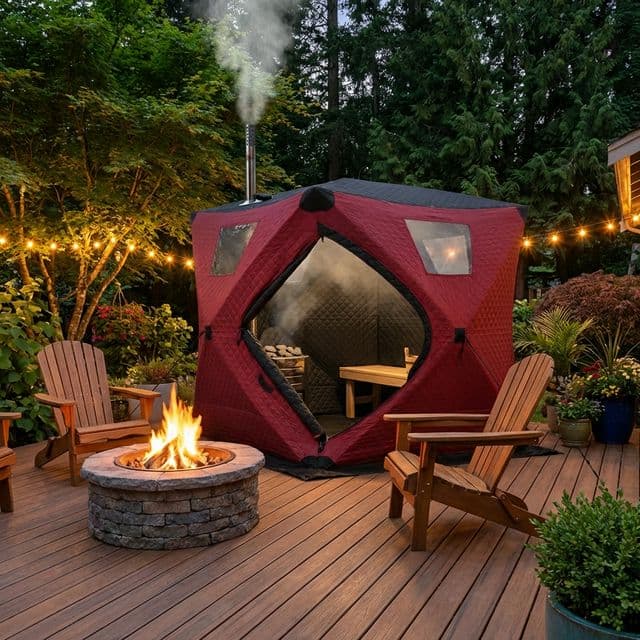
Backyard use is the cleanest ownership route when you can control clearance, anchoring, and dry-out.
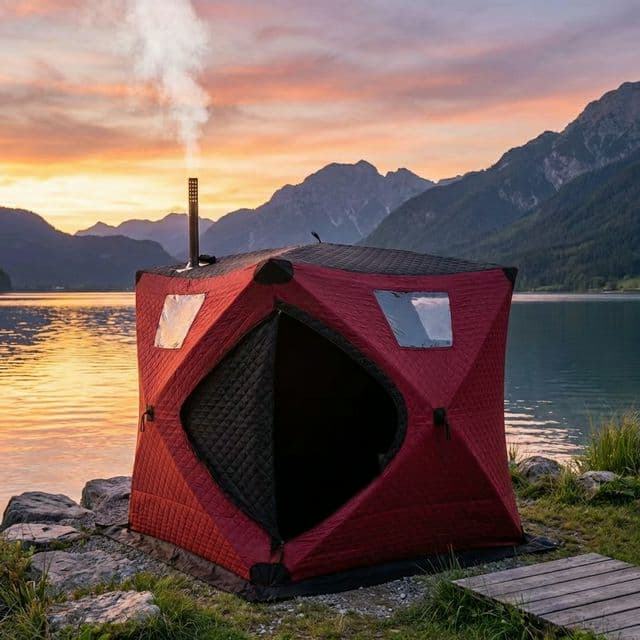
Lakeside or shoreline use raises the wind and moisture burden even when the lifestyle appeal is high.
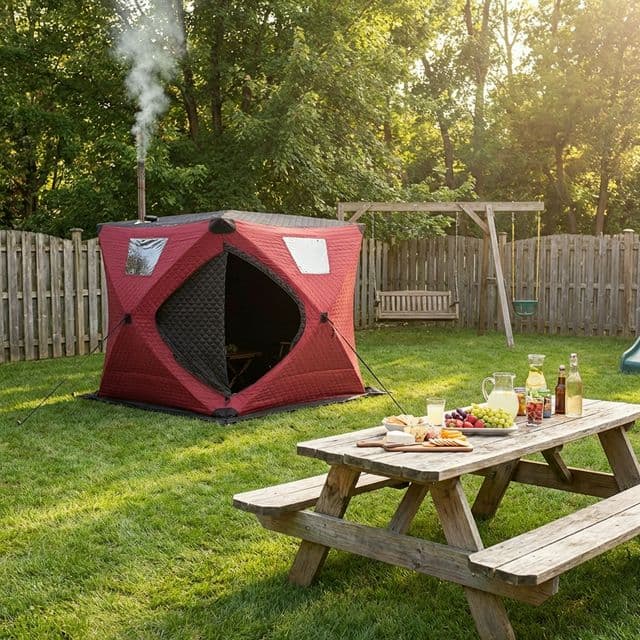
Group or family use pushes footprint, budget, and routine complexity above the entry-level listing mindset.
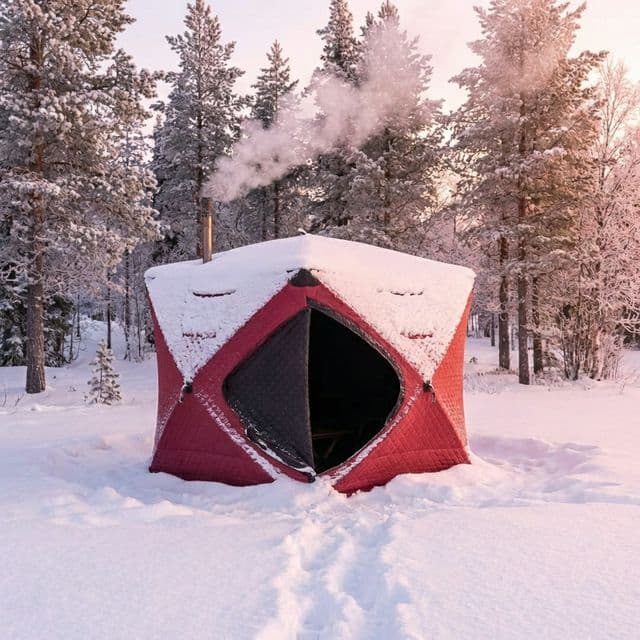
Winter use looks compelling in marketing, but it deserves stricter wind, surface, and setup assumptions.
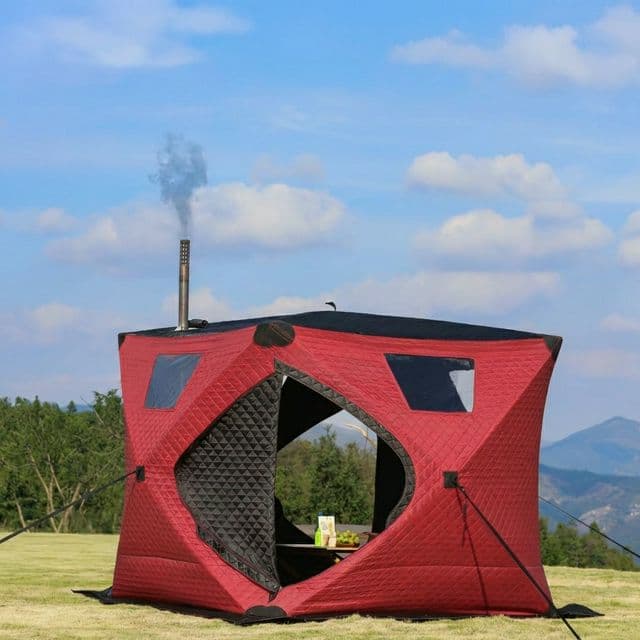
Clean pack-down and storage routines are part of the buying decision, not an afterthought.
Email your tool result, site photo, and the exact listing URLs you are considering to [email protected]. We use the same decision gates shown above, then tell you whether to proceed, downshift, or stop.
FAQ
These questions close the remaining decision gaps without turning the page into a glossary.
Decide the route, then buy with proof instead of momentum
The correct outcome for this keyword is not always “buy the tent.” Sometimes it is shortlist now, sometimes it is borrow first, and sometimes it is stop. This page is built to make that distinction visible.
Send your checker result, exact model links, and a session-site photo to [email protected] if you want the next move reviewed manually.