Sauna Stove Electric Fit + Load Planner
Input room volume, electrical readiness, usage schedule, and tariff assumptions. This tool returns a fit band, recommended kW class, monthly cost envelope, and the next action before purchase.
Default profile: 320 ft3 room, 4 sessions/week, 45 min sessions, 12 ft2 uninsulated/glass area, 17.24 cents/kWh (US residential average, Dec 2025), +15% stress-rate uplift, 150A panel, and in-progress permit planning.
Boundary reminder: unresolved 240V circuit, panel headroom limits, large uninsulated/glass surfaces, or permit gaps should force a conditional or blocked decision.
Tool output to report verification bridge
After running the planner, map your result band with this bridge. It tells you where to verify evidence and what action to take before any payment decision.
| Tool status | Interpretation | Verify in report | Next move |
|---|---|---|---|
| Strong Fit | Your top electric sauna stove class aligns with adjusted planning volume, budget, wiring readiness, and expected baseline + stress-month cost. | Key numbers + compliance boundaries + comparison grid + risk matrix | Send your planner output to [email protected] for final model shortlist validation before purchase. |
| Conditional Fit | At least one boundary remains open (panel headroom, permit progress, cold-surface correction confidence, or operating-cost tolerance). | Fit boundaries + methodology + regional rules + evidence gaps | Rerun with conservative assumptions, close the top blocker, then request manual review. |
| Boundary Hit | Current setup has one or more blockers for safe or practical electric-stove ownership. | Compliance boundaries + risk matrix + alternatives + FAQ | Pause checkout, build a minimum-safe fallback path, and only resume after boundary closure. |
Report summary: what matters most before you buy
This hybrid page is designed for mixed intent: immediate product direction + evidence-backed confidence checks. Use the planner first, then pressure-test your shortlist with the report modules.
Users searching electric sauna stove usually want immediate product direction, then validation that panel capacity, breaker sizing, and permit steps are truly feasible.
Source: Brave SERP sample reviewed February 28, 2026 across saunaplace.com, harvia.com, huumsauna.com, and category-led merchants.
The same weekly routine can shift from manageable to expensive when rates move year over year. This page now uses a user-controlled stress-rate uplift instead of a fixed hidden multiplier.
Source: EIA Electric Power Monthly update for December 2025 values (published February 24, 2026).
Room volume alone is incomplete. Glass-heavy and log-wall rooms can push effective planning volume into a higher kW class, so this tool now includes explicit surface-area correction input.
Source: HUUM heater sizing knowledge-base guidance reviewed February 28, 2026.
8 kW upgrade decisions are not just about room size and price. Wiring gauge, breaker demand, and panel headroom must be checked with published technical specs before checkout.
Source: Harvia official specification pages reviewed February 28, 2026.
Project plans fail when delivery dates are set before permit routes are confirmed. This report now contrasts Seattle, Austin, and Portland permit paths to show non-portable assumptions.
Source: Seattle SDCI over-the-counter permit guidance reviewed February 28, 2026.
Recall data justifies serial checks before commissioning, but public installed-base counts remain unavailable. This page labels failure-rate probability as "known unknown" instead of inventing precision.
Source: CPSC recall notices reviewed February 28, 2026.
Report publication timeline
Published: February 28, 2026
Last updated: February 28, 2026 (stage2 seo-geo closure pass: metadata compliance and launch verification)
Review cadence: refresh this page every 6-12 months.
Key numbers that change electric stove decisions
| Dimension | Value | Decision implication | Source |
|---|---|---|---|
| U.S. residential electricity average (Dec 2025) | 17.24 cents/kWh | Use this as baseline only. Tool stress-rate input should reflect your local tariff exposure before final model selection. | EIA Electric Power Monthly update |
| Year-over-year residential rate change (Dec 2025 vs Dec 2024) | +6.0% (U.S.) | Monthly cost models that reuse last-year pricing can understate spending risk in active-rate markets. | EIA release note (Feb 24, 2026) |
| Contiguous-state residential spread (Dec 2025) | 8.12-28.18 cents/kWh | Identical heater class and usage can produce more than 3x monthly cost difference by location. | EIA contiguous-state values (Dec 2025) |
| Harvia KIP60W electrical spec | 6.0 kW | 240V 1ph | minimum fuse 25A | cable 10AWG | Entry electric class can fit many rooms, but wiring requirements still require panel-headroom checks and electrician sign-off. | Harvia KIP60W product page |
| Harvia KIP8W electrical spec | 8.0 kW | 240V 1ph | minimum fuse 33.4A | cable 8AWG | Moving from 6 kW to 8 kW changes breaker and conductor requirements, not just warm-up speed. | Harvia KIP8W page |
| HUUM adjusted-volume correction | +3.3 ft3 per 1 ft2 uninsulated/glass area; log cabins up to 1.5x volume | Ignoring glass or log-wall penalties can under-size heater class and create persistent heat-up dissatisfaction. | HUUM heater sizing guidance |
| Seattle permit timing signal | Many OTC permits same day; electrical permits often several days to a few weeks | Permit queue variance should be modeled before committing to delivery and electrician windows. | Seattle OTC permit page |
| Portland electrical permit signal | Applied online and usually issued within 24 hours; service upgrades require panel amperage details | Even in faster jurisdictions, service-upgrade documentation can become the schedule bottleneck. | Portland permit page |
| Austin homeowner permit sequence | Permits must be obtained before work; final inspection required before use | Ordering before permit clarity increases rework, reinspection, and timeline risk. | Austin homeowner permit process |
| CPSC recall 26-036 (Oct 16, 2025) | ~78,000 units | 65 overheating incidents | 32 burn injuries | Serial-level recall screening stays mandatory before commissioning, even when sizing and permit checks pass. | CPSC recall 26-036 |
Fit / not-fit boundaries before checkout
| Profile | Fit signals | Not-fit signals | Next step |
|---|---|---|---|
| Strong fit profile | Adjusted planning volume (including uninsulated/glass correction) falls inside selected kW class, dedicated 240V circuit is documented, permit route is active, and stress-month cost remains acceptable. | No critical variable is left as “to be checked later,” especially fuse/cable match and permit queue assumptions. | Move to brand/model shortlist and request final review before payment. |
| Conditional fit profile | Core sizing looks valid but one boundary remains unresolved (service panel headroom, permit sequencing, stress-rate tolerance, or enclosure correction uncertainty). | Multiple unresolved boundaries stack together and hide real project risk, especially where permit timing is assumed. | Close the highest-risk boundary first, then rerun planner with updated assumptions. |
| Boundary-hit profile | None. Current plan conflicts with electrical readiness or cost tolerance. | No dedicated 240V path, panel oversubscription risk, no permit start, mismatch between target heat-up and enclosure reality, or high stress-month cost after realistic tariff uplift. | Pause purchase and adopt phased alternative path until constraints are resolved. |
Methodology and calculation logic
The tool converts budget, room volume, uninsulated/glass area, session schedule, tariff, insulation level, and readiness status into normalized factors for direct class comparison.
Each class receives weighted scoring across volume fit, budget fit, circuit readiness, installation context, control preference, and permit progress.
Monthly kWh is estimated from power class, session duration, partial preheat load, and insulation factor, then converted with your electricity-rate input and user-selected stress-rate uplift.
Hard boundaries are triggered when selected class conflicts with panel capacity, absent 240V planning, unresolved permit path, cold-surface-adjusted sizing mismatch, or aggressive warm-up targets.
Results map to Strong Fit, Conditional Fit, or Boundary Hit and always include next-step CTA plus minimal fallback route when recommendation confidence is low.
Compliance boundaries that invalidate weak shortlists
These are hard decision boundaries from official product documents and city permit guidance. If one row fails, treat the recommendation as conditional or blocked until the boundary is closed.
| Boundary | Requirement | Decision impact | If missed | Source |
|---|---|---|---|---|
| Dedicated electrical supply and certified connection | HUUM guidance states sauna heaters need dedicated electric supply and connection by a certified electrician. | No documented electrical path means high rework risk and should block purchase. | Choosing model class first can force expensive scope changes after electrical review. | HUUM installation guide |
| Fuse and conductor match by model class | Harvia KIP6W and KIP8W pages publish different minimum fuse and cable-gauge requirements despite adjacent kW classes. | Class upgrades can force panel and wiring changes; this must be verified before deposits. | Treating 6 kW and 8 kW as interchangeable can break electrical scope and schedule assumptions. | Harvia KIP specification pages |
| Adjusted volume correction for cold/glass surfaces | HUUM sizing guidance adds about 3.3 ft3 for each 1 ft2 uninsulated/glass area and may require up to 1.5x volume for log cabins. | Ignoring enclosure penalties can under-size heater class and inflate dissatisfaction risk. | Price-first model selection without adjusted volume can lead to chronic underheating and expensive replacement. | HUUM sizing formula |
| Permit sequencing before electrical work (Austin) | Austin homeowner guidance states permits must be obtained before beginning work and inspections are required. | Permit timing affects schedule and should be planned before ordering high-load heaters. | Out-of-sequence work can trigger reinspection costs and installation delays. | Austin homeowner permit process |
| Electrical permit trigger (Seattle) | Seattle guidance states electrical permits are required when electrical wiring is installed, altered, or extended. | Any wiring-scope ambiguity should be resolved before finalizing heater delivery and installer schedule. | Assuming “small electrical scope” can bypass permit requirements and cause timeline resets. | Seattle over-the-counter permit page |
| Code baseline awareness (Washington state) | Washington L&I indicates the state currently uses the 2023 NEC and does not allow local amendments to NEC minimum requirements. | Baseline code version should be checked early to prevent outdated wiring assumptions. | Using old-code assumptions can force redesign during permit review. | WA L&I NEC page |
| Recall screening before commissioning | CPSC sauna-related recalls show incident and injury counts that justify serial-level pre-install checks. | Recall check should happen before electrician scheduling and warranty registration. | Unscreened serials can lead to avoidable safety exposure and rework. | CPSC sauna recall notices |
Regional rule contrast: where assumptions can fail
This section is not legal advice. It shows reproducible examples of why permit and cost assumptions should be localized before checkout.
| Region pattern | Rule signal | Trigger detail | Buyer action | Source |
|---|---|---|---|---|
| Seattle, WA permit path | Many over-the-counter permits can be same-day, but electrical permits may take several days to a few weeks. | Seattle guidance also states permits are required when electrical wiring is installed, altered, or extended. | Confirm electrical-permit route and timeline before committing to heater delivery or electrician booking. | Seattle permit guidance |
| Portland, OR homeowner workflow | Electrical permits are applied online and usually issued within 24 hours. | Property owners may do their own work only when they own and occupy the home; service upgrades require current and proposed panel amperage details. | Treat permit speed and service-upgrade paperwork as separate checks before selecting high-kW classes. | Portland homeowner permit page |
| Austin, TX homeowner workflow | Homeowner page requires permits before work and notes inspections are mandatory. | Electrical modifications tied to sauna installation should follow documented permit and inspection sequence. | Do not lock electrician and delivery windows until permit sequence is clear. | Austin homeowner permit page |
| Austin, TX work-exempt boundary | Work-exempt page lists limited no-permit categories; major electrical additions are not blanket-exempt. | Assuming “small job” exemption for sauna wiring can create compliance risk. | Use work-exempt list as a guardrail and escalate uncertain scopes to city review early. | Austin work exempt list |
| Washington state code baseline | Washington indicates statewide use of the 2023 NEC and no local amendments to NEC minimum requirements. | Teams using older assumptions can fail review even when product specs are otherwise valid. | Capture current code baseline in project notes before comparing breaker and wiring options. | WA L&I code page |
| U.S. tariff variance (national) | Residential electricity rates vary sharply across states. | EIA reports Dec 2025 residential rates from 8.12 to 28.18 cents/kWh across contiguous states, with a 6.0% national year-over-year increase. | Run baseline and stress-month cost using local tariff and realistic seasonal uplift before selecting premium class. | EIA monthly update |
Evidence ledger and usage map
| Evidence | How this page uses it | Source |
|---|---|---|
| EIA Electric Power Monthly (Dec 2025 values, published Feb 24, 2026) | Anchors national average, contiguous-state spread, and year-over-year change used in baseline + stress-rate modeling. | EIA Electric Power Monthly update |
| Harvia KIP60W electrical specification | Provides concrete 6 kW wiring benchmark (minimum fuse + cable gauge) for load and panel planning. | Harvia KIP60W page |
| Harvia KIP8W technical specification | Supplies adjacent 8 kW benchmark showing breaker/cable changes relative to 6 kW class. | Harvia KIP8W page |
| HUUM heater sizing formula guidance | Adds explicit volume-correction rule for uninsulated/glass surfaces and log cabins; now reflected in tool inputs and boundary notes. | HUUM sizing knowledge base |
| HUUM installation requirements | Used to justify dedicated supply and certified-electrician hard boundary in tool and report sections. | HUUM installation guide |
| Austin homeowner permit sequence | Defines permit-before-work and inspection requirement in regional and compliance checks. | Austin homeowner permit page |
| Austin work-exempt permit list | Used as counterexample showing that exemption assumptions are narrow and should be verified early. | Austin work exempt page |
| Seattle permit timing and electrical trigger guidance | Supports city-level permit lead-time variability and confirms electrical permit triggers for wiring scope. | Seattle permit page |
| Portland homeowner electrical permit process | Adds counterexample with usually fast permit issuance but explicit service-upgrade documentation requirements. | Portland permit page |
| Washington state NEC baseline page | Adds code-version boundary (2023 NEC) and highlights that minimum NEC requirements are not locally reduced. | WA L&I NEC page |
| CPSC recall 26-036 sauna blanket notice | Provides real incident and injury figures supporting serial-level safety screening before purchase. | CPSC recall 26-036 |
| CPSC recall 26-040 sauna model notice | Supports ownership-risk section that non-heater components can also invalidate safe installation assumptions. | CPSC recall 26-040 |
Known unknowns and confidence boundaries
| Status | Unknown | Why it matters | Current handling |
|---|---|---|---|
| Known unknown | Public failure-rate denominator by installed electric sauna heater base | Without installed-base denominator, incident counts cannot be converted into reliable probability by class. | This page uses conservative boundary scoring, recall pre-check workflow, and avoids fake “failure probability” precision claims. |
| Pending confirmation | Cross-brand conversion consistency for adjusted-volume formulas (glass, tile, log-wall penalties) | Manufacturers publish similar concepts but not fully standardized correction methods, which can alter kW class choices. | Planner now exposes explicit cold-surface input and flags volume-mismatch boundaries, while keeping correction uncertainty visible. |
| Known unknown | Warranty claim incidence by model family and electrical context | Warranty marketing lacks comparable public claim rates, reducing confidence in headline reliability promises. | Manual-review CTA asks for model shortlist and local installer constraints before recommendation. |
| Pending confirmation | Permit lead-time variance by city, workload, and season | Seattle and Portland publish directional timing examples, but broad cross-city lead-time datasets are still sparse. | Scenario section includes phased fallback path and no-purchase recommendation when permits are unresolved. |
| Known unknown | Utility-specific time-of-use and demand-charge impact by household profile | Monthly cost can diverge from flat-rate assumptions when peak windows and demand charges apply. | Tool keeps stress-rate input explicit and asks users to verify utility tariff details before final shortlist. |
Competitor and class comparison grid
| Option class | Sample model | Room volume | Stone mass | Clearance reference | Best for | Watchouts |
|---|---|---|---|---|---|---|
| Entry wall class (6 kW) | Harvia KIP60W | 170-300 ft3 | 45 lbs | 240V 1ph | minimum fuse 25A | cable 10AWG | Smaller to mid-size rooms where panel headroom is limited but dedicated 240V is available. | Can underperform if uninsulated/glass correction pushes adjusted volume into higher class. |
| Mid wall class (8 kW) | Harvia KIP8W | 250-425 ft3 | 46 lbs | 240V 1ph | minimum fuse 33.4A | cable 8AWG | Mid-size rooms with stable routine and enough panel margin for higher branch demand. | Upgrade from 6 kW changes branch-circuit assumptions and may trigger additional electrical scope. |
| Design-forward 8 kW class | Harvia Spirit SP80E | 177-431 ft3 | 110 lbs | Certificates + technical docs listed on product page | Buyers wanting broader room compatibility and premium visual integration. | Panel headroom and control-module planning still required. |
| Tower class (9 kW reference) | HUUM DROP 9.0 | 282-529 ft3 | 121 lbs | Installation should follow dedicated supply + electrician rule | Users prioritizing stronger steam character and deeper stone mass in medium-large rooms. | Heat-up and operating cost can rise in weakly insulated shells. |
| Large-volume premium class | HUUM HIVE 12 | 424-883 ft3 | 529 lbs | Large-load planning with qualified electrician is mandatory | Large room envelopes and buyers who prioritize long steam stability. | High kW and mass increase circuit and installation complexity. |
| Permit-first workflow gate | Any shortlisted model after city permit and panel checks | N/A | N/A | Permit timing + service-amperage documentation first, model second | Jurisdictions where electrical permit routing and service-upgrade documentation drive schedule risk. | Buying first can create expensive sequencing rework when permit assumptions fail. |
Risk matrix and mitigation actions
Add uninsulated/glass correction before locking kW class and rerun planner when enclosure assumptions change.
HUUM sizing guidanceMap shortlisted class fuse/cable requirements to verified service capacity and reserve headroom before purchase.
Harvia KIP specification pagesConfirm city permit path, queue timing, and inspection sequence before placing non-refundable model orders.
Seattle permit pageRun baseline and stress-month scenarios using local tariff plus realistic seasonal uplift rather than national averages.
EIA monthly updateRequire verifiable technical documents and certificate references for final shortlist models.
Harvia Spirit certificatesRun serial and recall checks before commissioning and keep remedy path documented in project file.
CPSC recallsUse insulation-aware warm-up assumptions and treat very short target times as conditional until adjusted-volume sizing is validated.
HUUM sizing + product referencesAlternative paths when electric-stove fit fails
| Path | When to choose | Tradeoff | Decision trigger |
|---|---|---|---|
| Lower kW class + better insulation | Choose when panel capacity is constrained but enclosure upgrades are feasible. | Lower electrical demand, but warm-up time depends more on insulation and session planning discipline. | Circuit or service upgrade timeline exceeds project deadline. |
| Phased project (permit + wiring first) | Choose when model shortlist is clear but permit or electrician scheduling is unresolved. | Slower launch timeline, but significantly lower rework and compliance risk. | Permit status remains not-started or unclear after first planning pass. |
| Temporary lower-load fallback route | Choose when immediate wellness routine matters more than full-capacity permanent installation. | Reduced thermal mass and session profile versus full dedicated electric cabin setup. | Boundary-hit persists because panel or permit path cannot be solved near-term. |
| Cross-compare with wood-burning plan | Choose when electric cost or panel constraints remain high even after conservative tuning. | Wood path introduces fuel, chimney, and local burn-rule complexity instead of electrical-load complexity. | Monthly electric stress cost remains unacceptable after two reruns. |
Scenario lab: concrete examples
Setup: 320 ft3 outdoor cabin, 12 ft2 glass, 4 sessions/week, 150A panel, in-progress permit, balanced routine.
Tool result: Conditional Fit at first run with 8.0 kW class due to circuit readiness still planned.
Decision move: Finalize dedicated 240V documentation, rerun planner, then request manual shortlist before purchase.
Setup: 420 ft3 room, 7 sessions/week, 27 cents/kWh tariff, +30% stress-rate uplift, deep loyly preference, standard insulation.
Tool result: Conditional Fit with strong class match but elevated monthly stress cost boundary.
Decision move: Stress-test lower kW class plus insulation upgrades before committing to premium tower.
Setup: 250 ft3 retrofit room with 24 ft2 glass, 100A service panel, no confirmed 240V circuit, target warm-up under 40 minutes.
Tool result: Boundary Hit due to panel and readiness blockers plus adjusted-volume penalty despite acceptable budget.
Decision move: Pause purchase, start permit + electrical planning phase, and evaluate phased fallback path.
Setup: 540 ft3 dedicated cabin, 200A+ panel, confirmed permit path, WiFi control preference, deep session profile.
Tool result: Strong Fit for large-class options with medium confidence and manageable cost envelope.
Decision move: Proceed to 2-3 model shortlist and send full assumptions to support for final verification.
Setup: 380 ft3 project in a city with quick permit issuance, but panel upgrade details are incomplete.
Tool result: Conditional Fit with sizing confidence but unresolved electrical-scope documentation.
Decision move: Collect current/proposed panel amperage data first, then lock model and install timeline.
Product-image layout references
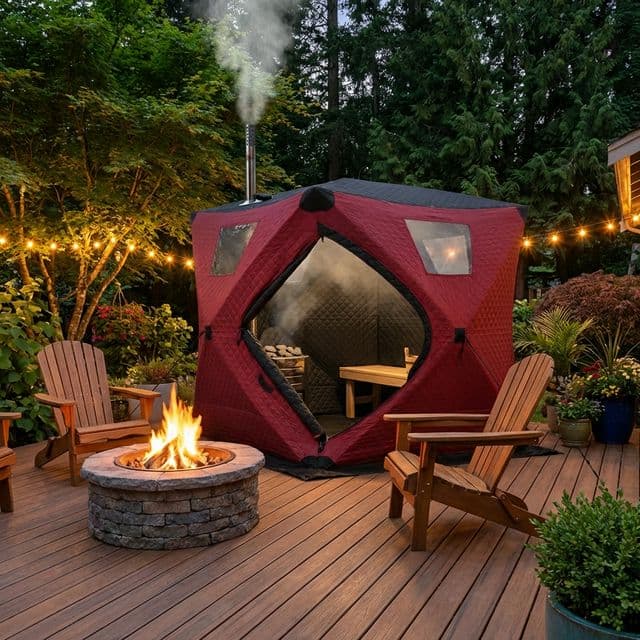
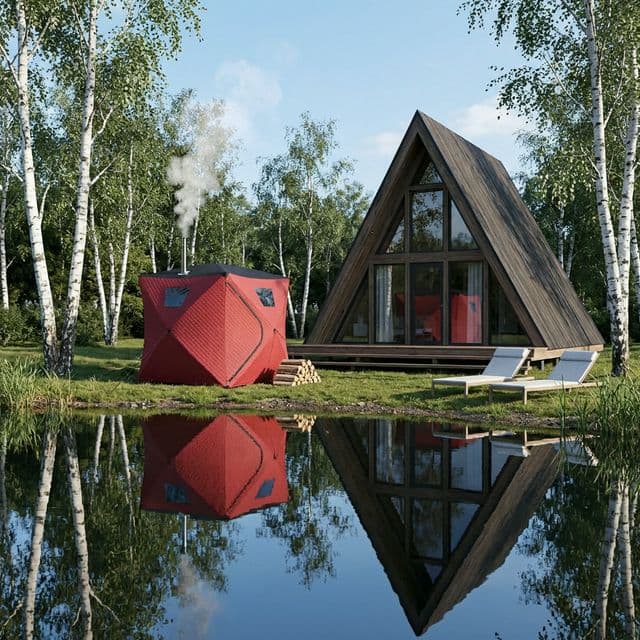
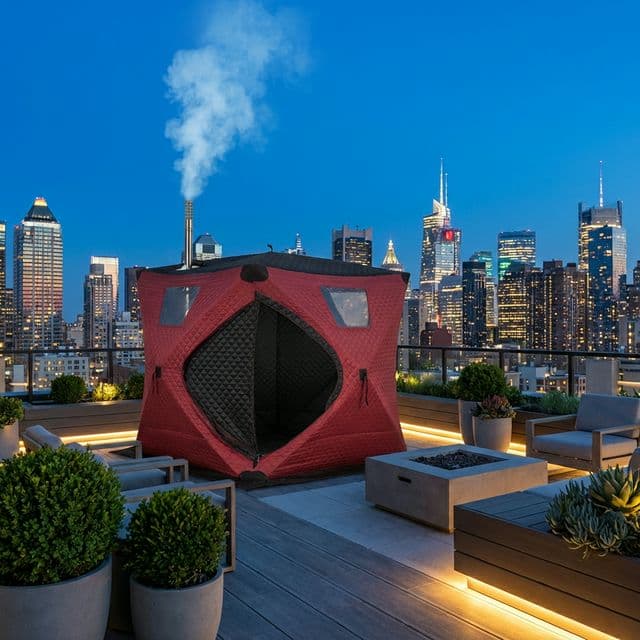
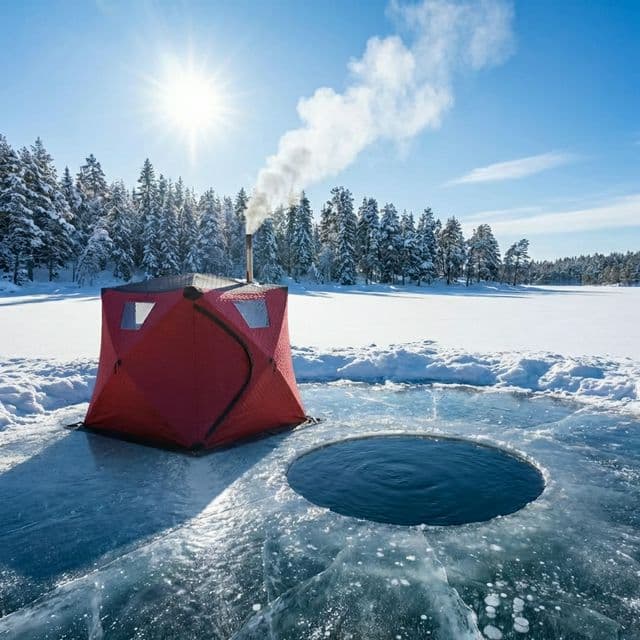
Gallery assets below come from the project product-image library and are used as layout context references. Final model verification still relies on documented specs and compliance checks.