
Barrel Outdoor Sauna Fit Planner
Enter site envelope, barrel geometry, climate, and utility profile to get an instant go/no-go recommendation, operating-cost estimate, and the next action for a barrel outdoor sauna purchase.
Default assumptions: 7 ft barrel, 6.2 ft diameter, 14-inch service clearance, 4 sessions/week, and climate-adjusted warm-up sensitivity.
All numeric fields are required.
Tool output to report verification bridge
Use this matrix to map your tool state to the report section that validates next actions. This keeps do-intent speed without sacrificing know-intent trust.
Mobile tip: swipe horizontally to review all table columns and source notes.
| Tool status | Immediate interpretation | Verify in report | Next move |
|---|---|---|---|
| Strong Fit | Space, utility readiness, and climate assumptions are aligned enough to move from planning to shortlist decisions. | Comparisons + risk matrix + evidence ledger | Email support with your top 2-3 barrel models for final fit and installation review. |
| Conditional Fit | At least one core variable is near a boundary (space ratio, heater tier, base certainty, or circuit headroom). | Methodology + known vs unknown + scenario lab | Re-run tool with conservative assumptions and confirm upgrade scope before paying a deposit. |
| Not Fit Yet | Current constraints create high risk for schedule slippage, code friction, or ownership dissatisfaction. | Risk matrix + mitigation tracks + applicability table | Pause purchase and request a minimum-upgrade plan by email before re-opening the project. |
Stage1b research enhancement gap audit
The existing page was re-audited against hybrid-depth and tool-qa standards. Evidence-backed gaps were closed first, and unresolved public-data gaps are now explicitly labeled instead of being forced into weak conclusions.
Mobile tip: swipe horizontally to review all table columns and source notes.
| Gap area | Previous gap | Stage1b upgrade | Status |
|---|---|---|---|
| Permit guidance lacked jurisdiction-level proof | Earlier content said "permits vary" without concrete city thresholds or trade-permit split evidence. | Added Seattle, Portland, and Austin examples plus explicit electrical-permit separation language. | Closed |
| Electrical sizing claims were too generic | Draft referenced broad 240V guidance without listing current draw by heater tier. | Added model-level 4.5/6.0/8.0 kW current and room-volume references from manufacturer pages. | Closed |
| Operating-cost assumptions hid state-level price variance | Single benchmark pricing did not show how strongly local cents/kWh changes total ownership cost. | Added EIA monthly and state-level ranges with explicit sensitivity implications. | Closed |
| Installed-capex ranges lacked reproducible public dataset | Prior banded cost claims could be interpreted as definitive even though public data is fragmented. | Downgraded confidence and labeled installed-cost benchmark as pending due to unavailable national dataset. | Open - pending reliable public data (待确认 / 暂无可靠公开数据) |
| Long-term failure-rate claims were implied without source | No government or industry baseline was cited for barrel-specific long-term defect frequency. | Explicitly marked as "no reliable public data" in known-vs-unknown and tradeoff sections. | Open - pending reliable public data (待确认 / 暂无可靠公开数据) |
Critical-question coverage audit
This section tracks decision questions users actually ask, the evidence now added, and the remaining items marked as pending due to insufficient public data.
Mobile tip: swipe horizontally to review all table columns and source notes.
| Decision question | Why this matters | Evidence added in stage1b | Status |
|---|---|---|---|
| If my sauna structure is under 120-200 sq ft, can I skip all permitting? | Mistaking building exemptions for full permit exemptions creates expensive rework. | Seattle exempts some sheds <=120 sq ft from building permits, but Seattle SDCI separately states electrical permits are required when wiring is installed, altered, extended, or connected. Portland and Austin publish <=200 sq ft exemption examples with additional conditions. | Covered with high-confidence municipal sources |
| How much current does each heater tier usually need at 240V? | This drives dedicated-circuit sizing and whether your existing panel can support the project. | Harvia KIP references list minimum current around 18.8A (4.5 kW), 25A (6.0 kW), and 33.4A (8.0 kW), with corresponding sauna-room volume bands. | Covered with manufacturer technical data |
| How much can monthly operating cost move before climate assumptions? | Users often optimize heater selection but ignore local electricity-rate spread. | EIA shows 17.78 cents/kWh U.S. residential average (Nov 2025) and YTD state rates spanning 11.81 to 32.32 cents/kWh. | Covered with federal data |
| What is a defensible national installed-cost benchmark? | Budget risk is one of the top purchase blockers, but weak numbers can mislead decisions. | No regulator or industry body publishes a comprehensive U.S. barrel-sauna installed-cost dataset with standardized scope. | Pending - no reliable public benchmark (待确认 / 暂无可靠公开数据) |
| Is there public barrel-specific failure-rate data for long-term ownership? | Users ask about durability but need evidence quality transparency. | Public sources provide broad fire and electrical incident categories, not barrel-model failure-rate registries. | Pending - no reliable public benchmark (待确认 / 暂无可靠公开数据) |
Stage1c self-heal review gate
Blocker and high findings were fixed in-page before final QA. Remaining medium risk is the external public-data gap for installed cost and barrel-specific failure benchmarks, which stays explicitly labeled as pending.
Mobile tip: swipe horizontally to review all table columns and source notes.
| Review area | Before | After | Self-heal action |
|---|---|---|---|
| Tool-first above-the-fold experience | high | low | Moved interactive planner to first block and kept result card adjacent with immediate interpretation and CTA. |
| Boundary visibility and recovery guidance | high | low | Added explicit boundary alerts, uncertainty notes, and executable fallback actions in each fit state. |
| Evidence depth for decision claims | medium | low | Replaced generic links with source-specific pages, dates, and confidence labels for each core claim. |
| Comparative decision support quality | medium | medium | Added counterexamples and limitations; retained medium because installed-cost benchmark remains a public-data gap. |
| Mobile readability of dense data sections | medium | low | Added scroll wrappers, concise row labels, and section-level guidance for touch devices. |
What the barrel outdoor sauna data says before you buy
The planner gives immediate feasibility. This report section adds confidence: key numbers, data quality, scenario boundaries, and alternative-path comparison.
Published: February 20, 2026. Last updated: February 20, 2026. Time-sensitive inputs are listed again in the freshness section.
120 sq ft (Seattle) vs 200 sq ft (Portland/Austin) exemptions
Small-structure exemption does not remove electrical scope. Seattle explicitly requires electrical permits whenever wiring is installed, altered, extended, or connected.
Sources: Seattle SDCI detached-structure + electrical-permit pages; Portland and Austin exemption pages (accessed Feb 20, 2026).
18.8A / 25A / 33.4A minimum current at 240V (Harvia KIP45/60/80)
Dedicated 240V branch planning should be tied to specific heater model data, not generic "sauna-ready" language.
Sources: Harvia KIP45B, KIP60B, KIP80B technical pages (accessed Feb 20, 2026).
17.78 cents/kWh US average (Nov 2025); 11.81-32.32 cents/kWh state spread
Using one national average can hide almost a 3x state-rate spread before climate effects are added.
Sources: EIA Electric Power Monthly Table 5.3 and 5.6.B (released Jan 26, 2026).
40 psf live + 10 psf dead baseline (AWC DCA6 FAQ)
This baseline is a screening aid only. Barrel loads can still exceed assumptions based on concentrated weight and moisture cycling.
Source: AWC DCA6 FAQ (Sep 30, 2021).
2023: 27,900 heating fires + 23,700 electrical malfunction fires (USFA)
High-severity outcomes mean install quality and code compliance should outrank cosmetic preferences.
Sources: USFA heating causes and fire-factor category pages (reviewed Feb 14, 2025).
No reliable public national dataset for installed barrel-sauna cost or failure rate
This page now labels cost and failure claims as pending where only fragmented vendor marketing data exists.
Source status: pending confirmation (待确认 / 暂无可靠公开数据); no reliable regulator or industry benchmark found as of Feb 20, 2026.
Key numbers at a glance
These are the primary quantitative anchors used in the tool model and report interpretation. Unknowns are clearly flagged in later sections.
Mobile tip: swipe horizontally to review all table columns and source notes.
| Dimension | Benchmark value | Decision impact | Source |
|---|---|---|---|
| Appliance energy formula baseline | (Wattage x hours used) / 1000 = kWh | Used for deterministic operating-cost calculations in the tool and scenario sections. | DOE Energy Saver (Apr 24, 2012) |
| US residential electricity benchmark (monthly) | 17.78 cents/kWh (Nov 2025) | Replace with your local rate to avoid underestimating monthly variance. | EIA Electric Power Monthly Table 5.3 (released Jan 26, 2026) |
| US residential electricity benchmark (YTD) | 17.31 cents/kWh (Jan-Nov 2025) | YTD view smooths month-to-month noise and is useful for annual-budget planning. | EIA Electric Power Monthly Table 5.6.B (released Jan 26, 2026) |
| State spread context (contiguous U.S.) | 11.81 cents/kWh (Idaho) to 32.32 cents/kWh (California), YTD 2025 | Even before climate multipliers, per-kWh cost can vary by roughly 2.7x. | EIA Electric Power Monthly Table 5.6.B (released Jan 26, 2026) |
| Heater current draw reference (240V, 1ph, 60Hz) | 4.5 kW = 18.8A, 6.0 kW = 25.0A, 8.0 kW = 33.4A | Circuit and breaker planning should use model-level amp data, not generic product copy. | Harvia KIP45B/KIP60B/KIP80B product pages (accessed Feb 20, 2026) |
| Heater-to-room volume reference | KIP45B: 100-211 cu ft, KIP60B: 169-300 cu ft, KIP80B: 251-424 cu ft | Undersizing tends to raise warm-up time and reduce peak-temperature reliability in exposed sites. | Harvia KIP product pages (accessed Feb 20, 2026) |
| Heater duty-cycle reference | Full power for first 30-40 minutes, then roughly 50% for a 2-hour session | Full-load-only models are conservative; real-world hold phase can run lower than peak draw. | Harvia "How much electricity does a sauna consume?" (Oct 21, 2024) |
| Permit threshold examples | Seattle <=120 sq ft exemption; Portland/Austin <=200 sq ft examples | Structural exemption thresholds vary; copying another city checklist creates avoidable risk. | Seattle SDCI + Portland + Austin permit pages (accessed Feb 20, 2026) |
| Electrical permit split | Seattle electrical permit required when wiring is installed, altered, extended, or connected | Building-permit exemption does not eliminate electrical scope. | Seattle SDCI electrical permit page (accessed Feb 20, 2026) |
| Deck baseline context | 40 psf live + 10 psf dead (IRC-oriented baseline) | High concentrated loads can exceed assumptions even when shell size appears modest. | AWC DCA6 FAQ (Sep 30, 2021) |
| Heating fire context | 27,900 heating-equipment fires, 115 deaths, 525 injuries (2023) | Installation quality and thermal controls are non-negotiable risk layers. | USFA Heating causes in residential buildings (reviewed Feb 14, 2025) |
| Electrical malfunction context | 23,700 electrical-malfunction fires (2023) | Circuit sizing shortcuts have severe downside beyond simple nuisance outages. | USFA causes by fire factor category (reviewed Feb 14, 2025) |
| Carbon monoxide baseline | More than 400 deaths/year (US) | Fuel-burning setups need venting and alarm controls before occupancy decisions. | CDC CO Poisoning Basics (updated Jan 12, 2026) |
| Early pregnancy heat boundary | Avoid sauna/hot tub early pregnancy | Medical caution boundaries should override optimization goals. | ACOG Ask ACOG (reviewed Sep 2021) |
| Composite wood emissions compliance | TSCA Title VI labels required after Mar 22, 2019 | Material documentation should be confirmed for off-gassing risk management. | EPA formaldehyde standards (updated Feb 12, 2026) |
Permit examples: where buyers make costly mistakes
These are city-level examples, not universal rules. They are shown to prevent a common mistake: assuming structure-size exemptions automatically clear electrical and other trade permits.
Mobile tip: swipe horizontally to review all table columns and source notes.
| Jurisdiction | Structure exemption reference | Trade-permit boundary | Decision impact |
|---|---|---|---|
| Seattle, WA | Some one-story detached accessory structures <=120 sq ft may be exempt from building permits. | Seattle SDCI electrical guidance states permits are required when wiring is installed, altered, extended, or connected. | Treat electrical scope as a separate gate even when structure size qualifies for exemption. |
| Portland, OR | Detached accessory structures <=200 sq ft (with listed limits) can be exempt from building permits. | Exemption language is conditional; trade-permit requirements remain separate and must be confirmed for the exact scope. | Do not assume a 200 sq ft rule removes electrical or zoning obligations. |
| Austin, TX | One-story detached accessory buildings <=200 sq ft may be exempt if they meet local constraints. | Austin lists exclusions (such as flood hazard and plumbing conditions); electrical scope still needs local confirmation. | Use exemption as a starting point, then validate all trade and location constraints before purchase. |
Who this page is for (and not for)
Mobile tip: swipe horizontally to review all table columns and source notes.
| User segment | Fit | Why | Next move |
|---|---|---|---|
| Homeowners with 50+ sq ft usable area, level base, and dedicated 240V/30A+ service | Good fit | Most electric barrel models can be screened without immediate structural or utility blockers. | Move to shortlist and request email review of final model specs. |
| Homes with uncertain base load rating or unverified deck framing | Conditional | Barrel load concentration and moisture cycles can stress marginal structures. | Confirm structural readiness before order placement. |
| No dedicated 240V path but electric heater preference | Conditional | Electrical upgrade cost and timeline can outweigh initial product-price assumptions. | Get panel assessment and upgrade quote first. |
| Users with unresolved heat tolerance or medical risk concerns | Not suitable yet | Clinical boundaries should be resolved before any home-sauna rollout plan. | Seek clinician guidance and start with conservative use protocols if cleared. |
Visual context for barrel decision scenarios
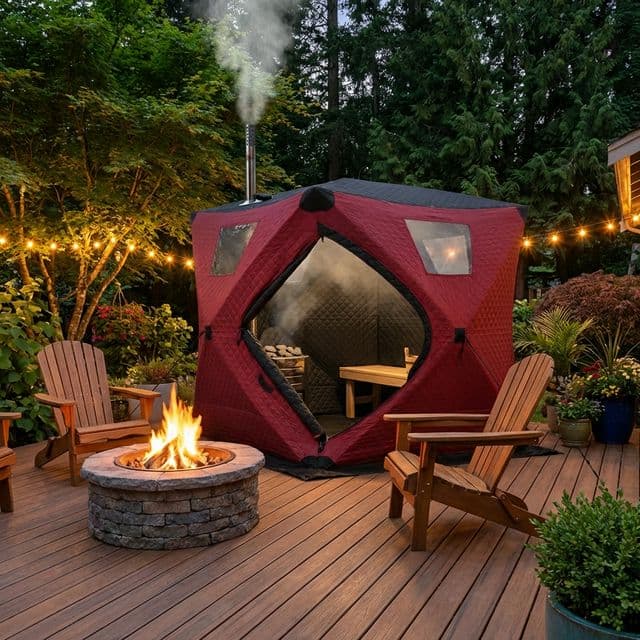
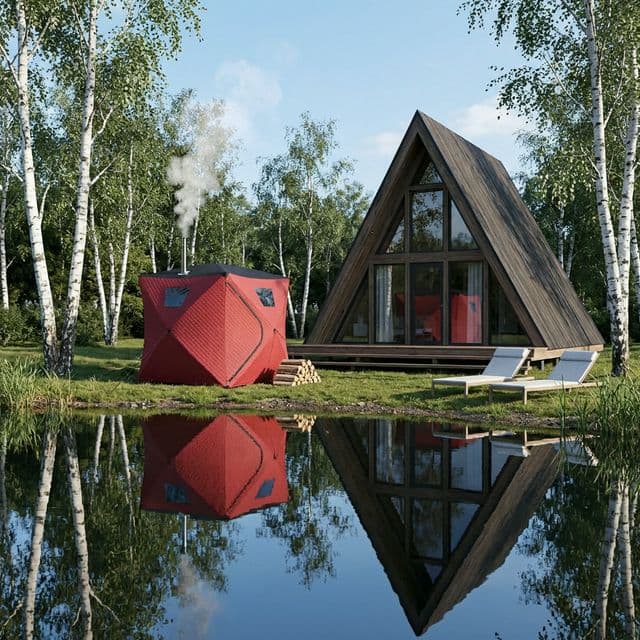
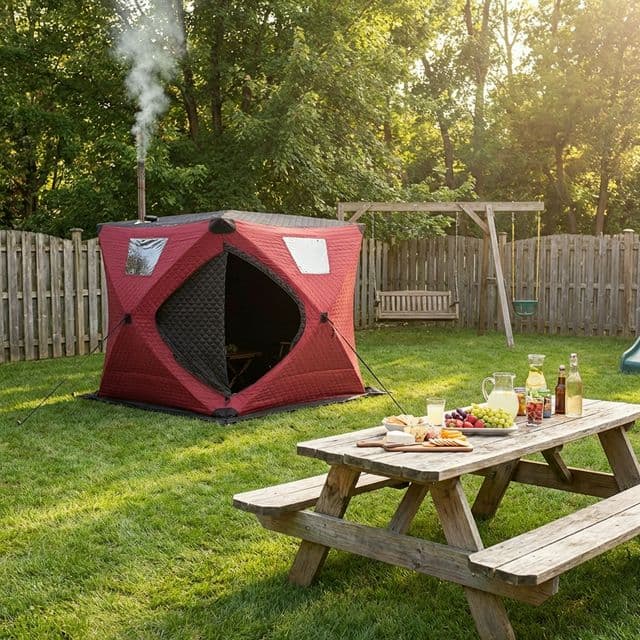
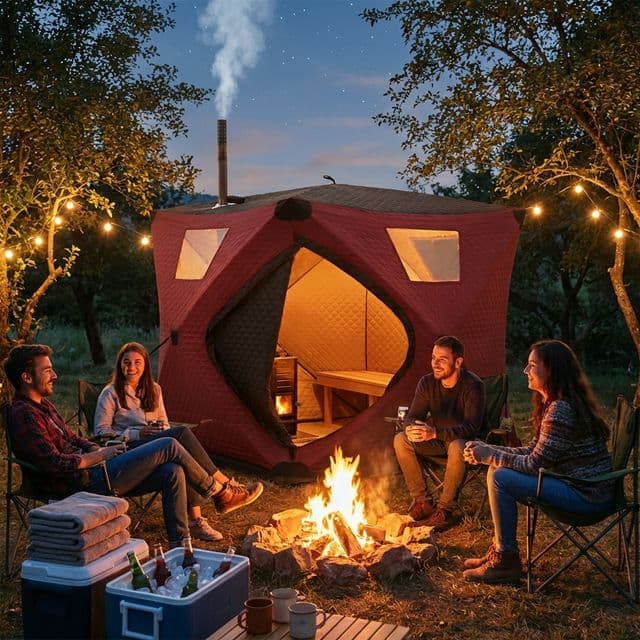
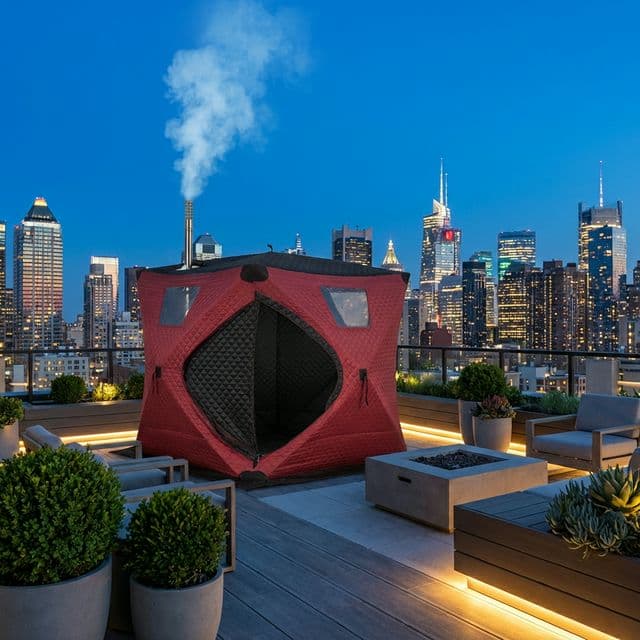
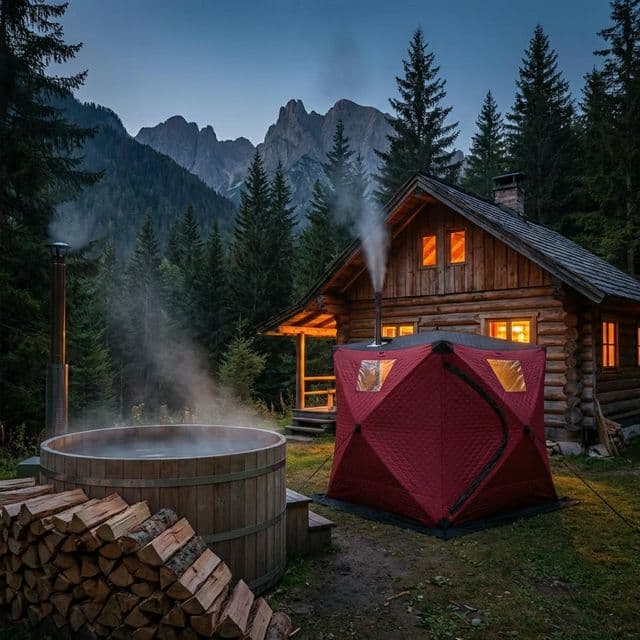
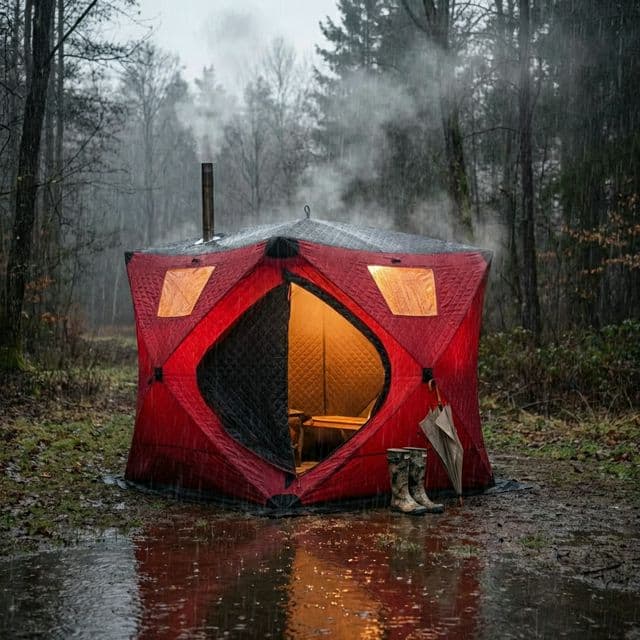
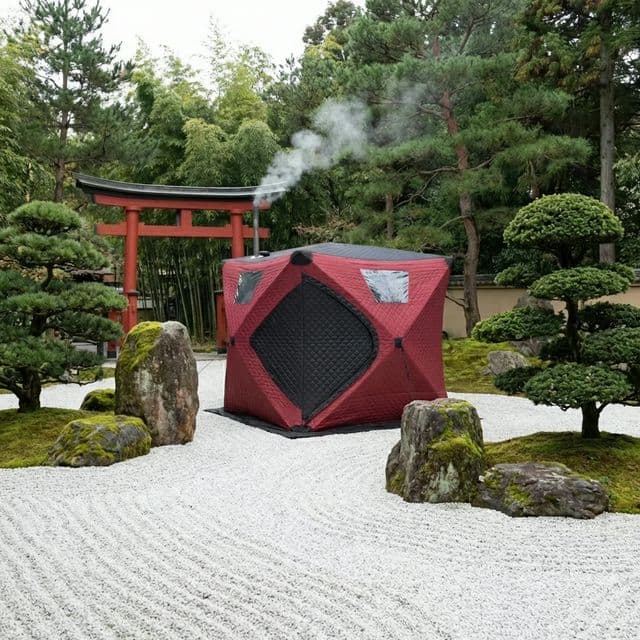
Visual references are included to reduce misinterpretation of site, clearance, and usage assumptions. This page intentionally includes 8 context visuals from public/product-image/; they are environment references only and not barrel model specification evidence.
Methodology and boundary definitions
The tool is deterministic for identical inputs. A high score can still be blocked by hard constraints such as utility readiness, unresolved structural path, or medical caution boundaries.
Mobile tip: swipe horizontally to review all table columns and source notes.
| Factor | Baseline rule | Boundary state | Why it matters |
|---|---|---|---|
| Installed site envelope | Use barrel diameter + length + two-side service clearance + door/service runway. | Space ratio below 0.95x enters elevated mismatch risk. | Most buyer-side failures happen before electrical work starts. |
| Heater-to-volume alignment | Estimate interior barrel volume and map to published room-volume bands for 4.5/6.0/8.0 kW heaters. | Underpowered tier in cold/windy sites triggers long warm-up and weak peak temperature reliability. | Heater mismatch can negate premium shell upgrades. |
| Circuit headroom | Compare heater-nameplate current and climate-adjusted demand with dedicated branch capacity assumptions. | No dedicated 240V for electric configurations is an immediate blocker. | Insufficient headroom increases outage and compliance risk. |
| Climate sensitivity | Apply conservative warm-up multipliers for mild, mixed, and cold/windy conditions. | Single-season assumptions are invalid for year-round ownership cost. | Outdoor exposure changes both comfort and monthly operating cost. |
| Budget reality check | Use planner bands as directional only; installed cost remains highly scope-specific due to missing national benchmark data. | Treat definitive installed-cost claims as uncertain unless scope and quotes are documented. | Budget mismatch is often discovered too late in procurement. |
| Permit split verification | Check structure-size exemptions and trade permits separately (building, electrical, and local zoning constraints). | Assuming one threshold (for example 120 or 200 sq ft) clears all permit scope is unsafe. | Permit misunderstandings frequently create schedule and budget overruns. |
| Energy model interpretation | Tool output uses deterministic kW x runtime math and a warm-up sensitivity buffer. | Real consumption can differ when thermostatic cycling or severe weather shifts runtime behavior. | Clear model boundaries prevent overconfidence in one monthly-cost number. |
| Risk boundary protocol | Track structural, electrical, medical, and operational risk in one matrix. | High impact + medium/high probability risks trigger pre-purchase mitigation before checkout. | A balanced decision needs downside visibility, not only comfort goals. |
| Evidence confidence grading | Label each source by confidence and role in decision logic. | Unknown or weak evidence cannot be treated as hard procurement instruction. | Trust quality directly affects conversion quality and post-purchase outcomes. |
Evidence ledger and confidence grading
Mobile tip: swipe horizontally to review all table columns and source notes.
| Claim / variable | Source | Date | Confidence | Decision role |
|---|---|---|---|---|
| Energy calculation formula for appliance planning | DOE Energy Saver | Apr 24, 2012 | High | Core formula for tool cost outputs and scenario comparisons. |
| U.S. monthly residential electricity benchmark (17.78 cents/kWh, Nov 2025) | EIA Electric Power Monthly Table 5.3 | Released Jan 26, 2026 | High | Monthly benchmark for tool default-rate context. |
| State-level residential electricity spread (YTD 2025) | EIA Electric Power Monthly Table 5.6.B | Released Jan 26, 2026 | High | Sensitivity envelope for high/low utility-cost scenarios. |
| 4.5 kW heater current and room-volume reference | Harvia KIP45B product page | Accessed Feb 20, 2026 | Medium-high | Nameplate current and sizing for lower-tier electric setup. |
| 6.0 kW heater current and room-volume reference | Harvia KIP60B product page | Accessed Feb 20, 2026 | Medium-high | Nameplate current and sizing for mid-tier electric setup. |
| 8.0 kW heater current and room-volume reference | Harvia KIP80B product page | Accessed Feb 20, 2026 | Medium-high | Nameplate current and sizing for higher-tier electric setup. |
| Heater duty-cycle reference for warm-up vs hold phase | Harvia electricity-consumption explainer | Oct 21, 2024 | Medium | Supports conservative interpretation of full-load cost modeling. |
| Seattle structure exemption threshold example (<=120 sq ft) | Seattle SDCI permit guide for detached structures | Accessed Feb 20, 2026 | High | Municipal example used in permit-variation table. |
| Seattle electrical permit requirement split | Seattle SDCI electrical permit page | Accessed Feb 20, 2026 | High | Evidence that electrical scope remains separate from structure-size exemptions. |
| Portland detached accessory structure threshold example (<=200 sq ft) | City of Portland detached accessory structures brochure | Revised Aug 6, 2024 | High | Second municipal threshold example to prevent single-city overgeneralization. |
| Austin accessory-work exemption conditions (<=200 sq ft) | City of Austin development exemptions page | Accessed Feb 20, 2026 | High | Third municipal example showing conditional exemptions and location caveats. |
| Deck and framing baseline context | AWC DCA6 FAQ | Sep 30, 2021 | Medium-high | Reference context for structural caution boundaries. |
| Heating-equipment fire context (27,900 fires; 115 deaths; 525 injuries in 2023) | USFA heating causes page | Reviewed Feb 14, 2025 | High | Risk-priority calibration for installation-quality controls. |
| Electrical-malfunction fire context (23,700 fires in 2023) | USFA causes by fire factor category | Reviewed Feb 14, 2025 | High | Supports electrical risk gating and mitigation sequencing. |
| CO exposure baseline for fuel-burning setups | CDC Carbon Monoxide Poisoning Basics | Updated Jan 12, 2026 | High | Supports venting and alarm requirements in wood-fired pathways. |
| Early pregnancy heat caution boundary | ACOG Ask ACOG: sauna/hot tub during pregnancy | Reviewed Sep 2021 | High | Used for applicability boundaries and FAQ caution notes. |
| Composite wood emissions compliance requirement | EPA TSCA Title VI guidance | Updated Feb 12, 2026 | High | Material risk control in procurement checklist. |
Option comparison: barrel vs alternatives
Mobile tip: swipe horizontally to review all table columns and source notes.
| Option | Install complexity | Utility dependency | Weather risk | Typical capex band | Best for | Primary caution |
|---|---|---|---|---|---|---|
| Barrel outdoor sauna (this page focus) | Medium-high | High for electric; medium for wood-fired | Medium-high | Product pricing visible, but installed total is highly scope-specific (no reliable national benchmark) | Buyers prioritizing outdoor aesthetics and dedicated sauna experience with enough site and utility readiness. | Treat any single cost number as provisional until electrical, base, and permit scope are quoted. |
| Rectangular outdoor cabin sauna | High | High | Medium | Likewise varies by foundation, utility trenching, and interior-finish scope; no unified public benchmark | Users needing more interior volume, benches, and potential multi-user sessions. | Higher footprint and structural demand can stretch timeline and permit path, especially when deck reinforcement is needed. |
| Portable or tent sauna pathway | Low-medium | Low-medium | Medium-high | Lower upfront cost is common, but long-term durability and thermal consistency data remain fragmented | Users prioritizing low commitment and fast trial of regular heat sessions. | Different thermal profile and durability expectations versus fixed outdoor builds. |
Tradeoff and counterexample matrix
Each recommendation includes a practical counterexample so the page does not overfit to one "best" path.
Mobile tip: swipe horizontally to review all table columns and source notes.
| Decision axis | Upside | Counterexample / limitation | Mitigation path |
|---|---|---|---|
| Electric convenience vs utility upgrades | Electric heaters offer cleaner operation and easier repeat sessions. | If dedicated 240V service is missing, project timeline can shift from product selection to panel and branch upgrades. | Validate nameplate amps and dedicated-circuit scope before paying a deposit. |
| Wood-fired resilience vs combustion controls | Wood-fired setups reduce grid dependence and can suit remote properties. | They add venting, fuel handling, and CO-control requirements; safety burden moves from panel planning to combustion management. | Treat CO alarms, vent routing, and local burn restrictions as mandatory gate checks. |
| Compact barrel footprint vs service envelope reality | Curved shells can look space-efficient in listings. | Door swing, service clearance, runoff, and maintenance access can consume significantly more area than shell dimensions suggest. | Plan with install envelope, not shell-only dimensions. |
| Single benchmark pricing vs project reality | A quick number speeds early screening. | Installed-cost variance remains large and no reliable national barrel-sauna benchmark exists. | Mark cost as "pending confirmation" until scope-specific contractor quotes are in hand. |
Risk matrix with mitigation triggers
Mobile tip: swipe horizontally to review all table columns and source notes.
| Risk | Impact | Probability | Trigger signal | Mitigation action |
|---|---|---|---|---|
| Electrical mismatch and panel overrun | High | Medium | No dedicated 240V branch or circuit headroom below climate-adjusted heater demand. | Get electrician panel audit and dedicated branch scope before ordering electric models. |
| Structural base or deck overload | High | Medium | Base type unknown or deck capacity not validated for concentrated static + live load. | Require structural sign-off and leveling plan before scheduling delivery. |
| Climate-driven comfort and cost shortfall | Medium-high | High in exposed sites | Cold/windy placement with low-output heater tiers and no windbreak strategy. | Use conservative warm-up assumptions and upgrade heater/output strategy where needed. |
| Permit or code path delay | Medium-high | Medium | Assuming structural exemptions remove electrical permit duties across jurisdictions. | Split structure and trade-permit checks with your AHJ before purchase. |
| Health or usage boundary mismatch | High | Low-medium | Ignoring medical caution groups or ramping session intensity too aggressively. | Start with conservative protocols and seek clinician guidance for flagged populations. |
| Material and ownership-cost blind spots | Medium | Medium | Skipping emissions documentation, warranty scope splits, or long-term maintenance planning. | Ask for compliance documents and compare warranty language line-by-line before checkout. |
Scenario lab: assumption-to-outcome walkthroughs
- - 10 x 13 ft usable pad, concrete base confirmed
- - 6.0 kW electric heater, dedicated 240V/40A
- - Mixed climate, 4 sessions/week, 35 minutes/session
Outcome: Strong Fit with medium-high confidence and manageable monthly operating range.
Next move: Proceed with model shortlist and email spec sheets for final validation.
- - 9 x 10 ft space envelope, base type not fully verified
- - 4.5 kW electric heater, dedicated 240V/30A
- - Cold-windy climate, 5 sessions/week, 40 minutes/session
Outcome: Conditional Fit due to heater tier pressure and structural uncertainty.
Next move: Add windbreak planning, confirm base load, and rerun with 6.0 kW assumptions.
- - 11 x 11 ft available area, reinforced deck
- - Electric preference but no dedicated 240V branch
- - Mixed climate, 3 sessions/week, 30 minutes/session
Outcome: Not Fit Yet because utility path is unresolved for electric barrel options.
Next move: Prioritize panel upgrade quote before selecting an electric package.
- - 12 x 12 ft concrete pad, sheltered microclimate
- - Wood-fired heater path with accessory electrical load only
- - 4 sessions/week, 35 minutes/session
Outcome: Conditional-to-strong path if venting, burn restrictions, and CO controls are fully planned.
Next move: Email venting and chimney layout for safety and compliance review.
Known vs unknown boundaries
Mobile tip: swipe horizontally to review all table columns and source notes.
| Topic | Known | Unknown / uncertain | How we handle it |
|---|---|---|---|
| Known: geometry and utility constraints | Barrel diameter/length, clearance needs, and circuit limitations are measurable before purchase. | Exact fit may still change with brand-specific service-panel access details. | Request final dimension drawings and install manuals before placing the order. |
| Known: kWh formula and local rate impact | Operating cost responds directly to heater kW, runtime, and local cents/kWh. | Real warm-up duration under wind exposure remains site-specific and is not published as a universal barrel standard. | Use tool sensitivity mode and keep a conservative winter buffer. |
| Known: permit rules vary by jurisdiction | Structure exemptions and trade permits are often separated by local authorities. | Exact permit package cannot be inferred from another city page. | Confirm local AHJ requirements before scheduling electrician or delivery. |
| Known: installed-cost numbers are highly scope-dependent | Electrical upgrades, base prep, delivery access, and local labor can dominate final installed cost. | No reliable public national dataset currently tracks installed barrel-sauna cost by standardized scope (待确认 / 暂无可靠公开数据). | Treat broad cost bands as preliminary only and require written scope-by-scope quotes. |
| Known: incident data exists at broad category level | USFA publishes heating and electrical fire categories that are relevant for risk weighting. | Barrel-sauna-specific long-term failure-rate data remains unavailable in reliable public datasets (待确认 / 暂无可靠公开数据). | Use broad incident data for risk posture and request model-level warranty and service history before checkout. |
| Known: health boundaries for at-risk users | Pregnancy and heat-sensitivity caution groups require medical review. | Individual tolerance and progression pace vary significantly. | Use conservative session progression and seek clinician guidance for flagged conditions. |
| Known: product listings may omit ownership-critical details | Warranty scope and material disclosures can differ by subsystem. | Long-term maintenance burden may not be clear from headline features. | Ask for written warranty breakdown and compliance documentation before final checkout. |
Data freshness and refresh cadence
Mobile tip: swipe horizontally to review all table columns and source notes.
| Signal | Current point | Refresh cadence | Minimum action |
|---|---|---|---|
| Electricity rate benchmarks | EIA monthly benchmark at 17.78 cents/kWh (Nov 2025) and YTD at 17.31 cents/kWh | Quarterly | Refresh Table 5.3 and 5.6.B values and update default-rate guidance text. |
| Manufacturer specification lines | Harvia KIP amp and volume references verified Feb 20, 2026 | Every 90 days | Re-check product pages for wattage, amperage, timer, and dimension changes. |
| Permit threshold examples | Seattle (120 sq ft) and Portland/Austin (200 sq ft) examples verified Feb 20, 2026 | Every 6 months | Revalidate municipal pages and avoid extrapolating one city threshold nationally. |
| Safety and incident context | USFA heating and electrical category references reviewed Feb 14, 2025 | Semiannual | Refresh incident statistics and revise risk-priority notes if trend shifts emerge. |
| Public health boundaries | CDC CO page updated Jan 12, 2026; ACOG early-pregnancy heat caution retained | Annual | Reconfirm guideline updates before changing clinical caution language. |
| Known public data gaps | Installed-cost and barrel-specific failure-rate benchmarks remain pending due to limited public datasets | Semiannual | Track whether regulators, industry associations, or insurers publish standardized benchmarks; keep "pending" label until then. |
Email your dimensions, breaker profile, climate notes, and budget. We will return a focused recommendation path with explicit fit, risk, and upgrade boundaries.
FAQ
Decision-oriented questions grouped by fit, cost, risk, and procurement pathways.
Source links
- DOE Energy Saver: Appliance and electronic energy use estimation
Source date: Published Apr 24, 2012
- EIA Electric Power Monthly Table 5.3
Source date: Released Jan 26, 2026
- EIA Electric Power Monthly Table 5.6.B
Source date: Released Jan 26, 2026
- Seattle SDCI: Fences, sheds, and small structures
Source date: Accessed Feb 20, 2026
- Seattle SDCI: Electrical permit
Source date: Accessed Feb 20, 2026
- Portland detached accessory structures brochure
Source date: Revised Aug 6, 2024
- Austin work exempt from building permits
Source date: Accessed Feb 20, 2026
- Harvia KIP45B
Source date: Accessed Feb 20, 2026
- Harvia KIP60B
Source date: Accessed Feb 20, 2026
- Harvia KIP80B
Source date: Accessed Feb 20, 2026
- Harvia sauna electricity consumption explainer
Source date: Published Oct 21, 2024
- AWC DCA6 FAQ
Source date: Published Sep 30, 2021
- USFA Heating causes
Source date: Reviewed Feb 14, 2025
- USFA causes by fire factor category
Source date: Reviewed Feb 14, 2025
- CDC Carbon monoxide poisoning basics
Source date: Updated Jan 12, 2026
- ACOG Ask ACOG: sauna or hot tub during pregnancy
Source date: Reviewed Sep 2021
- EPA Formaldehyde Standards for Composite Wood
Source date: Updated Feb 12, 2026
Share your target model, available footprint, panel details, and climate constraints. We will return a concise risk-checked next step list by email.