
Outdoor sauna plans checker
Current SERP gap
Exact-query results are heavy on downloadable plan packs, inspiration boards, and forum critique, but thin on permit and trade-readiness review.
Ventilation baseline
Harvia says sauna air should change six times per hour, so ventilation belongs on the drawing set and not in an afterthought.
Permit reality
Seattle, Austin, and Portland already publish different small accessory-structure rules, so copied shed logic is not a safe planning shortcut.
Recommended envelope size plus a site-fit ratio that exposes when a plan works only on paper.
Required versus missing drawings so you can tell concept packs from execution packets.
Permit, heater, and site-path flags that can turn a nice PDF into a weak real-world build packet.
Clear handoff path to email [email protected] once the result band tells you what to fix first.
Tool output to report verification bridge
Each checker result maps to a report module and a next action. This keeps the page tool-first while making the report layer directly usable instead of decorative.
| Result band | What it means | Verify next | Recommended move |
|---|---|---|---|
| Plan Ready | The packet already carries the site, section, utility, and heater assumptions cleanly enough to move into manual review instead of another concept loop. | Key numbers, plan-packet checklist, and source log before final email handoff. | Email [email protected] with the exact plan packet, heater sheet, and site dimensions for a final gap check. |
| Revise Plan Set | The concept works, but the drawing set is still missing permit or trade detail that can change cost and scope. | Plan packet, permit lanes, heater lane, and evidence ledger. | Fill the missing packet items before paying for materials or locking labor. |
| Builder Handoff | The packet is good enough for a builder conversation, but not yet stable enough for a confident self-directed order sequence. | Risk matrix, scenario lab, and methodology so the right expert closes the right gap. | Use the result as a briefing document for a builder, architect, or trade-led review. |
| Do Not Order Yet | The current packet still behaves like inspiration or an incomplete concept rather than a reliable outdoor sauna plan. | Intent audit, fit boundary, risk matrix, and related routes. | Pause purchases and choose the lower-risk route before the packet drives a cost commitment. |
Intent audit: why this page exists as one hybrid URL
The current search landscape already provides plan packs and idea boards. The missing layer is whether a packet is truly usable. That is why the tool comes first and the report exists to defend the result.
| Observed pattern | Public layer | Missing layer | This page |
|---|---|---|---|
| Current exact-query results are dominated by plan sellers, free-plan generators, idea boards, and community critique threads. | Users quickly find PDFs, visuals, plan bundles, and inspiration for what an outdoor sauna could look like. | Those results rarely pressure-test local permit variance, utility-path choice, ventilation detail, or the difference between a concept pack and an execution packet. | Starts with a checker that converts a plan pack into a decision band, then backs the result with plan-specific evidence and boundaries. |
| Plan pages sell included deliverables, not always real-world readiness. | Current examples emphasize technical drawings, materials lists, builder-ready PDFs, visualizations, and media galleries. | Those deliverables still do not guarantee site-plan completeness, trade notes, or use-case fit in your jurisdiction. | Separates deliverable language from actual packet readiness so buyers do not confuse a polished download with a safe next step. |
| Community critique results show validation demand is real. | Threads and boards show that people often want plan feedback after they already paid for a design or spent time drawing one. | There is still little structured help that maps the critique to missing documents, heater choice, and permit gates. | Turns that critique need into a repeatable checklist and follow-up route instead of one-off comments. |
| Most public results still blur plan packs with full DIY execution. | The same keyword cluster often blends layout inspiration, full build logs, and sellable plan packs. | That mix makes it easy to duplicate an existing DIY page or accidentally create another soft inspiration guide. | Stays distinct by focusing on packet quality, plan completeness, and whether the next action is revision, handoff, or pause. |
Report summary
These three summary cards keep the report layer aligned to the tool: what the page decides, who it helps, and what it deliberately does not pretend to do.
Key numbers and current planning signals
The point of this table is not trivia. Each row changes how a reader should interpret a plan packet right now.
| Metric | Number | Why it matters | Source |
|---|---|---|---|
| Current search-result pattern | 7 of the top 10 exact-query results were plan packs, free-plan pages, idea boards, or community critique pages | Confirms that the SERP is already rich in downloads and inspiration, but light on plan validation. | Current exact-query review dated March 21, 2026 |
| Representative paid plan example | 54 sq ft, about $5,000 USD project estimate | Shows how plan pages sell a finished concept quickly, even before local permit and trade-readiness questions are resolved. | Elevated Spaces backyard sauna plans page |
| Representative plan-pack deliverables | Printable PDF blueprints, material list, illustrated guide, 150 photos/videos, and a 3D SketchUp model | Useful deliverables, but not proof that the packet is permit-reviewable in your locality. | Elevated Spaces backyard sauna plans page |
| Representative free-plan promise | Technical drawings + material list + visualization | Shows why buyers often confuse content completeness with site and permit completeness. | DIY Center free sauna plans page |
| Ventilation baseline | 6 air changes per hour; supply and exhaust vent locations vary by mechanical vs gravity ventilation | A real sauna section should include ventilation intent, not just wall framing. | Harvia ventilation guidance |
| Bench geometry baseline | Upper bench >=500 mm deep, 600 mm for lying down, and 1100-1200 mm from bench to roof | Human comfort drives plan geometry more than a shed-like room sketch does. | Harvia bench guidance |
| Electric-heater planning signal | 176-423 ft^3 room range, min 33.4A, 3 in side/front clearance | Shows why an electric plan packet needs an exact heater note and electrical sheet. | Harvia The Wall SW80 |
| Wood-fired planning signal | 6-13 m^3 room range, 250-300 mm clearances, 2 m minimum room height | Shows why a wood-fired packet needs chimney and clearance logic rather than just a floor plan. | Harvia M3 |
| Current energy reality | 17.30 c/kWh U.S. annual average for 2025 | Lets the page convert plan and heater choices into a current budget lens instead of a stale rough guess. | EIA table 5.3 |
| Moisture-control boundary | 30%-60% relative humidity and dry wet materials within 24-48 hours | An outdoor sauna plan still needs dry-out logic, drainage, and weatherproofing discipline. | EPA mold guidance |
| Current federal credit boundary | 25C is not allowed for property placed in service after Dec. 31, 2025 | Stops readers from underwriting a 2026 sauna project with an expired federal home-improvement credit. | IRS One, Big, Beautiful Bill provisions page |
What a usable outdoor sauna plan packet should contain
This is the anti-duplication center of the page. Public plan sellers already market deliverables well. This table shows what must still exist before the packet is decision-worthy.
| Packet component | Why it matters | Evidence / note |
|---|---|---|
| Site plan | Separates interior sauna ambition from real-world setbacks, slope, access, and utility approach. | Portland requires site plans in accessory-structure construction drawings; Seattle and Austin still show why size-only logic is incomplete. |
| Floor and bench plan | Seat count, bench depth, and heater position determine whether the sauna is usable instead of just visually plausible. | Harvia bench guidance plus current plan-pack product pages reviewed March 21, 2026. |
| Elevations and section drawing | Proves headroom, roofline, bench-to-ceiling distance, and weather-envelope logic instead of leaving them implied. | Portland construction-drawing requirement and Harvia bench guidance. |
| Foundation / base note | Small outdoor saunas still need a base assumption that reflects slope, drainage, and loading reality. | Public accessory-structure permit pages and general builder packet expectations. |
| Ventilation sheet | A sauna packet without supply / exhaust logic is missing a core operating layer, not just a nice-to-have note. | Harvia ventilation guidance. |
| Heater sheet + utility note | Electric packets need breaker and clearance language; wood-fired packets need chimney and combustibles-clearance logic. | Harvia The Wall SW80 and Harvia M3. |
| Material list / BOM | Plan sellers commonly promise material lists, but a useful BOM still needs to line up with the actual packet scope and heater lane. | DIY Center and Elevated Spaces examples. |
| Trade / permit disclaimer note | This is where builder-ready and permit-ready usually diverge. The packet should say what still needs trade review or local authority confirmation. | Seattle, Austin, and Portland public guidance plus IRS / energy boundary notes. |
Fit boundary: who should trust this page and who should switch routes
Hybrid pages work only when the reader can quickly tell whether this is the right decision angle. This table makes that choice explicit.
| Reader segment | Fit | Reason | Next move |
|---|---|---|---|
| Buyer comparing one or two paid or free outdoor sauna plan packs before buying materials | Best fit | This page is strongest when you already have a packet and need to know whether it is missing core execution detail. | Run the checker, then compare the result against the plan-packet table and source log. |
| Homeowner turning a concept into a builder-quote packet | Best fit | The checker shows whether the current drawings can become a scope brief or whether the builder still has to design too much from scratch. | Use the document gap list as your builder handoff checklist. |
| Reader who has not measured the site or chosen the heater family | Conditional | A plan packet without site dimensions or heater lane is still too flexible for a strong readiness decision. | Measure the site, choose the heater lane, and rerun the tool. |
| Reader looking for free downloadable PDFs or stamped local drawings | Weak fit | This route is an audit page, not a download library or local design service. | Use the report to understand what a downloaded packet still needs before it becomes decision-ready. |
| Reader who is actually evaluating live products, kits, or turnkey offers | Different route | The right problem may be package scope or seller comparison, not plan-packet depth. | Open the related routes section and choose the more relevant decision angle. |
Heater lane boundary: the packet changes when the heater changes
This route is intentionally strict about heater choice because current public heater pages already prove that electric and wood-fired packets do not share the same assumptions.
| Heater lane | Drawing impact | Public evidence | Decision effect |
|---|---|---|---|
| Electric heater plan | Needs an exact heater spec, breaker note, clearance sheet, and a realistic operating-cost lens. | Harvia SW80 lists 176-423 ft^3, min 33.4A, and 3-inch side/front clearances. | Treats utility planning as a first-class packet item instead of an installer afterthought. |
| Wood-fired heater plan | Needs chimney / flue path, combustibles-clearance note, room-height logic, and a manual fuel / smoke review path. | Harvia M3 lists a 6-13 m^3 room range, 250-300 mm safety distances, and a 2 m minimum room height. | Makes it obvious that a wood-fired plan is not just an electric plan with a different icon. |
| Undecided heater lane | Leaves the packet structurally ambiguous because both utility and clearance assumptions are still moving. | Public heater pages show materially different constraints, which is why this tool penalizes an unresolved heater family. | Usually forces revise-plan-set or builder-handoff even when the sketch itself looks polished. |
Permit lanes: city examples that break copied assumptions
These public examples do not replace your local review. They prove why the packet needs city-specific confirmation instead of generic shed logic.
| Jurisdiction | Public rule | Why the shortcut fails | Planning takeaway |
|---|---|---|---|
| Seattle | Detached accessory structures under 120 sq ft on a slab-on-grade can be permit-exempt, but non-building permits and code requirements may still apply. | The exemption language is narrower than a generic "small shed" shortcut and does not erase other code or permit layers. | Use Seattle as proof that a small footprint does not end the review conversation. |
| Austin | One-story detached accessory structures up to 200 sq ft and 15 ft can be exempt if they do not create a dwelling, have no plumbing, and are not in a flood hazard area. | Bathroom fixtures and plumbing are not inside the work-exempt shortcut. | A plan that adds more than a dry heat room can quickly leave the easy exemption lane. |
| Portland | Non-habitable structures <=200 sq ft and <=15 ft may avoid a building permit, but a zoning permit may still be necessary; permit-required work needs site, architectural, and structural plans. | Habitable use, slope, or trade scope can still trigger a more formal drawing packet. | Portland is the clearest public reminder that size alone is not the full planning question. |
Methodology
The tool and report use the same logic. These five cards show how the page converts a search query into a packet-readiness decision instead of a generic article.
Evidence ledger
Each conclusion is paired with why the source is trusted and where the uncertainty still lives. This keeps the report layer useful without pretending away unknowns.
| Decision area | Source take | Why trusted | Limitation |
|---|---|---|---|
| SERP intent pattern | Current exact-query results skew toward sellable plans, inspiration, and community critique rather than plan-readiness validation. | Observed exact-query sample reviewed March 21, 2026. | Search-result composition changes over time and should be rechecked during future SEO / GEO refresh passes. |
| Plan-pack inclusions | Current representative plan pages emphasize technical drawings, materials lists, visualizations, and builder-ready downloads. | DIY Center and Elevated Spaces publicly describe their included deliverables. | Those inclusions are seller-defined and do not create one universal plan-pack standard. |
| Permit variance | Three public city examples already show different size thresholds, use conditions, and plan-submittal expectations. | Seattle, Austin, and Portland publish the rules directly on official sites. | This page is not a substitute for your local authority or project-specific interpretation. |
| Ventilation design | Sauna ventilation guidance is specific enough to belong in the packet: air-change rate and vent positions are not vague inspiration notes. | Harvia publishes the ventilation guidance directly. | Heater and project-specific engineering can still alter exact placement details. |
| Bench geometry | Bench depth and bench-to-roof distance are operational requirements, not purely aesthetic choices. | Harvia bench guidance publishes specific usable dimensions. | Human preference, user height, and exact sauna style still create some variation. |
| Heater-lane divergence | Public heater pages already show why electric and wood-fired packets require different notes, clearances, and utility logic. | Harvia SW80 and M3 product pages publish the model-specific constraints. | These are example products and do not make every heater interchangeable with them. |
| Energy budget and incentive timing | Current public data supports an up-to-date electricity benchmark and confirms the end of the federal 25C lane after 2025. | EIA and IRS publish the relevant figures and timing directly. | State incentives and local utility programs can still differ from the federal picture. |
| Moisture control | Moisture and dry-out discipline stay decision-relevant even on a plans page because wet materials and poor dry-out logic degrade the build quickly. | EPA clearly states the mold-prevention and drying guidance. | This is a moisture-control baseline, not a full building-science specification for every climate. |
Source log
Every high-impact claim on this page is traceable to a current public source or an explicitly dated SERP review.
Comparison grid
This route is one decision angle among several. The comparison grid helps a reader decide whether the plan packet is actually the main issue or just one step in a different route.
| Path | Best for | Main risk | Next move |
|---|---|---|---|
| Downloadable plan pack only | Readers who want fast inspiration and a rough materials or layout starting point. | Easy to mistake polished deliverables for permit or builder readiness. | Run this page first so you can separate nice content from a usable packet. |
| Plan pack + builder handoff | Readers who want to save design time but still let a builder or trade lead close the technical scope. | Builder still has to redesign large packet gaps if the downloadable plan is too generic. | Use the checker result as the briefing note before the handoff. |
| Outdoor sauna kits route | Readers who are really comparing package scope and current sellers rather than plan files. | Plan-focused readers can drift into product-first thinking before the packet itself is stable. | Switch to the outdoor sauna kits page when the live package is the decision center. |
| Do-it-yourself outdoor sauna route | Readers who already accept a heavier execution burden and need a broader build, timeline, and permit workflow. | That route solves the full DIY journey, not the narrower question of plan-packet completeness. | Use DIY pages after the plan packet survives this page’s readiness test. |
| Live-offer / for-sale route | Readers comparing seller pages, deposits, and current model options rather than design files. | Skipping plan validation can hide site-fit and utility issues until after a commercial decision is already made. | Move there only when the decision has shifted from drawings to current product proof. |
Risk matrix
The page must do more than celebrate plans. It also needs to tell users where a good-looking packet can still fail the real project.
| Trigger | Severity | Impact | Mitigation |
|---|---|---|---|
| Treating a concept packet like a permit packet | High | Materials or labor can be ordered before site, section, or trade details are actually locked. | Use the packet checklist and insist on missing items before any major spend. |
| Using one city’s small-structure shortcut everywhere | High | The project can slide into a permit or use-class problem after the design and budget feel settled. | Treat public city examples as variance proof and verify your own jurisdiction directly. |
| Leaving the heater lane undecided inside a "finished" plan | High | Clearances, utility path, and packet contents stay unstable, so the plan is still not execution-ready. | Choose the heater family before you freeze the packet. |
| Omitting ventilation from the drawings | Medium | The sauna can underperform in comfort and moisture control even if the structure is built cleanly. | Add vent placement and ventilation type notes before the packet leaves the planning stage. |
| Ignoring slope, wind, or drainage while sizing the packet | Medium | A nice-looking footprint can still fail the actual site once weather and base work appear. | Treat site conditions like first-class inputs, not an installer clean-up task. |
| Budgeting a 2026 project with an expired 25C assumption | Medium | The real budget can be materially higher than the packet narrative suggests. | Use live utility and tax reality before you lock the budget story. |
Scenario lab
Concrete scenarios make the result bands easier to trust. Each card shows how the same keyword can lead to a very different next step once real packet assumptions are added.
Premise: A homeowner has a 9x12 usable area, wants a 2-person electric sauna, and bought a low-cost plan download with drawings plus a materials list.
Process: The checker usually lands in Revise Plan Set because the packet still needs a site plan, ventilation note, and electrical single-line.
Outcome: Good concept, but not yet a builder-ready or permit-reviewable packet.
Premise: A 4-person electric layout already has a site plan, section drawing, heater sheet, and permit-packet review notes.
Process: The checker can reach Plan Ready if site fit and budget still clear the conservative assumptions.
Outcome: Strong handoff candidate for a final email review and builder scope lock.
Premise: A larger outdoor sauna concept looks attractive, but the site is steep, exposed, and the packet is still vague on flue path and clearances.
Process: The checker often lands in Builder Handoff because the design needs stronger technical ownership before a material order.
Outcome: The right next step is expert closure, not more optimism.
Premise: The reader saved beautiful renders or free plans but has not measured the site or chosen the heater family.
Process: The checker usually lands in Do Not Order Yet because the packet is still an inspiration layer.
Outcome: Stop downloading more plans and gather the missing real-world inputs first.
Known versus unknown
This route stays explicit about uncertainty. The goal is to help readers decide better, not to bury missing evidence under confident copy.
| Topic | Known | Unknown | Implication |
|---|---|---|---|
| Category-wide permit-ready rate of sold sauna plan packs | Representative plan pages clearly show what they include for download. | No reliable public dataset shows how many sold plan packs reach permit-ready execution without redesign. | The page focuses on packet completeness signals, not fake success-rate precision. |
| Universal sauna approval threshold across U.S. jurisdictions | Public city pages already prove that size, height, plumbing, and use conditions vary materially. | There is no single national shortcut that makes one packet safe everywhere. | Local review stays mandatory even for strong packets. |
| One standard ventilation diagram for every heater and layout | Harvia publishes a usable baseline with air-change and vent-location guidance. | Exact vent treatment still changes with the heater, room geometry, and mechanical vs gravity ventilation choice. | The page treats ventilation as a required packet item, not a solved universal template. |
| Normalized lifetime operating cost for wood-fired outdoor saunas | Electricity benchmarks are public and usable for electric reference models. | There is no reliable public cross-project wood-consumption dataset that makes one clean monthly-cost promise defensible. | Wood-fired packets are kept in the manual-review lane for cost and fuel assumptions. |
| Whether "builder-ready" wording also means locally stamped or engineered | Plan sellers can use strong deliverable language and still be speaking about their own package scope only. | Public sales copy rarely guarantees what your locality or builder will accept without revision. | This page separates marketed deliverables from local execution readiness. |
Product image deck
These images are not permit evidence. They keep planning context visible while the page explains why site fit, packet depth, and exposure still matter.
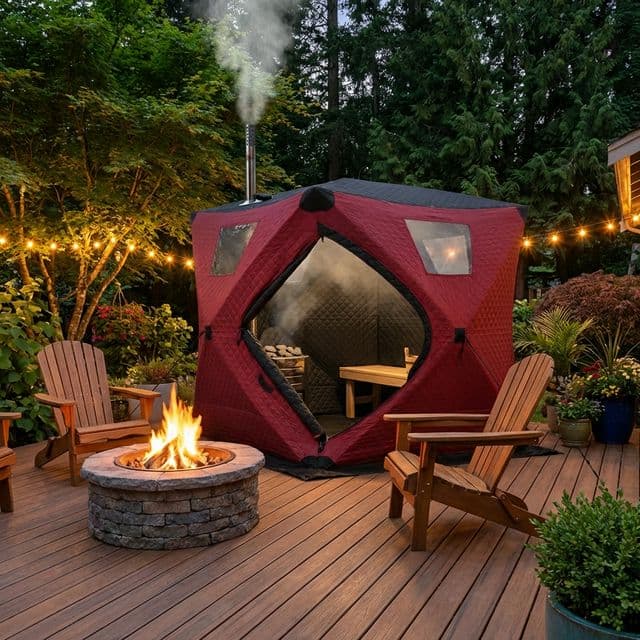
Backyard outdoor sauna planning context
Backyard context image used to keep site-fit and access-path thinking visible during plan review.
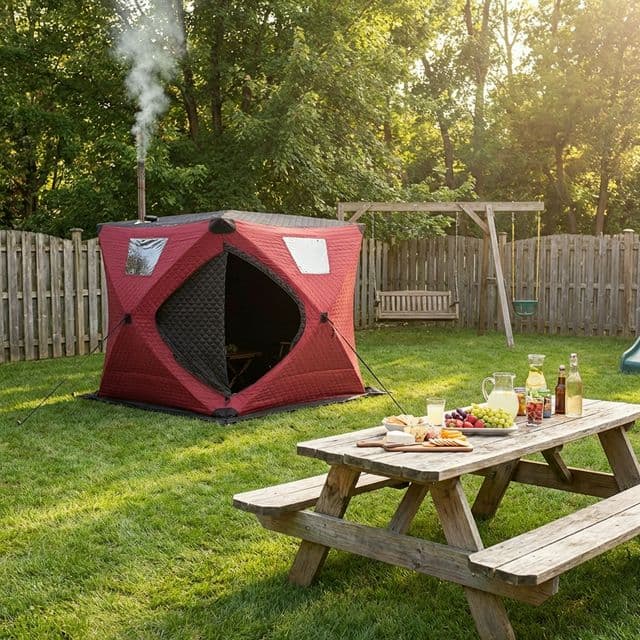
Family outdoor sauna seating context
Family-use context reminds readers that seat count changes the packet, not just the marketing headline.
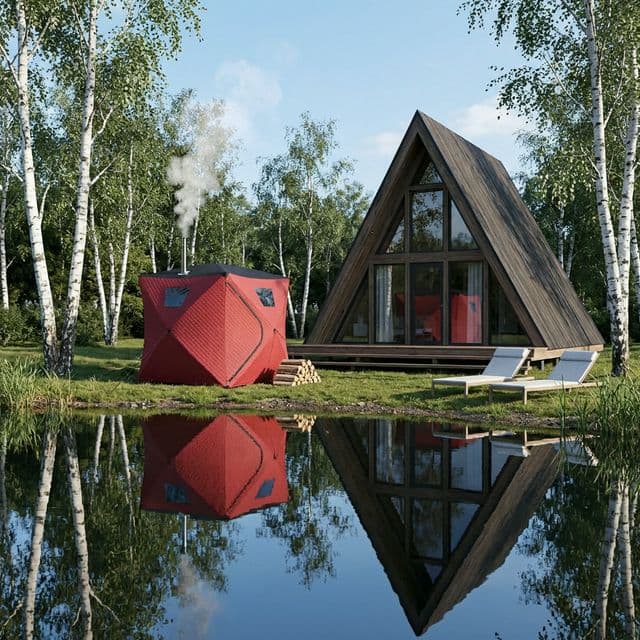
Cabin-style outdoor sauna planning context
Cabin-style reference helps illustrate why elevations and section drawings matter beyond a simple floor sketch.
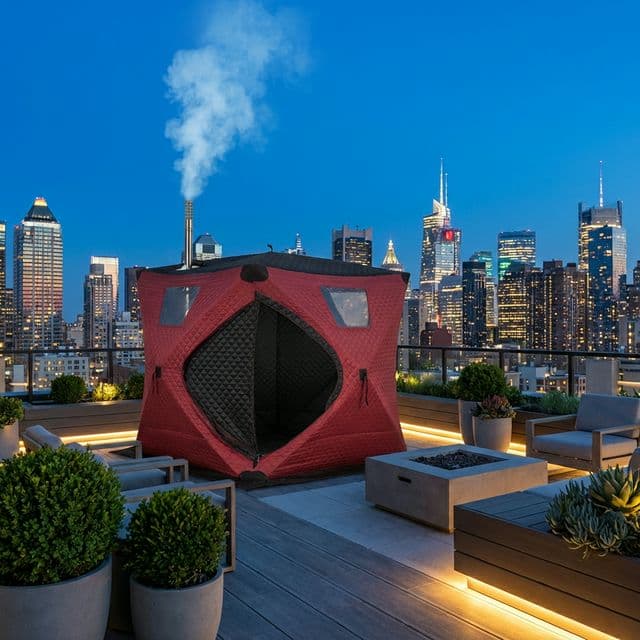
Tight-site planning context for outdoor sauna
Tight or urban sites need stronger setback, access, and shared-property discipline before a plan pack becomes useful.
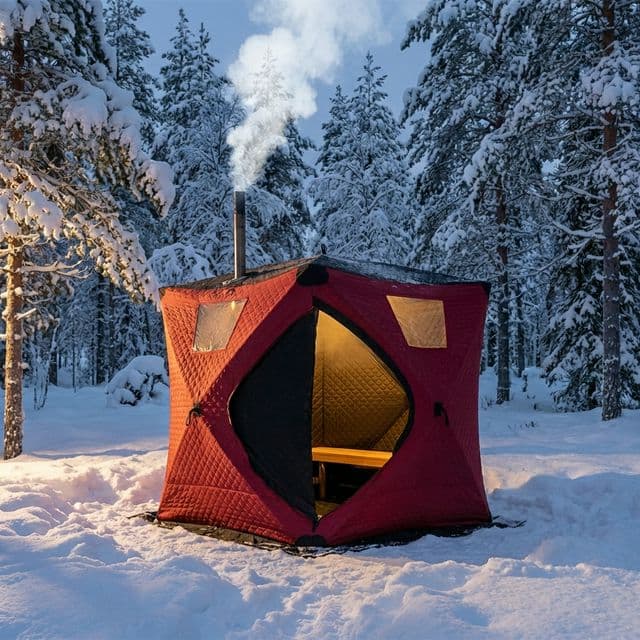
Cold-weather outdoor sauna exposure context
Cold and exposed settings make heater lane, envelope detail, and ventilation assumptions more important.
Send the packet, not just the idea
If you want useful feedback, email the actual plan packet, heater lane, site dimensions, and the result band. That gives [email protected] enough context to review the packet instead of re-running discovery from zero.
FAQ
The FAQ is grouped by decision intent instead of glossary filler so readers can resolve the most common planning objections quickly.
Do not buy the plan twice
The expensive mistake is not the PDF price. It is paying once for inspiration and then paying again to close the packet gaps. Run the checker, read the evidence, and email [email protected] once the missing layer is clear.