
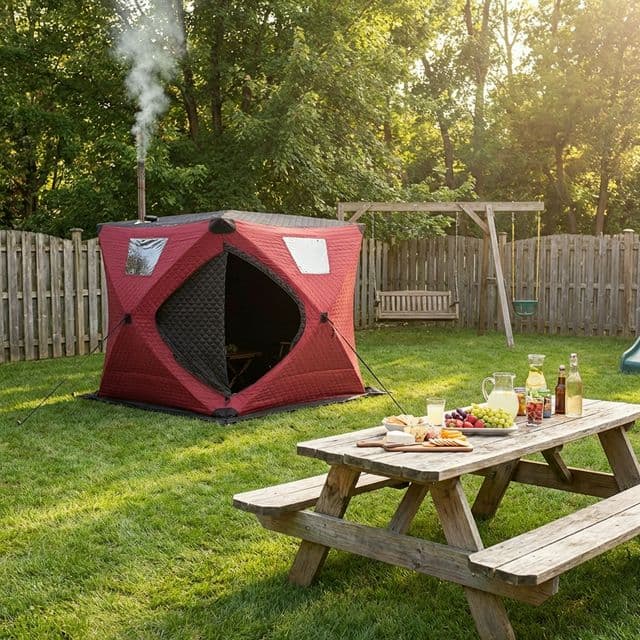
Two people planning a compact backyard outdoor sauna routine
Backyard context for two-user outdoor sauna planning.
Enter pad dimensions, heater profile, exposure level, and budget to get an instant go/no-go recommendation, weather-adjusted energy estimate, and next action for a small outdoor sauna project.
Default assumptions: 4 sessions/week, 30 minutes/session, 12-inch service clearance, and a 25-minute weather sensitivity pre-heat buffer.
All numeric fields are required.
Use this matrix to map your tool result to the report section that should be checked before acting. This keeps the tool layer fast and the report layer decision-focused instead of content-heavy.
| Tool status | Immediate interpretation | Verify in report | Next move |
|---|---|---|---|
| Small-Space Ready | Your footprint and electrical profile support a compact outdoor path without obvious blockers. | Small-model grid + ownership boundary + risk matrix | Shortlist 2-3 compact models and send your result to [email protected] for a final sanity check. |
| Boundary Fit | At least one critical variable is near failure tolerance (area, circuit headroom, weather exposure, or permit certainty). | Methodology + rate sensitivity + known unknowns | Re-run with conservative inputs and price the minimum upgrade step before ordering. |
| Not Fit Yet | Current setup carries unacceptable operational or safety risk for a small outdoor sauna purchase right now. | Risk matrix + permit variance + code checkpoints | Pause purchase and resolve the lowest-cost blocker first (circuit, structure, or local permit clarity). |
The tool gives instant feasibility. This report layer explains why the recommendation is trustworthy: key numbers, evidence timeline, scope boundaries, and competitor trade-offs.
Published: April 22, 2026. Last updated: April 22, 2026 (stage2 seo-geo closure pass: metadata precision and automation guardrails). Time-sensitive claims are date-stamped in the evidence ledger.
8 of top 10 sampled results are product/collection pages
Firecrawl web search on April 22, 2026 returned a result mix dominated by retailer and manufacturer listings, with one Reddit thread and one editorial review.
Published examples span 240V/30A to 240V/50A
Current product pages sampled for compact units show Salem at 240V/30A hardwire and Lennon at dedicated 240V/50A hardwire, with Redwood Duo requiring 240V heater service plus 120V lighting.
Visible sample price band: $3,499 to $6,814
Compact models can look affordable at listing level, but structural prep, electrical work, and permit friction still control total installed risk.
Seattle 120 sq ft vs Austin 200 sq ft examples
Current city examples show detached-structure thresholds vary and trade permits can still apply, so size alone is not a universal permit bypass.
CDC >400 annual CO deaths; OSHA NRTL boundary still applies
Small format does not remove heat-risk screening or certification checks; these remain category-level gates before checkout.
CPSC signals since Oct 2025 include ~1,000-unit and ~675-unit recalls
Recent CPSC notices include Sauna360 hybrid sauna bench-fall risk (Oct 23, 2025) and DIY sauna heater-kit fire risk (Mar 26, 2026).
| Dimension | Benchmark value | Why it matters | Source |
|---|---|---|---|
| SERP pattern for "small outdoor sauna" | 8 of top 10 sampled results were commerce pages | Searchers mostly see collections and listings first, so this page starts with a tool instead of long editorial copy. | Firecrawl web search snapshot (Apr 22, 2026) |
| Visible compact model price anchors | $3,499 (Lennon) to $6,814.29 (Salem), with Redwood Duo at $5,899 | Small format can lower entry price, but still leaves installation and permit costs outside headline listings. | Backyard Discovery, Almost Heaven, and Redwood product pages |
| Compact model footprint examples | Redwood Duo 62 3/4 x 50 3/4 in; Lennon 69.5 x 53.1 in; Salem 72 x 47 in | Small route planning depends on usable pad geometry, not just “2-person” marketing labels. | Current product-page dimensions (checked Apr 22, 2026) |
| Electrical requirement spread in compact examples | 240V/30A hardwire to dedicated 240V/50A hardwire | A small footprint does not remove electrical-upgrade risk. | Salem and Lennon product pages (checked Apr 22, 2026) |
| US residential electricity benchmark | 17.45 cents/kWh U.S. residential average; 8.40-27.61 cents/kWh contiguous-state spread (January 2026) | Use your utility tariff, but this benchmark anchors baseline cost sensitivity before local tariff mapping. | EIA Electricity Monthly Update (released Mar 24, 2026) |
| Climate variance affecting warm-up assumptions | EIA January 2026 weather context shows large state HDD swings versus last year (for example California -26%, Alaska +30%) | A fixed warm-up assumption can under- or over-estimate cost unless winter and exposure context are stress-tested. | EIA End Use weather context (January 2026 issue) |
| Permit-size variance examples | Seattle <120 sq ft (slab-on-grade language) vs Austin <=200 sq ft / <=15 ft | Small size alone is not a universal permit exemption. | Seattle SDCI + Austin Development Services pages |
| Heater sizing boundary (4.5 / 6.0 / 8.0 kW references) | Harvia KIP references list 100-210 / 170-300 / 250-425 cu ft room bands with 18.8A / 25A / 33.4A fuse minima | Do not map heater tier by marketing name alone; room volume and branch amperage must be screened together. | Harvia KIP45/KIP60/KIP80 references (checked Apr 22, 2026) |
| Certification boundary for U.S. use | CE mark is unrelated to U.S. requirements; specific NRTL mark is required | Do not accept vague safety language without identifiable U.S. certification marks. | OSHA NRTL FAQ (cached Apr 22, 2026) |
| Recent sauna recall signal | CPSC Sauna360 (Oct 23, 2025; ~1,000 units) plus DIY Sauna Heater Kit (Mar 26, 2026; ~675 units) | Category recall checks should be part of checkout workflow, not post-install cleanup. | CPSC recall notices 26-040 and DIY sauna heater-kit recall |
| Carbon monoxide burden context | >400 deaths, >100,000 emergency visits, >14,000 hospitalizations annually | Fuel-burning options and poor ventilation demand explicit risk controls. | CDC Carbon Monoxide Poisoning Basics (updated Jan 12, 2026) |
| Pregnancy heat boundary | ACOG: best not to use saunas/hot tubs early in pregnancy | This overrides optimization logic until individualized clinical guidance is clear. | ACOG Ask ACOG (published/reviewed Sep 2021) |
| User segment | Fit | Why | Next move |
|---|---|---|---|
| Homeowners with 35-65 sq ft usable footprint and known 240V readiness | Good fit | This profile matches the compact decision envelope this page is designed to evaluate. | Proceed to compact model shortlist and electrician pre-check. |
| Homes without dedicated 240V branch circuit | Conditional | Most sampled compact electric models still require hardwired 240V service. | Request electrician load study and upgrade estimate before model selection. |
| Yards that are narrow and wind-exposed | Conditional | Small shells in exposed sites can suffer larger runtime and comfort variance than listing pages imply. | Model windbreak/shelter and warm-up buffer before committing. |
| Users with unresolved medical, pregnancy, or heat-tolerance risk | Not suitable yet | Health boundaries override commercial fit, especially with frequent or high-heat routines. | Get clinician clearance first and hold purchase decisions until risk is clarified. |
The planner score is deterministic for identical inputs. It combines weighted factors for site fit, circuit headroom, weather exposure, budget alignment, and usage intensity. A high numerical score can still be blocked by hard constraints (for example unsafe wiring, missing permit readiness, or medical caution). Monthly cost outputs follow a heater-only DOE-style formula and are paired with a weather-adjusted warm-up sensitivity range.
| Factor | Baseline rule | Boundary state | Rationale |
|---|---|---|---|
| Installed pad area | Typical shell footprint + 12 in service clearance each side | Below 0.95x required area = high mismatch risk | Serviceability and weather runoff access are often omitted from product-card-only planning. |
| Electrical headroom | Use manufacturer heater amperage and dedicated 240V branch assumptions | No dedicated 240V = likely fit blocker for electric outdoor models | Winter pre-heat periods amplify nuisance-trip risk when branch headroom is tight. |
| Heater-to-room volume matching | Cross-check selected kW tier against manufacturer room-volume bands (for example 4.5/6.0/8.0 kW references). | Tool does not directly calculate interior cubic volume or ceiling height fit; this remains a manual verification step. | Power tier decisions can be mis-scoped if buyers rely on model labels without volume and amperage checks. |
| Exposure multiplier | Planning heuristic: sheltered 1.00x, mixed 1.18x, windy 1.32x demand adjustment | No public standardized outdoor-sauna warm-up dataset; use this as a conservative planning proxy, not a universal law | Outdoor ambient and wind profile materially shift heat-up time and energy draw. |
| Monthly cost | kW x runtime hours x local cents/kWh | Tool output is heater-only and excludes delivery charges | Tariff tiers, warm-up duration, and weather conditions vary by household and season. |
| Tariff structure mapping | Planner defaults to flat cents/kWh so outputs are reproducible for quick fit screening. | Time-of-use and demand-charge structures can move real bills away from flat-rate estimates. | Session timing in on-peak windows can change monthly cost even when total kWh is unchanged. |
| Evidence interpretation | Separate measured short-term effects from cohort associations | Observational signals are not proof of causal treatment benefit | Most long-term sauna outcomes are association-based and population-specific. |
| Permit path assumptions | Treat permit scope as jurisdiction-specific and split by trade (building/electrical/mechanical). | City examples (120 or 200 sq ft exemptions) are not universal national defaults. | Misreading exemption thresholds creates avoidable schedule and compliance risk. |
One of the most common decision gaps is choosing a heater tier by marketing label only. This table maps room-volume references to minimum electrical boundaries so power, comfort, and circuit readiness stay aligned.
| Heater tier | Reference room volume | Minimum room height | Electrical boundary | Timer boundary | Decision use | Source basis |
|---|---|---|---|---|---|---|
| 4.5 kW electric reference | 100-210 cu ft | 6.56 ft | Minimum fuse current listed as 18.8A | 60-minute operation period; up to 8-hour delay | Useful for compact two-person cabins, but only when interior volume and circuit sizing both stay inside this band. | Harvia KIP45B2401 (US page) |
| 6.0 kW electric reference | 170-300 cu ft | 6.56 ft | Minimum fuse current listed as 25A | 60-minute operation period; up to 8-hour delay | Common mid-tier choice; often workable on dedicated 240V/30A circuits depending heater listing and local code interpretation. | Harvia KIP60B2401 (US page) |
| 8.0 kW electric reference | 250-425 cu ft | 6.56 ft | Minimum fuse current listed as 33.4A | 60-minute operation period; up to 8-hour delay | High-output tiers can exceed many 30A branch assumptions; screen for 40A-class readiness before committing. | Harvia KIP80B2401 (US page) |
Applicability boundary: these are heater reference values, not a substitute for model-specific installation manuals, AHJ decisions, or licensed electrician load calculations.
This table turns product-sheet weight data into a first-pass load screening view. It is not a structural sign-off. Use it to decide when deck assumptions are too optimistic and professional review is mandatory.
| Model | Published dry weight | Footprint | Planning loaded weight | Estimated load density | Decision boundary | Source basis |
|---|---|---|---|---|---|---|
| SunRay Eagle 2 Person Outdoor Traditional | 725 lbs (published) | 51 x 51 in (~18.1 sq ft) | ~1,195 lbs planning load (adds 2 adults + stones/water assumption) | ~66 psf estimated static load | Load density exceeds common IRC-oriented 40 psf live-load benchmarks; verify deck framing before purchase. | SunRay product page + AWC DCA6 FAQ |
| Redwood Duo Outdoor Sauna - 2 Person | 910 lbs (published) | 62 3/4 x 50 3/4 in (~22.1 sq ft) | ~1,380 lbs planning load (adds 2 adults + stones/water assumption) | ~62 psf estimated static load | High concentrated load can exceed baseline deck assumptions; treat structural check as a blocker, not a nice-to-have. | Redwood product page + AWC DCA6 FAQ |
| Almost Heaven Salem 2 Person Barrel | Not listed on current product page (pending verification) | 72 x 47 in (~23.5 sq ft) | Pending reliable dry-weight data from manufacturer | Cannot estimate reliably from public page data alone | Do not finalize deck-only placement until dry/shipping weight is confirmed with the seller. | Almost Heaven product page |
Planning-load assumption used for published-weight models: +350 lbs for two adults and +120 lbs for stones/water/accessories. Treat missing weight fields as pending verification, not zero.
A major decision trap is assuming one permit threshold applies everywhere. This table shows why exemption size and trade-permit requirements should be validated as separate checklist items.
| Jurisdiction sample | Published structure threshold | Trade-permit boundary | Decision risk if ignored | Source basis |
|---|---|---|---|---|
| Seattle (SDCI example) | Accessory structure permit often not required when projected roof area is under 120 sq ft | Electrical and mechanical scope can still require permits even when structure exemption applies | Copying 200 sq ft assumptions from other cities can misclassify permit path and delay installation. | Seattle SDCI permit guidance |
| Austin (DSD example) | Detached one-story accessory structures under 200 sq ft are listed as building-permit exempt with explicit conditions (no dwelling, no plumbing, not in flood hazard area) | City guidance also states permits are required before starting electrical work | Assuming “no building permit” equals “no electrical permit” is a high-friction planning error. | Austin DSD work-exempt + homeowner permit guidance |
| Portland, OR (BDS/BOD example) | One-story non-habitable detached accessory structures are exempt up to 200 sq ft (and 15 ft height on project guidance pages) | BOD 21-05 states structural exemption does not negate electrical/mechanical/plumbing trade permits | Cross-jurisdiction buyers can underestimate permit scope if they do not split structure vs trade checks. | Portland accessory-structure guidance + BOD 21-05 |
This is a variance map, not legal advice. Use it to avoid false certainty, then confirm final scope directly with your local AHJ.
Pricing tables rarely show full ownership risk. These rows highlight where warranty scope and delivery timing can change total project reliability.
| Decision dimension | Known public data | Primary risk | Minimum executable action | Source basis |
|---|---|---|---|---|
| Warranty scope design | Current model references show a wide spread from 1-year to limited lifetime, and some split sauna shell vs heater/control components. | Price-first comparisons can hide long-run service risk when warranty scope is not normalized. | Ask for written warranty coverage matrix by subsystem (cabinet, heater, controls, accessories) before checkout. | Almost Heaven, Backyard Discovery, Redwood official product pages |
| Lead-time and project sequencing | At least one current product reference lists a 6-8 week shipping window for a compact outdoor model. | Permits, pad work, and electrician scheduling can desync if lead-time assumptions are copied from inventory-rich SKUs. | Lock permit/electrical pre-check first, then align ordering window to vendor lead-time confirmation. | Almost Heaven Salem product page |
| Heater-tier upgrade consequence | Some listings provide 8.0-9.0 kW upgrade paths while reference heater docs show higher fuse/current requirements for larger tiers. | Late heater upsizing can force unexpected circuit upgrade scope after purchase intent is already set. | Freeze heater tier only after electrician confirms branch capacity for the exact kW option. | Redwood Duo product page + Harvia KIP references |
Time-sensitive figures are date-stamped. Core claims are linked to source pages, and uncertain items are explicitly marked as pending verification instead of being guessed.
| Topic | Evidence detail | Date marker | Source link |
|---|---|---|---|
| Energy formula baseline | DOE specifies kWh as (wattage x time)/1000 and cost as energy x utility rate. | Published Apr 24, 2012 | Open source |
| US electricity benchmark | EIA monthly update reports 17.45 cents/kWh for the U.S. residential average in January 2026. | Issue released Mar 24, 2026 (data month: Jan 2026) | Open source |
| U.S. certification boundary (CE vs NRTL) | OSHA states CE mark is unrelated to U.S. product-safety requirements and that products must carry a recognized NRTL mark for the applicable product type. | Page cached Apr 22, 2026 | Open source |
| Recent sauna recall signal | CPSC recall 26-040 (Sauna360): October 23, 2025, about 1,000 units, seven bench-break reports, and one reported injury. | Recall notice published Oct 23, 2025 | Open source |
| Additional recall signal (heater kit fire hazard) | CPSC DIY Cold Plunge recall: March 26, 2026, about 675 sauna heater kits due to electrical-overheat fire hazard and risk of serious injury or death. | Recall notice published Mar 26, 2026 | Open source |
| US state electricity spread context | The same EIA issue shows contiguous-state residential averages from 8.40 to 27.61 cents/kWh for January 2026. | Issue released Mar 24, 2026 | Open source |
| Utility tariff-structure boundary | DOE FEMP guidance states time-of-use demand charges can be based on maximum demand during specified peak periods, which can diverge from flat-rate kWh estimates. | Page accessed Apr 22, 2026 | Open source |
| Deck load benchmark reference | AWC DCA6 FAQ states IRC-oriented deck criteria often use 40 psf live load plus 10 psf dead load (ASCE 7 context differs). | Published Sep 30, 2021 | Open source |
| Permit scope split example (local AHJ) | Saint Paul permit guide notes some accessory structures under 200 sq ft can be exempt from a general building permit while electrical/plumbing/HVAC still require trade permits. | City PDF posted May 2022 | Open source |
| Permit threshold variance example (Seattle) | Seattle SDCI guidance states many detached accessory structures under 120 sq ft projected roof area do not need a SDCI permit. | Page accessed Apr 22, 2026 | Open source |
| Permit threshold variance example (Austin) | Austin work-exempt guidance lists one-story detached accessory structures under 200 sq ft as exempt from building permits, with listed conditions. | Page accessed Apr 22, 2026 | Open source |
| Austin electrical permit baseline | Austin homeowner guidance states a person must obtain a homestead permit and pay required fees before beginning electrical, mechanical, and plumbing work. | Page updated Oct 9, 2023 (accessed Apr 22, 2026) | Open source |
| Trade permit persistence example (Portland) | Portland BOD 21-05 states exemption from a structural permit does not negate required electrical, mechanical, and plumbing trade permits. | Page accessed Apr 22, 2026 | Open source |
| Heating-fire baseline | USFA heating page reports 27,900 residential building heating fires, 165 deaths, and 780 injuries in 2023. | Page reviewed Jan 31, 2025 | Open source |
| Electrical-fire severity baseline | USFA electrical malfunction trend page lists 23,700 fires, 305 deaths, 800 injuries, and $1.50B loss in 2023. | Page reviewed Feb 14, 2025 | Open source |
| Extension cord boundary | CPSC checklist states extension cords should not be used as permanent wiring because installed wiring is safer and better protected. | Publication dated Jul 2008 | Open source |
| Wood-smoke and air-quality boundary | EPA notes wood smoke contains fine particles and VOCs, and some jurisdictions have restrictions on wood burning. | Updated Nov 6, 2025 | Open source |
| Carbon monoxide safety context | CDC reports more than 400 annual deaths, more than 100,000 emergency visits, and more than 14,000 hospitalizations from unintentional non-fire CO poisoning. | Updated Jan 12, 2026 | Open source |
| Pregnancy caution | ACOG advises against sauna/hot-tub use early in pregnancy due to overheating risk. | Published and reviewed Sep 2021 | Open source |
| Heat illness warning signs | CDC lists heat-exhaustion and heat-stroke warning signals such as dizziness, confusion, nausea, and loss of consciousness. | Last reviewed Jun 25, 2024 | Open source |
| Composite wood formaldehyde compliance | EPA states covered composite wood products must be TSCA Title VI labeled after Mar 22, 2019. | Page updated Feb 12, 2026 | Open source |
| Weather variance boundary for energy-planning uncertainty | EIA January 2026 weather context shows large state-level heating-degree-day shifts versus the prior year (for example, California down 26% and Alaska up 30%). | Issue released Mar 24, 2026 | Open source |
| Core sauna evidence review | Mayo Clinic Proceedings review summarizes observational and interventional sauna literature up to Feb 24, 2018. | PMID 30077204 | Open source |
| Acute cardiovascular response study | Experimental study (n=102) found short-term reductions in BP and arterial stiffness after one 30-minute sauna session. | PMID 29269746 | Open source |
| Model reference: Almost Heaven Salem 2 Person Barrel Sauna | Current product page lists 72 W x 47 D x 75 3/8 H dimensions, a 6 kW heater, 240V/30A hard-wire requirement, separate 110V lighting service, and limited-lifetime plus Harvia 1-year/5-year component warranty language. | Accessed Apr 22, 2026 | Open source |
| Model reference: SunRay Eagle 2 Person Outdoor Traditional | Current page lists 51 x 51 x 98 in dimensions, 725 lb weight, 4.5 kW heater, 220V/30A dedicated outlet guidance, and 7-year/1-year warranty language. | Accessed Apr 22, 2026 | Open source |
| Model reference: Redwood Duo Outdoor Sauna - 2 Person | Current page lists 62 3/4 x 50 3/4 x 82 3/4 in dimensions, 910 lb weight, 240V heater + 120V lighting service, and marks this model as a compact option for small spaces. | Accessed Apr 22, 2026 | Open source |
| Model reference: Backyard Discovery Lennon 2-4 Person Cube | Current page lists 69.5 x 53.1 x 78.3 in dimensions, 9kW heater, and dedicated 240V/50A hardwired electrical requirement with compact patio positioning language. | Accessed Apr 22, 2026 | Open source |
| Heater sizing reference: Harvia KIP45 | Harvia KIP45 lists 100-210 cu ft room volume, 6.56 ft minimum room height, 18.8A minimum fuse current, and a 60-minute operation period. | Accessed Feb 18, 2026 | Open source |
| Heater sizing reference: Harvia KIP60 | Harvia KIP60 lists 170-300 cu ft room volume, 6.56 ft minimum room height, 25A minimum fuse current, and a 60-minute operation period. | Accessed Feb 18, 2026 | Open source |
| Heater sizing reference: Harvia KIP80 | Harvia KIP80 lists 250-425 cu ft room volume, 6.56 ft minimum room height, 33.4A minimum fuse current, and a 60-minute operation period. | Accessed Feb 18, 2026 | Open source |
| Outdoor warm-up boundary for cost modeling | SunRay FAQ states average traditional outdoor sauna heat-up can range 30-45 minutes depending on temperature, location, and size. | Accessed Apr 22, 2026 | Open source |
| Counterexample class: indoor infrared compact model | Almost Heaven Laurel infrared listing shows 120V/20A dedicated outlet language and indoor small-space positioning, highlighting that indoor infrared electrical assumptions are not equivalent to outdoor traditional cabins. | Accessed Apr 22, 2026 | Open source |
These are high-impact checks where buyers commonly over-assume. Each row includes a practical action so uncertainty becomes executable instead of blocking.
| Checkpoint | Evidence detail | User impact | Minimum action | Source |
|---|---|---|---|---|
| Heat-up variability and energy planning | SunRay FAQ states typical outdoor traditional sauna heat-up is 30-45 minutes and varies by outside temperature/location. | Fixed short warm-up assumptions can understate winter electricity cost. | Run pre-heat sensitivity (25+ minutes/session) before final budget decisions. | SunRay Eagle FAQ |
| Flat-rate assumptions vs time-variable tariffs | DOE FEMP guidance notes utility bills can include time-of-use demand charges based on peak-period demand, not only flat energy rates. | Using one average cents/kWh can understate or overstate real monthly spend when sessions cluster in on-peak windows. | Map planned session times to your utility on-peak periods, then rerun cost sensitivity with peak/off-peak rates. | DOE FEMP utility-rate options guidance |
| Deck load baseline vs sauna placement | AWC DCA6 FAQ notes IRC-oriented deck design commonly uses 40 psf live + 10 psf dead load assumptions. | Compact but heavy saunas can consume load budget quickly when concentrated on small footprints. | Use model weight + occupant assumptions and require AHJ/engineer validation for deck installs. | American Wood Council DCA6 FAQ |
| Heater tier must match room volume + amperage | Harvia 4.5/6.0/8.0 kW references publish different room-volume bands and fuse minima, plus a 60-minute operation period. | Choosing kW by brand marketing label alone can mis-size comfort and circuit readiness. | Verify interior room volume and branch amperage against the selected heater tier before final SKU lock. | Harvia KIP series product references |
| Permit scope can split by trade | Saint Paul guidance shows accessory-structure exemptions and separate electrical/plumbing/HVAC trade permit requirements can coexist. | Assuming a single permit answer can create late-stage compliance delays. | Confirm permit scope with local AHJ by trade before placing a model order. | City of Saint Paul permit guide |
| Permit threshold variance across cities | Seattle, Austin, and Portland examples show different exemption thresholds and still require trade-specific permit checks. | Borrowing a permit checklist from another city can invalidate timelines and installation plans. | Build a local permit worksheet with separate rows for structure, electrical, and mechanical scope. | Seattle SDCI + Austin DSD + Portland BOD 21-05 guidance |
| Wood-smoke externality boundary | EPA Burn Wise says wood smoke contains fine particles and gases/VOCs and notes local restrictions may apply in some jurisdictions. | Wood-fired options can add air-quality compliance and neighborhood acceptance risk. | Check local burn restrictions and seasonal alerts before committing to wood-fired heaters. | EPA Burn Wise |
| Warranty scope normalization before purchase | Current compact outdoor product pages publish materially different subsystem warranty durations (for shell, heaters, and controls). | Service risk and post-install ownership cost can be under-scoped in price-only shortlists. | Compare warranty scope line-by-line across shortlisted models before placing a deposit. | Almost Heaven + SunRay + Redwood product pages |
This table separates direct measurements from cohort associations so decisions stay grounded. If a claim is not supported by robust public evidence, we label the boundary instead of forcing a conclusion.
| Claim area | Evidence base | What it supports | Limits / boundary | Source |
|---|---|---|---|---|
| Acute blood-pressure response | Experimental study, n=102, one 30-minute session at 73 C | Short-term physiologic response can be measured in controlled settings. | Single-session design does not prove long-term disease prevention effects. | PMID 29269746 |
| Dementia and Alzheimer association | Prospective cohort, 2,315 Finnish men, median follow-up 20.7 years | Higher sauna frequency is associated with lower observed hazard in this population. | Observational association in one demographic; not proof of causality for all users. | PMID 27932366 |
| Pneumonia risk association | Prospective cohort, 2,210 men, 25.6-year follow-up | Frequent sauna bathing correlates with lower observed pneumonia risk. | Population is restricted; mechanism and transferability to other groups remain uncertain. | PMID 29229091 |
| Overall cardiovascular and wellness benefit narrative | Narrative review covering observational, experimental, and interventional studies | Evidence trend is promising enough for cautious wellness framing. | Review itself highlights outstanding uncertainty and heterogeneous study quality. | PMID 30077204 |
| Concept | Practical meaning | When it applies | When it does not apply |
|---|---|---|---|
| Electric heater vs wood-fired setup | Electric setups simplify operation but usually require dedicated 240V infrastructure. Wood-fired setups reduce electrical demand but add combustion controls. | Use electric when panel upgrades are feasible and you want predictable startup; use wood-fired only when venting and fuel logistics are manageable. | Do not assume wood-fired is a zero-risk shortcut; CO controls, smoke exposure, and local burn restrictions become primary constraints. |
| Heater tier vs room volume and branch amperage | Reference heater docs publish specific room-volume bands and fuse minima for 4.5, 6.0, and 8.0 kW tiers. | Use this before locking heater output so interior volume, ceiling height, and circuit capacity stay aligned. | Do not infer suitability from model marketing names alone; kW upgrades can silently break branch assumptions. |
| Deck load assumptions vs concentrated sauna loads | Common IRC-oriented deck guidance uses 40 psf live + 10 psf dead load baselines, while many compact sauna shells already weigh hundreds of pounds before occupancy. | Use load math early when planning deck placement, especially for 725-910 lb product classes. | Do not treat this as structural sign-off; final framing adequacy still requires AHJ and/or engineer confirmation. |
| Building permit exemption vs trade permits | Local jurisdictions can exempt small structures at different thresholds (for example 120 sq ft or 200 sq ft) while still requiring trade permits. | Treat permit scope as a checklist by trade (building, electrical, mechanical) before purchase. | Do not assume one city threshold applies nationally; always verify with your own AHJ. |
| Warranty headline vs subsystem coverage | Vendors can publish different durations for sauna shell, heater, controls, and accessories within the same product listing. | Normalize warranty scope side-by-side when shortlisting models with similar upfront pricing. | Do not treat a single “X-year warranty” headline as full-system risk protection. |
| Timer-limited operation periods | Some heater references include built-in operation periods (for example 60 minutes) and delay timers. | Use timer behavior to plan session supervision and restart expectations for multi-user routines. | Do not assume unattended continuous operation is intended simply because the heater can reach target temperature quickly. |
| Heater-only cost vs total ownership cost | Calculator output tracks heater draw only (kWh x rate), which is useful for comparing usage profiles. | Use for model-to-model operating sensitivity and schedule planning under fixed tariff assumptions. | Does not include panel upgrades, pad work, permit fees, delivery, or annual maintenance. |
| Dedicated 240V requirement | Many outdoor two-person electric models call for dedicated 240V circuits in the 30A-40A range. | Use this as a pre-purchase screening rule and electrician scoping baseline. | Not a substitute for local code interpretation, panel-level load calculation, or permit approvals. |
| Outdoor traditional class vs indoor infrared class | Outdoor traditional compact examples in this report mostly require 240V heater service, while some indoor compact infrared models are published as 120V/20A dedicated. | Use class matching before copying electrical assumptions across products, especially when a listing does not clearly state indoor vs outdoor design intent. | Do not treat a 120V indoor infrared listing as proof that outdoor traditional cabins can skip 240V planning. |
| Flat-rate kWh math vs time-variable utility bills | The calculator uses flat-rate kWh math for reproducibility, but some utilities apply time-of-use or demand components. | Use flat-rate output for quick screening, then map session schedule to your tariff structure before final budgeting. | Do not treat one average cents/kWh estimate as a complete monthly bill forecast when TOU windows or demand charges apply. |
| Weather exposure multiplier | Wind and ambient temperature can materially increase warm-up time and runtime energy draw. | Apply a conservative multiplier for open/windy sites and winter-heavy routines. | Do not over-generalize a single test day to annual operating cost without seasonal checks. |
These visuals support planning discussions (placement, pairing, and session context). Final cabin dimensions should still come from the specific model spec sheet.
Two people planning a compact backyard outdoor sauna routine
Backyard context for two-user outdoor sauna planning.
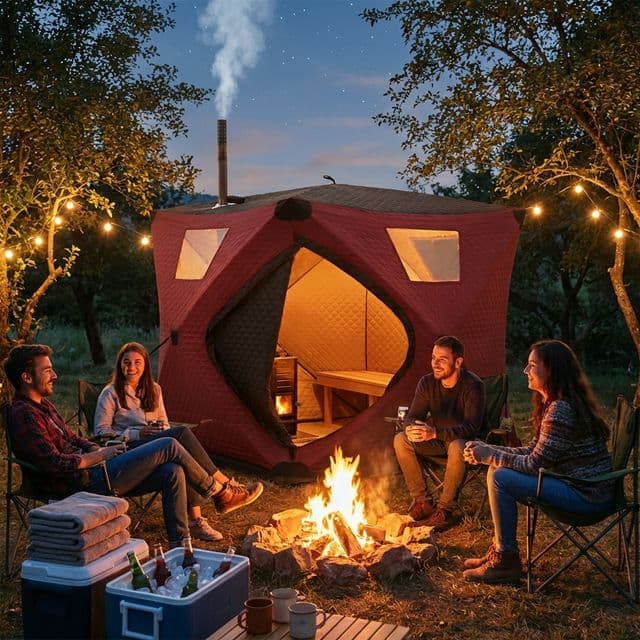
Two users checking outdoor sauna setup in open weather conditions
Useful for discussing exposure and shelter assumptions.
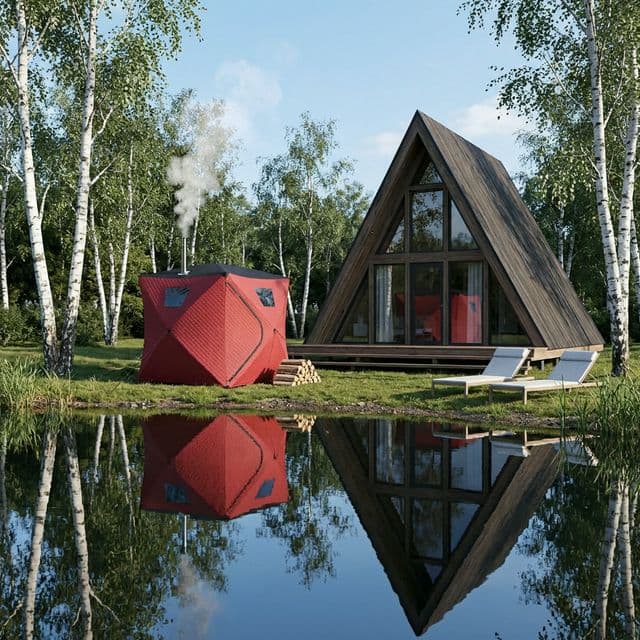
Two-person outdoor sauna concept near a small cabin
Illustrates footprint and circulation planning for compact sites.
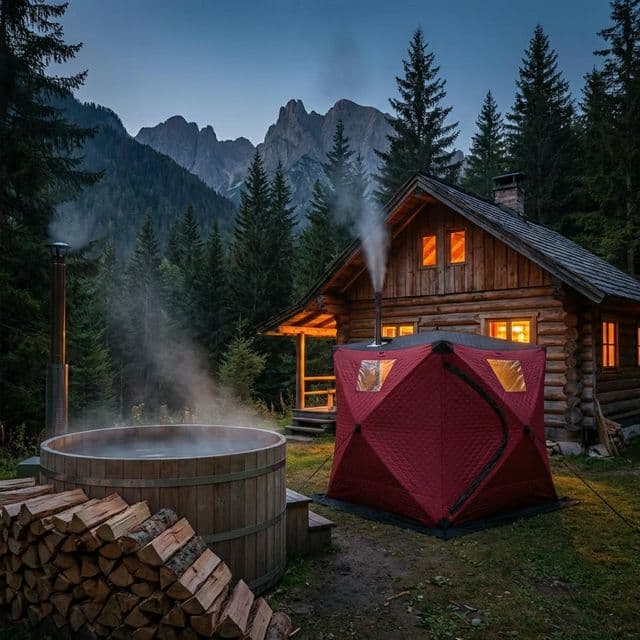
Outdoor sauna placement next to a retreat-style cabin
Highlights planning for service access and weather exposure.
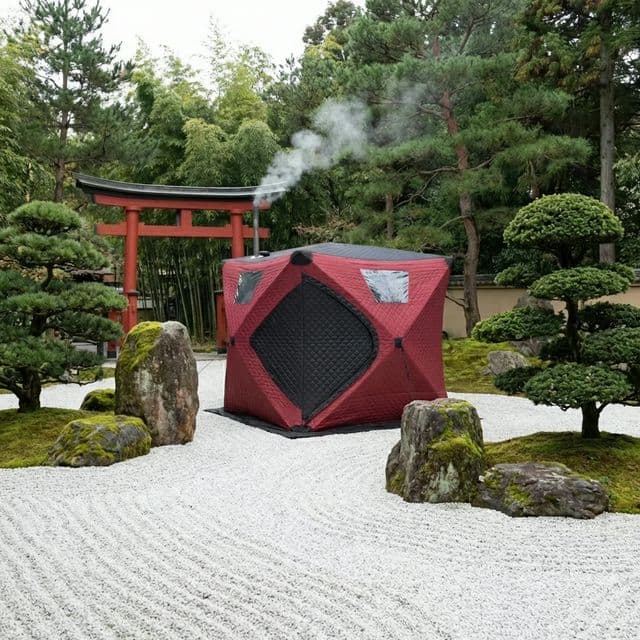
Outdoor sauna in a sheltered garden setting
Represents lower-exposure operating scenarios.
| Model | Heater profile | Electrical | Dimensions | Listed power | Published weight | Warranty scope snapshot | Ownership boundary | Best for | Evidence quality | Source |
|---|---|---|---|---|---|---|---|---|---|---|
| Almost Heaven Salem 2 Person Barrel | Electric traditional heater | 240V, 30A hard-wire heater + separate 110V lighting circuit | 72 x 47 x 75 3/8 in | 6.0 kW | Not publicly listed on current product page | Limited lifetime sauna-room coverage; Harvia heater language lists 1-year elements and 5-year other components | Lead time listed as roughly 6-8 weeks, so order timing can affect project sequence. | Buyers prioritizing compact barrel format with a mainstream dedicated 240V requirement. | Official product page | Spec |
| Backyard Discovery Lennon Outdoor Cube Sauna - 2-4 Person | Compact cube electric | Dedicated 240V / 50A hardwired connection | 69.5 x 53.1 x 78.3 in | 9.0 kW | Not explicitly listed on current page | 5-year comprehensive warranty language shown on current listing page | Higher output and 50A requirement can raise electrical-upgrade risk despite compact footprint language. | Buyers prioritizing compact patio footprint with modern cube design. | Official product page | Spec |
| Redwood Duo Outdoor Sauna - 2 Person | Electric-focused with multiple heater tiers | 240V heater service + 120V lighting service | 62 3/4 x 50 3/4 x 82 3/4 in | 6.0 kW standard (8.0-9.0 kW upgrade options listed) | 910 lbs (published) | 1-year wooden-sauna warranty plus 5-year Harvia component warranty listed | Higher output upgrade paths can raise branch-circuit requirements and long-run operating sensitivity. | Projects where published high-weight data is useful for up-front structural planning. | Official product page | Spec |
This comparison prevents a common decision error: copying electrical assumptions across non-equivalent sauna classes. The first row represents this page's outdoor planning scope; the second row is a deliberate counterexample.
| Class | Typical electrical profile | Evidence snapshot | Use / do-not-use boundary |
|---|---|---|---|
| Outdoor traditional compact class (this page primary scope) | Commonly 240V hardwired heater service (examples in this page range from 30A to 50A, with some models also using 120V for lighting). | Almost Heaven Salem, Backyard Discovery Lennon, and Redwood Duo published specs. | Use this class for outdoor weather-exposed planning and electrician scoping. |
| Indoor compact infrared class (counterexample) | Some models publish 120V/20A dedicated outlet requirements (for example Almost Heaven Laurel infrared). | Almost Heaven Laurel listing shows indoor small-space positioning and 120V/20A dedicated outlet language. | This is a valid electrical counterexample but not an outdoor traditional equivalence case. |
| Scenario | Assumptions | Monthly kWh | Session-only cost | Pre-heat sensitivity | Decision hint |
|---|---|---|---|---|---|
| Light usage | 4.5 kW, 3 sessions/week, 25 min, 15 cents/kWh | 24.3 kWh | $3.64 | $7.30 (+25 min pre-heat/session) | Often manageable, but weather and wind can move real-world cost closer to the sensitivity value. |
| Baseline usage | 6.0 kW, 4 sessions/week, 30 min, 17.45 cents/kWh | 51.9 kWh | $9.07 | $16.62 (+25 min pre-heat/session) | Use this as a planning baseline, then replace with your local tariff and cold-season runtime behavior. |
| Heavy usage | 8.0 kW, 7 sessions/week, 40 min, 27.61 cents/kWh | 161.7 kWh | $44.65 | $72.52 (+25 min pre-heat/session) | Daily winter routines materially increase cost sensitivity; pad, shelter, and heater match become critical. |
Cost method follows DOE appliance math: kWh = kW x runtime hours; cost = kWh x utility rate. Sensitivity adds 25 minutes of pre-heat per session.
Baseline scenario: 6.0 kW heater, 4 sessions/week, 30 minutes each. This table uses EIA's contiguous-state benchmark range so cost planning does not rely on a single national average.
| Rate profile | Benchmark tariff | Session-only monthly cost | With 25-min pre-heat | Decision note |
|---|---|---|---|---|
| Low-rate benchmark states | 8.40 cents/kWh | $4.36 | $8.00 | Even low-rate markets should validate pre-heat assumptions because winter warm-up can dominate runtime. |
| US residential average benchmark | 17.45 cents/kWh | $9.07 | $16.62 | Use this as a national planning midpoint only; local utility tariffs can vary materially. |
| High-rate benchmark states | 27.61 cents/kWh | $14.33 | $26.28 | Higher-rate markets remain workable for many users, but annual deltas are meaningful for frequent routines. |
Source basis: EIA Electricity Monthly Update (issue released March 24, 2026) lists 8.40-27.61 cents/kWh contiguous-state residential average range for January 2026.
| Risk | Probability | Impact | Early signal | Mitigation | Source |
|---|---|---|---|---|---|
| Heating equipment ignition risk | Medium | High | Scorched clearances, overheating surfaces, repeated abnormal smell during operation | Follow heater clearance rules, confirm thermal shielding, and stop use if overheating appears. | USFA residential heating fire trend |
| Electrical fault and fire exposure | Medium | High | Frequent breaker trips, warm outlets, flickering lights | Use dedicated properly rated wiring and stop use if overheating or repeat trips appear. | USFA electrical malfunction trend |
| Heater tier and branch mismatch | Medium | Medium-High | Selected heater kW requires amperage/volume beyond your current branch and room assumptions | Cross-check heater-room volume tables and minimum fuse/current requirements before finalizing the heater tier. | Harvia KIP reference pages |
| Utility tariff mismatch (flat-rate assumption vs TOU/demand charges) | Medium | Medium | Bills remain higher than flat cents/kWh estimates when sessions are mostly in evening peak windows | Recalculate with your utility tariff schedule and shift some sessions to off-peak windows when possible. | DOE FEMP utility-rate options guidance |
| Extension-cord misuse | Medium | High | Warm or coiled extension cord during operation | Do not use extension cords as permanent wiring; install proper receptacles instead. | CPSC Home Electrical Safety Checklist |
| Warranty-scope misunderstanding | Medium | Medium | Quote or checkout flow highlights only one headline warranty number without subsystem detail | Request a written warranty matrix for sauna shell, heater, controls, and accessories before payment. | Official product warranty statements |
| Recall-check omission before purchase | Low-Medium | High | Checkout proceeds without checking model/kit names against CPSC recall notices and serial guidance | Search current CPSC recall notices by brand/model and retain serial/lot documentation before first use. | CPSC Sauna360 + DIY heater-kit recall notices |
| Permit-scope mismatch before installation | Medium | Medium-High | Project assumes no permits are required because the structure is small, without trade-permit checks | Validate permit scope by trade with your AHJ (building vs electrical/mechanical) before order placement. | Local AHJ permit guidance (St Paul example) |
| Carbon monoxide exposure (fuel-burning setups) | Low-Medium | High | Headache, dizziness, nausea, confusion, or unusual fatigue during/after sessions | Use proper venting and CO alarms; stop use and seek fresh air immediately if symptoms appear. | CDC Carbon Monoxide Poisoning Basics |
| Wood-smoke particulate and neighbor-air-quality exposure | Low-Medium | Medium-High | Persistent visible smoke, irritation symptoms, or local burn restriction alerts | Check local burn regulations, optimize combustion/venting, and prefer electric options in tighter urban air-sheds. | EPA Burn Wise |
| Heat illness escalation | Medium | High | Excessive thirst, dizziness/confusion, nausea, severe headache | Stop session immediately, cool down, hydrate, and seek urgent care for heat-stroke signs. | CDC heat illness guidance |
| Pregnancy overheating risk | Low frequency, high consequence | High | Any attempt to continue prolonged high-heat exposure in pregnancy | Follow ACOG guidance: avoid sauna/hot tub early in pregnancy unless clinician advises otherwise. | ACOG Ask ACOG Sep 2021 |
| Material/off-gassing compliance blind spots | Low-Medium | Medium | Seller cannot provide TSCA Title VI labeling/compliance trail | Request documentation for covered composite wood products before purchase. | EPA TSCA Title VI page |
Where public evidence is incomplete, we do not force certainty. We mark it and define a minimum action path so you can still make a safe purchase decision.
| Topic | Current status | Decision impact | Minimum next step |
|---|---|---|---|
| Incomplete public weight disclosure across models | Some current official product pages (for example, Almost Heaven Salem) publish dimensions and electrical specs but do not list dry/shipping weight. | Without verified weight, deck-load screening can be under-scoped and produce false confidence. | Pending verification: request written dry + shipping weight from the seller before structural sign-off. |
| Interior volume is not consistently published across model pages | Many product pages prioritize exterior dimensions and may omit normalized interior cubic volume values. | Without interior volume normalization, heater-kW comparisons can be over-confident and mis-size comfort or electrical assumptions. | Pending verification: request interior cubic volume and minimum ceiling-height documentation from each shortlisted vendor. |
| Wood-fired insurance acceptance by carrier | Policy language and underwriting requirements differ by insurer and region, with limited public standardization. | Buyers can face unexpected compliance costs if insurance demands specific chimney, spark arrestor, or setback controls. | Pending verification: send your target model and venting plan to insurer before purchase approval. |
| Winter pre-heat duration variability | Public sources provide formulas, but open-yard warm-up datasets remain sparse across climates. | Operating cost can be under-estimated if users assume session time equals heater-on time year-round. | Use tool sensitivity (+25 min/session), then validate against the first cold-season billing cycles. |
| Long-term outdoor durability by climate | Manufacturer warranties and maintenance guides are not fully normalized across rain/snow/salt-air contexts. | Maintenance workload and replacement intervals may vary more than initial product pages suggest. | Collect climate-matched owner references and confirm annual maintenance tasks before final model selection. |
| No reliable public benchmark for total installed ownership cost | Public model pages usually publish product specs but do not provide standardized all-in cost data for electrical upgrades, permits, and site work. | Buyers can under-budget if they treat heater-only operating cost as full ownership cost. | Pending verification: obtain written quotes for electrician scope, permit fees, and pad/deck work before purchase approval. |
| Utility tariff complexity is household-specific | Public benchmark rates are available, but household-level TOU and demand-charge applicability depends on utility plan enrollment and meter setup. | A flat-rate estimate can misstate monthly spend if most sessions happen during on-peak windows. | Pending verification: pull your current tariff sheet and map session timing to on-peak/off-peak periods. |
| No single national sauna permit path | Local jurisdictions can differ on what is exempt as a structure versus what still needs electrical/mechanical permits. | Cross-state buyers can be delayed if they copy permit assumptions from other cities. | Treat out-of-area permit examples as directional only and obtain an AHJ-specific checklist. |
The table below clarifies which claims are time-sensitive, how often they should be revalidated, and the minimum action needed to avoid stale assumptions.
Review cadence: revalidate this page every 6-12 months, or sooner when supplier specs, local code pages, utility tariffs, or recall notices change.
| Evidence line | Current data point | Refresh cadence | Minimum action |
|---|---|---|---|
| US electricity price baseline | EIA March 24, 2026 issue reports January 2026 U.S. residential average at 17.45 cents/kWh with contiguous-state spread from 8.40 to 27.61 cents/kWh. | Monthly | Re-check the next EIA monthly release before finalizing annual operating-cost assumptions. |
| Utility tariff structure assumptions | DOE FEMP utility-rate guidance notes time-of-use demand charges can be based on maximum demand during specified peak windows. | When utility tariff changes | Map your planned session times to on-peak/off-peak windows and rerun monthly cost sensitivity. |
| SERP intent mix for "small outdoor sauna" | Firecrawl snapshot captured April 22, 2026 showed a commerce-dominant result mix (8/10 commerce pages). | Quarterly or after major ranking shifts | Re-run SERP snapshot before large content rewrites to keep tool/report balance aligned with intent. |
| Model specification sheets (power/weight/dimensions) | Almost Heaven, Backyard Discovery, and Redwood compact model pages were re-checked on April 22, 2026. | Before order placement | Re-validate model pages at checkout stage because SKU specs and options can shift. |
| Heater sizing references (volume/fuse/timer constraints) | Harvia KIP45/KIP60/KIP80 reference pages re-checked on April 22, 2026. | Before choosing final heater tier | Re-check heater reference pages because availability status and wiring specifications can change. |
| Residential heating-fire context | USFA heating page reviewed January 31, 2025 with 2023 national estimates. | Annual estimate cycle | Use trend data for screening, then pair with local installer and code review. |
| Composite wood compliance baseline | EPA page updated February 12, 2026; includes February 6, 2026 proposed standards update. | Rulemaking-driven | Ask suppliers for current TSCA Title VI documentation and watch proposal-to-final rule changes. |
| Permit-scope examples for structure vs trade permits | Seattle and Austin threshold pages plus Portland BOD 21-05 were re-checked on April 22, 2026 and continue to separate structural exemption from trade-permit scope. | Local code cycle dependent | Confirm latest permit interpretation directly with your AHJ before ordering. |
| Recent sauna recall watch | CPSC signals include Sauna360 (Oct 23, 2025, about 1,000 units) and DIY Sauna Heater Kit (Mar 26, 2026, about 675 units). | Before final payment and before first use | Run product and heater-kit names through the CPSC recalls database and keep serial/lot documentation. |
| Warranty scope and lead-time fields | Current vendor pages re-checked on April 22, 2026 show non-uniform subsystem warranty durations and model-specific logistics notes. | At quote and checkout stages | Capture screenshots/PDFs of warranty and lead-time terms before placing deposits. |
| Pregnancy heat-risk boundary | ACOG Ask ACOG publication and review date September 2021. | Guideline update dependent | Treat as hard boundary unless a clinician provides individualized advice. |
Send dimensions, circuit details, and budget. We will return a focused recommendation path for your small outdoor sauna plan and call out wiring, weather, or fit boundaries before you buy.
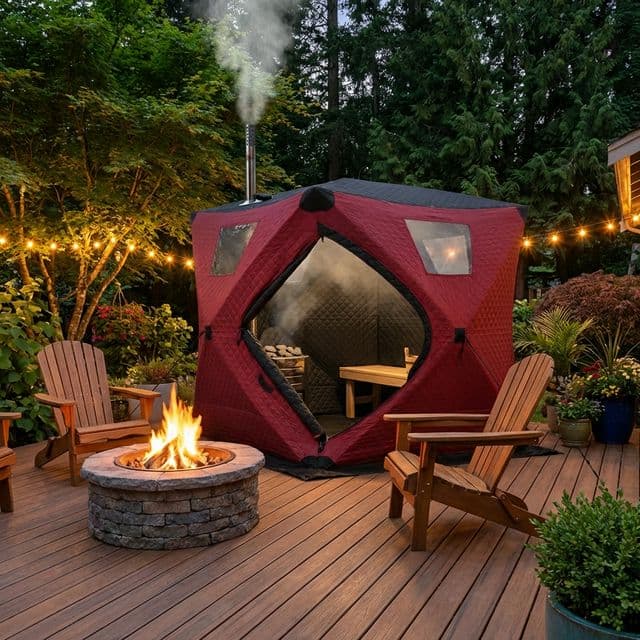
Assumption: Pad 8 x 7 ft, dedicated 240V/40A line, mixed exposure yard.
Process: Planner returns strong fit. Buyer chooses a 6 kW model and books electrician verification before delivery.
Result: Installation completes without rework; first winter bills stay within the expected sensitivity range.
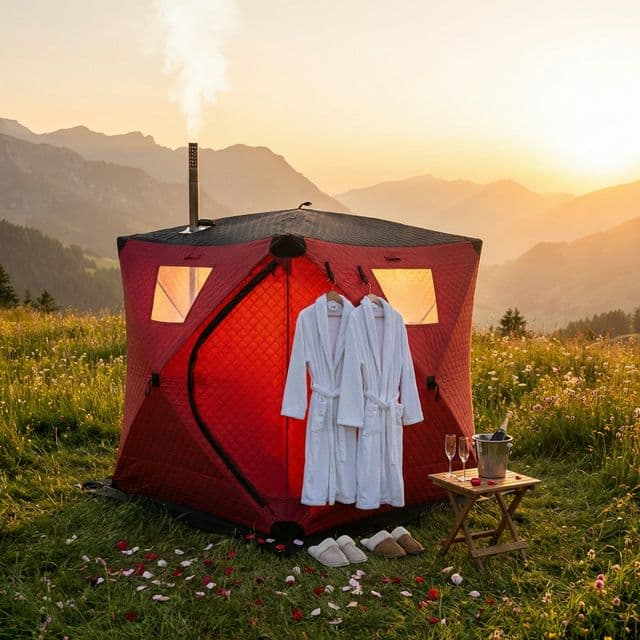
Assumption: Pad 6.5 x 5.5 ft, no dedicated 240V, windy side yard exposure.
Process: Planner flags not-fit due electrical blocker and boundary-level footprint ratio.
Result: Buyer pauses purchase and prioritizes panel upgrade plus windbreak planning before revisiting models.
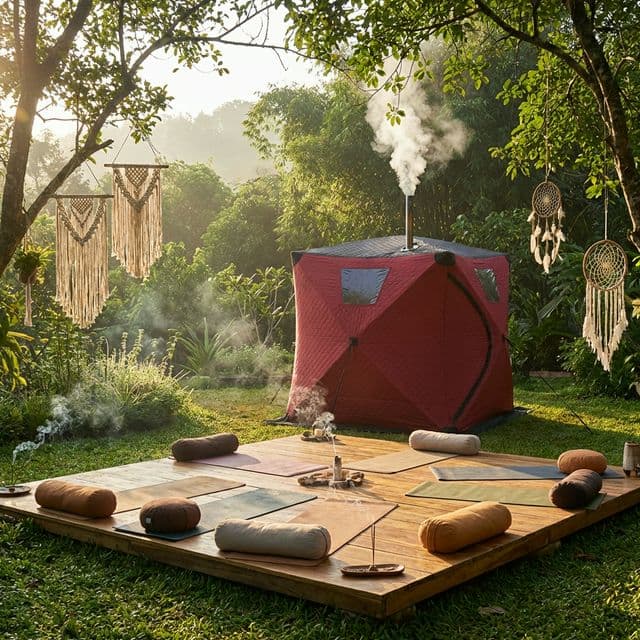
Assumption: Daily sessions planned, open-yard exposure, higher local power rate.
Process: Planner shows conditional fit with elevated warm-up sensitivity and higher monthly cost variance.
Result: User shifts to 4-5 sessions/week, adds shelter, and keeps emergency stop/hydration protocol visible.
Questions are grouped by real decision moments: fit, wiring/cost, and risk boundaries.
Send your site sketch, target budget, and breaker details to [email protected]. We will map your setup to suitable small outdoor models and call out wiring, weather, or usage risks before purchase.