
Do It Yourself Outdoor Sauna Planner
Enter budget, site envelope, build cadence, and code-readiness inputs to get an immediate build-path recommendation. Then use the report sections below to stress-test evidence, boundaries, and risk before buying materials.
Default profile models a 112 sq ft pad, 12-week schedule, 8 build hours per week, and 17.30 cents/kWh electricity benchmark.
Boundary warning: permit assumptions, fire-clearance documents, and ventilation plan are hard gates. If any are missing, do not proceed to checkout.
Result meaning: score summarizes build-path fit. You still need jurisdiction checks, listing-mark verification, and model-level recall review before purchase.
Tool output to report verification bridge
Map every tool result to the exact report module you should verify next. This keeps execution speed without skipping evidence checks.
Swipe horizontally to view full decision columns.
| Tool status | Immediate interpretation | Verify in report | Next move |
|---|---|---|---|
| Strong Fit | Inputs support one primary DIY pathway with manageable schedule and safety assumptions. | Comparison grid, evidence ledger, and risk matrix | Lock BOM + permit packet and email support for final spec sanity-check before checkout. |
| Conditional Fit | Core idea is viable but at least one boundary (timeline, circuit, ventilation, or permits) is thin. | Methodology assumptions and known-unknown table | Run conservative scenario and close the top boundary before any deposits. |
| Boundary Hit | Current plan has high rework probability if build starts now. | Risk matrix and alternatives section | Pause buying, build a minimum-safe fallback path, then rerun tool with updated constraints. |
Report summary: key conclusions before materials purchase
These conclusions are designed for decisions, not for generic reading. Each card includes source context and practical implication.
Most failed builds do not fail at checkout; they fail when permit, ventilation, and electrical assumptions are guessed instead of verified.
Source: TentSaunaSupply hybrid method refresh completed February 27, 2026 with US safety and energy references.
DIY ROI calculators that use a flat national number can materially understate monthly cost in high-rate states.
Source: EIA Electric Power Monthly Table 5.3 and 5.6.B (published February 24, 2026).
Two U.S. cities already show materially different exemption logic and conditions, so copied checklists create preventable compliance risk.
Source: Seattle SDCI permit page and Austin work-exempt permit page reviewed February 27, 2026.
A structure can be permit-exempt while heater wiring or plumbing still requires separate trade permits and inspections.
Source: Seattle Construction Inspections and Portland residential permit guidance reviewed February 27, 2026.
Even with long-term declines, annual U.S. heating-fire losses remain high enough to justify formal clearance and commissioning checklists.
Source: USFA residential building heating fire trends (page last reviewed February 14, 2025).
The same-day recalls reported 72 incident reports and 33 injuries in total, so "new in box" is not a safety proxy.
Source: CPSC recall notices 26-036 and 26-040 reviewed February 27, 2026.
Operational legality and combustion safety can change by season, so build feasibility should include alert subscriptions and detector planning.
Source: CDC Carbon Monoxide Poisoning Basics and BAAQMD wood-smoke alert updates reviewed February 27, 2026.
This page explicitly labels unknowns and uses cautious boundaries instead of fake precision for failure rates.
Source: Evidence-gap audit refreshed February 27, 2026.
Key numbers to anchor planning assumptions
Use these values as reference bounds, then replace with your own local conditions where available.
Use your utility tariff instead of national averages for planning.
Source: EIA Table 5.3
Identical sauna routines can vary >3x in monthly operating cost.
Source: EIA Table 5.6.B
Treat fire clearance documentation as a hard gate, not a post-install cleanup task.
Source: USFA residential heating fire trends
Dry wet materials within 24-48 hours to reduce mold and material degradation risk.
Source: EPA: Ten Things You Should Know about Mold
Two CPSC sauna recalls reported 72 incidents and 33 injuries before remedies were issued.
Source: CPSC recalls 26-036 and 26-040
Fuel-burning setups need detector placement and annual service habits built into commissioning checklists.
Source: CDC Carbon Monoxide Poisoning Basics
Wood-burning downtime alerts may happen more often, so operation planning needs a local backup path.
Source: BAAQMD Spare the Air update (Jan 15, 2026 notice)
Annual cap can reach $3,200, but sauna-specific equipment is not explicitly listed as a standalone qualifying category.
Source: IRS Energy Efficient Home Improvement Credit page
Stage1b gap audit to evidence delta
This table shows what was weak in the prior version and exactly what was upgraded in this round.
Swipe horizontally to view full decision columns.
| Gap found in previous draft | Evidence added in this round | Decision impact |
|---|---|---|
| Permit section discussed structure thresholds but under-covered trade-permit separation. | Added a code-versus-trade table using Seattle and Portland regulator language to show where electrical/mechanical/plumbing permits still apply. | Reduces false "permit-exempt means fully exempt" interpretations before heater/electrical purchase. |
| Wood-fired pathway lacked explicit operating-regulation constraints. | Added wood-smoke boundary coverage: BAAQMD burn-alert legal restrictions and Puget Sound split between air-quality and fire-safety burn bans. | Users can test whether a wood-fired plan remains workable during local no-burn periods. |
| Combustion risk guidance lacked current public-health magnitude data. | Added CDC annual CO burden figures (>400 deaths, >100,000 ED visits, >14,000 hospitalizations) and detector placement reminders. | Raises the priority of ventilation, detector, and commissioning tasks in off-grid or fuel-burning scenarios. |
| Permit divergence examples were too narrow for decision reuse. | Expanded permit examples with Portland thresholds (<=200 sq ft and <=15 ft) plus zoning/trade caveats. | Improves transferability checks when users copy assumptions across jurisdictions. |
| Budget and timeline ranges could be mistaken for market census data. | Marked pathway budget/timeline as planning ranges and explicitly tagged missing public all-in cost denominator as "to be confirmed." | Prevents overconfident purchasing decisions when quote and labor variance is still unresolved. |
Who this page is for and not for
Clear boundaries reduce wasted effort and prevent rushed purchases under unresolved risk.
Swipe horizontally to view full decision columns.
| Profile | Key signs | What to watch |
|---|---|---|
| Good fit for Do-It-Yourself outdoor sauna now | Dedicated outdoor footprint, documented clearances, realistic timeline, and permit scope already mapped. | Still verify listing mark, model-level recall status, and moisture recovery workflow. |
| Conditional fit (can proceed after fixes) | Budget and site are workable, but permit status or ventilation design is incomplete. | Pause equipment purchase until code scope and dry-out controls are explicitly documented. |
| Not fit yet | No permit work started, no fire-clearance packet, and timeline compressed below practical build cadence. | Use phased fallback options instead of forcing full build under unresolved safety constraints. |
Permit boundary examples and counterexamples
Do not copy permit assumptions across jurisdictions. Exemption definitions and conditions vary in ways that change project risk.
Swipe horizontally to view full decision columns.
| Jurisdiction example | What can be exempt | What still triggers action | Why this matters |
|---|---|---|---|
| Seattle (SDCI permit screen) | One-story detached accessory structure can be exempt if projected roof area is <120 sq ft and foundation is slab-on-grade. | Seattle explicitly notes exempt work must still meet code requirements; trade-scope permit checks are still required. | Small footprint alone is not enough to greenlight a sauna install or heater hookup. |
| Austin (Work Exempt from Building Permits) | Detached accessory structure may be exempt only when <=200 sq ft floor area, <=15 ft height, non-dwelling, no plumbing, outside flood hazard. | Any plumbing, dwelling conversion, or flood-hazard location breaks exemption assumptions immediately. | Austin shows multi-condition exemption logic, not a single size threshold. |
| Portland (Residential permit guidance, Jan 2022) | Non-habitable detached accessory structure can be permit-exempt at <=200 sq ft and <=15 ft height (or <=400 sq ft on lots >2 acres with setbacks). | Zoning rules still apply, and electrical/plumbing/mechanical scopes can trigger separate trade permits. | A larger structural exemption does not eliminate trade-scope compliance work. |
| Counterexample: same 180 sq ft shell in two cities | Could be exempt in Portland or Austin if conditions pass, but not automatically exempt in Seattle due different threshold basis. | Must re-check local definitions (projected roof area vs floor area), plus height, plumbing, and zoning conditions before purchase. | "Under 200 sq ft" is a false universal rule in DIY planning. |
Code versus trade permits: where DIY plans often fail
Structural exemptions and trade-permit requirements are separate gates. Validate both before buying high-load equipment.
Swipe horizontally to view full decision columns.
| Jurisdiction | Building-scope signal | Trade-scope signal | Frequent failure mode | Execution rule |
|---|---|---|---|---|
| Seattle | Detached accessory structure can be exempt when projected roof area is <120 sq ft and foundation is slab-on-grade. | Seattle construction inspections page states electrical, plumbing, mechanical, side-sewer, and water services require separate permits and inspections. | Treating a small shell exemption as approval for heater wiring and commissioning. | Open and track trade permits before purchasing high-load equipment. |
| Portland | Non-habitable detached accessory structures can be permit-exempt at <=200 sq ft and <=15 ft under residential guidance. | Portland residential guidance states electrical, plumbing, or mechanical scopes still need trade permits and can be filed separately. | Skipping trade applications while assuming the structure exemption covers hard-wired systems. | Run two parallel checks: structure permit status and trade permit status. |
| Austin | Accessory-structure exemption depends on multiple conditions (area, height, no plumbing, non-dwelling, flood-hazard limits). | Austin links separate local amendments for electrical, plumbing, and mechanical work on the same exemption page. | Passing one size check and ignoring trade-code amendments tied to system installs. | Capture written confirmation for each trade scope before deposits. |
Do-it-yourself inspection packet checklist
Use this packet workflow to convert tool output into inspector-ready artifacts before materials become non-refundable.
Swipe horizontally to view full decision columns.
| Packet item | Minimum evidence | Owner | Recheck trigger |
|---|---|---|---|
| Site and envelope snapshot | Pad dimensions, drainage slope, and minimum service-clearance drawing with door swing path. | Homeowner + installer | Any layout revision or structure-footprint change. |
| Permit and jurisdiction packet | Exemption check notes, permit application IDs, and inspector contact log with date stamps. | Homeowner | When permit status changes or local policy language updates. |
| Electrical readiness packet | Panel capacity check, breaker assignment, and dedicated-circuit scope signed by licensed electrician. | Licensed electrician | Heater wattage tier change or service-panel finding update. |
| Fire-clearance packet | Manufacturer clearance specs, material schedule, and inspector-reviewed photos before first operation. | Installer + inspector | Heater swap, vent-route change, or interior-finish revision. |
| Moisture and ventilation packet | Intake/exhaust route, humidity target, and dry-out checklist with 24-48 hour response plan. | Homeowner | Moisture readings outside target range or mold signal. |
| Commissioning and recall packet | Model/serial recall screenshots, first-run checklist, and maintenance interval log. | Homeowner | Before final payment, at delivery, and before first full-heat session. |
Methodology and scoring logic
The tool is deterministic with explicit assumptions so repeated inputs produce repeatable outputs.
Tool normalizes budget, area, runtime, schedule, and code-readiness so different build pathways can be compared fairly.
Each pathway is scored against area ratio, timeline ratio, budget fit, electrical headroom, and safety readiness gates.
Missing fire documentation, absent ventilation plan, and rushed permit timelines trigger hard-boundary output states.
Result cards map each status to a concrete action path so users avoid analysis-only outputs.
Swipe horizontally to view full decision columns.
| Dimension | Weight | How to interpret |
|---|---|---|
| Build fit | 30% | Area ratio + foundation suitability + climate exposure fit |
| Execution cadence | 25% | Build hours/week vs estimated build-hour demand |
| Permit and safety readiness | 25% | Permit state + fire documentation + ventilation strategy |
| Operating and budget envelope | 20% | Budget-band alignment + expected monthly run cost |
Evidence ledger and source boundaries
Time-sensitive claims include explicit review dates. Unknowns are labeled instead of being guessed.
Swipe horizontally to view full decision columns.
| Source | What it supports | Reviewed on | Link |
|---|---|---|---|
| EIA Table 5.3 (Average U.S. retail electricity price) | Provides 2025 annual U.S. residential benchmark of 17.30 cents/kWh used in planner defaults. | February 27, 2026 | Open source |
| EIA Table 5.6.B (State year-to-date retail electricity price) | Provides 2025 state spread context from 11.81 to 40.59 cents/kWh for stress testing. | February 27, 2026 | Open source |
| USFA Residential Building Heating Fire Trends (archive snapshot) | Provides annual U.S. heating-fire counts, deaths, injuries, and dollar-loss trends used in risk framing. | February 27, 2026 | Open source |
| Seattle SDCI "Do You Need a Permit?" | Provides <120 sq ft projected-roof exemption example and explicit note that exempt work must still meet all code requirements. | February 27, 2026 | Open source |
| Austin "Work Exempt from Building Permits" | Provides <=200 sq ft detached-accessory exemption conditions including <=15 ft height, no plumbing, and non-dwelling scope. | February 27, 2026 | Open source |
| Seattle SDCI "Construction Inspections" | States that related electrical, plumbing, mechanical, side-sewer, and water-service work requires separate permits and inspections. | February 27, 2026 | Open source |
| Portland "Do You Need a Permit for Your Residential Project?" (Jan 2022 PDF) | Adds <=200 sq ft and <=15 ft detached-structure context plus explicit statements that electrical work needs residential electrical permits. | February 27, 2026 | Open source |
| Portland "Garages, sheds, and accessory structures" | Clarifies that trade permits (electrical, plumbing, mechanical) can still be required even when accessory-structure pathways are discussed as permit-light. | February 27, 2026 | Open source |
| CPSC Recall 26-036 (Lifepro Bioremedy sauna blankets) | October 23, 2025 recall with 78,000 units and 65 incident reports including 32 burn injuries. | February 27, 2026 | Open source |
| CPSC Recall 26-040 (Sauna360 Tylo/Kiruna hybrid saunas) | October 23, 2025 recall with about 1,000 units and seven bench-collapse incidents including one injury. | February 27, 2026 | Open source |
| EPA Ten Things You Should Know about Mold | Provides 30-60% RH guidance and 24-48 hour dry-out recommendation for moisture control. | February 27, 2026 | Open source |
| CDC Carbon Monoxide Poisoning Basics | Provides annual U.S. burden estimates (>400 deaths, >100,000 ED visits, >14,000 hospitalizations) and CO-detector placement guidance. | February 27, 2026 | Open source |
| BAAQMD Spare the Air update (January 15, 2026) | States wood-burning use is illegal during alerts and documents the threshold change from 35 to 25 ug/m3 effective October 1, 2025. | February 27, 2026 | Open source |
| Puget Sound Clean Air Agency burn-ban status page | Distinguishes air-quality burn bans from fire-safety burn bans and identifies different issuing authorities. | February 27, 2026 | Open source |
| IRS Energy Efficient Home Improvement Credit (25C) | Provides time window and annual cap rules used for ROI boundary checks (page last reviewed October 24, 2025). | February 27, 2026 | Open source |
Known unknowns and decision rules
When evidence is incomplete, this section defines practical fallback rules so planning can continue safely.
Swipe horizontally to view full decision columns.
| Topic | Known | Unknown | Decision rule |
|---|---|---|---|
| Installed-base incident denominator | Recall notices and incident narratives exist for some product segments. | No reliable public dataset: no regulator-grade denominator by active installed units and usage hours for Do-It-Yourself outdoor sauna projects. | Use conservative risk multipliers and stage-gate purchases. |
| Local permit sequencing duration | Jurisdictions publish permit categories and exemption thresholds. | To be confirmed: actual review cycles vary by season, inspector backlog, and trade-scope complexity. | Pad schedule assumptions with explicit permitting slack weeks. |
| Utility-rate forward volatility | Historical annual and state spread data are published by EIA. | Future seasonality and fuel-cost spikes for a specific utility account. | Run cost scenarios at baseline and +20% tariff stress case. |
| Model-level serviceability quality | Listing marks, warranty terms, and recall notices can be checked pre-purchase. | To be confirmed: long-term parts availability and service turnaround are not fully disclosed for every vendor SKU. | Prioritize vendors with explicit parts and service response commitments. |
| User adherence to dry-out routine | Moisture guidance and RH targets are publicly documented. | No reliable public dataset: real-world homeowner adherence rates are not tracked in a public longitudinal dataset. | Choose workflows and layouts that make dry-out behavior easy to repeat. |
| Address-level no-burn day frequency for wood-fired operation | Regional agencies publish burn alerts and update legal thresholds (for example, BAAQMD threshold change on October 1, 2025). | No reliable public national dataset normalizes expected no-burn days per address and per season. | Treat wood-fired operating hours as scenario-based and keep a backup heating pathway. |
DIY pathway comparison grid
Compare budget, timeline, complexity, and failure mode before selecting a build direction.
Swipe horizontally to view full decision columns.
| Pathway | Budget band | Typical timeline | Complexity | Best for | Primary risk |
|---|---|---|---|---|---|
| Modular electric kit | $9.8k-$20.5k (planning range) | 8-12 weeks typical (to be confirmed) | Medium | Homeowners who want faster setup and predictable parts list. | Needs dedicated 240V circuit and stable foundation early. |
| Panel kit + pro wiring handoff | $12.4k-$28.5k (planning range) | 10-16 weeks typical (to be confirmed) | Medium-high | DIY framing users who want lower electrical compliance risk. | Trade scheduling delays can break timeline assumptions. |
| Wood-fired cabin kit | $11.8k-$26.8k (planning range) | 12-18 weeks typical (to be confirmed) | High | Cold-climate, off-grid, or low-electricity-dependence use cases. | Clearance, ventilation, and no-burn-day constraints carry high consequence. |
| Shell-first phased build | $7.6k-$17.8k upfront stage (planning range) | 9-14 weeks for shell stage (to be confirmed) | Medium | Budget-constrained users who need phased cash flow. | Half-finished moisture envelope can increase rework risk. |
Budget and timeline fields are planning ranges, not a regulator-grade market census.
There is no reliable public dataset that normalizes all-in DIY outdoor sauna cost by build type, labor quality, and permitting complexity. Treat these values as to be confirmed with local quotes and jurisdiction fees.
Risk matrix and mitigation actions
This matrix translates abstract concerns into concrete controls you can schedule and verify.
Swipe horizontally to view full decision columns.
| Risk | Impact | Probability | Mitigation action |
|---|---|---|---|
| Permit and compliance mismatch | High | Medium to high | Document jurisdiction scope in writing before buying heater and panel kits. |
| Fire-clearance documentation missing | High | Medium | Create clearance packet with distances, materials, and inspection evidence before operation. |
| Ventilation and moisture control failure | High | Medium | Define intake/exhaust path, post-session dry-out, and RH monitoring routine. |
| Electrical capacity underestimation | High | Medium | Confirm dedicated circuit load headroom and panel scope with licensed electrician. |
| Timeline optimism bias | Medium | High | Add contingency weeks and stage material purchases around milestone completion. |
| Operating cost surprise | Medium | Medium | Run baseline and +20% tariff stress scenario with local utility data. |
| Wood-smoke burn-ban downtime | Medium | Medium | Track local alert systems and plan a legal backup pathway for no-burn periods. |
| Carbon monoxide exposure from fuel-burning misconfiguration | High | Low to medium | Install battery-backed CO detectors near sleeping areas and verify vent path plus annual servicing. |
| Model-level recall miss before purchase | High | Medium | Require a serial/model recall check in CPSC data before deposit and again before first operation. |
Wood-smoke and carbon-monoxide operating boundaries
Fuel-burning pathways can be constrained by seasonal alerts and detector requirements. Validate operating legality, not only build feasibility.
Swipe horizontally to view full decision columns.
| Geography / scope | Constraint | Trigger or time marker | Planning move |
|---|---|---|---|
| Bay Area (BAAQMD) | During Spare the Air Alerts, using fireplaces, wood stoves, pellet stoves, outdoor fire pits, and other wood-burning devices is illegal. | BAAQMD lowered the PM2.5 alert threshold from 35 to 25 ug/m3 effective October 1, 2025. | Expect more no-burn alerts than older planning templates; keep a legal backup operating plan. |
| Puget Sound region | Air-quality burn bans and fire-safety burn bans are different systems with different issuing authorities. | Air-quality bans are typically cold-season pollution controls, while fire-safety bans are typically dry-season wildfire controls. | Subscribe to both alert channels instead of monitoring only one ban type. |
| U.S. household fuel-burning safety (CDC) | Carbon monoxide remains a material risk for fuel-burning appliance misuse and poor venting. | CDC reports >400 annual non-fire deaths, >100,000 emergency visits, and >14,000 hospitalizations. | Install battery-backed CO detectors near sleeping areas and treat annual appliance service as mandatory. |
Practical alternatives when the main plan is blocked
Fallback options keep momentum while avoiding high-risk shortcuts.
Use when: Electrical upgrade is delayed but core wellness goal is near-term.
Tradeoff: Lower capacity and slower heat-up but faster compliance path.
Use when: Budget is split across quarters and permit timing is uncertain.
Tradeoff: Longer total timeline and temporary underutilization risk.
Use when: You can DIY assembly but want pro oversight on high-risk scope.
Tradeoff: Higher cash outlay than pure DIY but lower rework probability.
Scenario lab: assumptions to outcome examples
Use these examples as templates to test your own assumptions before committing funds.
Assumptions: Harsh winter, 4 sessions/week, confirmed permits, concrete pad, and electrician support.
Result: Panel kit + pro wiring path scores Strong Fit with 11.2-week estimated timeline.
Next move: Lock winterization details and send final BOM to support for line-item review.
Assumptions: 10-week goal, no permit start, unclear ventilation design, and first-build skill level.
Result: Boundary Hit due to permit and ventilation blockers despite adequate budget.
Next move: Pause purchasing and convert to phased plan with permit packet milestone first.
Assumptions: Wood preference, four-season use, medium build cadence, inspector-reviewed fire packet.
Result: Wood-fired cabin path ranks highest with Conditional Fit pending schedule buffer plus burn-ban readiness.
Next move: Add contingency weeks, subscribe to local burn alerts, and verify chimney + CO detector plan before ordering components.
Assumptions: Moderate climate, shell-first approach, 6 build hours/week, researching permit scope.
Result: Shell-first phased path scores Conditional Fit with higher timeline uncertainty.
Next move: Define stage-gate checklist so shell completion does not stall before commissioning.
Product image references for planning conversations
Use these visuals to align expectations on footprint, weather exposure, and style before final material decisions.
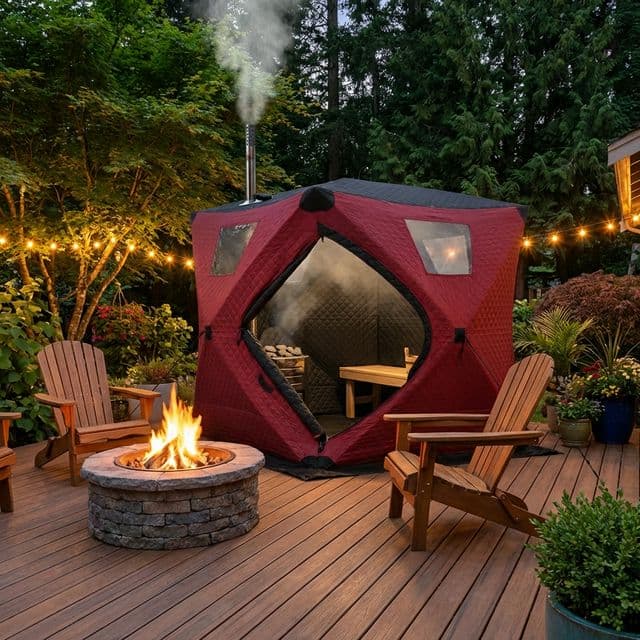
Backyard scale and sightline reference for compact-yet-safe placement.
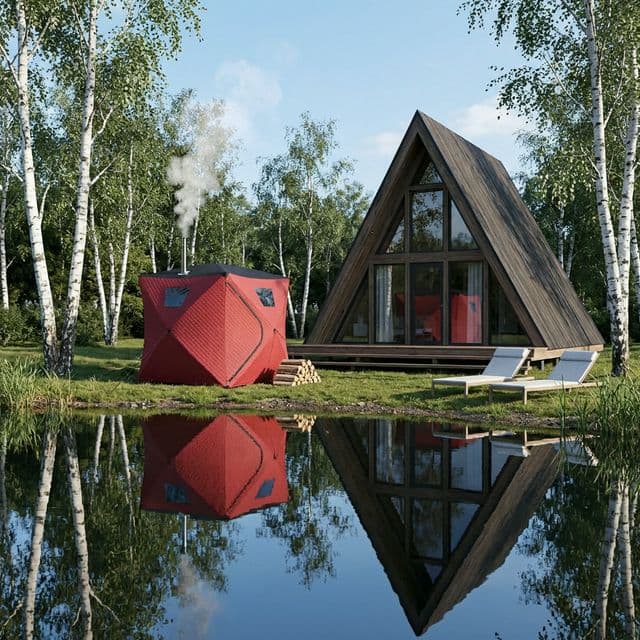
Cabin-inspired shell style to evaluate cladding and weatherproof envelope choices.
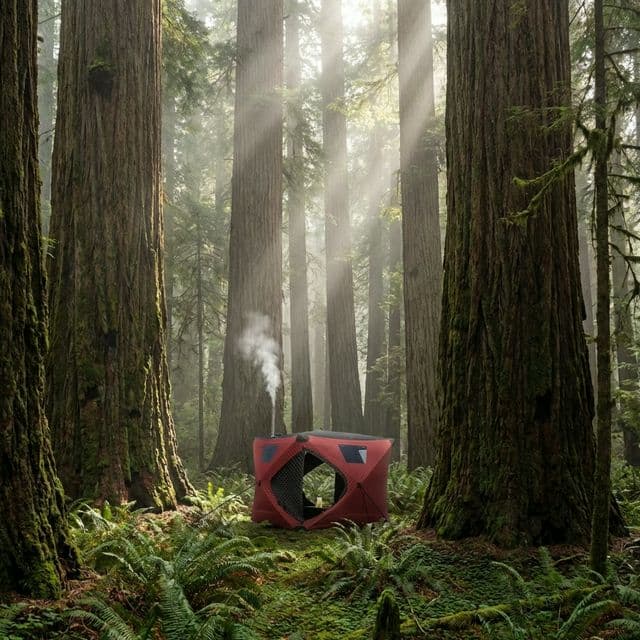
Moisture-heavy environment reminder: ventilation and dry-out workflow cannot be optional.
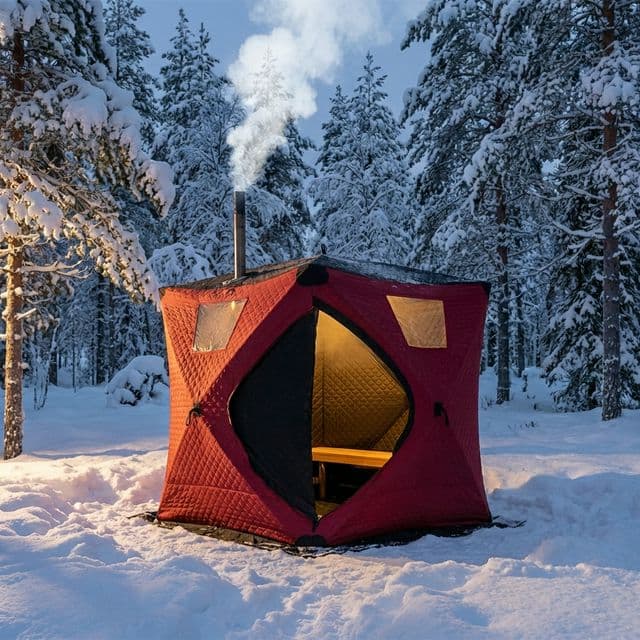
Winter scenario visual for heat-loss assumptions and schedule buffer planning.
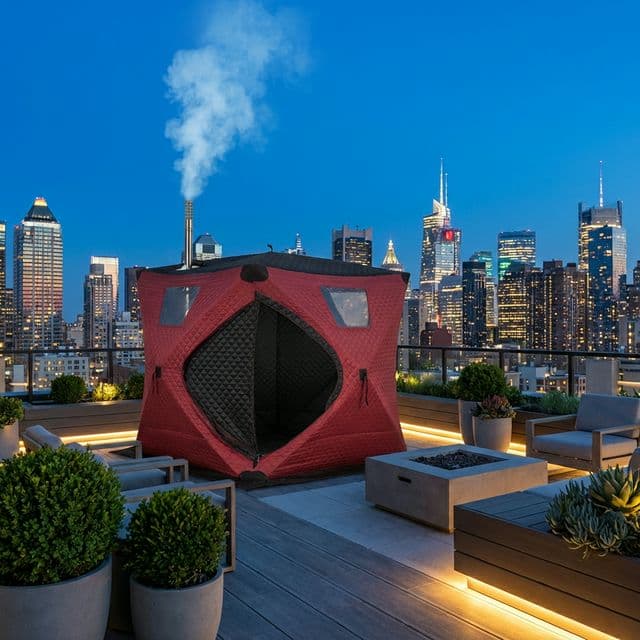
Constrained-footprint example where permit and clearance detail becomes the main risk gate.
Related pages for adjacent decisions
Use these pages when your project shifts from DIY outdoor build to adjacent formats or constraints.
FAQ: decision-focused clarifications
Grouped by planning intent so you can jump directly to the blocker type you are facing.
This page is planning guidance, not code, engineering, or medical advice. Verify local code and qualified professional requirements before installation.
Report published: February 27, 2026. Last updated: February 27, 2026 (stage2 seo-geo audit closure pass).
Review cadence: revalidate assumptions every 6-12 months or sooner when permit rules, energy tariffs, or safety guidance changes.
This refresh rechecked permit/trade boundaries, burn-ban operating constraints, and CDC carbon-monoxide guidance on February 27, 2026 (stage2 seo-geo audit closure pass).
Primary keyword: do it yourself outdoor sauna. Secondary intent cluster: do it yourself outdoor sauna cost, do it yourself outdoor sauna plans, do it yourself outdoor sauna permit checklist, do it yourself outdoor sauna electrical requirements, do it yourself outdoor sauna risk matrix.