
Outdoor sauna kits checker for scope, install-readiness, and cost
Enter site, base, power, package-scope, and freight assumptions to get a deterministic decision band before you treat a live outdoor sauna kit listing like a ready-to-install project. The default model assumes an electric-heater kit and a conservative 45-minute warm-up, not a wood-fired or quick-start edge case.
What this tool does: screens whether an outdoor sauna kit listing is actually ready for your site, crew, base, circuit, and purchase timing.
What it does not do: replace a licensed electrician, finalize local permits, certify a product listing, normalize wood-fired chimney rules, underwrite tax-credit eligibility, or act as medical advice.
Boundary to keep in mind: current seller FAQ guidance says many outdoor saunas need about 45-60 minutes to preheat. If your listing is wood-fired or your site runs colder and windier, rerun the math with slower assumptions or move straight to manual review.
Tool output to report verification bridge
The tool gives the immediate answer. The report explains why that answer is trustworthy for outdoor sauna kits specifically, not just for outdoor-sauna shopping in general.
Mobile tip: swipe horizontally to review the full comparison tables.
| Tool state | Immediate interpretation | Verify in report | Next move |
|---|---|---|---|
| Ready To Shortlist | The listing scope, base, power, and permit signals are aligned enough to move into final model review. | Key numbers + kit scope + readiness checks | Email [email protected] with one or two candidate kit pages and your site constraints. |
| Verify Kit Scope | The idea can work, but the listing still leaves at least one important gap around BOM, exclusions, or site prep. | Intent audit + kit scope + methodology | Close the missing package-scope proof before you treat the kit price like the project price. |
| Contractor Upgrade | The project is still viable, but base, circuit, permit, or access work matters more than the kit headline right now. | Readiness checks + risk matrix + scenario lab | Price the upgrade path first, then return to kit comparison with cleaner assumptions. |
| Not Kit First / Medical Screen | A generic kit is not the right first move under current site, buyer-execution, or heat-risk assumptions. | Fit audience + comparison grid + FAQ safety group | Pause checkout and use the related routes or email handoff to find the lower-risk path. |
Current intent audit: why this page is not a duplicate of other outdoor-sauna routes
A March 20, 2026 SERP and top-result pattern check shows strong commercial intent. The anti-duplication angle is not “another outdoor sauna page”; it is the package-scope decision inside the outdoor sauna kits keyword cluster.
Mobile tip: swipe horizontally to review the full comparison tables.
| Observed pattern | What public pages do well | What still goes missing | Why this page is distinct |
|---|---|---|---|
| Current results are dominated by category pages and retailer collections | They surface prices, seat counts, styles, and fast filtering for buyers who are already near a transaction. | They usually do not translate the listing into site-prep, power, package-scope, or delivery-path reality. | Starts with a checker that converts the same product-page assumptions into a decision band and next-step action. |
| “Kit” can mean full shell, panelized room, or just the sauna interior package | Public pages use the same word for very different package definitions. | Buyers can confuse a ready-to-assemble room with a material package that still needs a contractor-built outer structure. | Makes scope clarity the main differentiator and explains why that scope gap changes cost, labor, and fit. |
| Product pages expose specs without showing exclusion risk | You often get dimensions, heater size, and glossy visuals quickly. | Pages still skip flooring exclusions, roof carpentry, base assumptions, or freight path constraints that can dominate the real project. | Combines tool logic, tables, and risk prompts so the exclusions are treated like first-class decisions. |
| Editorial pages often compare styles but not ownership friction | They can help with inspiration and broad format awareness. | They usually do not connect the inspiration layer to current pricing, local permit variance, or current safety proof. | Keeps “buy now” and “why trust this” on one URL so the intent stays aligned to outdoor sauna kits. |
Outdoor sauna kits are a package-completeness decision, not just a product-browse query
The strongest public pages currently help you browse styles and prices. They are weaker on the exact layers that turn a kit into a usable project: what is included, what is excluded, whether your site is actually ready, and whether the current proof stack holds.
Published: March 20, 2026. Last updated: March 21, 2026 (stage1b evidence refresh: seller-backed warm-up range, heater-manual boundary, freight acceptance workflow, and current assembly / lead-time reality). Time-sensitive figures are date-marked in the source log.
Review cadence: refresh this page every 6-12 months, or sooner if current kit ranges, product manuals, or permit examples change.
Primary sources checked
23 links
Manufacturer, retailer, regulator, tax, medical, permit, shipping-policy, and current product-manual sources were rechecked on March 21, 2026.
Decision tables
11 tables
The page now covers package scope, pricing, power, freight, permit conditions, tax-credit timing, risk, and fit in structured tables.
Decision outputs
5 bands
The tool routes each scenario into shortlist, verify, contractor-upgrade, not-kit-first, or medical-screen logic.
Product visuals
5 images
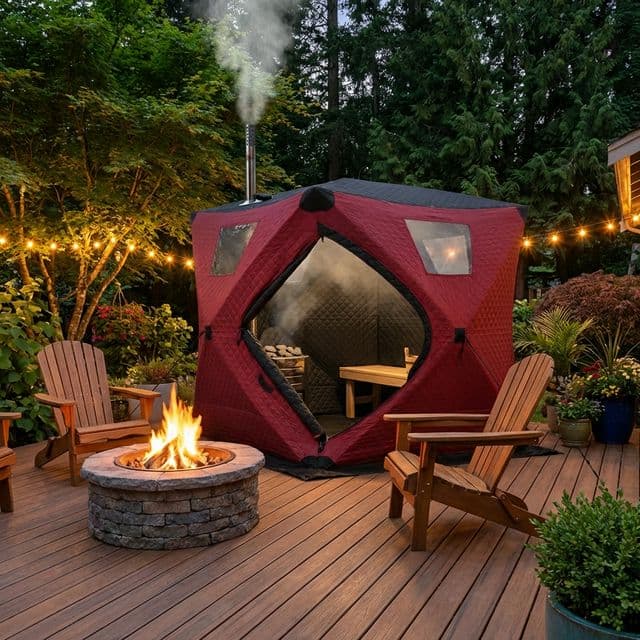
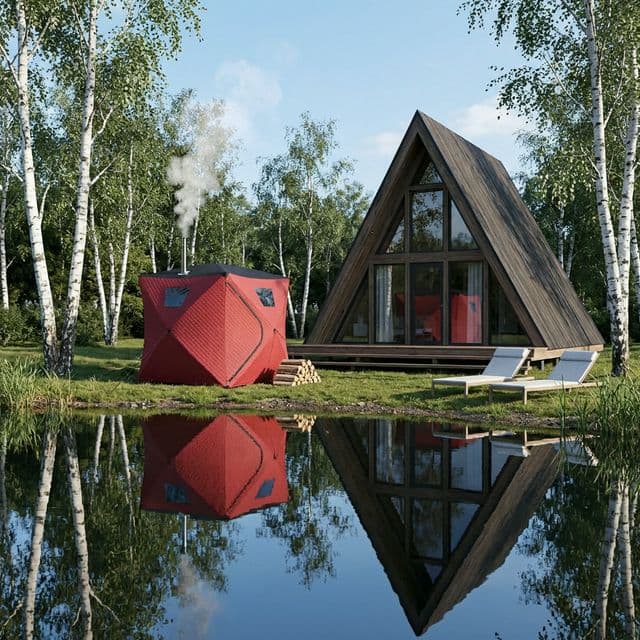
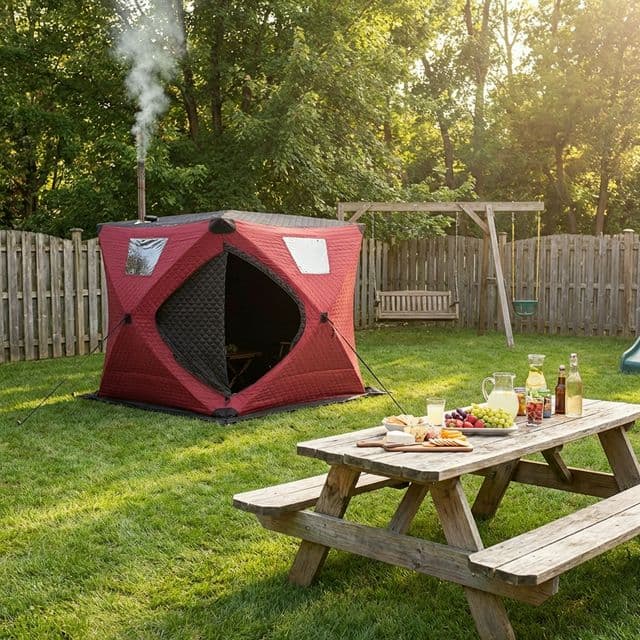
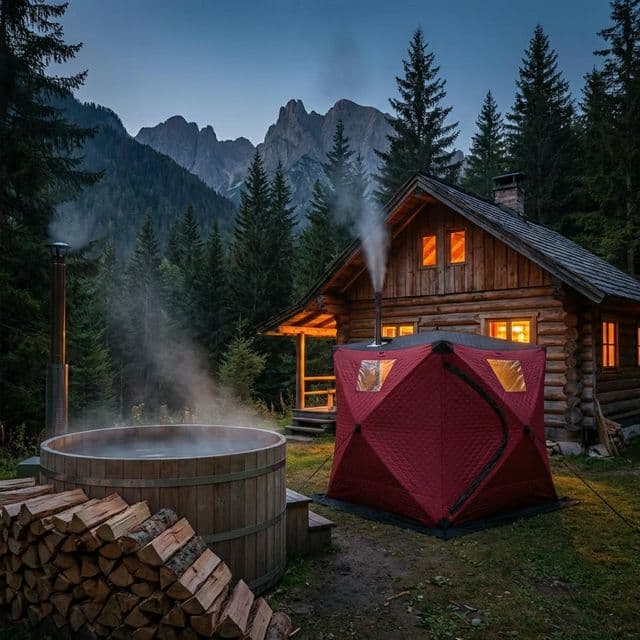
Gallery cards keep site-fit and property-context tradeoffs visible while you review the package logic.
The key numbers and proof signals that change the decision
$4,999 to $20,195 in visible current examples
Redwood Outdoors shows current visible outdoor sauna examples starting at $4,999, while Cedarbrook modular outdoor kit listings extend to $20,195. That spread exists before site prep, electrical work, or excluded accessories are added.
Source set: Redwood Outdoors collection page and Cedarbrook outdoor modular kit page reviewed March 21, 2026.
Shell, insulation, and exterior can still sit outside the package
SaunaFin explicitly describes one outdoor material-kit model as the interior sauna “skin” while the buyer or contractor still builds the outer structure. That is the anti-duplication core of this page.
Source: SaunaFin outdoor saunas page reviewed March 21, 2026.
Cedarbrook says footprint is 8 inches bigger than the stated size
A “5x7” kit can mean 5 feet by 7 feet inside, while the exterior footprint grows to 5 foot 8 by 7 foot 8. Site-fit math must use the outside envelope plus clearances.
Source: Cedarbrook outdoor modular kit page reviewed March 21, 2026.
8 kW heater, 240V, 40A breaker, 8 gauge wire
Cedarbrook’s current 6x6 outdoor kit example includes these electrical assumptions. Buyers who do not already have a dedicated 240V path should treat that as a project gate, not an afterthought.
Source: Cedarbrook 6x6 outdoor sauna kit product page reviewed March 21, 2026.
About 45-60 minutes; longer in colder weather or at higher temperatures
Redwood Outdoors’ current FAQ says most saunas take about 45-60 minutes to preheat, with colder weather or higher setpoints pushing that higher. That is why this round stops treating a 25-minute warm-up like the default planning case.
Source: Redwood Outdoors sauna FAQ reviewed March 21, 2026.
Electric example: 3 in side/front clearance + 33.4 A; wood-fired example: 250-300 mm combustibles clearance + 1.2 m room height
Harvia’s official electric and wood-burning heater pages show why buyers cannot treat heater type as a small option toggle. Electric paths stay in wiring and breaker territory, while wood-fired paths add chimney, fuel, and larger combustible-clearance questions.
Source set: Harvia The Wall SW80 and Harvia M3 official product pages reviewed March 21, 2026.
Seattle 120 sq ft slab-only vs Austin 200 sq ft / <=15 ft / no dwelling vs NYC 120 sq ft / 7 ft 6 in / storage-only
The same backyard footprint can fall into different permit logic, and NYC’s storage-only language shows why a sauna is not automatically equivalent to a shed even when the square footage looks small.
Source set: Seattle SDCI, Austin Development Services, and NYC RCNY 101-14 reviewed March 21, 2026.
CPSC recall on Oct 23, 2025 covered about 1,000 units sold for $6,000-$12,000
The recall was driven by a bench-collapse hazard, which is exactly why current model and serial checks should happen before acceptance or resale assumptions are made.
Source: CPSC recall 26-040 reviewed March 21, 2026.
Mobile tip: swipe horizontally to review the full comparison tables.
| Metric | Number | Why it matters | Source set |
|---|---|---|---|
| Visible current sample price band | $4,999-$20,195 | Confirms that “kit” spans entry outdoor units through premium modular builds. | Redwood Outdoors + Cedarbrook pages |
| Visible current sample sizes | 3x4 up to 10x10 | Shows why the route must handle compact and large-kit assumptions on one page. | Cedarbrook outdoor modular kit page |
| Exterior footprint delta | +8 inches vs nominal size | Small-footprint assumptions fail if you plan from interior dimensions only. | Cedarbrook outdoor modular kit page |
| Example power requirement | 8 kW / 240V / 40A / 8 gauge | Turns a vague “heater included” promise into a real infrastructure checkpoint. | Cedarbrook 6x6 product page |
| Current seller-backed warm-up range | About 45-60 min; longer in colder weather | Shows why a 25-minute default can understate time and electricity cost for real outdoor usage. | Redwood Outdoors sauna FAQ |
| Current residential electricity benchmark | 17.24 c/kWh US average; 11.02-41.62 c/kWh residential state spread | The same kit usage pattern can land in very different annual operating bands, especially once seller-backed 45-60 minute preheat windows replace a quick-start assumption. | EIA Electric Power Monthly table 5.6.A (December 2025 residential retail prices) |
| Current prefab timing example | 36 weeks from order + 5-9 business days transit after ship | Confirms that production timing is seller-specific and can dominate the project calendar before site prep even starts. | Cedarbrook terms page |
| Current city permit examples | Seattle 120 sq ft slab-only; Austin 200 sq ft / <=15 ft / no dwelling; NYC 120 sq ft / 7 ft 6 in / storage only | Prevents one-city assumptions from being copied into another jurisdiction or across different structure-use categories. | Seattle SDCI + Austin Development Services + NYC RCNY 101-14 |
| Current freight responsibility example | Curbside + bill-of-lading inspection + damage notice within 7 days | Shows why “ships to your house” does not equal backyard placement, clean claims handling, or cost certainty. | Redwood shipping&returns page + FTC order rule |
| Current heater-boundary example | Electric: 3 in side/front clearance; wood-fired: 250-300 mm combustible clearance | The exact heater family changes whether the project is mainly wiring work or a larger clearance and chimney review. | Harvia The Wall SW80 + Harvia M3 |
| Federal tax-credit timing in 2026 | Section 25C not allowed after Dec. 31, 2025 | Stops buyers from underwriting a 2026 outdoor sauna project with an expired federal home-improvement credit. | IRS FAQ FS-2025-05 |
| Recent recall signal | About 1,000 units; 7 incidents; 1 injury | Current category risk remains decision-relevant even when the listing looks polished. | CPSC recall 26-040 |
Who this kit-screening workflow fits, and who should slow down
Mobile tip: swipe horizontally to review the full comparison tables.
| Buyer segment | Fit | Why | Next move |
|---|---|---|---|
| Buyer with one live kit page, real site dimensions, and a prepared base | Best fit | This page is strongest when the user is screening one real package against actual site and utility constraints. | Run the checker, then compare the package-scope table against the live listing. |
| Buyer trying to decide whether “kit” still means shell-included or only interior materials | Best fit | The route is intentionally built around package-scope ambiguity and the cost/risk that comes from it. | Use the kit-scope section and source log before trusting the headline price. |
| Buyer with no prepared base, no dedicated 240V path, and no permit check | Conditional | The purchase can still be viable, but the project is infrastructure-led rather than product-led. | Treat contractor-upgrade as the default band until the prerequisites are priced. |
| Buyer who only wants a turnkey install and minimal coordination | Weak fit | Many outdoor kits still assume curbside freight, multi-day assembly, and explicit local coordination. | Compare the kit route against turnkey or contractor-led alternatives before deposit. |
| Buyer with pregnancy or medication-related heat-risk constraints | Medical screen | ACOG’s early-pregnancy heat guidance and the lack of universal drug-specific sauna thresholds make the tool’s conservative screen appropriate. | Use conservative screening first and keep the purchase sequence secondary. |
Package scope: what current public kit pages still need to prove
This is the core differentiation layer. The fastest way to waste time on outdoor sauna kits is to assume the word means the same thing everywhere.
Mobile tip: swipe horizontally to review the full comparison tables.
| Checkpoint | What to verify | Why it matters | Source set |
|---|---|---|---|
| Outer shell vs interior package | Does the listing include the full weather shell, or only the interior sauna package and finish components? | Some public “outdoor sauna kit” language still means the buyer or contractor builds the outer enclosure. | SaunaFin outdoor saunas page |
| Included room components | Panels, benches, door, trim, heater, controls, and accessories should be listed explicitly. | A panelized room is a different purchase from a vague materials package with no clear BOM. | Cedarbrook modular kit + 6x6 product pages |
| Flooring and roof work | Check whether flooring is excluded, whether roof assembly uses pre-built trusses, and what carpentry still lands on you. | Excluded flooring or roof carpentry changes labor, timeline, and buyer fit immediately. | Cedarbrook 6x6 product page |
| Base assumption | Look for slab, pavers, or wood-platform requirements before treating the product price as complete. | Cedarbrook says outdoor DIY kits require a sturdy base, so base work becomes a hidden scope item if ignored. | Cedarbrook DIY kits page |
| Heater and control package | Confirm exact heater size and whether built-in, external, digital, or WiFi controls are included. | “Heater included” without exact technical details is not enough for electrical planning. | Cedarbrook modular kit page |
| Certification and recall proof | Ask for the model-specific certification mark and current recall status or serial-range check. | A polished product page does not remove the need for serial-level safety verification. | OSHA NRTL program + CPSC recall |
Readiness checks: base, power, permits, freight, and proof
Outdoor kit friction usually shows up below the product image: in site prep, utility work, access constraints, and missing proof.
Mobile tip: swipe horizontally to review the full comparison tables.
| Checkpoint | Current evidence signal | Why it matters | Next move | Source set |
|---|---|---|---|---|
| Base | Cedarbrook says outdoor DIY kits require a sturdy base such as a cement slab, wood platform, or boxed landscaping pavers. | If your site is still bare ground or an unreviewed deck, the kit is not truly “ready to assemble.” | Price base preparation before comparing wood species or visual style. | Cedarbrook DIY kits page |
| Electrical path | Cedarbrook’s 6x6 example specifies 8 kW / 240V / 40A / 8 gauge wire, while Harvia’s current Wall SW80 page lists 33.4 A, AWG 8, ETL certification, 3-inch side/front clearance, and about 3.67 feet of ceiling clearance. | DIY-friendly copy does not remove dedicated-circuit work when the heater and breaker assumptions are real. | Document your actual breaker, wire path, heater family, and electrician scope before you treat the kit as a near-term purchase. | Cedarbrook 6x6 product page + Harvia The Wall SW80 |
| Warm-up realism | Redwood’s current sauna FAQ says most saunas take about 45-60 minutes to preheat, and colder weather or higher temperatures can push that past 60 minutes. | A fast 25-minute assumption can understate ownership friction, the usable-session window, and the electricity band. | Start cost planning at 45 minutes unless your exact heater, weather exposure, and target temperature consistently prove lower. | Redwood sauna FAQ |
| Shipping and carry path | Redwood’s shipping page says shipping damage should be marked on the bill of lading and reported within 7 days, while Cedarbrook’s terms say common-carrier sauna freight over 150 lbs is re-assessed at ship date and then usually spends 5-9 business days in transit. | Delivery confirmation is not the same as inspection discipline, backyard carry, or damage control on your timeline. | Get pallet count, gate width, slope, acceptance workflow, transit timing, and seller deadline terms in writing before deposit. | Redwood shipping&returns + Cedarbrook terms + FTC order rule |
| Permit threshold | Seattle, Austin, and NYC publish materially different exemption conditions: size thresholds, height, slab/flood limits, and even storage-only use language. | A small-structure rule can fail on use classification, not just square footage. | Check whether your local rule treats the sauna as an occupiable accessory structure before ordering. | Seattle SDCI + Austin Development Services + NYC RCNY 101-14 |
| Certification mark | OSHA says an NRTL mark signifies the product was tested and certified to appropriate safety standards, and Redwood says its electric heaters are UL-listed. | That makes visible certification proof a real screening layer, not a cosmetic bullet point. | Save the mark or model proof and the exact heater spec sheet with your order packet. | OSHA NRTL program + Redwood all saunas page |
| Heater family boundary | Harvia’s electric Wall SW80 and wood-burning M3 pages show materially different constraints: the electric path centers on amperage and wiring, while the wood-fired path adds 250-300 mm combustible clearances and a 1.2 m minimum room height. | The heater choice changes whether this is mainly an electrical project or a chimney / fuel / larger-clearance project. The tool’s cost math only models the electric side. | Identify the exact heater family before checkout. If it is wood-fired, stop treating the electricity estimate like the operating-cost answer. | Harvia The Wall SW80 + Harvia M3 + EPA certified wood heater database |
| Assembly and offload burden | Redwood’s current 3-person Cove page says the sauna can be built in a few hours and ships at 1,000 lbs in an 83 x 42 x 30 inch crate, while Cedarbrook’s 6x8 page says 2-4 days and 100-150 lb wall panels, with the assembly manual recommending at least two people on a flat, level base. | “DIY” or “ready-to-assemble” does not tell you the same thing across sellers. Crew size, offload plan, and panel weight can still dominate the real effort. | Match the listing to your actual crew, pallet handling plan, and base condition before you trust the speed promise. | Redwood 3-person Cove product page + Cedarbrook 6x8 page + Cedarbrook modular assembly instructions |
| Climate and insulation | Cedarbrook markets outdoor kits as 4-inch / R-20 insulated and built for cold weather, but not every current kit page provides that level of envelope detail. | Insulation detail changes warm-up time, winter usability, and what the operating-cost estimates mean. | Treat missing envelope detail as a gap in the decision, not a neutral omission. | Cedarbrook modular kit page |
Cost sensitivity: one outdoor kit, very different utility bands
These examples use an 8 kW outdoor kit running three sessions per week with mixed exposure, 35-minute sessions, and a 45-minute warm-up unless otherwise labeled. Redwood’s current FAQ says many saunas need about 45-60 minutes to preheat, so the table now shows a more conservative planning lens.
Mobile tip: swipe horizontally to review the full comparison tables.
| Scenario | Electricity rate | Monthly estimate | Annual estimate | Why it matters |
|---|---|---|---|---|
| North Dakota residential, 45-minute preheat baseline | 11.02 c/kWh | $16.87 | $202.48 | Uses an 8 kW kit, 3 sessions per week, 35-minute sessions, 45-minute warm-up, and mixed exposure. This keeps the current default aligned with seller-backed preheat guidance instead of a quick-start assumption. |
| Current US average, 45-minute preheat baseline | 17.24 c/kWh | $26.40 | $316.77 | Same routine, different rate. This is the new default planning band after replacing the old 25-minute warm-up with a more defensible 45-minute baseline. |
| Hawaii residential, 45-minute preheat baseline | 41.62 c/kWh | $63.73 | $764.73 | The usage pattern stays constant while the residential utility-rate spread widens the ownership-cost band materially. |
| Current US average, 60-minute cold-weather upper band | 17.24 c/kWh | $31.70 | $380.41 | Redwood says colder weather or higher temperatures can push preheat beyond 60 minutes. This row shows why outdoor winter use should be rerun instead of inheriting the default. |
Methodology: how the checker turns a kit page into a decision band
Evidence ledger: where the page is strong, and where it stays conservative
Mobile tip: swipe horizontally to review the full comparison tables.
| Decision area | What the source set supports | Why trust it | Limit |
|---|---|---|---|
| SERP intent | Current top-result patterns confirm strong commercial intent with category pages and retailer collections dominating. | Observed current search-result sample for the exact keyword on March 21, 2026. | SERP composition can shift over time, so this pattern should be rechecked during later SEO/GEO refresh. |
| Package-scope ambiguity | Public pages confirm that “kit” can range from full modular room to inside-skin material package. | SaunaFin and Cedarbrook publicly describe materially different kit scopes. | Category-wide distribution of each kit type is not normalized in any public dataset found for this round. |
| Power requirements | Current live product and collection evidence supports dedicated-circuit planning for outdoor kits, not just generic heater-included language. | Cedarbrook gives exact heater, voltage, breaker, and wire details, while Harvia publishes amperage, wire gauge, certification mark, and current clearances for an 8 kW heater. | Public seller statements are useful, but they do not replace your exact model manual or local electrical review. |
| Warm-up realism and operating-cost drift | Current seller guidance supports using a 45-60 minute preheat lens instead of a quick-start assumption for many outdoor sauna sessions. | Redwood’s current sauna FAQ states that most saunas take about 45-60 minutes to preheat and can take longer in colder weather or at higher temperatures. | This does not create one universal runtime for every heater, envelope, or climate. It is a conservative planning baseline, not a guarantee. |
| Permit variance | City thresholds and use conditions already differ enough that copied assumptions are unsafe. | Seattle, Austin, and NYC official pages and rules state different public exemption conditions. | This page is not a substitute for local permit interpretation in your jurisdiction. |
| Delivery responsibility | Current seller policies and FTC rules support treating delivery as a documented workflow, not a vague promise. | Redwood publishes bill-of-lading and damage-report expectations, Cedarbrook publishes freight timing and shipment-weight treatment, and the FTC states baseline timing and delay-consent/refund obligations. | Carrier damage, site carry, and white-glove scope still vary by seller and contract. |
| Heater-family boundary | Official electric and wood-burning heater pages already show materially different clearance and installation requirements. | Harvia publishes the current technical data for both The Wall SW80 electric heater and the M3 wood-burning heater, and EPA publishes the searchable database buyers can use where wood-heater certification questions apply. | These are model-level examples. They prove the boundary exists, but they do not let this page generalize one clearance or compliance rule to every heater listing. |
| Certification meaning | Visible NRTL certification marks remain a real quality and safety proof layer. | OSHA directly explains what the mark signifies under the NRTL program. | A mark alone does not confirm installation quality, serial-range safety, or fitness for your property. |
| Pregnancy heat boundary | The tool’s pregnancy-related medical screen is backed by public ACOG guidance to avoid saunas and hot tubs early in pregnancy. | ACOG states that sauna or hot-tub use early in pregnancy can raise core body temperature and may be harmful for the fetus. | This does not create a universal postpartum or medication rule; individualized review is still required. |
| Federal tax-credit timing | As of March 2026, IRS guidance says section 25C is not allowed for property placed in service after December 31, 2025. | Official IRS FAQ FS-2025-05 gives the termination date directly. | State/local rebates or future legislation may differ; this page only addresses the cited federal credit timing. |
| Current safety signal | Recent recall evidence supports serial-level due diligence before acceptance and use. | CPSC recall notice gives date, unit count, hazard, and sale-price band. | Public recall notices do not produce a reliable category-wide failure rate denominator. |
| Lead-time visibility | Current product and policy pages show that lead-time communication is seller-specific: some pages publish explicit long production windows, while others expose assembly and crate facts more clearly than delivery timing. | Cedarbrook publishes a current 36-week prefab-kit window on its terms page, while Redwood’s current product and FAQ pages emphasize crate size, assembly, and receiving workflow. | Inventory and production timing move quickly. Only date-stamped seller pages are reliable for a live purchase decision. |
Source log for buyers who want to trace the major claims
Cedarbrook outdoor modular kit page
Reviewed March 21, 2026
Cedarbrook 6x6 outdoor sauna kit product page
Reviewed March 21, 2026
Cedarbrook DIY sauna kits page
Reviewed March 21, 2026
Cedarbrook modular assembly instructions PDF
Reviewed March 21, 2026
Cedarbrook terms page
Reviewed March 21, 2026
SaunaFin outdoor saunas page
Reviewed March 21, 2026
Redwood Outdoors all saunas collection
Reviewed March 21, 2026
Redwood Outdoors 3-person Cove sauna product page
Reviewed March 21, 2026
Redwood Outdoors sauna FAQ page
Reviewed March 21, 2026
Redwood Outdoors shipping&returns page
Reviewed March 21, 2026
Redwood Outdoors sauna FAQ shipping page
Reviewed March 21, 2026
EIA Electric Power Monthly table 5.6.A (Dec 2025 residential retail prices)
Reviewed March 21, 2026
OSHA Nationally Recognized Testing Laboratory Program
Reviewed March 21, 2026
Harvia The Wall SW80 official product page
Reviewed March 21, 2026
Harvia M3 official product page
Reviewed March 21, 2026
EPA certified wood heater database
Reviewed March 21, 2026
FTC Mail, Internet, or Telephone Order Merchandise Rule
Reviewed March 21, 2026
Seattle SDCI permit threshold page
Reviewed March 21, 2026
Austin Development Services work-exempt permit page
Reviewed March 21, 2026
NYC RCNY §101-14 permit exemption rule PDF
Reviewed March 21, 2026
CPSC recall 26-040 for sauna units
Reviewed March 21, 2026
ACOG sauna / hot tub early pregnancy guidance
Reviewed March 21, 2026
IRS FAQ FS-2025-05 on section 25C timing
Reviewed March 21, 2026
Comparing the main outdoor-sauna purchase paths
Mobile tip: swipe horizontally to review the full comparison tables.
| Path | Best when | Speed | Main risk | Recommended next move |
|---|---|---|---|---|
| Material package, shell not included | Buyers with a contractor or custom build path who only need the sauna interior package. | Low | The word “kit” hides the fact that the outer enclosure, insulation, and finish can still be a separate project. | Use this route only if the shell build is already budgeted and staffed. |
| Panelized or barrel outdoor kit | Buyers who want a defined room package and can coordinate base, power, and freight execution. | Medium | Package clarity, site access, assembly burden, and excluded labor can still undermine the simple-buying narrative. | Run this checker first, then confirm the BOM, crate or panel handling reality, and delivery path. |
| Insulated modular or premium cube kit | Buyers prioritizing envelope quality, design finish, and colder-climate usability. | Medium | Higher sticker price plus more demanding base, utility, and lead-time assumptions. | Separate comfort and winter-performance benefits from the full project budget and delivery calendar. |
| Turnkey / prebuilt outdoor sauna | Buyers who want less assembly coordination and are comfortable paying for that reduced complexity. | High once ready | Freight, craning, site access, and higher all-in acquisition cost. | Compare against the outdoor sauna for sale page if live seller offers are already in play. |
| DIY from scratch | Buyers who want full customization and already accept a heavier project-management burden. | Low | Permit, timeline, ventilation, and trade-scope failure if execution discipline is weak. | Use the do it yourself outdoor sauna planner if the kit route still feels too pre-packaged. |
Risk matrix: the failures most likely to waste time or money
Mobile tip: swipe horizontally to review the full comparison tables.
| Trigger | Severity | What breaks | Mitigation |
|---|---|---|---|
| Treating a vague listing as a full-scope kit | High | The real project budget and timeline can expand after checkout when shell, flooring, or labor exclusions appear. | Demand a BOM and manual before payment; use “unclear scope” as a stop sign, not a small annoyance. |
| No prepared base | High | Assembly cannot start cleanly and the kit price becomes disconnected from the usable project. | Price slab, pavers, or platform work before comparing cedar grade or glass options. |
| No dedicated 240V path for a higher-load kit | High | Schedule slip, electrician change orders, or a total mismatch between listing promise and property readiness. | Lock power assumptions before deposit and keep the exact heater spec in writing. |
| Treating a wood-fired kit like an electric-heater kit | High | The buyer can miss chimney parts, larger combustible clearances, room-height constraints, and any local review that sits outside a simple 240V checklist. | Identify the exact heater family first. If the listing is wood-fired, stop using the electricity estimate as the operating-cost answer and switch to manual review. |
| Treating a shed exemption like universal sauna approval | High | Permit friction can appear after freight or site-prep commitments because storage-only, no-dwelling, height, setback, or slab-only conditions may not fit a sauna use case. | Use local permit pages early and confirm use classification, height, setback, flood, and plumbing conditions before deposit. |
| Ignoring freight and carry constraints | Medium | Curbside delivery can turn into redelivery, extra labor, or impossible backyard access. | Confirm gate width, slope, pallet handling, who can accept delivery, and damage-claim responsibility before ordering. |
| Skipping bill-of-lading inspection or seller damage deadlines | Medium | A freight problem can become your cost if visible damage is not documented at delivery or reported inside the seller window. | Inspect at drop-off, note damage on the bill of lading, take photos immediately, and follow the seller reporting process the same day. |
| Budgeting around an expired 2026 federal 25C credit | Medium | The buyer can choose the wrong kit tier or electrical scope if the budget assumes money that current IRS guidance says is unavailable after December 31, 2025. | Treat the federal credit as zero unless a tax professional identifies a different current program that actually applies. |
| Skipping serial-level safety due diligence | Medium | A product that looks current and premium can still carry a current recall or model-specific safety issue. | Check certification proof and current recall status before acceptance and use. |
| Using quick-start warm-up math for an outdoor session that really needs 45-60 minutes | Medium | The ownership-cost band, usable session window, and winter planning can all look cleaner on paper than they do in real operation. | Use 45 minutes as the baseline, rerun 60-minute cold-weather cases, and only move lower when your exact heater and site consistently support it. |
Scenario lab: four realistic ways this page gets used
Buyer has a 12x14 site, prepared slab, 240V / 40A, and a panelized-cabin kit page with current manual and component list.
Why: Most of the decision risk has moved from infrastructure uncertainty to model-level tradeoffs.
Next: Use email handoff for final review of the exact kit page and the site photo.
Listing looks strong on price, but the product page still leaves install exclusions and accessory assumptions thin.
Why: The page is selling a package, but not yet proving what the package really covers.
Next: Pause checkout, request the BOM, and only continue when exclusions are explicit.
Buyer likes the kit, but the site still needs a base, permit screen, and 240V work.
Why: The project is viable, but it is currently upgrade-led rather than product-led.
Next: Price the prerequisite work first and compare the upgrade budget against other sauna paths.
Buyer likes the outdoor-sauna concept, but the listing uses a wood-burning heater while the planning math still assumes electric wiring and electricity-only operating cost.
Why: This is not a tiny spec mismatch. Heater family changes the installation path, the clearances, and the meaning of the cost estimate.
Next: Pull the exact heater page or manual first, then reopen the budget and permit conversation with the correct heater assumptions.
Buyer wants a turnkey room, but the listing is closer to an interior materials package that still assumes contractor-built exterior work.
Why: This is a scope mismatch, not a minor install detail.
Next: Switch to turnkey or contractor-led alternatives, or reopen the project once the shell plan exists.
Known vs unknown: where buyers should stay disciplined
Mobile tip: swipe horizontally to review the full comparison tables.
| Topic | Status | Decision impact |
|---|---|---|
| Normalized national installed-cost dataset for outdoor sauna kits | Unknown / no reliable public benchmark found | The page uses visible current listing evidence and marks hidden-scope items instead of inventing one fake national total. |
| Category-wide failure rate denominator | Unknown | Recall evidence is decision-relevant, but it does not produce a trustworthy universal failure probability. |
| Local trade-permit treatment for every city | Partially known / city rules vary by use class | This page uses Seattle, Austin, and NYC examples to show variance, not to substitute for your jurisdiction or use classification. |
| Universal wood-fired compliance path for outdoor sauna heaters | Unknown / model- and locality-dependent | Current official heater pages prove that the install boundary changes, but they do not create one universal chimney, emissions, or permit path for every jurisdiction. |
| Exact winter runtime for every site and envelope | User-specific | Operating-cost tables stay illustrative until the tool is rerun with your climate, frequency, and rate inputs. |
| Freight and damage-claim terms across all retailers | Varies materially by seller | The route treats delivery-path proof as a real input rather than assuming one industry standard exists. |
| Category-wide current lead-time benchmark across outdoor kit sellers | Unknown / fast-moving | Current seller pages can be useful snapshots, but there is no reliable public national benchmark that stays valid once inventory and production change. |
| Medication-specific sauna thresholds by drug class | Unknown / no reliable public sauna-specific dataset found | The tool keeps medication-sensitive cases in manual-review logic instead of pretending one generic safe threshold exists. |
Product image deck for package-fit and property context
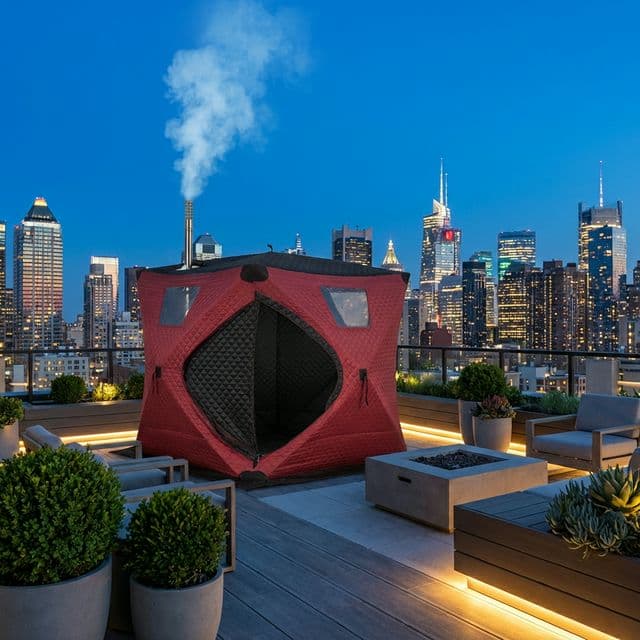
Need a real-world review of the kit page you are looking at?
Email [email protected] with the kit URL, your site dimensions, available circuit, and the weakest point still blocking purchase. We use the same screening logic as this page, then narrow the next move.
FAQ: the practical questions that appear after the first product page click
Screen the package first, then pay only when the project scope holds
Outdoor sauna kits buyers do not need more lifestyle copy. They need a better filter. Run the checker, review the decision band, and email [email protected] once the weakest blocker is clear.