
Home outdoor sauna fit calculator and action plan
Start with your real site dimensions, heater plan, facade intent, and utility rate. The calculator returns a fit score, cost band, uncertainty notes, and the exact email handoff path for support.
Tool output to report verification bridge
Use this matrix to map calculator status to report sections and immediate next actions. It keeps execution speed while preserving decision trust.
Swipe horizontally to view all table columns.
| Tool status | Immediate interpretation | Verify in report | Next move |
|---|---|---|---|
| Strong Fit | Core constraints clear planning thresholds, so style and vendor shortlist decisions can move forward. | Installation physics + comparisons + risk matrix + evidence ledger | Email support with top models and panel details for final scope lock. |
| Conditional Fit | At least one boundary is thin (space ratio, headroom, privacy, or budget floor). | Usage safety + methodology + known/unknown + scenario lab | Run conservative assumptions and document upgrade scope before deposit. |
| Not Fit Yet | Current assumptions create high probability of rework, schedule slip, or ownership dissatisfaction. | Risk matrix + usage safety + fit audience boundary table | Pause checkout and request minimum-upgrade pathway via support email. |
Executive summary: what matters most
These conclusions combine tool logic and dated evidence. Unknowns remain explicitly labeled to prevent overconfident decisions.
Recommended planning ratio: >=1.10x usable area vs required area
Glass-forward and crisp-clad builds look compact in renderings, but service clearances and door swing still control real-world fit and maintenance access.
Tool method baseline refreshed February 24, 2026. Uses explicit clearance assumptions in calculator output.
2025 annual US average 17.30 cents/kWh, with 11.81-40.59 cents/kWh state spread
The same weekly routine can cost materially more depending on local rate and winter exposure profile. EIA annual data now confirms spread beyond 3x between low-cost and high-cost states.
EIA Electric Power Monthly Table 5.3 and 5.6.B, released February 24, 2026 (2025 annual values).
Seattle/NYC 120 sq ft and Portland/Austin 200 sq ft thresholds can still require trade permits
A size-based structure exemption is not equal to a full permit exemption. Electrical scope and city-specific conditions remain active checkpoints before deposit.
Seattle SDCI, Portland BDS, Austin Development Services, and NYC Buildings pages reviewed March 2, 2026.
Harvia 8 kW side/front clearance 4.92 in vs 2.00 in on 6 kW (+146%), with minimum fuse rising from 25A to 33.4A
The 251-300 ft^3 overlap does not mean 6 kW and 8 kW are interchangeable. Clearance and circuit demand can change enough to force layout and panel-plan revisions.
Harvia KIP60B and KIP80B technical fields checked March 2, 2026.
2023 USFA context: 27,900 heating fires and 23,700 electrical malfunction fires
Given incident severity, installer selection, wiring discipline, and moisture control should outrank luxury add-ons in decision sequence.
USFA residential fire trend pages (2023 baseline) reviewed March 2, 2026.
No regulator-grade national benchmark for installed home-outdoor-sauna failure rate
Public sources remain fragmented across vendor claims and localized anecdotes; this page labels unknowns instead of forcing false precision.
Evidence-gap status checked February 24, 2026: public evidence insufficient, pending robust denominator data.
Practical interpretation of score bands
- 76-100: move to shortlist and permit/electrical confirmation workflow.
- 52-75: treat as conditional, then rerun with conservative weather and budget assumptions.
- 0-51: pause purchase path and resolve infrastructure gaps before any deposit.
Key numbers and dated baselines
Numeric claims are tied to dated source context. Unknown fields are surfaced as explicit gaps rather than hidden assumptions.
Residential electricity benchmark
US annual average residential retail electricity price (2025).
Source: EIA Table 5.3
State price variability snapshot
2025 YTD state spread shows why copy-paste monthly cost claims are unreliable.
Source: EIA Table 5.6.B
YoY electricity-price lift
2025 annual residential rate rose from 16.48 to 17.30 cents/kWh (EIA annual table).
Source: EIA Table 5.3
6 kW heater envelope reference
Reference model range: Harvia KIP60B room volume and minimum fuse guidance.
Source: Harvia KIP60B product spec
8 kW heater envelope reference
Reference model range: Harvia KIP80B room volume and minimum fuse guidance.
Source: Harvia KIP80B product spec
Clearance jump in overlap zone
Harvia side/front minimum increases from 2.0 in (6 kW) to 4.92 in (8 kW).
Source: Harvia KIP60B + KIP80B technical fields
Dense-city shed threshold
NYC RCNY 101-14 limits this permit-free path to temporary portable freestanding sheds with strict conditions.
Source: NYC Department of Buildings
Heating fire context
Install discipline remains a first-order buying filter.
Source: USFA residential fire trends
Electrical malfunction fire context
Circuit planning and inspection quality are non-negotiable.
Source: USFA residential fire trends
Recent recall signal
CPSC recall notice 26-040 (October 23, 2025) flagged bench-collapse risk on Sauna360 Tylö Halmstad and Kiruna Hybrid units.
Source: U.S. CPSC recall database
Jurisdiction checkpoints: where permit assumptions break
The same backyard geometry can follow different permit paths by city. This table focuses on structure exemption boundaries and trade-permit edge cases that directly affect timeline and rework risk.
Swipe horizontally to view all table columns.
| Jurisdiction | Structure exemption scope | Trade-permit boundary | Counterexample / limit | Source context |
|---|---|---|---|---|
| Seattle (SDCI) | Detached accessory structures under 120 sq ft projected roof area can be exempt when one-story and non-habitable. | Electrical permit is still required when electrical service is installed, altered, extended, repaired, or connected. | A 96 sq ft shell may skip building permit, but adding a 240V feeder still requires electrical permit and inspection. | Seattle SDCI permit and electrical pages reviewed March 2, 2026. |
| Portland (BDS) | Portland permit-need guidance allows one-story non-habitable detached accessory structures up to 200 sq ft and up to 15 ft high without a building permit. | City guidance states an electrical permit is still required even when a building permit is not. | A 180 sq ft shell can be structure-exempt, but a new sauna branch circuit still enters electrical permit workflow. | Portland residential permit-need PDF and BDS electrical permit page reviewed March 2, 2026. |
| Austin (Development Services) | Detached one-story accessory structures up to 200 sq ft can be exempt only with no utilities and outside flood-hazard zones. | Exempt work must still comply with all technical codes; utility additions can trigger separate trade-permit paths. | A 200 sq ft exempt shell loses exemption assumptions once power, plumbing, or flood-zone constraints are introduced. | Austin work-exempt guidance reviewed March 2, 2026. |
| New York City (DOB) | NYC RCNY 101-14 allows temporary portable freestanding sheds up to 120 sq ft and 7 ft 6 in height only when specific lot-line and use conditions are met. | NYC states an electrical permit is required for most electrical work and must be filed by a licensed electrical contractor. | A 110 sq ft shell can leave the exemption path once it adds non-portable installation characteristics or new electrical feeder scope. | NYC RCNY 101-14 and DOB electrical permit page reviewed March 2, 2026. |
Who this path fits and where it breaks
The same product can be a strong fit or a poor fit depending on infrastructure and usage context. Use this table before finalizing vendor calls.
Swipe horizontally to view all table columns.
| Audience segment | Fit signal | Why | Recommended next action |
|---|---|---|---|
| Homeowners with >=85 sq ft usable install area and dedicated 240V/40A capacity | Good fit | Strong baseline for modern 6-8 kW home outdoor installations without forced compromises. | Move to shortlist + electrician pre-check + base verification. |
| Projects relying on extension cords or no dedicated 240V planning | Not fit yet | High safety and reliability risk for home outdoor electric installations. | Pause checkout and scope dedicated branch circuit and panel capacity first. |
| Windy/coastal sites with open-yard privacy assumptions | Conditional | Thermal loss and comfort volatility can reduce usage consistency and raise operating cost. | Add wind/privacy screening or revise heater tier and operating expectation. |
| Budget below $16k with full custom facade expectations | Conditional | Facade ambition and infrastructure scope can quickly exceed realistic envelope. | Prioritize envelope + electrical reliability before premium finish add-ons. |
Heater tier boundaries and counterexamples
Heater sizing is not a pure aesthetics decision. Manufacturer volume/fuse windows reveal where 6 kW and 8 kW choices diverge or overlap.
Swipe horizontally to view all table columns.
| Reference tier | Source signal | Works when | Breaks when | Decision move |
|---|---|---|---|---|
| 6 kW electric reference tier (Harvia KIP60B) | Room volume 170-300 ft^3, minimum fuse 25A | Compact sheltered envelopes where slower warm-up is acceptable and dedicated 240V capacity is stable. | Room volume drifts above 300 ft^3 or wind exposure materially increases thermal demand. | Use as efficiency-first baseline; rerun with mixed/windy exposure before committing. |
| 8 kW electric reference tier (Harvia KIP80B) | Room volume 251-424 ft^3, minimum fuse 33.4A | Larger home outdoor shells or colder exposure profiles where warm-up reliability is a priority. | Panel capacity is limited to 30A-class service or installation budget is near minimum floor. | Treat 40A-class dedicated branch planning as default unless model documentation says otherwise. |
| Counterexample zone: 251-300 ft^3 overlap | Both 6 kW and 8 kW reference tiers overlap in this volume band | Either tier can pass on paper; final choice depends on warm-up tolerance and exposure volatility. | Assuming 6 kW and 8 kW are interchangeable without climate, usage cadence, and circuit-headroom checks. | Run two calculator passes and compare energy, headroom, and comfort trade-offs before checkout. |
Installation physics: heater swaps can change clearance math
Overlapping room-volume bands can still hide major differences in side clearance and circuit demand. Validate these constraints before you lock design drawings or deposits.
Swipe horizontally to view all table columns.
| Reference model | Envelope signal | Electrical minimum | Clearance signal | Decision impact | Source context |
|---|---|---|---|---|---|
| Harvia KIP60B (6.0 kW) | 169-300 ft^3 room volume | min room height 78.7 in | 240V 1PH | minimum fuse 25A | Side/front 2.0 in | floor 5.0 in | ceiling clearance 43.3 in | Works for tighter shells when warm-up speed expectations are moderate and 30A+ branch planning is stable. | Harvia KIP60B product table fields checked March 2, 2026. |
| Harvia KIP80B (8.0 kW) | 251-424 ft^3 room volume | min room height 78.7 in | 240V 1PH | minimum fuse 33.4A | Side/front 4.92 in | floor 7.01 in | ceiling clearance 43.3 in | Often needs 40A-class planning and wider side buffer even when volume overlap looks acceptable. | Harvia KIP80B product table fields checked March 2, 2026. |
| Counterexample: 251-300 ft^3 overlap band | Both 6 kW and 8 kW appear valid on room volume alone | Current floor jumps from 25A to 33.4A (+33.6%) | Side/front clearance jumps from 2.0 in to 4.92 in (+146%) | Treat heater swap as a layout and panel-design change, not a cosmetic upgrade. | Derived from Harvia KIP60B and KIP80B published technical rows. |
Usage safety boundaries for household readiness
Infrastructure fit is not enough by itself. This matrix adds user-readiness constraints so purchase decisions reflect who will actually use the sauna.
Swipe horizontally to view all table columns.
| Boundary condition | Source signal | Risk if ignored | Action now | Source date |
|---|---|---|---|---|
| Cardiovascular-use readiness | AHA notes most people with controlled high blood pressure can use saunas if exposure is gradual and clinician-approved. | Rapid hot-to-cold switching or alcohol use can increase blood-pressure volatility and event risk. | Document who will use the sauna and set no-alcohol and slow-cool-down rules before first week of operation. | American Heart Association review date: August 14, 2025. |
| Pregnancy first-trimester boundary | ACOG advises avoiding hot tubs and saunas in the first trimester because overheating can raise birth-defect risk. | Household usage assumptions may conflict with medical guidance for part of the user group. | Set household user restrictions and escalate to OB-GYN guidance before regular use plans are finalized. | ACOG FAQ published/last reviewed: September 2021. |
| Heat-hydration protocol | CDC/NIOSH heat guidance recommends about one cup (8 oz) of water every 15-20 minutes and avoiding alcohol. | Dehydration and avoidable heat stress can suppress long-term usage consistency. | Use this as a conservative baseline and adjust with clinician advice for medications or heat-sensitive conditions. | CDC/NIOSH page updated January 28, 2026. |
Methodology and scoring flow
This page separates tool mechanics from claim rhetoric. Each step produces a decision artifact you can audit or challenge.
Convert entered dimensions into usable area and compare to required home outdoor install envelope with service clearance.
Output: Space ratio and boundary flag
Apply heater tier and climate multiplier, then compare effective kW demand against selected circuit profile.
Output: Headroom kW and power boundary signal
Score facade intent and privacy treatment to reflect practical usage friction, not visual preference only.
Output: Design/usage readiness sub-scores
Estimate monthly and annual electricity cost from sessions, warm-up profile, and local cents-per-kWh input.
Output: Monthly and annual cost bands
Map score band to primary action, fallback path, and uncertainty notes for support handoff.
Output: Clear next-step CTA with risk disclosure
Evidence ledger and limitation disclosure
Each conclusion traces to a source row with date context and limitation notes. This avoids one-sided claims and preserves auditability.
Swipe horizontally to view all table columns.
| Source | Date context | Signal used | How used in this page | Limitations |
|---|---|---|---|---|
| EIA Electric Power Monthly Table 5.3 | Released February 24, 2026 | 2025 annual US residential retail electricity benchmark | Updates default utility-rate interpretation and year-over-year operating-cost sensitivity. | National average can hide local tiered-rate and seasonal pricing effects. |
| EIA Table 5.6.B | Released February 24, 2026 | 2025 YTD state-level residential electricity spread | Explains why local tariff input is mandatory for cost sensitivity checks. | Does not capture utility-specific demand charges or TOU tariffs. |
| Seattle SDCI permit + electrical pages | Reviewed March 2, 2026 | Structure threshold (<120 sq ft) and explicit electrical-permit trigger | Supports rule that building-permit exemption does not remove electrical permit scope. | Local updates can happen; city-level verification is still required. |
| Portland permit-need PDF + residential electrical permit guidance | Reviewed March 2, 2026 | Up-to-200 sq ft and 15 ft-high structure exemption can coexist with required electrical permit | Adds city-level counterexample in permit-boundary section. | Site overlays, zoning, or historic constraints are outside this single-page summary. |
| Austin Development Services exempt-work guidance | Reviewed March 2, 2026 | 200 sq ft exemption works only with no utilities and no flood-hazard conflict | Explains why utility additions can invalidate initial exemption assumptions. | Austin-specific framing; cannot be generalized to all jurisdictions. |
| NYC RCNY 101-14 + DOB electrical permit page | Reviewed March 2, 2026 | 120 sq ft temporary shed exemption is constrained by lot-line/use rules, and electrical permit remains required for most electrical work. | Adds dense-city counterexample where size-based assumptions fail once permanent install scope is included. | NYC framing is city-specific and must not be generalized nationally. |
| Harvia KIP60B and KIP80B technical tables | Reviewed March 2, 2026 | Room-volume overlap still shows major clearance and current-floor differences (2.0 in vs 4.92 in, 25A vs 33.4A). | Supports installation-physics table and the heater-swap counterexample logic. | Manufacturer data still requires project-level manual verification and local code checks. |
| USFA residential fire trend pages (heating + electrical) | 2023 data, pages reviewed March 2, 2026 | 27,900 heating fires and 23,700 electrical fires in one/two-family homes | Prioritizes installation discipline over cosmetic upgrades. | Not specific to home outdoor sauna subtype incidents. |
| American Heart Association sauna safety article | Last reviewed August 14, 2025 (checked March 2, 2026) | Controlled high blood pressure users may sauna with caution; avoid alcohol and abrupt hot-cold transitions. | Defines household usage-safety boundary in risk matrix and usage section. | Public-health guidance; not individualized medical clearance. |
| ACOG pregnancy FAQ | Published/last reviewed September 2021 (Ask ACOG page checked March 2, 2026) | First-trimester sauna/hot-tub overheating risk boundary is explicitly flagged. | Adds a household user-screening condition before routine usage planning. | Pregnancy-specific guidance only; does not cover all medical conditions. |
| CDC/NIOSH heat stress recommendations | Updated January 28, 2026 | Hydration reference: one cup (8 oz) water every 15-20 minutes in heat exposure contexts. | Used as conservative pre-session hydration baseline in usage boundary section. | Workplace heat guidance, not a sauna-only clinical dosing standard. |
| U.S. CPSC recall notice 26-040 (Sauna360 Tylö Halmstad/Kiruna Hybrid) | Issued October 23, 2025 | About 1,000 units recalled after seven bench-collapse incidents and one reported injury. | Supports recall due-diligence step before deposit and at delivery. | Single recall event does not produce a category-level failure-rate denominator. |
Primary source links and refresh log
Every core conclusion in this stage1b round is mapped to a readable source URL, with check date and known limitations.
Swipe horizontally to view all table columns.
| Source item | Checked on | Used for | Known limitation |
|---|---|---|---|
| EIA Table 5.3 - residential average retail price | March 2, 2026 | 17.30 cents/kWh 2025 annual benchmark and year-over-year change context. | National annual average does not include utility plan-specific fees or TOU pricing. |
| EIA Table 5.6.B - state retail price spread | March 2, 2026 | 11.81-40.59 cents/kWh state spread used in cost sensitivity framing. | State averages still hide city-level and tariff-level differences. |
| Seattle SDCI permit guidance | March 2, 2026 | 120 sq ft detached-structure threshold used in permit-boundary section. | Applies to Seattle jurisdiction only; verify local amendments elsewhere. |
| Seattle SDCI electrical permit page | March 2, 2026 | Confirms electrical permit requirement for electrical-service work. | Does not replace project-level plan review or site-specific inspection requirements. |
| Portland residential permit-need PDF | March 2, 2026 | 200 sq ft and 15 ft detached-structure exemption condition in jurisdiction comparison. | PDF guidance is broad and still subject to parcel-specific overlays and current code updates. |
| Portland BDS residential electrical permits | March 2, 2026 | Explicit statement that electrical permit can remain required without building permit. | City guidance summary; final inspector interpretation can vary by scope. |
| Austin Development Services exempt-work guidance | March 2, 2026 | 200 sq ft exemption boundary plus no-utilities and flood-zone conditions. | Austin-specific conditions do not transfer one-to-one to other cities. |
| NYC RCNY 101-14 (work exempt from permit) | March 2, 2026 | 120 sq ft and 7 ft 6 in temporary shed exemption criteria in dense-city comparison. | Rule excerpt applies to specific one-/two-family accessory conditions in NYC only. |
| NYC Buildings electrical permit page | March 2, 2026 | Confirms electrical permit requirement for most electrical work. | Application and filing requirements vary by electrical scope and contractor status. |
| Harvia KIP60B specification | March 2, 2026 | 6 kW room-volume, fuse, and minimum clearance data used in heater and installation sections. | Single manufacturer reference; other brands may define different ranges. |
| Harvia KIP80B specification | March 2, 2026 | 8 kW room-volume, fuse, and clearance delta used for overlap-band counterexample. | Product-specific assumptions still need model-level installation manual confirmation. |
| USFA heating-residential fire trends | March 2, 2026 | 27,900 heating-fire context used in risk-priority sections. | Incident counts are not normalized by installed sauna base or exposure hours. |
| USFA electrical-residential fire trends | March 2, 2026 | 23,700 electrical-malfunction-fire context used in circuit-risk guidance. | Incident counts are not normalized by installed sauna base or exposure hours. |
| American Heart Association sauna safety article | March 2, 2026 | Controlled-hypertension and alcohol/hot-cold caution signals in usage boundary section. | General guidance and not a replacement for individualized medical advice. |
| ACOG pregnancy sauna guidance FAQ | March 2, 2026 | First-trimester usage boundary in the household screening matrix. | Guidance applies to pregnancy context and is not a full risk model for all users. |
| CDC/NIOSH heat stress recommendations | March 2, 2026 | Conservative hydration baseline (8 oz every 15-20 minutes) in usage planning. | Workplace heat-exposure guidance rather than sauna-only clinical dosing. |
| CPSC recall notice 26-040 (Sauna360 Tylö Halmstad/Kiruna Hybrid) | March 2, 2026 | Recall due-diligence checklist and quantified incident context. | Event-level recall data does not provide category-wide failure-rate denominator. |
Home Outdoor vs adjacent alternatives
Comparison dimensions focus on decision trade-offs, not decorative feature lists.
Swipe horizontally to view all table columns.
| Option | Best for | Infrastructure profile | Operating cost profile | Primary risk | Counterexample / limit |
|---|---|---|---|---|---|
| Home outdoor sauna (cube/cabin modern) | Design-led projects balancing visual integration and daily use | Usually dedicated 240V branch and weather-managed base | Medium to high, rate-sensitive by climate and tier | Boundary drift if style goals outrun electrical/site readiness | If permit timing or panel upgrades are blocked, a temporary portable track can be the lower-rework path. |
| Barrel outdoor sauna | Footprint-conscious projects favoring curved-shell identity | Still needs stable base + code-aligned wiring path | Medium; can rise in exposed sites | Interior headroom geometry and bench ergonomics vary by model | Can underperform modern-facade goals where strict home outdoor exterior integration is mandatory. |
| Traditional cabin outdoor sauna | Max comfort and capacity with less design-minimalism priority | Often larger footprint and stronger base requirements | Medium to high depending heater tier | Higher capex and slower install if site prep is weak | May fail compact-yard projects even when budget is available because envelope demand is larger. |
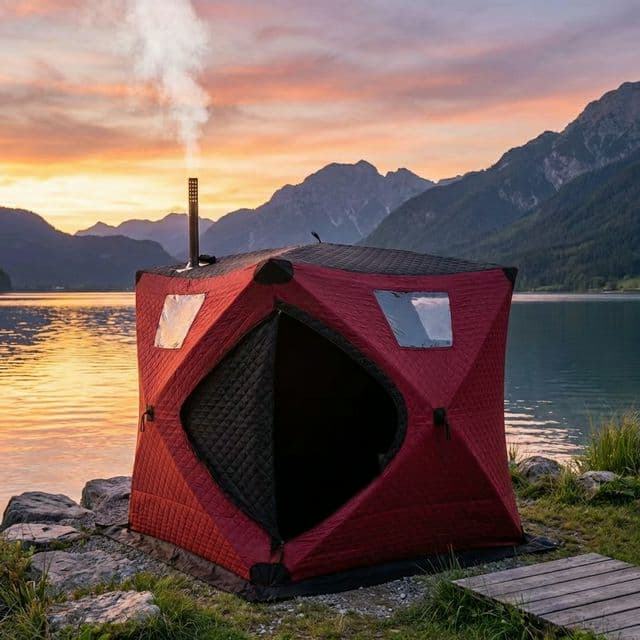
| Portable/tent alternative | Low-commitment experimentation while infrastructure is pending | Lower permanent build burden | Lower absolute demand but variable durability | Lower premium finish and different comfort expectations | Not a direct substitute when long-term property integration and resale optics are required. |
Risk matrix with mitigation actions
Risk statements are actionable only when mapped to probability, impact, trigger signal, and mitigation path.
- High-impact + medium-probability risks should be resolved before any purchase commitment.
- Medium-impact risks can proceed only with mitigation line items documented in budget and schedule.
- Low-confidence assumptions remain labeled near tool output for transparent handoff.
Swipe horizontally to view all table columns.
| Risk item | Probability | Impact | Trigger signal | Mitigation action |
|---|---|---|---|---|
| Electrical under-spec | Medium | High | No dedicated 240V branch or insufficient panel headroom | Require licensed load calculation and permit path before ordering. |
| Moisture and weather envelope mismatch | Medium | High | Wind-driven rain or poor drainage around base and cladding joints | Add drainage slope, weather break, and maintenance inspection cadence. |
| Budget scope drift | High | Medium | Premium facade add-ons before infrastructure scope lock | Freeze electrical/base scope first, then release finish upgrades. |
| Permit misunderstanding | Medium | Medium to high | Assuming structure exemption means no trade permits needed | Verify structure and electrical permits as separate checklist items. |
| Household usage-safety mismatch | Medium | High | Routine sessions begin without user screening for cardiovascular, pregnancy, or hydration boundaries. | Use AHA/ACOG/CDC checkpoints as pre-use policy and escalate to clinician advice when required. |
| Recall blind spot | Low to medium | High | Model is purchased without checking CPSC recalls, serial ranges, or distributor notice updates. | Check CPSC recall database before deposit and verify model/serial eligibility again at delivery. |
| Usage drop after install | Medium | Medium | Insufficient privacy or poor thermal comfort in exposed yard | Address privacy, access lighting, and wind shielding before go-live. |
Scenario lab: assumptions to outcomes
These examples show how small input changes can alter result states and decision quality.
Premise: 12 x 14 ft usable zone, 240V/40A already available, partial privacy screens.
Process: Calculator returns strong fit after increasing clearance from 12 in to 18 in and adding local utility rate.
Outcome: Proceed with shortlist and electrician confirmation; timeline stays under 8 weeks.
Fallback: If panel headroom drops during review, step down to 6kW tier first.
Premise: High wind exposure, glass-forward facade preference, no current privacy treatment.
Process: Conditional fit due to thermal variability and budget pressure from facade upgrades.
Outcome: Project proceeds only after adding wind/privacy screen line item and revised budget.
Fallback: Switch to sheltered placement or non-glass-heavy facade to regain margin.
Premise: No dedicated 240V branch, budget $14k, high design ambition.
Process: Not fit yet triggered by electrical and budget floor mismatch.
Outcome: Buyer pauses checkout, scopes electrical upgrade, then re-enters planning cycle.
Fallback: Temporary pivot to portable option while infrastructure upgrade is scheduled.
Known vs unknown boundary register
Decision integrity improves when evidence gaps are disclosed directly and tied to mitigation workflows.
Swipe horizontally to view all table columns.
| Question area | Status | Decision impact | Why incomplete | How to handle now |
|---|---|---|---|---|
| National installed-cost benchmark for home outdoor subtype | Partial | Medium | Available data is fragmented across vendor ranges without normalized scope definitions. | Public evidence insufficient for a single benchmark; use calculator band + local contractor quotes. |
| Failure-rate denominator by exposure hours | Unknown | High | Public incident data does not normalize by installed base or runtime. | Treat safety architecture and installation quality as primary controls. |
| Category-wide recall rate denominator for outdoor/home sauna units | Unknown | Medium | CPSC publishes event-level recalls, but no normalized installed-base denominator by sauna subtype. | Treat recall screening as mandatory and re-check serial eligibility before and after delivery. |
| Sauna-specific hydration dosage by medical profile | Partial | Medium | Public guidance is often extrapolated from general heat-exposure recommendations rather than large sauna-specific trials. | Use conservative hydration/session limits and escalate to clinician guidance for heat-sensitive conditions. |
| Facade-specific maintenance cycle by climate zone | Partial | Medium | Maintenance intervals vary by species, coating, and weather severity. | Request model-level maintenance schedule in writing before purchase. |
| Permit turnaround times across cities | Unknown | Medium | No reliable public cross-city dataset normalizes permit lead times with project complexity. | Treat timeline as pending confirmation: add schedule buffer and verify city-level lead times pre-deposit. |
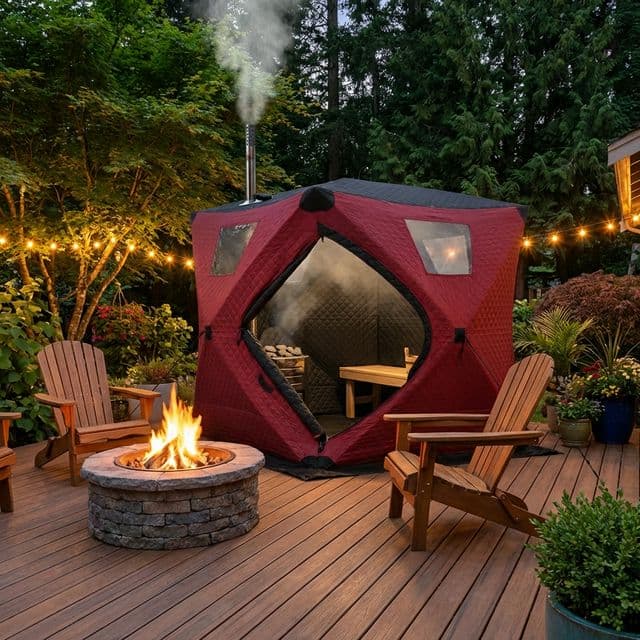
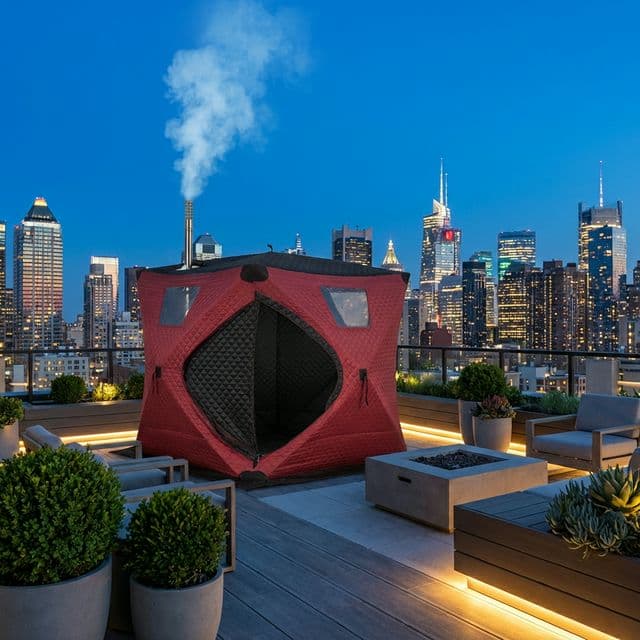
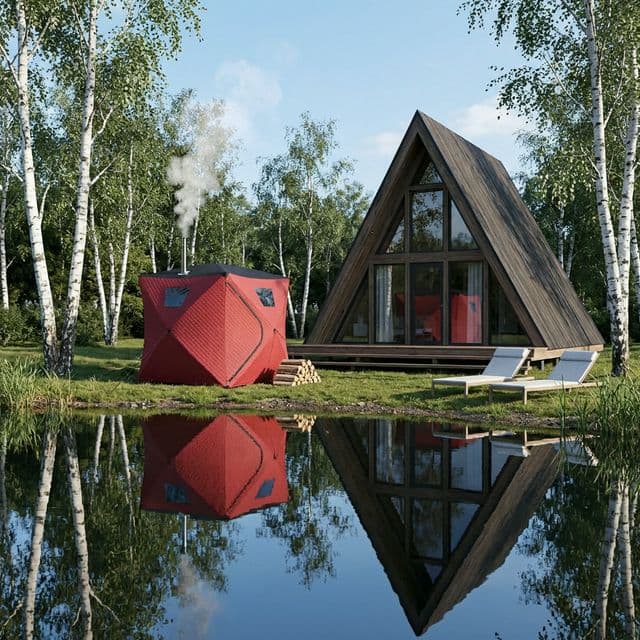
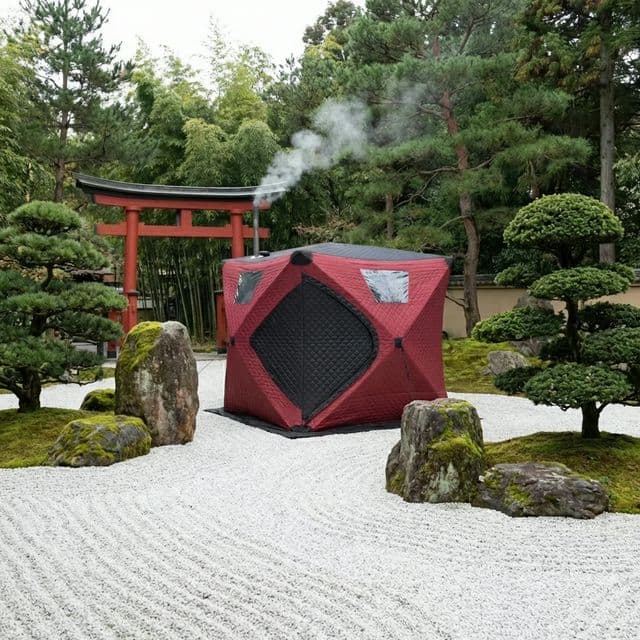
Product visuals for contextual planning
Image references support design and siting conversations. They do not replace model-specific technical sheets.
Ready to validate your real project constraints?
Send dimensions, utility rate, and shortlist to [email protected] for a manual review pathway.
FAQ by decision intent
Questions are grouped by planning stage so users can move from curiosity to execution without context loss.
Final pre-purchase checkpoint
Before paying a deposit, share your calculator assumptions, site notes, and shortlisted models with [email protected]. We will map your setup against fit boundaries, risk controls, and minimum-upgrade path.
Report published March 2, 2026. Last updated March 2, 2026 (stage2 seo-geo closure pass: metadata compliance + automation guard). Re-check time-sensitive permit and utility data if purchase timing changes. Review cadence: refresh source checks every 6-12 months, or sooner when code and utility data materially changes.