
Propane Sauna Stove Fit + Fuel Planner
Input room volume, propane assumptions, gas-line readiness, and safety/permit status. The tool returns a fit band, probable heater class direction, monthly fuel envelope, and a concrete next step.
Default profile: 460 ft3 room, 14 ft2 uninsulated/glass area, 4 sessions/week, 50 minutes/session, $2.674/gal propane, and +15% stress uplift.
Boundary reminder: unresolved gas piping, undefined venting, missing permit flow, or missing CO alarm coverage should force a conditional or blocked decision.
Tool output to report verification bridge
The tool gives an immediate fit band. This bridge maps each result state to the report block you should verify before acting.
| Tool status | Immediate interpretation | Verify in report | Next move |
|---|---|---|---|
| Strong Fit | Top propane class aligns with adjusted volume, budget envelope, and readiness gates (gas line, venting, permit, CO alarms). | Key numbers + permit variance + comparison grid + risk matrix | Email [email protected] with room dimensions, utility notes, and your tool score for final shortlist review. |
| Conditional Fit | A feasible path exists, but at least one boundary is still soft (fuel-cost tolerance, permit stage, venting design, or alarm coverage). | Fit boundaries + methodology + known unknowns + scenarios | Close one blocker, rerun with conservative assumptions, then request manual review before checkout. |
| Boundary Hit | Current setup carries unresolved safety or regulatory blockers for propane ownership. | Risk matrix + alternatives + FAQ | Pause purchase, define a staged permit and venting plan, then return to tool rerun. |
Propane route summary before you commit
This page is intentionally single-URL hybrid architecture: tool first for execution, report second for confidence. The summary cards below capture the main decision signals with dated evidence.
Published: April 12, 2026. Last updated: April 12, 2026 (stage1b-research-enhance evidence refresh round + stage2 seo-geo closure pass). Time-sensitive items are date-stamped in the evidence ledger.
Review cadence: refresh this page every 6-12 months, or sooner if fuel benchmarks, safety guidance, or permit workflows materially change.
EIA fuel data and city permit pathways both materially change outcome quality
The route now treats propane decisions as a dual-track workflow: monthly fuel exposure and permit-readiness need to clear at the same time.
Source: EIA heating-oil-and-propane data + Seattle/Portland/Austin permit pages reviewed April 12, 2026.
CDC update (Jan 12, 2026): >400 deaths, >100,000 emergency visits, and >14,000 hospitalizations annually from unintentional non-fire CO poisoning
The planner keeps venting, alarm coverage, and permit state as hard gates because combustion safety risk remains materially high.
Source: CDC Carbon Monoxide Poisoning page (updated January 12, 2026).
EIA week of Mar 30, 2026: U.S. average $2.674/gal vs New England $3.766/gal vs Midwest $2.184/gal
A single national baseline can understate regional exposure. The tool now emphasizes baseline + stress runs for every shortlist.
Source: EIA heating-oil-and-propane weekly survey table reviewed April 12, 2026.
EIA indicates weekly residential propane collection runs during Oct-March and weekly updates return in October 2026
Off-season decisions should use wider stress ranges and scheduled reruns because weekly public benchmark cadence pauses.
Source: EIA heating-oil-and-propane update notes reviewed April 12, 2026.
Scandia anchors: 40K BTU up to 616 ft3; 80K BTU up to 1,600-1,680 ft3
These anchors keep recommendations tied to available model classes; final commissioning still requires licensed HVAC and local code review.
Source: Scandia gas-heater collection and model pages reviewed April 12, 2026.
Seattle, Portland, and Austin publish materially different lane rules, lead times, and closure requirements
Permits and inspections should be treated as pre-order milestones before committing to non-returnable combustion equipment.
Source: Seattle SDCI, Portland PPD, and Austin DSD permit pages reviewed April 12, 2026.
Key numbers and why they matter
| Dimension | Current value | Decision implication | Source |
|---|---|---|---|
| Propane energy conversion baseline | 1 gallon = 91,452 Btu | This conversion is the core bridge between heater BTU rating and monthly fuel-volume estimation. | U.S. EIA Btu units |
| Residential propane benchmark (U.S. average) | $2.674 per gallon (week of Mar 30, 2026) | Use as a baseline only. Local supply contracts and delivery charges can materially deviate. | EIA heating-oil-and-propane update |
| Regional propane benchmark spread | New England $3.766/gal vs Midwest $2.184/gal (week of Mar 30, 2026) | Regional spread is large enough to change class affordability and stress-month budgeting. | EIA PADD table |
| Public price-data cadence boundary | EIA weekly propane collection runs Oct-March; weekly updates return in October 2026 | During spring/summer planning, rerun assumptions monthly and apply wider stress bands. | EIA collection notes |
| U.S. CO harm burden (non-fire, unintentional) | CDC: >400 deaths, >100,000 emergency visits, >14,000 hospitalizations per year | CO protection and venting readiness must be treated as launch gates, not optional polish. | CDC CO poisoning basics |
| Cold-month concentration in consumer-product CO deaths | CPSC 2021 estimate: 204 deaths; 56% occurred in Nov-Feb; heating systems accounted for 31% | Winter commissioning and high-load usage periods deserve stricter pre-checks and monitoring discipline. | CPSC 2021 annual estimates |
| Portable fuel-burning enclosure warning | CDC/CPSC: do not use portable fuel-burning camp equipment inside homes, garages, vehicles, or tents unless specifically designed | Tent or temporary-shelter propane assumptions require explicit model-level design proof and safety controls. | CDC CO prevention guidance |
| Scandia 40K published class anchor | 40,000 BTU, up to 616 ft3 | Useful directional anchor for medium-volume rooms with tighter budget and lower throughput expectations. | Scandia 40K product page |
| Scandia 80K published class anchor | 80,000 BTU, up to roughly 1,600-1,680 ft3 | Large-volume support increases fuel throughput and installation complexity, so readiness scoring must remain strict. | Scandia 80K product page |
| Published installer prerequisite | Scandia gas-heater pages state install by licensed HVAC professional | Model shortlist is only the first step; licensed trade installation remains a hard requirement. | Scandia 80K page notes |
| Seattle mechanical lane timing and scope | Most projects plan for 9 weeks; simple like-for-like can be approved in 24 hours; mechanical permit does not cover gas lines | Separate lane mapping is required early or project schedule can slip after equipment commitment. | Seattle mechanical permits |
| Seattle gas-piping permit baseline | Seattle gas-piping licensing law states gas-piping permit is required whether or not a license is required | Do not assume mechanical permit alone clears propane gas-piping scope. | Seattle gas-piping licensing law |
| Portland mechanical permit workflow | Apply online in ~15 minutes; permits are typically issued within 24 hours after payment; final inspection code 699 required | Permits can start quickly, but final inspection closure is still a mandatory schedule checkpoint. | Portland residential mechanical permits |
| Austin stand-alone permit constraints | Permit expires on the 181st day without inspection; natural gas/propane scope needs a separate plumbing permit | Permit lane selection and inspection pacing must be planned before purchase and contractor scheduling. | Austin development services permits |
Data boundaries and interpretation rules
| Boundary | What evidence says now | How to use it in decisions | Source |
|---|---|---|---|
| Fuel benchmark freshness | EIA notes weekly collection in heating season and an October 2026 weekly return point. | During off-season planning, run at least baseline + stress cases and revisit price inputs monthly. | EIA heating-oil-and-propane |
| CO incident dataset scope | CDC and CPSC provide broad non-fire CO burden signals, but not a sauna-specific national denominator. | Treat statistics as risk-severity evidence, then rely on project-level venting and commissioning checks. | CDC + CPSC annual estimates |
| Permit variance | Seattle, Portland, and Austin publish different lane scope, review cadence, and closure conditions. | Map permit lane at city level first, then anchor purchase timing to permit + inspection milestones. | City permit pages |
| Model-class vs commissioning | Published class ranges and installer prerequisites come from manufacturer pages, not site-specific engineering sign-off. | Use class fit for shortlisting only. Require licensed installer and AHJ confirmation before final commitment. | Scandia gas-heater pages |
Who this route fits, and who should pause
| User segment | Fit | Why | Next move |
|---|---|---|---|
| Owners with documented gas-line route, defined vent path, in-progress permit, and full CO alarm coverage | Strong candidate | Most core safety and regulatory dependencies are already active, so heater-class decisions are less likely to fail downstream. | Use the tool result as shortlist input and request final manual review before purchase. |
| Users with adequate budget and volume fit but unfinished venting details | Conditional | Thermal fit can look correct while combustion-exhaust design remains unresolved. | Freeze model selection until venting path, clearances, and inspection route are documented. |
| Projects with unknown permit lane or not-started application status | Conditional to weak | Permit uncertainty often becomes the schedule bottleneck and can invalidate assumed install timelines. | Contact local authority or licensed contractor, then rerun with updated permit state. |
| Installations without CO alarms or with no gas line plan | Not suitable yet | Current configuration does not meet minimum safety-readiness baseline for commissioning. | Close life-safety and utility blockers first; do not proceed to checkout. |
| Projects assuming portable fuel-burning equipment can run inside tents or temporary shelters | Not suitable | CDC/CPSC guidance warns against using portable fuel-burning camp equipment inside enclosed spaces unless specifically designed for that environment. | Use non-combustion alternatives or move to fixed, code-compliant vented installation planning. |
Methodology and scoring logic
The tool adjusts planning volume with +3.3 ft3 per 1 ft2 uninsulated or glass area to avoid nominal-volume under-sizing.
This is conservative screening logic, not a universal code formula. Borderline projects should get installer-level heat-loss verification.
Published propane class anchors are scored against adjusted volume and budget envelope.
Keeps recommendation tied to real model classes users can buy, while still requiring licensed HVAC and AHJ review for final install.
Gas-line, venting, permit status, and CO-alarm coverage are weighted and can force conditional/boundary outcomes.
Prevents a purely thermal answer from hiding life-safety and compliance blockers.
Monthly gallons and baseline/stress cost are derived from BTU class, usage profile, and user-entered propane price with regional benchmark reference.
Shows how region and stress pricing can shift affordability even when thermal fit remains constant.
Evidence tables date-stamp fuel, safety, and permit sources and keep known unknowns visible in-page.
Prevents stale or weak evidence from being mistaken for settled engineering or legal certainty.
Permit variance by city (non-portable assumptions)
| City | Public signal | Planning impact | Source |
|---|---|---|---|
| Seattle, WA (mechanical lane) | Seattle notes most mechanical projects should plan for about nine weeks, while simple like-for-like work can be approved in 24 hours. | Do not assume fast-path timing unless scope clearly fits the simple lane. | Permit page |
| Seattle, WA (gas-piping law) | Seattle gas-piping licensing law states a gas-piping permit is required whether or not a license is required. | Do not treat mechanical paperwork as a full substitute for gas-piping permit scope. | Permit page |
| Portland, OR | Portland indicates online submission in about 15 minutes and typical permit issuance within 24 hours after payment. | Front-end permit speed can be high, but final inspection closure (code 699) must still be scheduled and passed. | Permit page |
| Austin, TX | Austin states permits expire on day 181 without inspection and natural gas/propane work requires a separate plumbing permit. | Permit lane scope and inspection cadence should be resolved before purchase and contractor handoff. | Permit page |
Mid-route action checkpoint
If your score is conditional or boundary-hit, do not skip to checkout. Use the evidence and risk sections below, then send your current assumptions to support for a manual boundary review.
Email [email protected]Evidence ledger (dated)
| Claim | Evidence | Accessed | Confidence | Source |
|---|---|---|---|---|
| Propane conversion baseline in the tool is explicit and auditable. | EIA units page: 1 gallon propane = 91,452 Btu | 2026-04-12 | High | Open |
| Fuel baseline and regional spread use current public benchmark values. | EIA heating-oil-and-propane survey (week of Mar 30, 2026) with U.S. and PADD values | 2026-04-12 | High | Open |
| Fuel benchmark cadence boundary is visible to users, not hidden in assumptions. | EIA update notes weekly residential propane collection in heating season and October 2026 weekly return | 2026-04-12 | High | Open |
| CO risk framing uses recent public-health burden data with explicit date. | CDC page (updated Jan 12, 2026): >400 deaths, >100k emergency visits, >14k hospitalizations annually | 2026-04-12 | High | Open |
| Cold-month concentration and product-category risk mix are documented. | CPSC 2021 annual estimates: 204 deaths, 56% in Nov-Feb, 31% linked to heating systems | 2026-04-12 | Medium-High | Open |
| Portable enclosed-space use warning is explicitly carried into fit boundaries. | CDC/CPSC guidance: do not use portable fuel-burning camp equipment inside enclosed spaces unless specifically designed | 2026-04-12 | High | Open |
| 40K and 80K class anchors remain tied to currently published propane models. | Scandia 40K + 80K model pages and gas-heater collection | 2026-04-12 | Medium-High | Open |
| Manufacturer installer prerequisite is disclosed as a hard implementation boundary. | Scandia gas-heater pages note installation should be performed by licensed HVAC professional | 2026-04-12 | Medium-High | Open |
| Permit-variance section now includes lane timing and closure constraints. | Seattle mechanical permit page + Seattle gas-piping licensing law + Portland and Austin permit resources | 2026-04-12 | Medium | Open |
Known unknowns and evidence limits
- No single public national dataset provides denominator-normalized incident rates specific to all residential propane sauna-heater installations.
- CPSC annual estimates are currently published through 2021 and may revise as late state reports are added; this introduces unavoidable lag.
- No open national formula explicitly defines sauna load adjustment from glass/uninsulated area, so the +3.3 factor here remains a planning heuristic.
- Municipal permit pages describe pathways but cannot replace project-specific AHJ interpretation for each address and scope.
- Public product pages provide class anchors, but final venting and clearances still require model-manual and licensed installer review.
Propane vs adjacent routes
| Route | Best for | Main tradeoff | Blocker signal |
|---|---|---|---|
| Propane class (40K/80K style path) | Owners needing combustion heat with gas-supply feasibility and where electric service upgrades are costly. | Requires stricter venting, permit coordination, and CO-alarm discipline than electric-only approaches. | No gas line plan or no vent path definition. |
| Electric sauna stove route | Sites with reliable panel headroom, straightforward wiring lane, and preference for simpler combustion-free operation. | Operating cost is directly exposed to electricity tariff changes and may need service upgrades. | Insufficient panel capacity or unresolved branch-circuit requirements. |
| Wood-burning sauna stove route | Off-grid or low-utility contexts where fuel logistics and chimney path are manageable. | Fuel handling, emissions compliance, moisture control, and chimney maintenance become ongoing responsibilities. | No compliant chimney path, unresolved fuel logistics, or restricted local use. |
Risk matrix and mitigation
| Risk | Trigger | Impact | Mitigation |
|---|---|---|---|
| Combustion exhaust / CO exposure risk | Undefined venting path, poor draft assumptions, missing alarm coverage, or enclosed-space misuse assumptions | Life-safety hazard and commissioning stop condition | Define venting route early, follow CDC/CPSC enclosed-space warnings, install CO alarms per guidance, and complete licensed inspection sequence. |
| Permit sequencing failure | Equipment ordered before permit lane and scope are confirmed | Schedule slip, rework, and possible compliance disputes | Treat permit workflow as a prerequisite milestone in planning, not as post-purchase paperwork. |
| Fuel-price stress underestimation | Decisions made on single baseline price while ignoring regional spread and stress cases | Unexpected monthly ownership cost and budget overrun | Run baseline + regional + stress scenarios and compare with fallback alternatives before locking class. |
| Stale benchmark assumption | Treating one EIA data point as a full-year constant despite seasonal data cadence changes | False cost confidence and poor contract timing decisions | Re-run price assumptions monthly in off-season and recheck weekly benchmarks when heating-season updates resume. |
| Thermal under-sizing from nominal volume only | Ignoring uninsulated/glass surfaces in room load estimate | Slow heat-up, comfort dissatisfaction, and expensive correction cycle | Use adjusted planning volume and rerun class fit with conservative envelope assumptions. |
| False certainty from tool output | Treating planner score as engineering approval | Overconfident purchase decisions with unresolved boundaries | Use the score as decision support and complete licensed trade + AHJ checks before commissioning. |
Alternatives when propane boundaries remain open
If gas-line or venting blockers cannot be resolved this season, electric can reduce combustion complexity while preserving predictable use routines.
Open electric sauna stove plannerIf utility costs dominate and you have strong chimney/fuel-readiness, wood-burning can be viable with a different maintenance and compliance profile.
Open wood-burning stove selectorIf heater choice is being made before shell and site fundamentals, reset via an outdoor-cabin readiness route first.
Open best outdoor sauna selectorScenario lab
Assumptions: 460 ft3 room, 14 ft2 glass/uninsulated area, 4 sessions/week, $2.674/gal U.S. benchmark, permit in review, alarms partial.
Likely result: Conditional fit; 40K often leads unless adjusted load or deep-session profile pushes 80K.
Boundary to close: Finish vent path documentation and full alarm coverage.
Assumptions: Same thermal profile as baseline, but $3.766/gal reference price (EIA week of Mar 30, 2026).
Likely result: Monthly cost can move from manageable to borderline, even when thermal fit class remains unchanged.
Boundary to close: Validate delivered contract terms and acceptable stress-month ceiling before ordering.
Assumptions: 900+ ft3 effective load, 5+ sessions/week, 70+ minute sessions, premium budget.
Likely result: 80K class bias with higher monthly fuel envelope and stronger readiness dependence.
Boundary to close: Permit sequence and fuel-cost stress tolerance.
Assumptions: Any room size, any budget, alarms missing.
Likely result: Boundary hit despite thermal fit signals.
Boundary to close: Gas line scope, venting route, permit initiation, and CO baseline coverage.
Assumptions: Mechanical lane selected late, gas-piping lane not mapped early, inspections not scheduled promptly.
Likely result: Schedule delay can exceed equipment lead-time assumptions and force rework or permit re-submission.
Boundary to close: Lock lane scope and inspection sequence before purchase; track city-specific permit expiry rules.
Assumptions: Same usage routine, higher delivered propane price and longer heat-up.
Likely result: Monthly stress cost can move a previously acceptable setup into conditional territory.
Boundary to close: Document winter fuel contract terms and evaluate usage-frequency adjustments.
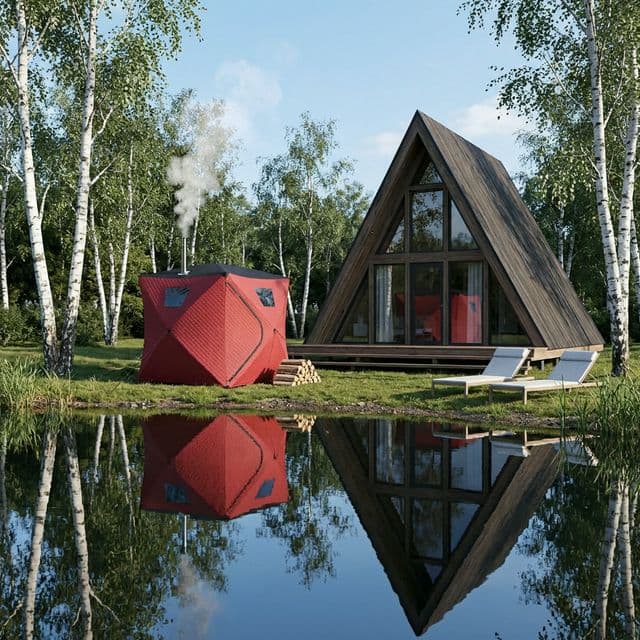
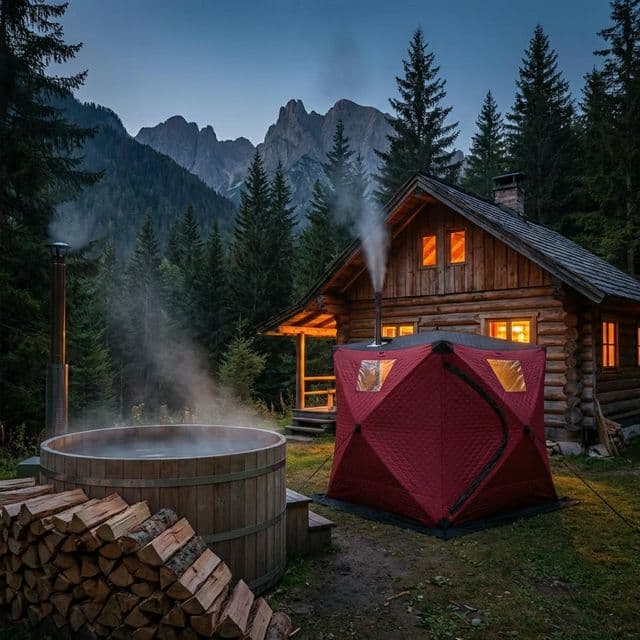
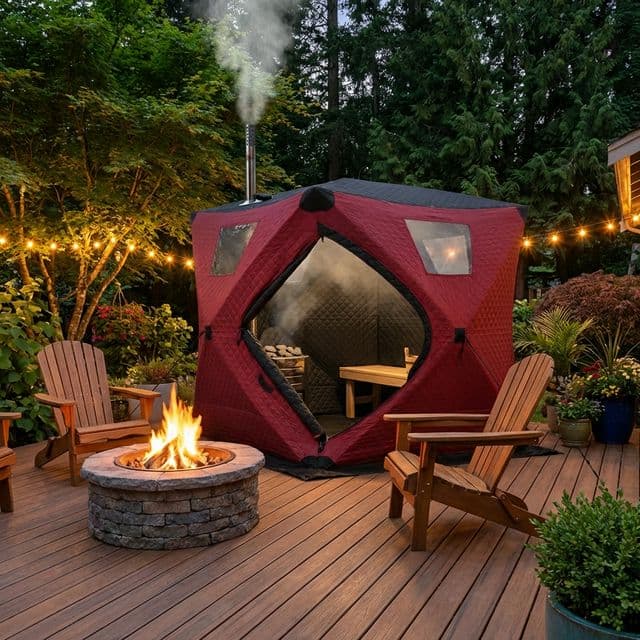
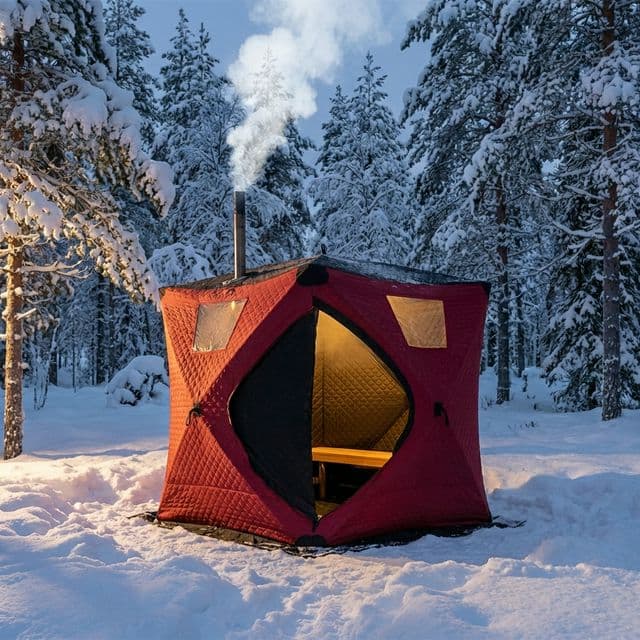
Product-image context gallery
Visual references from the project product-image library. These are support visuals for layout and scenario context, not live product inventory or performance claims.
Related decision routes
FAQ
Send your propane planning brief for manual review
Include your room dimensions, envelope notes, utility readiness, permit status, and this tool output. We will reply with a boundary check and practical next-step path.
Guidance scope: decision support only. Final gas, vent, permit, and commissioning decisions must be completed by qualified trades and local authorities.