
Benefits of infrared sauna: run your evidence-and-safety profile first
This checker maps your goal, dosage, hydration, and risk constraints to a decision-ready benefit signal. The output explains what is known, what is uncertain, and the next step to take before committing to a routine.
Empty state: run the checker to generate your benefit signal. Every output is paired with evidence limits and a practical next step.
The model intentionally discounts claims that rely only on observational data. Conflicting RCT outcomes lower confidence instead of being ignored.
Result bands are designed for decision support, not diagnosis. Disease-treatment decisions should stay with licensed clinicians.
If your output is inconclusive, start with low-risk alternatives: consistent sleep, hydration, daily walking, and stress-load management.
Then re-run the checker with updated data or email [email protected] for a manual comparison.
Tool output to evidence-report bridge
Use this bridge immediately after the checker run. It maps each output status to the report section that validates the decision before you start, buy, or escalate a sauna routine.
| Tool status | Immediate interpretation | Verify in report | Next move |
|---|---|---|---|
| High Potential | Input pattern is aligned with moderate evidence and manageable safety assumptions. | Key numbers + endpoint matrix + claim boundaries | Start a conservative 4-week routine and email [email protected] for a protocol cross-check. |
| Moderate Potential | Potential exists, but at least one variable (dose, hydration, or risk profile) is weak. | Counterevidence + methodology + risk matrix | Adjust one variable first, then re-run checker before buying or escalating session intensity. |
| Inconclusive / Pause + Screen | Current assumptions do not support a confident benefits forecast. | Audience-fit boundaries + known unknowns + FAQ safety group | Pause heat escalation and use low-risk alternatives until boundaries are addressed. |
Stage1b content-gap audit and patch log
This enhancement round prioritizes evidence depth and boundary clarity. Open items remain explicitly marked as pending rather than being forced into low-confidence conclusions.
| Audit area | Previous gap | Stage1b upgrade | Status |
|---|---|---|---|
| Endpoint effect-size clarity | Earlier copy stated "mixed evidence" but did not show pooled and subgroup blood-pressure numbers side by side. | Added an endpoint matrix with effect size, confidence interval behavior, and heterogeneity context from 2025 syntheses plus a 2025 counterexample trial. | Closed |
| Protocol transfer boundaries | Users could over-transfer results between observational cohorts, heart-failure Waon protocols, and home infrared routines. | Added protocol boundary table with population, dosage context, transferable signal, and explicit "do not assume" notes. | Closed |
| Medication and heat-risk handling | The page covered generic heat risk but lacked a dedicated evidence-backed medication interaction decision path. | Added CDC 2025 medication-heat guidance into audience boundaries, risk matrix, and evidence ledger with dated references. | Closed |
| Metabolic endpoint counterexamples | Earlier versions leaned on blood-pressure outcomes and under-covered opposite-direction glucose responses. | Added a counterevidence matrix and key-number entries showing acute postprandial glucose increase in T2D participants during infrared sessions. | Closed |
| Reproductive-planning boundaries | Pregnancy risk was included, but male fertility-planning boundaries and reversibility timelines were not explicitly documented. | Added fertility risk rows across key numbers, audience fit, risk matrix, FAQ, and evidence ledger with recovery-timeline context. | Closed |
| High-claim topics without strong public evidence | Detox-style claims were not explicitly marked as evidence-limited in a dedicated decision table. | Added claim-limit rows that flag pending areas where reliable public RCT-level detox endpoints are not available in cited 2025 syntheses. | Pending confirmation for new biomarker trials |
Benefits of infrared sauna: what is credible, what is conditional, and what should wait
The tool gives immediate outputs. This report layer explains whether those outputs are trustworthy using dated sources, transparent boundaries, and practical alternatives for inconclusive cases.
Published: February 20, 2026. Last updated: March 7, 2026 (stage2 seo-geo closure pass). Time- sensitive claims are date-stamped in the evidence ledger.
Research verification window: March 7, 2026. Sources were re-checked against PubMed, CDC, FDA, and CPSC pages, with added metabolic and fertility boundary studies.
Review cadence: refresh every 6 months or immediately after major trial, recall, or regulatory updates.
2025 reviews: pooled uncertainty + subgroup SBP signal (-4.11 mmHg)
Recent systematic reviews report subgroup blood-pressure improvements, while pooled cardiometabolic outcomes remain inconsistent across protocols.
Source: PMID 41049507 and PMID 41166412 (both published in 2025)
Most studied protocols cluster around multiple sessions per week
The benefits checker weights repeatability and hydration because these factors often explain why real-world outcomes differ from headline claims.
Source: PMID 41049507 (interventions 2-15 weeks) + PMID 30239008 (Waon therapy protocol)
Pregnancy + heat intolerance require pause-and-screen path
Heat exposure can be inappropriate for specific users. A conservative protocol and clinical screening should come before experimentation in higher-risk profiles.
Source: CDC clinician overview for heat and pregnancy (updated Sep 18, 2025) + CDC Heat and Medications page (Sep 18, 2025)
T2D acute trial: glucose iAUC rose (17.7 vs 14.8 mmol/L*h); male fertility study showed reversible sperm declines
Heat can improve some short-term hemodynamic markers while creating opposite-direction effects in glycemic control and fertility planning contexts.
Source: PMID 39209309 (2024) + PMID 23411620 (2013)
FDA warning-letter precedent on disease-treatment claims
Use sauna as a supportive wellness practice. Claims that imply disease cure or replacement of medical treatment can become unsafe and misleading.
Source: FDA warning letter 622648 (Jul 5, 2022)
Oct 23, 2025 recalls documented burn and fall incidents
CPSC recalls in both blanket and hybrid-cabin categories show that protocol quality is not enough if hardware quality controls fail.
Source: CPSC recalls 26-036 and 26-040 (both Oct 23, 2025)
Peer-reviewed evidence base
12 PubMed studies + 2 syntheses (2025)
Cardiometabolic, fertility, and protocol-boundary studies are mapped in one dated evidence ledger.
Public-health and regulatory checks
CDC + FDA + CPSC references
Heat-risk guidance, claim boundaries, and recall notices are reviewed before decision recommendations.
Manual escalation channel
Direct [email protected] handoff
Users can submit checker outputs for a human protocol review instead of relying on generic advice.
Update governance
6-month refresh cadence
Publish and update markers are explicit, with time-sensitive sources rechecked in a fixed review window.
Key numbers and why they matter
| Dimension | Value | Decision implication | Source context |
|---|---|---|---|
| Finnish observational cohort signal | 2,315 men, median follow-up 20.7 years | Higher sauna frequency associated with lower fatal CVD and all-cause mortality; observational design does not prove causality. | PMID 25705824 (published Apr 2015) |
| Frequency gradient in cohort | 4-7 sessions/week vs 1 session/week: HR 0.37 for sudden cardiac death | Association is strong but population-specific (middle-aged Finnish men), so transferability is limited. | PMID 25705824 |
| Incident-hypertension cohort signal | 1,621 men; median follow-up 24.7 years; 251 hypertension events | Compared with 1 session/week, hypertension risk was lower at 2-3 sessions/week (HR 0.76) and 4-7 sessions/week (HR 0.54). Observational design still limits causal claims. | PMID 28633297 (published May 2017) |
| 2025 RCT-focused review | 20 RCTs: pooled SBP estimate -2.46 mmHg, CI crossed zero | Subgroup blood-pressure effects were significant in selected populations, but pooled all-population certainty remained limited. | PMID 41049507 (eCollection Sep 2025) |
| 2025 broader meta-analysis | 51 papers: multi-bout heat linked to SBP -5, MAP -4, DBP -3 mmHg | The same synthesis reported no meaningful pooled change in CRP or arterial stiffness, so endpoint-specific interpretation is required. | PMID 41166412 (published Oct 30, 2025) |
| Hypertension comparator trial | RCT n=41 found no significant ambulatory BP reduction | Direct comparator data can conflict with pooled findings; confidence should be tiered by protocol quality. | PMID 40407037 (published Jun 1, 2025) |
| Type 2 diabetes acute crossover signal | n=12 men; 40-minute infrared session raised postprandial glucose iAUC (17.7 vs 14.8 mmol/L*h, p=0.03) | Heat exposure can produce mixed metabolic effects; same-day glucose handling may worsen even when some vascular markers improve. | PMID 39209309 (published Aug 28, 2024) |
| Healthy women acute cardiovascular response | n=10 crossover: tympanic temperature +1.05 C and heart rate +34 bpm, but no significant BP or arterial-stiffness change | Exercise-mimic language should be constrained because acute heat load did not translate to immediate vascular benefit in this sample. | PMID 34954348 (published Jan 14, 2022) |
| Acute-session hemodynamic response | 102 adults, 30 minutes at 73 C: SBP 137 to 130 and DBP 82 to 75 immediately post-session | Short-term blood-pressure drops can occur even when long-term treatment effects remain uncertain. | PMID 29269746 (published Jan 2018) |
| Heart-failure-specific infrared protocol | Meta-analysis: 15-minute 60 C infrared sessions + 30-minute warm rest, 5 days/week for 2-4 weeks | Signals (BNP/LVEF) were condition-specific and do not automatically transfer to general home users. | PMID 30239008 (published Oct 2018) |
| Male fertility planning boundary | n=10 men, 2 x 15-minute sessions/week for 3 months at 80-90 C reduced sperm count/motility; values recovered about 6 months after stopping | Users actively trying to conceive should treat frequent high-heat routines as conditional and time-sensitive rather than neutral. | PMID 23411620 (published Mar 2013) |
| Non-thermal comparator for BP decisions | 2025 network meta-analysis (182 studies): meditative movement -7.49 mmHg and breathing control -6.65 mmHg at <=3 months | If heat risk is high or output is inconclusive, low-risk alternatives can deliver decision-grade BP support instead of acting as a weak backup. | PMID 40519356 (published Jan 2025) |
| Safety incident benchmark | 78,000 recalled infrared blankets; 65 overheating reports; 32 burns | Device quality control and monitoring matter; benefit pursuit without safety checks is not acceptable. | CPSC recall 26-036 (Oct 23, 2025) |
| Cabin recall benchmark | 1,000 recalled hybrid saunas; 7 incidents; 1 injury | Even premium-format products can fail, so buyers should verify recall and remedy status. | CPSC recall 26-040 (Oct 23, 2025) |
| Pregnancy boundary | CDC clinician overview: one day of extreme heat can increase risk of preterm birth and other adverse outcomes | Pregnancy heat-risk boundaries should override wellness experimentation when applicable. | CDC clinical overview for heat and pregnant women (updated Sep 18, 2025) |
| Medication interaction boundary | CDC updated guidance for heat and medications on Sep 18, 2025 | Medication plans that alter thermoregulation or hydration need clinician review before frequent sauna use, especially during heat events. | CDC Heat and Medications page (updated Sep 18, 2025) |
| Heat illness escalation signs | Dizziness, nausea, confusion, loss of consciousness | Any escalation symptom requires stop-and-cooldown response, not continued exposure. | CDC Heat Stress page (accessed Feb 20, 2026) |
| Regulatory claim boundary example | FDA warning letter on broad disease-treatment claims for FIR sauna marketing | Marketing language should stay within evidence-supported and legally safe boundaries. | FDA warning letter 622648 (Jul 5, 2022) |
Endpoint effect-size matrix (what moves and what does not)
This matrix prevents overgeneralization by separating pooled uncertainty, subgroup wins, and explicit null findings.
| Endpoint | Effect size or direction | Decision interpretation | Source context |
|---|---|---|---|
| Systolic BP (all passive-heat RCTs pooled) | Point estimate favored heat (-2.46 mmHg), but confidence interval crossed zero; heterogeneity I2 60.3%. | Do not present universal blood-pressure claims for all users. | PMID 41049507 (20 RCTs, eCollection Sep 2025) |
| Systolic BP subgroup (systemic-hypertension cohorts) | Weighted mean difference -4.11 mmHg (95% CI -7.36 to -0.86). | BP benefits can be meaningful in specific subgroups when protocols align. | PMID 41049507 |
| Systolic BP subgroup (coronary-risk cohorts) | Weighted mean difference -2.52 mmHg (95% CI -4.26 to -0.79). | Evidence signal is present but still population-limited, not universal. | PMID 41049507 |
| Multi-bout heat interventions (broader synthesis) | SBP -5 mmHg, MAP -4 mmHg, DBP -3 mmHg with moderate-to-high heterogeneity. | Endpoint-level improvements exist, but variance across protocols remains substantial. | PMID 41166412 (published Oct 30, 2025) |
| Postprandial glucose handling in men with type 2 diabetes | Acute crossover trial showed higher glucose iAUC during a 40-minute infrared session (17.7 vs 14.8 mmol/L*h; p=0.03). | Do not assume same-day glycemic benefit from infrared sessions in T2D users. | PMID 39209309 (published Aug 28, 2024) |
| Healthy women acute vascular response | Core temperature and heart rate increased, but blood pressure and arterial stiffness changes were not significant in n=10 crossover study. | Acute heat stress is not equivalent to reliable short-term vascular improvement. | PMID 34954348 (published Jan 14, 2022) |
| Inflammation and vascular stiffness endpoints | CRP and arterial stiffness were not significantly changed in pooled analyses. | Do not infer broad anti-inflammatory or vascular-remodeling claims from BP-only signals. | PMID 41166412 |
| Untreated hypertension comparator RCT | After 8-10 weeks, ambulatory BP changes were not significant vs control in n=41 trial. | Counterexamples exist; trial quality and protocol details must shape confidence. | PMID 40407037 (published Jun 1, 2025) |
Counterevidence and limits that change decisions
This table highlights where common marketing claims fail transfer checks. These rows are designed to prevent high-confidence conclusions when endpoints conflict.
| Popular claim | Counterevidence | Decision impact | Source context |
|---|---|---|---|
| Infrared sessions are universally glucose-friendly for metabolic users | In a 2024 crossover trial, men with type 2 diabetes had higher postprandial glucose iAUC during 40-minute infrared exposure (17.7 vs 14.8 mmol/L*h; p=0.03). | For metabolic-risk users, avoid framing sauna as immediate glucose control and monitor meal timing plus glucose response. | PMID 39209309 (published Aug 28, 2024) |
| Acute heat exposure equals acute cardiovascular therapy | A 2022 healthy-women crossover study found strong thermal load (core temperature and heart-rate rise) but no significant blood-pressure or arterial-stiffness shift. | Treat acute comfort or strain response as separate from proven therapeutic endpoint change. | PMID 34954348 (published Jan 14, 2022) |
| Frequent high-heat exposure has no fertility tradeoff | A Finnish exposure study in men reported reduced sperm count and motility after 3 months of repeated sauna sessions, with recovery around 6 months after stopping. | If pregnancy planning is active, prioritize lower exposure and clinician-timed planning. | PMID 23411620 (published Mar 2013) |
| If sauna confidence is low, alternatives are too weak to matter | A 2025 network meta-analysis (182 studies) found meditative movement and breathing control reduced systolic blood pressure by 7.49 mmHg and 6.65 mmHg at <=3 months. | For high-risk profiles, non-thermal interventions can be a primary plan rather than a placeholder. | PMID 40519356 (published Jan 2025) |
Applicable and not-applicable audience boundaries
This table prevents overreach. If your profile lands in a boundary case, follow the mitigation path before starting or escalating sessions.
| Profile | Applicability | Why | Next step |
|---|---|---|---|
| Adults with no heat contraindications and consistent hydration habits | Applicable with caution | This profile can generally test moderate protocols with symptom tracking and conservative temperature settings. | Use the checker output to set a 4-week routine and monitor tolerance before scaling intensity. |
| Users on medications that can affect heat response or hydration balance | Conditional | CDC guidance notes that medication plans may need adjustment during heat exposure because thermoregulation and fluid balance can shift. | Review medication timing, hydration targets, and stop-rules with a clinician before frequent sauna sessions. |
| Men actively trying to conceive in the next 3-6 months | Conditional | Repeated high-heat exposure has been linked to reversible declines in sperm parameters in a controlled exposure study. | Use lower exposure, discuss reproductive timeline with a clinician, and avoid aggressive heat escalation during active conception windows. |
| Users on blood-pressure medication with symptom monitoring | Conditional with monitoring | Some users may tolerate conservative protocols, but dizziness or hypotension signals can appear and require escalation control. | Use lower initial dose, monitor symptoms each session, and pause if lightheadedness appears. |
| Heat-sensitive users or unresolved dizziness history | Conditional to not-applicable | Benefit potential can be outweighed by poor heat tolerance and dehydration risk. | Start with non-heat alternatives and request individualized screening. |
| Users with type 2 diabetes and recent post-meal glucose swings | Conditional | A small crossover infrared trial in men with type 2 diabetes showed opposite-direction acute outcomes: some vascular improvements with higher postprandial glucose iAUC. | Avoid using infrared sessions as immediate glucose control; review timing, meal context, and glucose monitoring strategy before frequent use. |
| Pregnancy or immediate pregnancy planning | Not applicable now | CDC clinical guidance notes that even one day of extreme heat may increase preterm-birth and related pregnancy risks. | Use clinician-approved alternatives and defer sauna protocols until cleared. |
Protocol transfer boundaries (where evidence does and does not transfer)
A result from one protocol family should not be copied into another without checking population and dosage match.
| Protocol context | Population and dosage | Transferable signal | Boundary condition | Source |
|---|---|---|---|---|
| Finnish observational cohort | 2,315 middle-aged men; median follow-up 20.7 years | Higher sauna frequency associated with lower cardiovascular and mortality risk. | Association does not prove causality and does not represent all demographics. | PMID 25705824 |
| Incident-hypertension cohort analysis | 1,621 men, 24.7-year follow-up | Higher sauna frequency associated with lower future hypertension incidence. | Cannot infer that starting sauna now will guarantee prevention at individual level. | PMID 28633297 |
| Heart-failure Waon infrared protocol | HF cohorts, 5 sessions/week, 2-4 weeks | Meta-analysis reported improved BNP/LVEF and no significant blood-pressure change. | This disease-specific protocol is not a direct template for general-wellness home use. | PMID 30239008 |
| Acute high-heat trial | 102 adults, single 30-minute session at 73 C | Immediate blood-pressure reduction and lower pulse-wave velocity were observed. | Single-session physiological response does not establish long-term treatment benefit. | PMID 29269746 |
| Type 2 diabetes acute infrared crossover | 12 men, 40-minute session at 60 C in crossover design | Diastolic pressure and arterial compliance improved acutely in-session. | Postprandial glucose iAUC increased, so cardiometabolic outcomes can move in opposite directions in the same protocol. | PMID 39209309 |
| Male fertility heat-exposure study | 10 men, 2 sessions/week at 80-90 C for 3 months | Sperm parameters recovered about 6 months after stopping exposure. | Frequent high-heat use is not neutral for near-term fertility planning. | PMID 23411620 |
| Untreated-hypertension RCT | n=41, infrared sessions over 8-10 weeks | No significant ambulatory blood-pressure advantage versus control. | Prevents overconfident claims and reinforces subgroup-only interpretation. | PMID 40407037 |
Methodology and assumption controls
The checker is deterministic and reproducible under these assumptions. Do not treat outputs as final medical guidance outside these boundaries.
Baseline: Separate observational, RCT, and pooled meta-analysis layers
Boundary: Conflicting RCT and pooled findings reduce certainty instead of being averaged into a guaranteed claim
Why: Most misleading wellness claims collapse different evidence tiers into one headline number.
Baseline: Frequency + duration score calibrated to repeatable routine behavior
Boundary: Single-session spikes do not count as sustained protocol quality in the checker output
Why: Consistency tends to predict whether users actually feel and maintain outcomes.
Baseline: Risk flags, hydration, and heat range penalties
Boundary: Pregnancy, medication-related heat risk, and major heat-risk profiles trigger pause-and-screen outputs
Why: Risk management should override upside narratives when downside potential is high.
Baseline: Wellness support framing, not disease-treatment substitution
Boundary: No cure language without strong clinical proof and regulatory support
Why: Regulatory enforcement history shows harm when marketing exceeds evidence boundaries.
Baseline: Tool status mapped to report sections and next actions
Boundary: Every status must have a minimum executable path
Why: Users need decisions they can execute, not only background reading.
Evidence ledger with date markers
Sources include peer-reviewed papers, public-health guidance, regulatory references, and safety recalls. Every row includes a date context.
| Topic | Detail | Date marker | Source |
|---|---|---|---|
| Long-term cardiovascular association cohort | Prospective cohort of 2,315 Finnish men linked higher sauna frequency with lower sudden cardiac death and all-cause mortality associations. | Published Apr 2015 | Open source |
| Incident-hypertension cohort extension | Follow-up analysis (1,621 men, 24.7-year median follow-up) found lower incident hypertension risk with more frequent sauna use. | Published May 2017 | Open source |
| Cardiometabolic RCT-focused evidence review | Systematic review/meta-analysis of 20 RCTs found pooled uncertainty but significant systolic BP effects in selected subgroup analyses. | eCollection Sep 2025 | Open source |
| Broader heat-therapy evidence synthesis | Meta-analysis across 51 papers reported selected BP improvements and unchanged CRP/arterial stiffness in pooled results. | Published Oct 30, 2025 | Open source |
| Heart-failure-specific infrared protocol evidence | Meta-analysis of Waon therapy reported BNP and LVEF improvements with no significant BP change in heart-failure cohorts. | Published Oct 2018 | Open source |
| Acute-session physiological response | Single-session trial (102 participants, 73 C for 30 minutes) observed immediate blood-pressure reductions and lower pulse-wave velocity. | Published Jan 2018 | Open source |
| Direct comparator null signal in untreated hypertension | Randomized trial (n=41) found no significant ambulatory blood-pressure reduction under tested heat protocol. | Published Jun 1, 2025 | Open source |
| Type 2 diabetes acute crossover counterexample | Men with type 2 diabetes (n=12) showed higher postprandial glucose iAUC during 40-minute infrared exposure despite favorable shifts in some vascular markers. | Published Aug 28, 2024 | Open source |
| Healthy women acute-response transfer limit | Crossover trial in healthy women (n=10) found stronger thermal load and heart-rate response but no significant blood-pressure or arterial-stiffness change. | Published Jan 14, 2022 | Open source |
| Male fertility planning boundary signal | Controlled sauna exposure study reported temporary sperm count and motility declines after repeated high heat, with recovery approximately 6 months after stopping. | Published Mar 2013 | Open source |
| Low-risk comparator interventions | Network meta-analysis across 182 studies found meditative movement and breathing control delivered short-term systolic blood-pressure reductions in treated-hypertension cohorts. | Published Jan 2025 | Open source |
| Exercise-focused comparator estimate | Meta-analysis in resting-hypertension cohorts reported exercise-related systolic blood-pressure reductions and highlighted protocol-specific heterogeneity. | Published Jul 30, 2024 | Open source |
| Pregnancy heat-risk boundary | CDC clinician overview notes that even one day of high heat can increase preterm-birth and related risks, and recommends stronger prevention planning. | Updated Sep 18, 2025 | Open source |
| Medication and heat interaction boundary | CDC updated guidance that medication regimens may need review during heat exposure because fluid balance and thermoregulation can be affected. | Updated Sep 18, 2025 | Open source |
| Heat illness warning signs | CDC heat-stress guidance lists confusion, slurred speech, and loss of consciousness as emergency heat-stroke signs and outlines immediate first aid. | Page accessed Mar 7, 2026 | Open source |
| Regulatory claim enforcement precedent | FDA warning letter cites disease-treatment claim overreach and references narrow FIR sauna indications (temporary local circulation and temporary pain relief). | Letter date Jul 5, 2022 | Open source |
| Recall risk benchmark: infrared blankets | Lifepro Bioremedy recall covered about 78,000 units with overheating and burn injury reports. | Recall date Oct 23, 2025 | Open source |
| Recall risk benchmark: hybrid cabins | Sauna360 recall covered about 1,000 units with bench-break incidents and injury report. | Recall date Oct 23, 2025 | Open source |
Alternatives and tradeoff comparison
| Option | Evidence signal | Speed to feel | Risk load | Tradeoff | Best fit | Source |
|---|---|---|---|---|---|---|
| Infrared sauna protocol (moderate temperature) | Mixed evidence: subgroup BP improvements with pooled uncertainty | Often short-term subjective relaxation first | Heat and hydration dependent | Potential wellness support, but outcomes are protocol-sensitive and not a medical replacement; acute glucose responses can be unfavorable in some metabolic-risk users. | Best for users who can run consistent, monitored routines | PMID 41049507 + PMID 41166412 + PMID 39209309 |
| Traditional sauna (higher ambient heat) | Longer historical literature, still mixed by endpoint | Fast perceived heat effect; adaptation may take longer | Higher heat stress for sensitive users | May improve subjective recovery but can raise tolerance demands compared with infrared. | Best for users with high heat tolerance and controlled environments | PMID 25705824 + PMID 34954348 (transfer boundary) |
| Structured walking + sleep optimization | Exercise-focused meta-analysis in resting hypertension cohorts reported around -8.37 mmHg systolic BP | Slower subjective reward, steady objective gains | Low | Less novelty than sauna routines but usually lower risk and lower cost. | Best fallback when sauna output is inconclusive | PMID 39076557 (published Jul 30, 2024) |
| Meditative movement + breathing control programs | Network meta-analysis found systolic BP reductions of -7.49 mmHg (meditative movement) and -6.65 mmHg (breathing control) at <=3 months | Often measurable within 4-12 weeks when adherence is high | Low | Effect sizes may attenuate over longer follow-up, so maintenance planning matters. | Best for pause-and-screen users before heat exposure | PMID 40519356 (published Jan 2025) |
Risk matrix and mitigation map
| Risk | Probability | Impact | Early signal | Mitigation | Source |
|---|---|---|---|---|---|
| Heat intolerance escalation | Medium | High | Nausea, dizziness, unusual fatigue during or after session | Lower session dose, hydrate, and stop immediately when warning signs appear; request clinical guidance. | CDC Heat Stress signs and first aid (accessed Feb 20, 2026) |
| Medication and heat-response mismatch | Medium | High | Unexpected dizziness, low blood-pressure symptoms, or poor thirst response during heat exposure | Review medication timing and hydration strategy with a clinician before frequent sessions, especially during hot weather. | CDC Heat and Medications page (updated Sep 18, 2025) |
| Metabolic endpoint mismatch in diabetes routines | Low to medium | Medium to high | Post-meal sessions followed by unexpected glucose spikes despite perceived relaxation | Use glucose-aware timing, avoid treating sauna as immediate glycemic therapy, and track session timing against meals. | PMID 39209309 (acute crossover in men with type 2 diabetes) |
| Fertility-planning conflict from repeated high heat | Conditional | Medium | Trying-to-conceive timeline overlaps with frequent high-temperature sessions | Reduce exposure and align routine with clinician guidance when conception timing is a near-term priority. | PMID 23411620 (reversible sperm-parameter decline signal) |
| Overstated disease-treatment expectations | Medium | High | Using sauna to replace prescribed treatment without clinician oversight | Keep sauna in supportive-wellness role and maintain standard medical care. | FDA warning-letter precedent |
| Equipment quality or recall miss | Low to medium | High | Unknown serial status, overheating reports, missing remedy documentation | Verify recall notices and remedy status before purchase and regular use. | CPSC recalls 26-036 and 26-040 |
| Protocol inconsistency | High | Medium | Irregular schedule and no symptom log | Use a fixed 4-week protocol and log session dose, hydration, and post-session response. | Methodology constraint (this report) |
Claim boundaries: what to say and what to avoid
May support relaxation, perceived recovery, and selected cardiometabolic markers in some users when used consistently.
Aligned with mixed but non-zero evidence signals and conservative interpretation.
Source: PMID 41049507 and PMID 41166412
Can be considered as adjunct support while maintaining clinician-guided treatment plans.
Protects users from replacing essential care and reflects current uncertainty.
Source: PMID 40407037 + FDA warning letter 622648
Cures disease, replaces medication, or guarantees blood-pressure normalization for everyone.
Not supported by current evidence quality and can conflict with regulatory safety expectations.
Source: FDA warning letter 622648 (Jul 5, 2022)
Guaranteed detoxification or toxin clearance from routine infrared sauna use.
Cited 2025 syntheses did not report a reliable detox biomarker endpoint.
Source: PMID 41049507 + PMID 41166412 (no detox endpoint reported)
Infrared sessions can fully substitute for exercise or immediate glucose-management protocols.
Acute studies show endpoint divergence by population, including null vascular findings and adverse glycemic shifts in some users.
Source: PMID 39209309 + PMID 34954348
| Claim area | What is known | Evidence gap | Decision default | Source |
|---|---|---|---|---|
| Detox and toxin-clearance narratives | The cited 2025 syntheses report BP, vascular, glycemic, and inflammation endpoints. | No reliable public RCT-level detox biomarker endpoint was reported in those syntheses. | Treat detox language as pending confirmation / no reliable public data until biomarker-based trials are available. | PMID 41049507 and PMID 41166412 |
| Disease-treatment replacement claims | FDA warning-letter precedent states FIR sauna devices are generally cleared for temporary local circulation and temporary pain-relief indications. | No high-certainty evidence supports replacing prescribed treatment with sauna routines. | Keep sauna in adjunct-wellness role and continue clinician-guided care. | FDA warning letter 622648 (Jul 5, 2022) |
| Home-device adverse-event incidence rate | CPSC recalls in Oct 2025 documented overheating and structural incidents in two product categories. | No public denominator dataset gives incident rates per million sessions by home device type. | Run recall verification and stop-rule planning before escalating routine intensity. | CPSC recalls 26-036 and 26-040 (Oct 23, 2025) |
| Exercise-equivalent and glucose-improvement narratives | Small acute studies show thermal load can raise heart rate, while BP and glucose responses can diverge by population. | No reliable universal estimate shows infrared sessions consistently replicate exercise cardiometabolic effects across healthy and metabolic-risk groups. | Avoid using exercise-equivalent language as a purchase trigger; verify endpoint-specific outcomes for your profile. | PMID 39209309 + PMID 34954348 |
Known unknowns and decision-safe defaults
| Question | Known | Unknown | Default action |
|---|---|---|---|
| What is the optimal temperature-frequency protocol per condition? | Multiple protocols show mixed outcomes; some cardiometabolic improvements are protocol-specific. | No universal protocol is validated for all users and conditions in current public evidence. | Run conservative cycles and track outcomes before increasing heat dose. |
| How generalizable are current positive associations? | Large Finnish cohort indicates strong associations with frequent sauna use. | Population differences (age, sex, comorbidity, climate, lifestyle) limit direct transferability. | Treat cohort findings as directional context, not guaranteed personal outcomes. |
| Do short-term improvements predict long-term clinical endpoints? | Some short-term marker changes are reported in selected studies. | Long-term randomized endpoint data remain limited and inconsistent. | Prioritize sustained habits and periodic objective monitoring when applicable. |
| What adverse-event rate should home users assume? | Recall and incident reports show failures are possible even in premium products. | No single public registry gives complete user-level adverse event rates by protocol type. | Use device quality checks and conservative monitoring by default. |
| Can detox-style claims be treated as evidence-backed outcomes today? | Recent syntheses summarize blood pressure and vascular markers, not validated detox biomarker outcomes. | No reliable public RCT-level detox endpoint estimate is currently available. | Treat detox claims as pending confirmation and avoid making purchase decisions on that promise alone. |
| Do repeated infrared sessions improve glucose control in metabolic-risk users over time? | A small acute crossover trial in men with type 2 diabetes showed higher postprandial glucose iAUC during infrared exposure, even with some favorable vascular shifts. | Reliable long-term randomized data on glucose trajectories under home-style infrared routines are still limited. | If glucose management is a core goal, monitor meal timing and glucose response and prioritize clinician-reviewed protocols. |
| How strong is the evidence for female-specific and fertility-planning outcomes? | Small female acute studies and male fertility exposure studies show important boundary signals. | Large, modern, long-duration trials covering women, fertility planning windows, and mixed comorbidity profiles remain sparse. | Treat sex-specific and reproductive-use claims as conditional and avoid one-size-fits-all messaging. |
Scenario lab: from assumptions to action
Process: Starts 4 sessions/week, 20-25 minutes, moderate temperature, hydration and symptom log.
Output: Moderate-to-high potential signal with medium confidence after consistency check.
Decision: Proceed with conservative routine and share output with support team for plan review.
Process: Attempts high-temperature sessions with unstable weekly schedule.
Output: Inconclusive signal because dose consistency and safety assumptions are weak.
Decision: Stabilize sleep/hydration first, then re-run checker before scaling heat intensity.
Process: Checker flags pregnancy boundary and overrides expected benefit pathway.
Output: Pause-and-screen result with high confidence boundary alert.
Decision: Do not proceed with sauna routine until clinician confirms a safe path.
Process: Starts with low-to-moderate dose plan, explicit hydration targets, and clinician-reviewed timing before frequent sessions.
Output: Conditional signal with boundary alert: potential upside exists only with symptom monitoring and medication-aware controls.
Decision: Proceed only with conservative dosing and stop rules; pause immediately if dizziness or unusual weakness appears.
Process: Starts low-dose protocol, avoids immediate post-meal sessions, and logs pre/post-session glucose and symptoms for two weeks.
Output: Moderate or conditional signal with explicit warning that acute glucose response may not follow BP or relaxation response.
Decision: Continue only if glucose trend and tolerance remain stable; if spikes occur, prioritize non-thermal alternatives and clinician review.
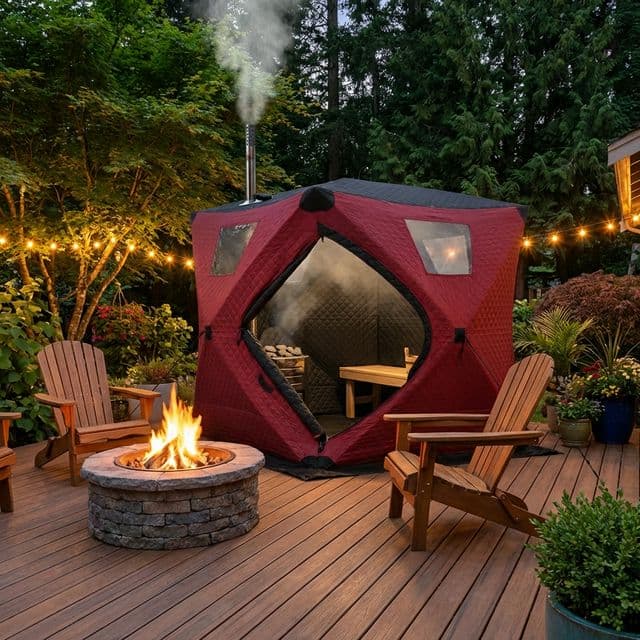
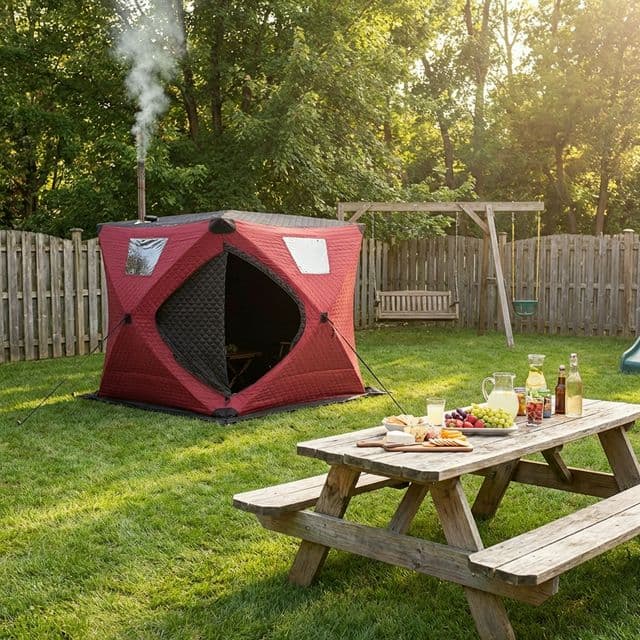
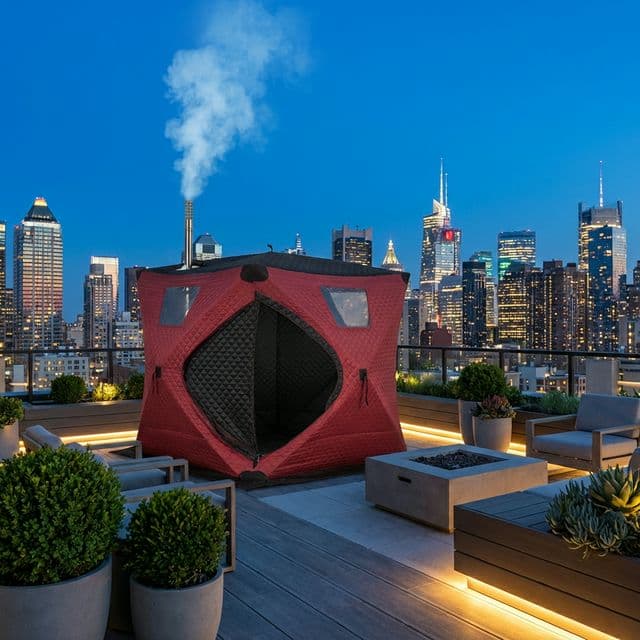
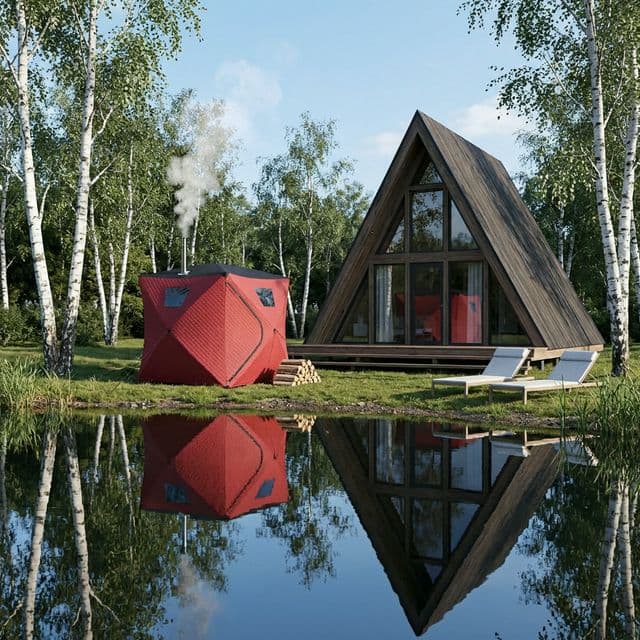
Visual references for practical planning

Contextual internal links for next decisions
- Need a fundamentals-first definition and boundary walkthrough? Open the what is an infrared sauna hybrid page
- Need purchase-ready format ranking after reviewing benefits? Open the best infrared sauna hybrid selector + report
- Need a buyer-focused shortlist instead of outcomes-only analysis? Use the best home infrared sauna hybrid ranking page
- Need installation and electrical readiness? Open the at-home infrared sauna checker
- Need far-wave specific claim checks and format trade-offs? Open the far infrared sauna hybrid page
- Need full-spectrum panel-proof checks and buyer boundaries? Open the full spectrum infrared sauna checker + report
- Need claim-risk and hydration boundaries specifically for detox intent? Use the infrared sauna detox checker + evidence report
- Compare cabin-level sizing and budget details in the 2-person infrared sauna planner
- If you need lower wattage options, review the 2-person portable sauna decision page
- Compare humidity-first alternatives in the 2-person steam sauna guide
- Need steam-specific evidence and risk boundaries? Open the benefits of steam sauna hybrid checker + report
- For larger family use, review the 4-person outdoor sauna layout and risk planner
- Send your protocol goals to our support team for a manual review
- Browse product images and layout references before requesting recommendations
- Read additional buying guides and maintenance walkthroughs in the blog
FAQ: evidence, safety, and execution
FAQ is grouped by decision intent so you can jump straight to the block that matches your current risk and confidence level.