
Best Infrared Sauna Fit Selector
Enter your budget, space, electrical setup, and usage goal to get an immediate best-format recommendation. Then use the report layer below to verify risks, evidence, and alternatives before purchase.
Default profile: 4 sessions/week, 30-minute sessions, dedicated 20A circuit, and 17.8 cents/kWh electricity reference.
Safety boundary: if you are pregnant, heat-intolerant, or on medications that raise heat risk, use conservative assumptions and clinician guidance before increasing session intensity.
Input baseline
Room area, budget, circuit, and usage intensity drive score.
Result baseline
Every output includes fit band, cost estimate, and required next action.
Safety baseline
If output is inconclusive, use the fallback path and request manual screening.
Tool output to report verification bridge
Use this table immediately after running the selector. Match your tool band with the validation section, then execute the recommended next action before making a purchase decision.
| Tool status | Interpretation | Verify in report | Next move |
|---|---|---|---|
| Strong Fit | Inputs clear room, circuit, and budget boundaries for a primary format choice with manageable uncertainty. | Comparison grid + risk matrix + evidence ledger | Shortlist 2-3 models and email [email protected] for final spec cross-check before checkout. |
| Conditional Fit | At least one boundary is near threshold, so assumptions need stress-testing before commitment. | Methodology + fit boundaries + scenario lab | Re-run with conservative assumptions and compare one lower-load alternative tier. |
| Boundary Hit | Current inputs indicate elevated implementation or safety risk and do not support immediate purchase. | Risk matrix + FAQ safety cluster | Pause checkout, resolve infrastructure or heat-risk blockers, then re-run the selector. |
Best infrared sauna conclusions with decision-grade context
Published February 21, 2026. Last updated February 21, 2026 (stage1b deep research refresh). These conclusions summarize what the selector cannot express alone: evidence quality, constraints, and tradeoff boundaries.
Review cadence: refresh this page every 6 months, or earlier when safety recalls, federal policy, or utility-cost baselines change.
The most expensive or hottest option is not automatically best. Top outcomes happen when shortlist logic starts with room, circuit, and use pattern constraints.
Source: TentSaunaSupply selector method + CPSC/CDC boundary checks, refreshed February 21, 2026
The same session routine can cost more than 3x across locations, so run planning with your real utility rate before finalizing format.
Source: EIA Electric Power Monthly update published January 26, 2026
Recall history and safety-mark documentation should be hard gates before payment, especially for premium-cabin budgets.
Source: CPSC recalls 26-036 and 26-040 (both October 23, 2025)
Even a strong room and electrical score can become conditional when medication or heat-tolerance factors are present.
Source: CDC Heat and Medications guidance for clinicians
Require a recognized US listing mark and traceable test-lab evidence before buying to reduce downstream safety and insurance friction.
Source: OSHA NRTL Program FAQ (accessed February 21, 2026)
Treat disease-outcome promises as low confidence unless supported by product-relevant clinical evidence with transparent methods.
Source: FTC Health Products Compliance Guidance (December 2022), accessed February 21, 2026
Do not assume infrared sauna purchases qualify for a federal credit; sauna equipment is not explicitly listed in current 25C qualifying categories.
Source: IRS Energy Efficient Home Improvement Credit page (accessed February 21, 2026)
Key numbers that shape format choice
Time-sensitive numbers are date-labeled for reproducibility.
| Dimension | Value | Decision implication | Source |
|---|---|---|---|
| US residential electricity benchmark | 17.78 cents/kWh (November 2025) | Useful first-pass cost baseline when local tariff details are unavailable. | EIA Electric Power Monthly |
| State electricity spread | 8.24 to 25.91 cents/kWh (contiguous US, November 2025) | Location can change the same usage profile cost by more than three times. | EIA Electric Power Monthly |
| Energy formula baseline | (Wattage x hours) / 1000 = kWh | Use this formula to validate calculator output and vendor operating-cost claims. | DOE Energy Saver |
| Residential heating fire context | USFA 2023 estimate: 27,900 fires, 115 deaths, 525 injuries, $488M loss | High-heat home equipment decisions need placement, clearance, and supervision controls. | USFA residential heating fire trends |
| Sauna recalls with injury reports | 1,000 cabin units and 78,000 blanket units recalled | Recall checks should be mandatory pre-purchase gates, not optional post-sale checks. | CPSC recalls 26-040 and 26-036 |
| Medication-related heat risk guidance | Guidance reviewed September 18, 2025 | Heat routine intensity should be clinician-screened when medication risk factors exist. | CDC Heat and Medications |
| US listing-mark boundary | CE mark alone is generally not accepted as US NRTL approval | Ask for recognized US listing documentation before payment. | OSHA NRTL FAQ |
| IRS 25C timeline boundary | Current IRS page lists qualifying improvements placed in service through December 31, 2025 | Do not assume sauna products qualify; current listed categories emphasize envelope, HVAC, and water-heating equipment. | IRS Energy Efficient Home Improvement Credit |
| Indoor humidity boundary | Keep indoor relative humidity below 60% (ideal 30-50%) | Ventilation and moisture management remain operational requirements for repeat sessions. | EPA mold guidance |
| Public hot tub safety thresholds | CDC: maximum 104 degrees F; free chlorine >=3 ppm or bromine 4-8 ppm; pH 7.0-7.8 | If studio access is your fallback path, confirm posted chemistry and temperature logs before sessions. | CDC healthy hot tub guidance |
| Heat-and-pregnancy boundary | CDC (reviewed September 18, 2025): heat can affect pregnancy in any trimester and even one high-heat day may increase risk | Pregnancy-related households should use clinician-reviewed heat plans instead of self-optimized routines. | CDC clinical overview: heat and pregnant women |
| Infrared metabolic-claim counterexample | 2024 crossover trial (n=12, type 2 diabetes): single 40-minute 60C infrared session did not improve postprandial glucose handling | Avoid buying decisions based on one-session metabolic promises; require stronger longitudinal evidence. | PubMed PMID 39209309 |
Applicable vs not-applicable boundaries
| Audience pattern | Fit status | Why | Recommended action |
|---|---|---|---|
| Home users with 30+ sq ft area and dedicated 20A or higher circuit capacity | Applicable now | Most compact-cabin and balanced-format decisions are executable without major rework. | Use comparison grid and shortlist final models for manual support review. |
| Renters or shared-circuit users prioritizing low setup friction | Conditional | Shared circuits and lease constraints often favor lower-load portable or tent paths. | Start with lower-demand formats and validate written permission before upgrade paths. |
| Buyers targeting full-spectrum cabin without panel confirmation | Conditional | Electrical and ventilation assumptions can fail late and create high rework cost. | Confirm panel headroom, receptacle type, and ventilation pathway before ordering. |
| Users with unresolved heat-risk medication concerns | Not applicable yet | CDC clinician guidance lists multiple medication classes that can amplify heat stress risk. | Pause purchase and request clinician-safe protocol guidance first. |
| Pregnant users or pregnancy-planning households | Not applicable yet | CDC states heat can harm in any trimester and even one high-heat day may increase pregnancy risk. | Use non-heat recovery alternatives and resume sauna planning only after clinician-specific heat guidance. |
| Users relying on studio or hotel facilities instead of ownership | Conditional | Safety depends on day-to-day operator controls for water chemistry and temperature. | Check CDC-aligned logs before each session (max 104 degrees F, chlorine >=3 ppm or bromine 4-8 ppm, pH 7.0-7.8). |
Methodology and assumptions
Boundary: Risk penalties reduce scores when heat-risk profile and session intensity conflict.
Why it matters: Best-format quality depends on implementation feasibility, not marketing claims.
Boundary: Scores degrade when budget is significantly outside realistic purchase bands.
Why it matters: Budget mismatch is a leading source of abandoned or regret-driven purchases.
Boundary: Circuit ratio below 0.8 is treated as unstable for routine use.
Why it matters: Nuisance trips and underheated sessions are common failure modes in weak circuits.
Boundary: High-risk profile plus high-frequency sessions can force boundary-hit even when fit score is high.
Why it matters: Safety screening must be parallel to convenience and cost optimization.
Boundary: Output excludes fixed utility fees and assumes stable tariff throughout the month.
Why it matters: Operating-cost claims become more reliable when assumptions are transparent.
Boundary: When claims rely on testimonials, tradition, or non-product-specific citations, they are downgraded to low confidence.
Why it matters: This prevents overpaying for marketing narratives that do not have decision-grade substantiation.
Boundary: Sauna equipment is not explicitly listed in current 25C categories, so ROI is modeled without automatic credit assumptions.
Why it matters: Payback estimates become more realistic when uncertain incentives are excluded from baseline math.
Boundary: Evidence gaps are explicitly marked instead of hidden behind generic marketing copy.
Why it matters: Decision trust depends on knowing what is proven versus what remains uncertain.
Evidence ledger and date context
| Evidence item | Date context | How used in this page | Source link |
|---|---|---|---|
| EIA residential electricity benchmark and state spread | Published January 26, 2026 (November 2025 data) | Cost baseline and location sensitivity checks in tool + report tables | EIA Electric Power Monthly |
| CPSC blanket recall with burn-hazard reports | Recall released October 23, 2025 | Pre-purchase serial-number check and safety-remedy workflow for blanket tier | CPSC recall 26-036 |
| CPSC cabin recall with injury reports and mixed electrical specs | Recall released October 23, 2025 | Verification-gate rules in comparison table and risk matrix for cabin buyers | CPSC recall 26-040 |
| USFA residential heating fire trend baseline | Published February 14, 2025 (2023 estimate) | Context for electrical, placement, and supervision discipline in risk planning | USFA heating fire trends |
| CDC heat and medication guidance for clinicians | Last reviewed September 18, 2025 | Heat-risk profile boundaries and FAQ safety recommendations | CDC Heat and Medications |
| OSHA NRTL FAQ CE-only boundary | Accessed February 21, 2026 | Compliance checks in evidence and risk sections | OSHA NRTL Program FAQ |
| FTC substantiation standard for health-product claims | Guidance issued December 2022, accessed February 21, 2026 | Claim-evidence filter in methodology and FAQ to reduce marketing overreach risk | FTC Health Products Compliance Guidance |
| IRS 25C timeline and category boundaries | Accessed February 21, 2026 (page reflects through 2025) | Tax-credit caution in methodology and FAQ | IRS Energy Efficient Home Improvement Credit |
| CDC hot tub safety thresholds (temperature and chemistry) | Page reviewed August 8, 2025 | Fallback-path checks for users choosing studio or shared facilities | CDC healthy hot tub safety |
| CDC clinical heat and pregnancy boundary | Last reviewed September 18, 2025 | Not-applicable guidance for pregnancy-related scenarios in fit boundaries and risk matrix | CDC heat and pregnant women clinical overview |
| DOE appliance-energy estimation formula | Accessed February 21, 2026 | Tool equation transparency and monthly cost interpretation | DOE Energy Saver |
| Infrared one-session metabolic counterexample (type 2 diabetes) | Published August 31, 2024 | Counterexample to one-session outcome claims in key numbers and FAQ | PubMed PMID 39209309 |
Known unknowns and pending confirmations
Evidence gaps stay visible so planning does not depend on false certainty.
| Evidence gap | Current status | Decision impact | Interim action |
|---|---|---|---|
| Cross-brand long-term failure-rate denominator | Pending confirmation: no reliable public dataset normalizes failures by installed units or usage hours (as of February 21, 2026). | Durability rankings remain directional and should not be treated as statistically complete. | Request model-level warranty claim history, spare-parts lead time, and service-SLA terms before final selection. |
| Standardized EMF test comparability across brands | Pending confirmation: no universal public registry publishes model-level EMF results under one shared protocol. | Cross-brand low-EMF claims are hard to verify apples-to-apples from public sources alone. | Ask for test-lab method details (distance, sensor type, load condition) and treat missing methods as low-confidence. |
| Product-level mapping of wellness claims to regulatory pathway | Pending confirmation: no complete public index links each marketing claim to substantiation and regulatory context. | Buyers can overestimate certainty when brands mix general wellness language with implied treatment outcomes. | Use FTC substantiation principles and keep purchase logic separate from disease-treatment expectations. |
Format comparison grid
| Format | Budget band | Electrical profile | Strength | Limit | Best-fit scenario | Verification gate before payment |
|---|---|---|---|---|---|---|
| Portable infrared blanket | $350-$1,200 | Typically 120V / 10A-12A equivalent load | Lowest upfront cost and easiest storage footprint | Single-user comfort limits and higher adherence drop-off in long routines | Space-limited users needing low-friction entry path | Confirm recall status and controller revision before purchase (CPSC 26-036). |
| Infrared sauna tent | $800-$2,800 | Mostly 120V / 12A-15A class | Better seated-session comfort with modest power demand | Durability variance and lower premium finish quality | Balanced portability with repeatable home sessions | Require NRTL listing documentation and avoid extension-cord/power-strip operation. |
| Compact 2-person cabin | $3,200-$7,600 | Usually 120V / 15A-20A depending model | Strong comfort-to-cost ratio and stable routine potential | Needs dedicated floor area and stronger install discipline | Primary home users with dedicated setup zone | Verify exact model amperage and installation sheet; do not infer from tier label. |
| Full-spectrum 3-4 person cabin | $6,800-$14,500+ | Often 240V and can reach 30A with upgrades | Highest throughput and multi-user support | Highest capital risk if electrical assumptions are wrong | Families or heavy-use households with confirmed infrastructure | Get electrician sign-off on panel headroom and ventilation before placing order. |
Need manual verification before purchase?
Send your selector inputs and target models to [email protected] for a human review of format fit, electrical assumptions, and risk boundaries.
Risk matrix with mitigation paths
| Risk | Probability | Impact | Mitigation action |
|---|---|---|---|
| Electrical overload or nuisance tripping | Medium | High | Check dedicated-circuit capacity against model demand and avoid sharing high-load appliances. |
| Heat-related adverse symptoms | Medium | High | Start with shorter sessions, hydrate, and clinician-screen high-risk medication profiles. |
| Pregnancy-related heat mismatch | Low to medium | High | CDC clinical guidance flags pregnancy heat risk across all trimesters; require clinician-approved protocol before sauna use. |
| Product safety defect or recall exposure | Low to medium | High | Check recall history, serial ranges, and remedy process before payment. |
| Ventilation and moisture mismatch | Medium | Medium | Maintain airflow design and humidity boundaries; do not skip post-session moisture control. |
| Tax-credit assumption error | Medium | Medium | Treat tax credits as unconfirmed until category-specific eligibility is validated with a tax professional. |
| Claim overreach from marketing copy | Medium | Medium | Apply FTC substantiation standard: downgrade claims without competent and reliable scientific evidence. |
| Shared-facility water-quality mismatch | Medium | Medium | For studio and hotel alternatives, verify posted readings against CDC thresholds (<=104 degrees F, chlorine >=3 ppm or bromine 4-8 ppm, pH 7.0-7.8). |
Alternatives and tradeoff pathways
| Path | Setup cost | Recurring cost | Tradeoff | Choose when |
|---|---|---|---|---|
| Infrared sauna ownership | $350-$14,500+ | Electricity + maintenance | Highest control and routine consistency, but requires setup diligence and upfront capital. | Best when you can commit to a stable weekly routine and infrastructure is ready. |
| Infrared studio membership | $0 upfront | Monthly membership or per-session fees | No installation burden, but recurring cost, schedule friction, and facility-quality variability can limit outcomes. | Best for trial phase when the facility publishes reliable temperature and chemistry logs. |
| Traditional sauna access | Gym, spa, or facility dependent | Membership plus travel/time cost | Higher ambient heat and social access; less private and less schedule-flexible. | Best when humidity profile and high-heat preference are prioritized over home convenience. |
| No-heat recovery alternatives | Low to moderate | Varies by modality | Lower heat risk but different recovery profile and routine experience. | Best when heat tolerance is uncertain or contraindicated. |
Scenario lab: four practical decision paths
Premise: Budget $2,000, 24 sq ft available area, shared 15A, goal is stress relief.
Process: Selector downgraded cabin options due to electrical ratio and flagged tent/blanket path as conditional fit.
Outcome: User selected tent-first trial plan and requested manual support checklist before upgrading.
Premise: Budget $6,500, 45 sq ft area, dedicated 20A, daily-wellness goal.
Process: Compact cabin scored highest with strong-fit band and moderate operating-cost profile.
Outcome: User proceeded to shortlist and requested final model electrical sheet review via support email.
Premise: Budget $10,000, 60 sq ft area, unknown panel headroom, family-sharing goal.
Process: Full-spectrum scored high but remained conditional due to unresolved electrical and ventilation assumptions.
Outcome: Purchase paused pending electrician validation and permit-path confirmation.
Premise: Household budget and room were sufficient, but the primary user was pregnant and planning high-frequency sessions.
Process: Tool returned boundary-hit despite acceptable infrastructure metrics because pregnancy-risk boundary overrides convenience scoring.
Outcome: User paused purchase, shifted to no-heat alternatives, and requested clinician-specific heat guidance before future reevaluation.
Product-image context for format decisions
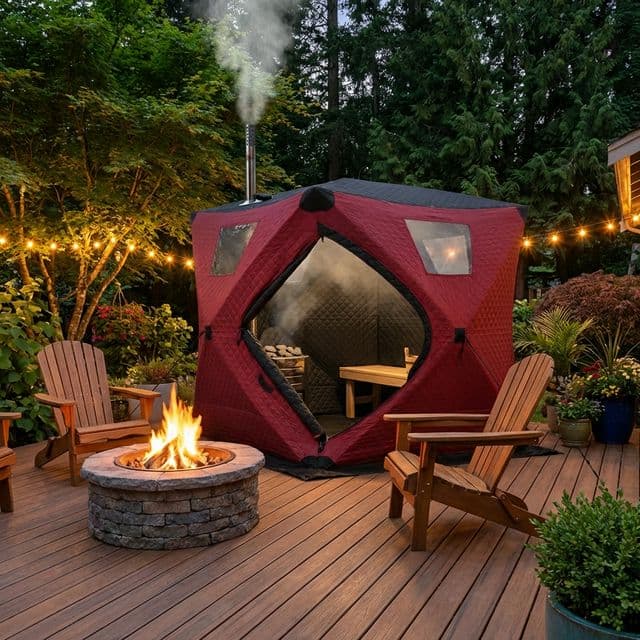
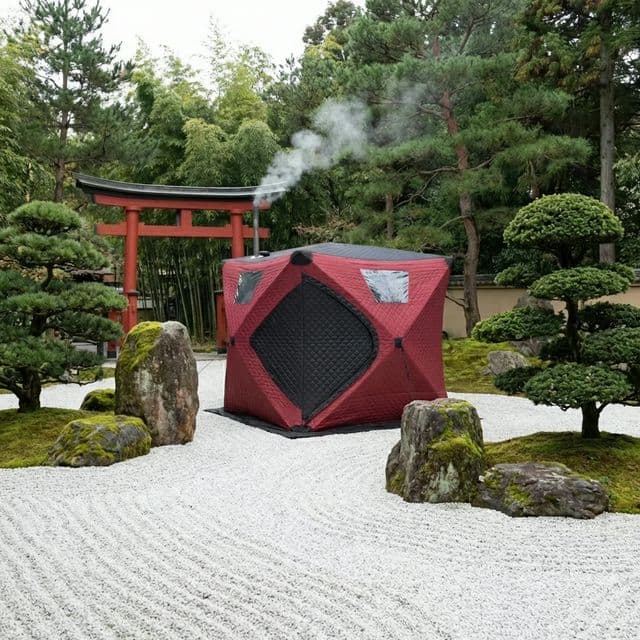
Use this path when installation friction and flexibility matter more than cabin permanence.
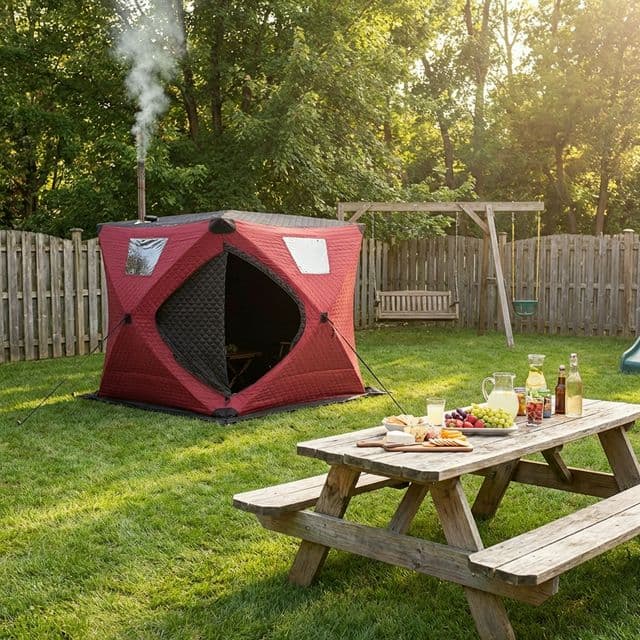
Balanced routine users usually benefit from stable weekly scheduling and moderate operating cost.
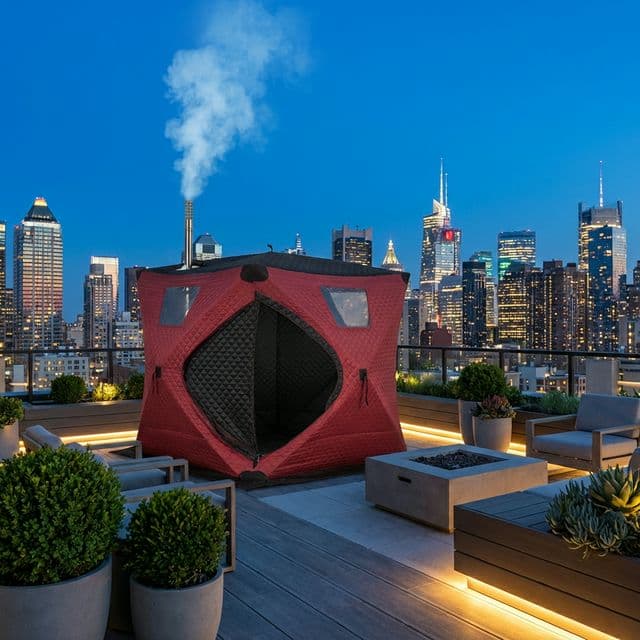
Higher-capacity upgrades should follow verified circuit headroom and ventilation plan.
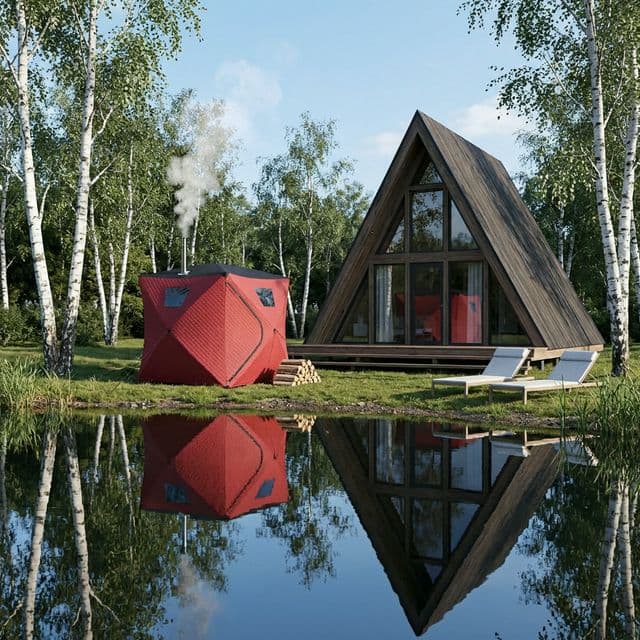
Related internal pages
Frequently asked decision questions
Send your shortlist for manual verification
Include tool inputs, desired budget tier, and candidate formats. We will help you verify electrical scope, risk boundaries, and final model-selection assumptions.