
Full Spectrum Infrared Sauna Readiness and Claim-Risk Checker
Enter wiring, documented tri-band coverage, and usage assumptions to get an immediate readiness band, cost signal, and next action. Then use the report layer to verify evidence and risk boundaries.
Defaults model a compact cabin at four 30-minute sessions per week with 82% tri-band panel coverage.
Review evidence sections via the anchor navigation before final checkout.
This checker is a decision aid only. Confirm electrical and health-related constraints with qualified professionals.
Tool output to report verification bridge
Use this table immediately after the checker runs. It maps each tool band to the exact report block that should be reviewed before a purchase decision.
| Tool status | Immediate interpretation | Verify in report | Next move |
|---|---|---|---|
| Ready Path | Technical fit and documentation quality both pass baseline thresholds, so purchase planning can move forward. | Comparison grid + evidence ledger | Shortlist 2-3 models and email [email protected] for a manual pre-order check. |
| Conditional Path | One variable is near a boundary (panel proof, circuit margin, or risk profile) and needs stress-testing. | Methodology + risk matrix + scenario lab | Re-run the tool with conservative assumptions and compare alternatives before checkout. |
| Boundary Hit | Current setup has high rework probability due to electrical, space, or evidence-quality mismatch. | Fit boundaries + known unknowns | Pause purchasing and resolve the highest-impact bottleneck first. |
| Pause + Screen | Clinical-risk or disease-treatment expectations override all technical positives for now. | Risk matrix + FAQ safety group | Use a conservative path and consult qualified professionals before heat escalation. |
Full spectrum infrared sauna decisions need both fast execution and evidence discipline
The tool block solves immediate fit decisions. This report block explains why each recommendation is reliable, where uncertainty remains, and what to do next if outcomes are inconclusive.
Published: March 2, 2026. Last updated: March 2, 2026 (stage2 seo-geo closure pass: metadata compliance plus automation guardrails). Time-sensitive numbers are date-stamped in the source ledger.
Review cadence: refresh this page every 6-12 months.
IR framing ranges from 0.7-50 micrometers (FDA) to 1 millimeter (NIST)
Consumer pages often label "full spectrum infrared" without publishing panel-level emission maps, lab method, or operating-temperature assumptions.
Source: FDA device classification and NIST infrared guidance reviewed February 2026.
2025 U.S. average 17.30 cents/kWh, state range 11.81-40.59
The same sauna routine can vary by more than 3x in monthly cost depending on location and warm-up duty cycle.
Source: EIA Electric Power Monthly tables 5.3 and 5.6.B, data release February 24, 2026.
2025 synthesis + trial conflict: 20-RCT meta-analysis showed mixed effects, while an untreated-hypertension RCT (n=41) found no significant 24-hour BP reduction
Passive-heat outcomes vary by population, protocol duration, and endpoint. Counterexamples now include a controlled 30-session protocol without significant ambulatory blood-pressure change.
Source: PubMed records 41049507, 40407037, 34954348, and 40331900.
79,000 sauna-related units recalled on October 23, 2025
Same-day recalls covered both fire risk (heater class) and fall risk (bench support class), showing that hazard types differ even inside one category.
Source: U.S. CPSC recalls 26-036 and 26-040, reviewed February 2026.
FDA general wellness boundaries (updated January 6, 2026) + FTC substantiation requirements
Use full spectrum infrared sauna as a wellness support tool, not a replacement for disease treatment or clinician guidance. Disease-adjacent claims require stronger substantiation.
Source: FDA General Wellness Guidance + FTC Health Products Compliance Guidance (reviewed March 2026).
NIOSH hydration/acclimatization guardrails + CDC pregnancy heat-risk updates
Users on heat-sensitive medication, pregnant users, and new high-frequency users need conservative ramp plans and stop criteria.
Source: CDC and NIOSH heat guidance pages, reviewed February 2026.
Key numbers and what they change
EIA marks this as preliminary 2025 annual data and released the table on February 24, 2026.
EIA Table 5.3
North Dakota to Hawaii spread can drive a 3x-4x operating-cost gap under the same usage profile.
EIA Table 5.6.B
The combined event count spans different hazard classes (fire + bench-collapse fall hazard), so buyers should validate hazard type before transfer.
CPSC recalls 26-036 and 26-040
NIOSH guidance is occupational and must be adapted conservatively for home sauna routines.
CDC NIOSH heat recommendations
Most pooled outcomes were not statistically significant, with selective subgroup blood-pressure signal.
PubMed 41049507
A controlled 30-session protocol over 8-10 weeks did not show significant ambulatory blood-pressure change versus exercise control.
PubMed 40407037
Used here as a boundary proxy: the trial reported no significant core-temperature change, so deep-tissue claims need careful qualification.
PubMed 40331900
Pregnant users should follow clinician guidance and avoid applying standard high-heat routines without adaptation.
CDC Clinical Overview of Heat and Pregnancy (July 31, 2025)
Medication profile can alter hydration and thermoregulation, so protocol intensity should be individualized before frequency increases.
CDC Heat and Medications (September 18, 2025)
Stage1b gap audit and closure
| Gap area | Initial weakness | Stage1b enhancement | Status |
|---|---|---|---|
| Evidence citation precision | Earlier report rows linked to broad source homepages, so users could not quickly audit the exact numeric basis for conclusions. | Replaced generic links with direct table/paper/regulatory references, explicit dates, and concrete metrics. | Closed in stage1b refresh |
| Protocol transfer boundaries | The page summarized health evidence but did not clearly separate supervised trial protocols from typical home usage patterns. | Expanded protocol-limit coverage with both positive and null-effect studies, including 2025 untreated-hypertension RCT context. | Closed in March 2026 refresh |
| Regulatory substantiation boundaries | Earlier text relied mainly on one warning letter and did not clearly separate wellness framing from disease-claim substantiation requirements. | Added FDA 2026 general-wellness and FTC substantiation checkpoints with a pass/fail screen for claim language. | Closed in March 2026 refresh |
| High-risk user guardrails | Heat-risk guidance lacked concrete hydration and acclimatization numbers for new, sensitive, or pregnant users. | Added session guardrails with CDC medication-interaction triggers, not only hydration and pregnancy boundaries. | Closed in March 2026 refresh |
| Recall hazard transfer quality | Recall context was aggregated but hazard types were not clearly separated, which could over-transfer one hazard class to all models. | Clarified CPSC recall hazard split (fire vs bench-collapse fall risk) and mapped each to distinct buyer checks. | Closed in March 2026 refresh |
| Evidence certainty for detox language | Detox-style buying claims were discussed loosely without a dedicated evidence sufficiency marker. | Added NCCIH evidence-quality boundary and marked detox-superiority claims as pending confirmation when public data is insufficient. | Closed in March 2026 refresh |
Applicable and non-applicable audience boundaries
| Audience profile | Fit status | Why | Minimum action |
|---|---|---|---|
| Home users with dedicated 20A+ circuits and documented panel specs | Applicable | Most compact/full-cabin setups become predictable when electrical and panel documentation are both clear. | Proceed with shortlist and report cross-check. |
| Buyers with shared circuits and no upgrade plan | Not applicable yet | Low headroom increases nuisance trips and safety risk. | Pause checkout and verify dedicated wiring first. |
| Users expecting disease-treatment outcomes | Not applicable | Current evidence does not justify treatment replacement claims. | Use clinician-directed care path and conservative wellness framing. |
| Users with mild heat intolerance history | Conditional | Some can use low-intensity protocols, but escalation should be slower and monitored. | Run lower-temperature scenarios and set stop criteria early. |
| Commercial buyers with compliance documentation workflow | Applicable with controls | Higher load and throughput can be managed when procurement, maintenance, and incident logging are formalized. | Require full technical pack and incident-response SOP before deployment. |
| Users relying on marketing-only product pages | Conditional to not applicable | Missing panel map and electrical labels reduce confidence in both cost and safety assumptions. | Request primary specs or remove model from shortlist. |
Methodology and assumptions used in this hybrid page
The checker and report share one logic chain. Inputs are converted to deterministic scores, adjusted for risk boundaries, then translated into action-oriented outcomes.
| Step | Method | Why it matters | Output |
|---|---|---|---|
| Step 1 | Normalize core inputs (room area, wattage, panel coverage, cost, sessions, risk profile). | Prevents cherry-picking one favorable metric while ignoring hard constraints. | Structured input vector for deterministic scoring. |
| Step 2 | Compute technical-fit scores (area ratio, circuit margin, ventilation readiness). | Most ownership failures start with wiring/space mismatch, not with wellness intent. | Technical-fit subtotal and boundary detection. |
| Step 3 | Score documentation quality and claim-risk posture. | Far-wave percentages without proof can overstate confidence and hide compatibility risk. | Evidence-confidence modifier. |
| Step 4 | Apply safety penalties for heat-risk and disease-treatment framing. | High-risk profiles need conservative paths even if hardware metrics look strong. | Decision band guardrail. |
| Step 5 | Cross-check results against protocol limits, claim boundaries, and heat-risk guardrails. | A technically feasible setup can still fail if claims are overstated or user-risk controls are missing. | Confidence adjustment with explicit non-transfer warnings. |
| Step 6 | Generate next-step CTA + fallback path linked to report verification sections. | Actionable outputs reduce drop-off after inconclusive results. | Ready/conditional/boundary/pause pathway. |
Evidence ledger with dates and limitations
| Claim area | Evidence summary | Source | Updated | Known limitation |
|---|---|---|---|---|
| National electricity baseline for cost model defaults | EIA Table 5.3 lists U.S. residential 2025 annual average at 17.30 cents/kWh (preliminary). | EIA Electric Power Monthly Table 5.3 | Released February 24, 2026 | National average excludes utility-specific fixed charges and tiered structures. |
| State-level cost sensitivity stress test | EIA Table 5.6.B shows 2025 residential annual range from 11.81 cents/kWh (North Dakota) to 40.59 (Hawaii). | EIA Electric Power Monthly Table 5.6.B | Released February 24, 2026 | Values are state averages; city, utility, and TOU plans can differ materially. |
| Cost-baseline revision risk | EIA Monthly Energy Review states annual values are preliminary estimates and are likely to be revised in next publications. | EIA Monthly Energy Review overview | Page updated February 27, 2026 | Does not provide model-specific sauna costs; only confirms that baseline national/state averages can shift after revision. |
| Recall incident benchmark (higher-volume unit class) | CPSC recall 26-036 reported 65 incidents and 32 injuries for 78,000 recalled units. | U.S. CPSC Recall 26-036 | Published October 23, 2025; reviewed February 28, 2026 | Recall applies to specific units; it is not a universal failure-rate denominator. |
| Recall incident benchmark (lower-volume hybrid-room class) | CPSC recall 26-040 reported 7 incidents and 1 injury for 1,000 units tied to bench support failure and fall hazard. | U.S. CPSC Recall 26-040 | Published October 23, 2025; reviewed February 28, 2026 | Incident counts are recall-specific and do not represent the whole sauna market. |
| Recall-driven electrical-configuration variability | Recall 26-040 covers models across 120V/15A, 120V/20A, and 240V wiring profiles, showing that same-category products can have very different electrical assumptions. | U.S. CPSC Recall 26-040 | Published October 23, 2025; reviewed February 28, 2026 | Recall sample is model-specific and cannot replace model-level manual/electrical verification before purchase. |
| Infrared spectrum label boundary | FDA warning-letter text references infrared lamp devices in an approximate 700-50,000 nm range for claim-boundary context. | FDA Warning Letter 622648 | Issued July 5, 2022; reviewed February 28, 2026 | This is claim-enforcement context and does not validate one model-level wavelength output. |
| Infrared category framing context | NIST educational guidance frames infrared broadly from roughly 700 nm to 1 mm. | NIST Infrared Imaging Overview | Reviewed February 28, 2026 | These ranges are category-level context, not proof that one product emits a claimed panel spectrum. |
| Passive-heat efficacy signal strength | A 2025 meta-analysis of 20 RCTs found mostly non-significant pooled outcomes, with subgroup SBP improvement (-4.11 mmHg) in systemic heating or cardiovascular-risk populations. | PubMed 41049507 | Published 2025; reviewed February 28, 2026 | Subgroup effects do not guarantee transfer to all home users or all protocols. |
| Counterexample to blood-pressure certainty | A 2025 untreated-hypertension trial (n=41) with 30 sessions over 8-10 weeks reported no significant change in 24-hour ambulatory blood pressure after heat-therapy intervention. | PubMed 40407037 | Published May 2025; reviewed March 2, 2026 | One protocol and one target population; null findings should not be over-transferred to every modality, endpoint, or demographic. |
| Deep-heating interpretation boundary | A 2025 healthy-adult trial observed 63% lower heating at 2.4 cm muscle depth and negligible temperature rise beyond 3.8 cm, with no significant core-temperature change. | PubMed 40331900 | Published 2025; reviewed February 28, 2026 | Single-session and healthy-participant design limits generalization to chronic clinical outcomes. |
| Heat-risk controls and hydration | NIOSH recommends acclimatization ramping (about 20% duration increase per day) and hydration targets around 8 oz every 15-20 minutes, with a practical ceiling of 6 cups/hour. | CDC NIOSH heat recommendations | NIOSH page last reviewed January 28, 2026 | Workplace guidance requires adaptation for home sauna routines and medical context. |
| Medication-driven heat-risk screening | CDC clinical guidance identifies medication groups that can raise heat sensitivity or dehydration risk, including select blood-pressure, heart, psychiatric, and antihistamine medications. | CDC Clinical Overview: Heat and Medications | Page last reviewed September 18, 2025 | Medication effects are individualized; this is a screening signal and does not replace prescribing-clinician advice. |
| Pregnancy-specific heat boundary | CDC notes heat exposure can increase pregnancy risk during any trimester and recommends individualized heat action planning with medication review. | CDC Clinical Overview: Heat and Pregnancy | Page last reviewed July 31, 2025 | Guidance is risk-management oriented, not a direct dosage protocol for sauna sessions. |
| General wellness claim boundary (device framing) | FDA updated guidance on January 6, 2026 and states that low-risk general wellness products should not reference diseases or conditions. | FDA General Wellness: Policy for Low Risk Devices | Last updated January 6, 2026 | Guidance defines low-risk wellness framing but does not validate any specific model-level efficacy claim. |
| Advertising substantiation threshold | FTC health-products guidance explains that serious disease claims generally require at least one randomized, controlled human clinical trial. | FTC Health Products Compliance Guidance | Issued December 2022; reviewed March 2, 2026 | FTC substantiation requirements are claim-dependent; this is a compliance baseline, not product-performance proof. |
| Detox-superiority evidence sufficiency | NCCIH reports little evidence that detoxes remove toxins and warns some products can be harmful. | NCCIH: Detoxes and Cleanses | NCCIH page updated March 2025; reviewed March 2, 2026 | Source is broad detox guidance and not sauna-specific dosage research, so product-level detox claims remain pending confirmation. |
| Regulatory claim-enforcement precedent | FDA warning letter 622648 cites unsupported treatment and efficacy statements for infrared wellness marketing claims. | FDA Warning Letter 622648 | Issued July 5, 2022; reviewed February 28, 2026 | Regulatory outcomes are fact-specific by intended use, classification, and claim language. |
Protocol limits: where trial findings do and do not transfer
This table prevents over-transfer from controlled study designs to everyday home routines. If your intended routine falls outside these boundaries, downgrade confidence before purchase.
| Evidence context | Key finding | Non-transfer boundary | Decision action | Source |
|---|---|---|---|---|
| Passive heat therapy meta-analysis (2025, 20 RCTs; duration 2-15 weeks) | Most pooled outcomes were not significant; subgroup SBP signal was -4.11 mmHg in selected cohorts. | Do not market this as a universal blood-pressure treatment effect for all users. | Use blood-pressure goals as conditional support only and keep clinician-directed care primary. | PubMed 41049507 |
| Untreated-hypertension intervention trial (2025, n=41, 30 sessions over 8-10 weeks) | Heat therapy increased heat tolerance but did not significantly change 24-hour ambulatory blood pressure in this protocol. | Do not assume blood-pressure benefit is guaranteed even with multi-week adherence and supervised dosing. | Treat blood-pressure claims as conditional. Keep medication management and clinician plans primary. | PubMed 40407037 |
| Single-session far-infrared tissue-heating study (2025 healthy adults) | Muscle warming dropped 63% at 2.4 cm depth, was negligible beyond 3.8 cm, and core temperature change was not significant. | Deep-tissue and systemic-temperature claims should be treated as unproven in routine home use. | Frame tri-band value around comfort and routine adherence, not guaranteed deep-heating outcomes. | PubMed 40331900 |
| Acute infrared sauna crossover trial (2022, n=10 women) | Tympanic temperature rose, but blood pressure and arterial-stiffness outcomes were not significantly different vs exercise/control in this short protocol. | Single-session thermal response does not prove cardiometabolic equivalence to exercise. | Avoid exercise-replacement messaging; use separate fitness and recovery plans. | PubMed 34954348 |
| Finnish sauna cohort association (2015, men 42-60 years, n=2,315) | Higher sauna frequency was associated with lower sudden cardiac death and cardiovascular mortality, but authors note observational design and possible residual confounding. | Traditional sauna cohort associations should not be treated as causal proof for full-spectrum infrared home units. | Use cohort data as directional context only; rely on modality-specific, protocol-matched evidence for purchase-critical claims. | PubMed 25705824 |
Claim boundary matrix: allowed framing vs red flags
| Claim type | Lower-risk framing | High-risk pattern | Why this matters | Action | Source |
|---|---|---|---|---|---|
| General wellness vs disease language | Describe support for relaxation or general well-being without naming disease treatment outcomes. | Linking product claims to prevention, cure, or treatment of specific diseases without valid clearance/evidence package. | FDA general wellness policy states low-risk framing cannot reference diseases or conditions. | Use wellness-support framing in PDP, ad copy, and sales scripts unless regulatory status explicitly supports stronger claims. | FDA General Wellness Guidance (updated January 6, 2026) |
| Low-risk wellness framing | Comfort, relaxation, and temporary symptom support language without disease-curative promises. | Promises to treat, reverse, or cure diagnosed disease states. | FDA warning-letter precedent shows enforcement exposure when wellness language shifts into treatment claims. | Keep checkout copy and sales scripts in wellness-support framing unless device clearance explicitly supports stronger claims. | FDA Warning Letter 622648 (July 5, 2022) |
| Spectrum language | Publish actual panel specs, test method, and operating conditions with each wavelength statement. | Using "full spectrum infrared" as a standalone quality signal with no method, panel map, or lab context. | Infrared category ranges are broad in official references; label terms alone are not product-level proof. | Require model-level technical documentation before assigning high confidence in the tool. | FDA + NIST infrared references |
| Outcome magnitude framing | Explain that observed benefits vary by protocol, population, and endpoint. | Presenting subgroup trial effects as guaranteed outcomes for all home users. | Recent synthesis shows mixed pooled effects and heterogeneous protocols. | Use conditional language and link outcome expectations to protocol boundaries. | PubMed 41049507 |
| Advertising substantiation quality | Match health-outcome claims to the level of available human evidence and disclose limitations. | Using testimonials or mechanism-only arguments as primary proof for serious disease-adjacent claims. | FTC guidance states serious disease claims generally need at least one randomized, controlled human clinical trial. | If evidence is weak or mixed, downgrade copy to conditional language and remove absolute performance promises. | FTC Health Products Compliance Guidance (December 2022) |
| Detox and toxin-removal messaging | State clearly when evidence is limited and keep detox outcomes outside purchase-critical promises. | Claiming sauna sessions reliably remove unspecified toxins or deliver superior detox outcomes without robust public evidence. | NCCIH reports little evidence that detoxes remove toxins and notes that some detox products can be harmful. | Mark detox-superiority language as pending confirmation and prioritize measurable fit/cost/safety criteria instead. | NCCIH Detoxes and Cleanses (updated March 2025) |
Claim substantiation screen: pass/fail checks before checkout
Use this gate when model pages make health-outcome promises. If any row fails, downgrade confidence and treat claims as pending confirmation before payment.
| Screen | Pass condition | Fail signal | Decision impact | Source |
|---|---|---|---|---|
| Wellness-only framing | Copy limits scope to relaxation/general well-being support and avoids disease names. | Any statement implies disease treatment, prevention, reversal, or cure. | High: crossing this line can trigger enforcement risk and invalidate low-risk positioning. | FDA General Wellness Guidance (updated January 6, 2026) |
| Serious health-claim substantiation | Claim strength matches quality of human evidence, with limitations stated near the claim. | Serious disease-adjacent claims rely on testimonials, mechanism narratives, or uncontrolled studies. | High: FTC guidance indicates serious disease claims generally require randomized controlled human trial support. | FTC Health Products Compliance Guidance (December 2022) |
| Detox-superiority language | Detox claims are either removed or explicitly labeled as unconfirmed in public evidence. | Marketing copy presents toxin-removal superiority as established fact. | Medium to high: can misdirect buyer priorities and raise claim-risk exposure. | NCCIH Detoxes and Cleanses (updated March 2025) |
| Tri-band disclosure comparability standard | Vendor provides panel map, method, and operating conditions with each spectrum claim. | Only one aggregate percentage is shown with no test protocol details. | Pending confirmation: no federal public template found for consumer tri-band disclosure comparability as of March 2, 2026. | Inference from FDA + FTC public guidance scope |
Session guardrails for real-world risk control
| Scenario | Guardrail | Threshold | Source | Tool action |
|---|---|---|---|---|
| New users ramping session frequency | Start with short exposure blocks and progressive ramping rather than full target routine on day one. | NIOSH acclimatization heuristic: about 20% duration increase per day. | CDC NIOSH heat recommendations | Prefer Conditional Path until two to three weeks of stable tolerance are logged. |
| Long or high-heat sessions | Hydration and cooling breaks should be scheduled, not improvised after symptoms appear. | NIOSH hydration heuristic: around 8 oz every 15-20 minutes; practical ceiling 6 cups/hour. | CDC NIOSH heat recommendations | If this hydration cadence is not feasible, reduce session duration/frequency before increasing heat. |
| Users on medication affecting heat response | Run a medication heat-risk screen before increasing intensity because some drug classes can worsen dehydration or heat intolerance. | CDC highlights risk with select blood-pressure, heart, psychiatric, and antihistamine medications. | CDC Clinical Overview: Heat and Medications | If medication profile is unclear, stay in Conditional or Pause + Screen until clinician guidance defines safe limits. |
| Pregnancy or clinician-flagged heat sensitivity | Use individualized heat action planning and clinician review before routine escalation. | CDC notes heat can increase risk in any trimester and advises medication review. | CDC Clinical Overview: Heat and Pregnancy | Route to Pause + Screen until medical guidance defines a safe exposure boundary. |
| Symptom onset during a session | Stop immediately for dizziness, nausea, confusion, severe headache, or unusual weakness. | NIOSH heat-illness framework distinguishes early symptoms from emergency escalation. | CDC NIOSH heat illnesses and first aid | Do not rerun high-intensity sessions until symptoms are reviewed and trigger conditions are corrected. |
Full spectrum infrared vs alternatives: decision comparison grid
| Dimension | Full spectrum infrared | Far infrared | Steam | Decision cue |
|---|---|---|---|---|
| Primary heat profile | Mixes near/mid/far emitters with broader sensory intent and more components to validate. | Lower ambient temperature profile with panel-emitter variability across products. | High humidity + high ambient heat, different comfort and respiratory profile. | Choose by tolerated heat style and verifiable hardware data, not by slogan-level labels. |
| Typical circuit demand | Often similar or slightly higher depending on emitter mix and cabin size. | 0.9-3.0 kW common in home formats; higher for larger rooms. | Generator-driven demand varies widely and may require stronger electrical/plumbing planning. | Circuit margin should be verified before model comparison gets too deep. |
| Documentation risk | Spectrum-distribution claims may be harder to verify when emitter mix is proprietary. | Panel percentage claims can be vague without emission map, test method, and temperature context. | Spec verification focuses on generator, pressure, and moisture controls. | Prefer vendors that provide primary technical documents, not only brochure claims. |
| Session comfort profile | Broader sensory profile; user perception varies by emitter placement. | Often chosen for lower ambient heat perception and gradual warming feel. | Humidity-heavy exposure can feel intense faster for heat-sensitive users. | Run small pilot sessions before committing to high-frequency routines. |
| Evidence-transfer confidence | Often relies on extrapolation from broader infrared literature with added product variability. | Mixed confidence; 2025 synthesis found mostly non-significant pooled effects with selective subgroup signals. | Longstanding use context exists, but endpoint-specific evidence still depends on study quality. | Treat all modalities as conditional support tools, not guaranteed interventions. |
| Blood-pressure evidence conflict check | No robust long-term head-to-head RCT dominance over far infrared has been published in comparable home-use protocols. | A 2025 untreated-hypertension trial (n=41) found no significant 24-hour blood-pressure change after a 30-session protocol. | Cardiovascular associations exist in traditional-sauna cohorts, but modality and population differ from infrared home setups. | Do not purchase on one favorable endpoint. Require protocol-matched evidence for your actual goal and profile. |
| Exercise-equivalence risk | Broad-spectrum heating still faces the same evidence-transfer gap without matched training protocols. | Acute temperature rise does not automatically imply exercise-equivalent cardiovascular adaptation. | Heat stress can complement recovery routines but should not replace structured exercise plans. | Maintain a separate exercise program and use sauna modality as optional support. |
| High-risk user boundary | Higher component complexity can add uncertainty when user risk profile is already constrained. | Pregnancy, medication effects, and heat intolerance require conservative escalation or pause-and-screen. | Humidity-heavy exposure may intensify discomfort faster in heat-sensitive users. | For high-risk profiles, prioritize clinician-guided protocol boundaries over modality preference. |
| Maintenance burden | Additional emitter types can increase replacement and troubleshooting complexity. | Panel integrity, airflow cleaning, and electrical checks dominate recurring work. | Descaling, moisture management, and mold prevention are major recurring tasks. | Choose the path you can maintain reliably, not only the one with best initial marketing. |
| Recall hazard transfer risk | Hybrid-room recalls show structural/fall hazards can coexist with electrical concerns, so hazard mapping must stay model-specific. | Recent recalls include fire risk in heater classes; hazard checks must include installation controls and clearances. | Hazards often center on generator or moisture systems, creating a different inspection checklist from panel saunas. | Map hazards by model and subsystem before checkout instead of applying one generic safety narrative. |
Risk matrix with mitigation actions
Risk ratings are directional decision support, not guaranteed outcome predictions. If symptoms or high-risk conditions are present, pause and follow qualified professional guidance.
| Risk | Probability | Impact | Trigger | Mitigation |
|---|---|---|---|---|
| Misuse risk: treatment expectation inflation | Medium | High | User expects full spectrum infrared sessions to replace prescribed disease treatment. | Keep claim boundary visible, use clinician-guided care, and treat sauna as optional support only. |
| Technical risk: insufficient circuit headroom | Medium | High | Shared circuits or unknown breaker margin. | Verify dedicated wiring, panel labels, and electrician sign-off before purchase. |
| Cost risk: underestimated operating budget | Medium | Medium | Using national average rates in high-tariff regions. | Use local utility tariff, stress-test high usage, and revisit assumptions when EIA preliminary annual values are revised. |
| Product risk: poor panel documentation | High | Medium | Retail listing provides no emitter map or test method. | Request spec packet; remove model if core technical fields remain unknown. |
| Health risk: heat intolerance escalation | Low to medium | High | Symptoms such as dizziness, nausea, or prolonged headache. | Stop session, cool down, and use conservative protocols with clear stop criteria. |
| Clinical-profile risk: pregnancy or medication heat sensitivity | Low to medium | High | User is pregnant or on medication that changes fluid balance or heat response. | Use pause-and-screen logic, obtain clinician guidance, and apply individualized heat action planning. |
| Medication-interaction risk: hidden thermoregulation or dehydration effects | Medium | High | User runs high-frequency sessions while using medications that can affect fluid balance, blood pressure, or alertness. | Screen medication profile against CDC heat-medication guidance and keep protocols conservative until clinician feedback is documented. |
| Evidence-transfer risk: exercise-equivalence messaging | Medium | Medium to high | Acute warming or short-study subgroup findings are translated into broad performance promises. | Keep claims conditional, cite protocol limits, and avoid replacing structured training plans. |
| Decision-quality risk: cherry-picking one favorable study | Medium | Medium to high | Buyer decisions rely on positive subgroup findings while ignoring null-effect trials or modality mismatch. | Use the protocol-limit table to review both supportive and contradictory evidence before final model selection. |
| Compliance risk: claim language or labeling mismatch | Low to medium | High | Marketing language implies medical treatment outcomes. | Audit claim language against allowed wellness framing and regulatory guidance. |
Known unknowns that still affect decisions
| Unknown area | Why it matters | Status | How to proceed |
|---|---|---|---|
| No universal global standard for consumer tri-band percentage labeling | Without a mandatory baseline, vendor percentages are not always directly comparable. | Open (pending confirmation in public federal guidance as of March 2, 2026) | Treat percentage claims as provisional unless supported by test method and panel map. |
| No robust public incident denominator for all home infrared installations | Recall and incident reports show absolute events but not full installed-base risk rates. | Open | Use conservative safety margins and maintenance logs instead of inferred failure-rate precision. |
| Head-to-head long-term RCT comparisons for full spectrum infrared vs far infrared in matched home-use protocols | Many claims extrapolate across modalities without matched protocol comparisons. | Open | Frame modality selection as a trade-off decision rather than absolute hierarchy. |
| No public registry for model-level panel-spectrum test methods | Buyers cannot independently compare emitter claims when test setup and measurement method are hidden. | Open | Treat missing lab method as unresolved risk and downgrade confidence in checker assumptions. |
| Utility demand-charge impact for commercial buyers | Demand charges can materially change operating economics beyond kWh averages. | Case-specific | Model with utility billing specialist for multi-unit or commercial deployments. |
| No reliable public dataset proving detox or deep-penetration superiority | Popular marketing claims can outrun publicly verifiable endpoint-specific evidence. | Public evidence insufficient | Mark such claims as "to be confirmed" and avoid using them as purchase-critical assumptions. |
Scenario lab: from input assumptions to decision outcomes
Premise: User has 48 sq ft spare room, documented compact-cabin specs, and moderate usage goals.
Process: Tool returns Ready Path. Report verification confirms panel documentation and manageable monthly cost sensitivity.
Outcome: Proceed with shortlist and installation sequencing.
Next step: Send final spec sheet bundle to [email protected] for pre-order review.
Premise: User has limited wiring capacity and relies on broad retailer claim copy.
Process: Tool returns Boundary Hit due to circuit margin and proof-quality penalties.
Outcome: Do not purchase current model set.
Next step: Request full documentation and evaluate lower-load alternatives first.
Premise: User plans 6 sessions/week and has good electrical readiness, but uncertain over-claim expectations.
Process: Tool returns Conditional Path. Report highlights evidence boundaries and hydration/stop-signal rules.
Outcome: Proceed conservatively with protocol discipline.
Next step: Pilot a 4-week schedule and review outcomes before intensity increases.
Premise: User expects sauna to replace medical management and reports medication-related heat sensitivity.
Process: Tool routes to Pause + Screen regardless of favorable hardware inputs.
Outcome: Clinical clearance and conservative alternatives become mandatory.
Next step: Use clinician-directed path and avoid treatment-substitution messaging.
Product image references for shortlist context
These visuals support format comparison only. Final decisions still require verified dimensions, electrical labels, and documentation.
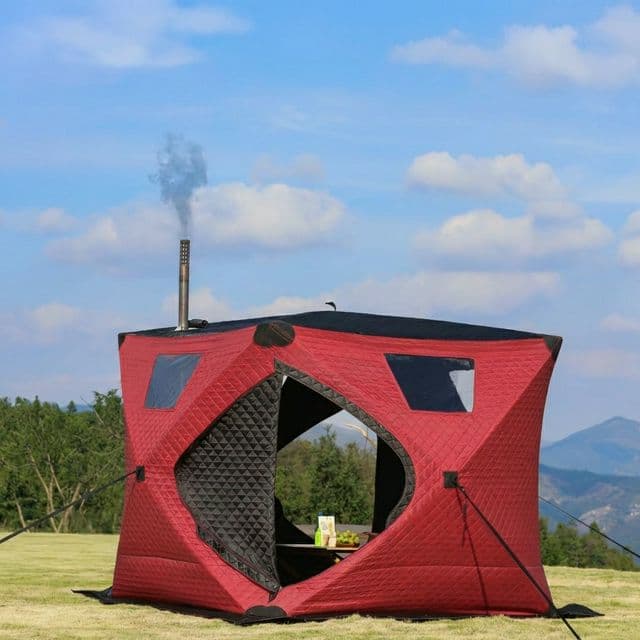
Clean setup reference for compact home placement planning.
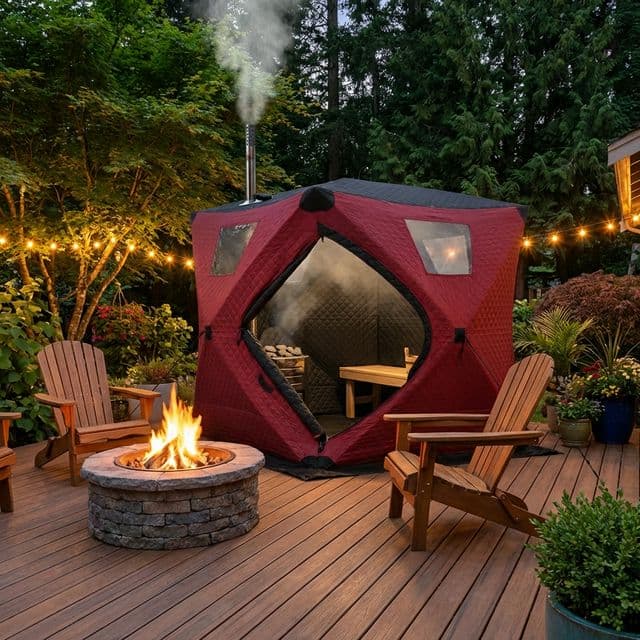
Outdoor placement scenario when indoor wiring or ventilation is constrained.
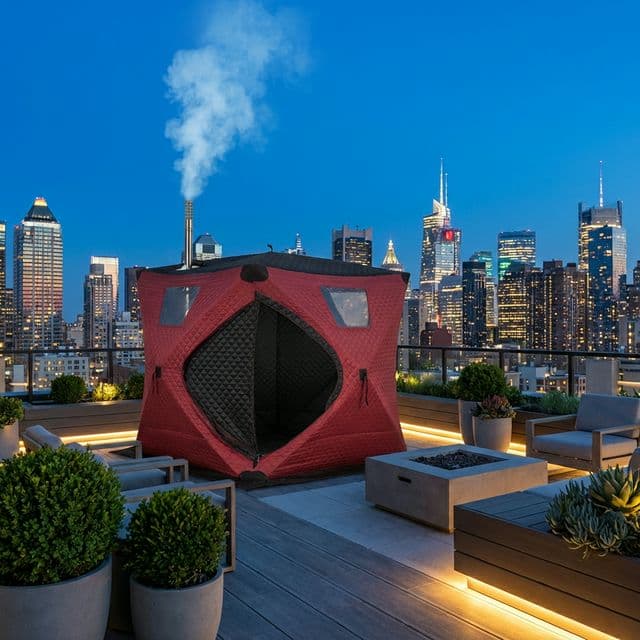
Urban footprint inspiration for limited-space decision scenarios.
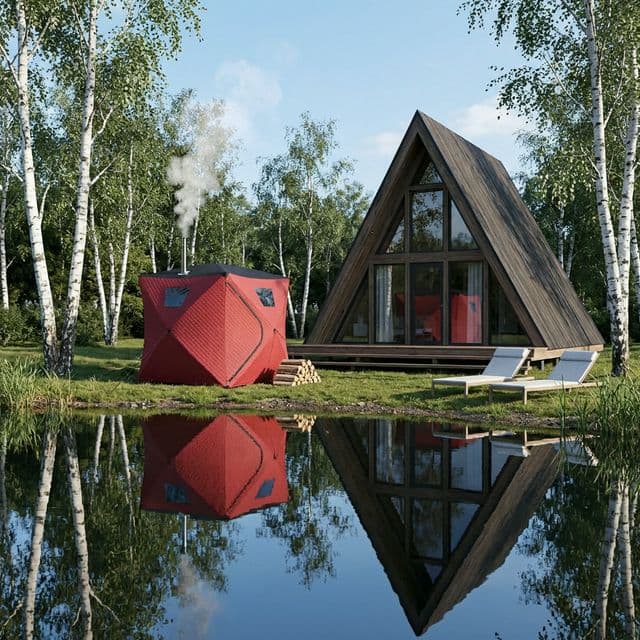
Cabin-style reference for full-size budget and layout planning.
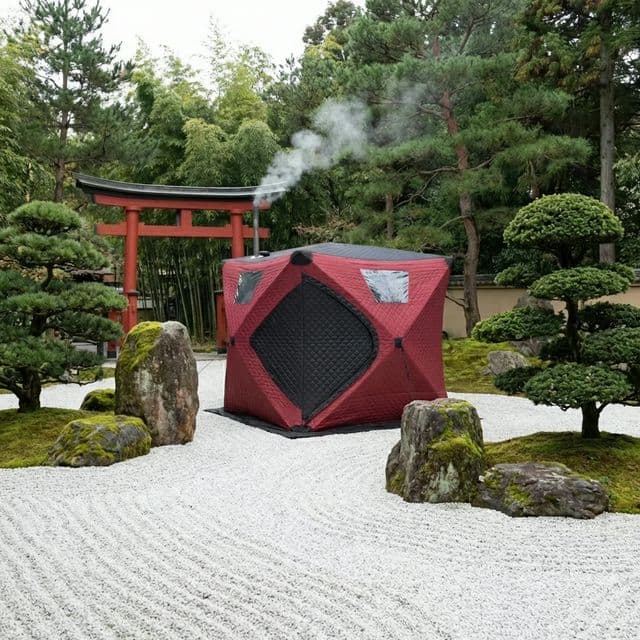
Recovery-focused atmosphere reference used in scenario planning.
Related pages to continue your evaluation
- Need model ranking after this checker? Open the best infrared sauna hybrid selector + report.
- Need home-specific shortlist logic? Review the best home infrared sauna decision page.
- Need deeper home-install readiness? Use the at-home infrared sauna checker + report.
- Need one URL that combines instant fit scoring with broad decision evidence? Open the infrared sauna planner + report.
- Need a one-page install planning flow that combines tool output and decision evidence? Open the infrared sauna install planner + report.
- Need transactional offer screening before deposit? Open the infrared sauna for sale checker + report.
- Need outcomes evidence before product comparison? Read the benefits of infrared sauna report.
- Need detox-intent claim screening and hydration boundary checks? Open the infrared sauna detox checker + report.
- Need cabin-size planning? Open the 2-person infrared sauna decision planner.
- If wiring upgrades are blocked, compare lower-load options in the portable route.
- Compare humidity-first alternatives in the 2-person steam sauna hybrid page.
- Browse visual references in the product gallery.
- Read additional maintenance and buying notes in the blog.
Frequently asked decision questions
Need new outputs first? Return to the tool section, then send your updated assumptions by email.