
Infrared Sauna Detox Checker: Fit, Risk, and Cost in One Pass
Use this calculator to test whether your infrared sauna detox plan is evidence-aligned. You will get a decision band, hydration boundary, cost estimate, and clear next action to email [email protected].
What you get after submit
- Decision band with confidence and practical next step.
- Monthly and annual electricity estimate based on your tariff.
- Hydration replacement gap and uncertainty notes near the result.
- Direct handoff CTA to [email protected].
Match your checker band to the right report section and next action
| Checker band | Interpretation | Where to verify | Next move |
|---|---|---|---|
| Ready Path | The plan is aligned to wellness framing, hydration replacement, and evidence quality checks. | Key numbers + evidence ledger + known vs unknown | Email [email protected] with your checker output and ask for a conservative escalation plan. |
| Conditional Path | One or two decision-critical boundaries remain weak (claim framing, hydration discipline, or source quality). | Fit boundary + risk matrix + scenarios | Fix the highest-impact weak point and rerun the checker before changing frequency or intensity. |
| Boundary Hit | The setup can produce false confidence because key assumptions conflict with public evidence or safety guardrails. | Detox pathway + risk matrix + known vs unknown | Pause deterministic detox expectations and request a lower-risk fallback plan by email. |
| Pause + Screen | Heat-risk profile or treatment-intent framing overrides all positive technical signals. | Method + risk matrix + FAQ safety group | Keep sessions conservative and seek clinician-informed guidance before protocol escalation. |
Core conclusions for infrared sauna detox decisions
Published March 6, 2026. Last updated March 6, 2026 (stage2 seo-geo recheck pass: title clamp + tap-target hardening + review cadence disclosure).
Review cadence: every 6-12 months, or earlier when safety recalls, regulation, or evidence quality shifts.
NCCIH update (March 2025): little evidence that detox programs remove toxins
NCCIH includes sauna among detox approaches but emphasizes low-quality evidence and potential safety concerns. Deterministic detox promises should not drive purchase-critical decisions.
Source: NCCIH Detoxes and Cleanses page (last updated March 2025, checked March 6, 2026).
EIA Table 5.3 annual 2025 residential average: 17.30 cents/kWh; Table 5.6.B spread: 11.81-40.59 cents/kWh
A fixed session schedule can look cheap in one market and expensive in another. In the 2025 snapshot, the spread runs from North Dakota (11.81) to Hawaii (40.59), so tariff checks belong in every detox protocol review.
Source: EIA Electric Power Monthly (data for December 2025, release date February 24, 2026).
NIOSH worker guidance: about 8 oz every 15-20 minutes, with a practical ceiling of 6 cups/hour
Although this guidance comes from occupational settings, it is a useful conservative baseline for home heat exposure planning when users increase session frequency.
Source: CDC NIOSH Workplace Recommendations page checked March 6, 2026.
FDA General Wellness guidance updated January 6, 2026; FTC health-claim substantiation guidance issued December 2022
If copy implies disease treatment or cure, substantiation expectations increase sharply. A detox marketing claim is not automatically compliant or evidence-backed.
Source: FDA guidance + FTC Health Products Compliance Guidance reviewed March 6, 2026.
CPSC recall 26-036: about 78,000 units and 32 burns; recall 26-040: about 1,000 units with seven bench-break reports and one head/neck injury
Incident patterns differ by product class (overheating vs structural failure). Buyers should run model-level recall checks before checkout.
Source: CPSC recalls 26-036 and 26-040, both issued October 23, 2025 and reviewed March 6, 2026.
CDC Heat and Medications page date marker: September 18, 2025; Heat and Pregnancy clinical overview moved to a new path in 2026 website restructuring
This page uses current CDC heat-health URLs and treats link migration as a data-quality signal for ongoing evidence maintenance.
Source: CDC Heat Health pages verified March 6, 2026.
PubMed 41166412 (2025 meta-analysis) reports pooled BP improvements in several passive-heat studies, while PubMed 40407037 (2025 RCT) reports no BP effect in untreated hypertension
This page now carries explicit counterevidence. Positive passive-heat signals do not automatically translate into deterministic toxin-removal claims or universal dose rules.
Source: PubMed records 41166412 and 40407037 reviewed March 6, 2026.
CDC MMWR: 119,605 heat-related ED visits in 2023; about 92% occurred May-September
Ambient heat context changes tolerance margins. Detox-intent protocols should downshift during hot periods and prioritize acclimatization rather than fixed weekly escalation.
Source: CDC MMWR report published May 8, 2025 and checked March 6, 2026.
Content gaps identified and closed with verifiable increments
| Gap found | Why decision-critical | Stage1b increment | Status + source signal |
|---|---|---|---|
| Detox mechanism boundary was under-specified (what sweat can show vs what it cannot prove). | Without a physiology boundary, users can mistake temporary fluid loss or isolated sweat markers for deterministic toxin removal. | Added kidney-clearance baseline (NIDDK), sweat-heavy-metal evidence limits (PubMed 35410004 + 23535853), and explicit 'pending confirmation' language. | Closed with boundary notes NIDDK kidney physiology page + peer-reviewed sweat studies; checked March 6, 2026. |
| Heat-risk section lacked population-level burden context for seasonal decision timing. | Users may over-index on personal tolerance and ignore broader heat-illness burden when ambient temperatures are high. | Added CDC MMWR 2023 emergency-department burden data (119,605 U.S. HRI visits; 92% May-Sep) and linked it to escalation timing. | Closed with dated public data CDC MMWR publication date May 8, 2025; checked March 6, 2026. |
| No explicit counterevidence block comparing positive and null passive-heat findings. | Single-direction evidence creates false certainty and encourages over-claiming detox outcomes. | Added counterevidence matrix pairing pooled positive signals (PubMed 41166412) with null-effect evidence (PubMed 40407037). | Closed with contrast table PubMed records checked March 6, 2026. |
| Acclimatization guidance existed but did not include a concrete ramp cadence. | Users can jump directly to high-frequency sessions and accumulate heat stress before adaptation. | Added NIOSH acclimatization cadence (day-1 20% duration, +20% daily, usually 7-14 days) into key numbers, risk matrix, and scenarios. | Closed with operational rule CDC NIOSH heat recommendations page checked March 6, 2026. |
| No validated public biomarker endpoint for 'home infrared detox success.' | Users ask for objective pass/fail markers; forcing a fake threshold would reduce trust and safety. | Marked this boundary as pending and kept tool output anchored to hydration, cost, and risk controls. | Pending confirmation No reliable public consensus endpoint found as of March 6, 2026. |
Quantitative anchors used throughout this page
Core checker baseline
1,900W x 32 min x 4 sessions/week
Default input model used for neutral cost and hydration examples before personalization.
U.S. average residential electricity rate (annual 2025)
17.30 cents/kWh
From EIA Table 5.3 release dated February 24, 2026.
State-level residential spread (Table 5.6.B snapshot)
11.81 to 40.59 cents/kWh
North Dakota to Hawaii spread used to stress-test annual operating assumptions.
Default monthly electricity estimate
$18-$20/month
Calculated from baseline load and U.S. average tariff; replace with your bill rate.
Hydration planning reference
8 oz every 15-20 min, max 6 cups/hour
NIOSH occupational guidance adapted conservatively for home sessions.
Acclimatization ramp marker
Day 1 at 20% duration, then +20% daily (usually 7-14 days)
NIOSH acclimatization guidance reduces early-session heat-risk stacking.
Detox evidence certainty marker
Low confidence for deterministic toxin-removal claims
NCCIH states little evidence detox programs remove toxins from the body.
2023 U.S. heat burden context
119,605 heat-related ED visits; about 92% May-Sep
CDC MMWR baseline used to adjust detox protocol escalation during warmer periods.
Counterevidence marker
Positive pooled passive-heat signals + null-effect RCT coexist
PubMed 41166412 and 40407037 are both used to avoid one-way interpretation.
Recall benchmark (overheat hazard)
CPSC 26-036: about 78,000 units; 65 incidents; 32 burns
Shows why model-level safety and serial checks matter.
Recall benchmark (structural hazard)
CPSC 26-040: about 1,000 units; 7 incidents; 1 reported head/neck injury
Different hazard class from overheat recalls; do not over-generalize.
Who should use this page and who should escalate to clinician-first paths
| Profile | Fit | Reason | Action |
|---|---|---|---|
| Wellness-focused user with conservative frequency and hydration logging | Applicable | Claim framing, monitoring discipline, and risk awareness align with currently available evidence boundaries. | Use the checker monthly and escalate only after stable hydration and symptom logs. |
| User expecting guaranteed detox outcomes from marketing copy only | Not applicable yet | Deterministic detox claims are not supported by robust public endpoint evidence. | Reframe target outcomes around measurable comfort, adherence, and safety data. |
| User on heat-sensitive medication without clinician review | High caution | CDC heat guidance flags medication interactions that can alter thermoregulation and fluid balance. | Screen medication heat interactions with clinician support before intensity changes. |
| Pregnant or trying to conceive, planning high-heat protocols | Pause + screen | CDC indicates pregnancy can increase heat-related risk and dehydration sensitivity. | Avoid escalation and follow individualized clinician guidance first. |
| User with closed-room setup and no airflow management | Conditional to boundary | Ventilation quality can materially affect heat tolerance and symptom variability. | Upgrade ventilation path before adding time or session count. |
| User running sessions during active local heat-wave alerts | High caution | CDC MMWR 2023 burden data shows heat-related emergency visits cluster in warm months, shrinking tolerance margins when ambient heat is elevated. | Downshift session duration and prioritize acclimatization before adding weekly frequency. |
| Buyer needing strict treatment outcomes for diagnosed disease | Not fit for standalone tool decisions | Regulatory and clinical substantiation thresholds are higher than this planning checker can satisfy. | Use clinician-directed care as primary pathway; this tool is supplementary only. |
How checker inputs become interpretable decision bands
Step 1: Parse practical inputs
Session duration, frequency, power load, tariff, hydration intake, and heat-risk profile are normalized into one baseline.
Step 2: Score claim-evidence alignment
Detox certainty and treatment framing are penalized when evidence quality is weak or non-verifiable.
Step 3: Add operational boundaries
Hydration replacement ratio, ventilation status, and budget stress convert into deterministic penalties and uncertainty notes.
Step 4: Map to action path
Result bands map to email handoff actions so each output has a practical next step instead of passive scores.
Claim-by-claim source mapping with freshness and limits
| Claim | Evidence summary | Source and date | Boundary note |
|---|---|---|---|
| Detox evidence baseline | NCCIH states there have been only a small number of detox studies in people and no compelling research that detox diets eliminate toxins. | NCCIH Detoxes and Cleanses Last updated March 2025; checked March 6, 2026 Open source | Broad detox evidence, not sauna-only protocol research. |
| Physiology baseline: kidney-first clearance | NIDDK notes kidneys filter about 150 quarts of blood daily and remove wastes and extra fluid into urine (about 1-2 quarts/day). | NIDDK Your Kidneys and How They Work NIDDK page checked March 6, 2026 Open source | Foundational physiology reference; page is older and not sauna protocol guidance. |
| U.S. electricity baseline | Table 5.3 lists 2025 annual U.S. residential average at 17.30 cents/kWh. | EIA Electric Power Monthly Table 5.3 Data for December 2025; release date February 24, 2026 Open source | National average masks local utility fees and time-of-use tariffs. |
| State tariff spread for stress testing | Table 5.6.B shows a residential spread from 11.81 to 40.59 cents/kWh in the 2025 snapshot. | EIA Electric Power Monthly Table 5.6.B Data snapshot with December 2025 report context, released February 24, 2026 Open source | Spread values are not a personalized bill estimate. |
| Hydration planning reference | NIOSH guidance recommends about 8 oz every 15-20 minutes with a practical upper limit of six cups per hour. | CDC NIOSH Workplace Recommendations Page checked March 6, 2026 Open source | Workplace guidance is an adaptation baseline, not sauna-specific dosing guidance. |
| Acclimatization progression rule | NIOSH recommends starting with about 20% exposure on day 1 and increasing by about 20% each day, with most adaptation occurring over 7-14 days. | CDC NIOSH Workplace Recommendations Page checked March 6, 2026 Open source | Heat-work guidance adapted for sauna pacing; not a disease-treatment protocol. |
| Medication interaction screening | CDC clinician guidance identifies medication classes that can change heat tolerance, hydration, and thermoregulation. | CDC Heat and Medications Guidance for Clinicians Page date marker September 18, 2025; checked March 6, 2026 Open source | Medication responses are individualized and require clinician-level decisions. |
| Pregnancy heat-risk framing | CDC clinical overview describes increased heat and dehydration sensitivity during pregnancy and advises heat action planning. | CDC Clinical Overview of Heat and Pregnancy CDC page verified on new URL structure March 6, 2026 Open source | Risk framing does not define individualized sauna dosing. |
| Seasonal heat burden context | CDC MMWR reported 119,605 U.S. heat-related ED visits in 2023, with about 92% occurring during May-September. | CDC MMWR Heat-Related Emergency Department Visits report (2023 data) Published May 8, 2025; checked March 6, 2026 Open source | Population-level burden does not isolate home-sauna-attributable cases. |
| Wellness vs disease claim boundary | FDA general wellness guidance clarifies low-risk products should be unrelated to diagnosis, cure, mitigation, prevention, or treatment of disease. | FDA General Wellness Guidance Content current as of January 6, 2026 Open source | Guidance defines policy scope and does not validate individual product efficacy. |
| Advertising substantiation threshold | FTC guidance requires objective health claims to be truthful and supported by competent and reliable scientific evidence. | FTC Health Products Compliance Guidance Issued December 2022; checked March 6, 2026 Open source | Evidence threshold depends on claim seriousness and context. |
| Passive-heat evidence is mixed, not deterministic | PubMed 41166412 reports pooled cardiometabolic improvements in some passive-heat studies, while PubMed 40407037 reports no BP change in untreated hypertension after a 30-session intervention. | PubMed 41166412 + PubMed 40407037 Both records checked March 6, 2026 Open source | Cardiometabolic endpoints do not directly validate deterministic detox outcomes. |
| Sweat biomarker evidence has reproducibility limits | PubMed 35410004 reports variable toxic-element patterns in sweat versus urine among prediabetic adults, while PubMed 23535853 found dermal contamination can alter sweat trace-element interpretation. | PubMed 35410004 + PubMed 23535853 Records checked March 6, 2026 Open source | Small cohorts and sampling variability limit use as a home-detox pass/fail endpoint. |
| Recall hazard: overheating incidents | CPSC recall 26-036 lists about 78,000 units and 65 overheating incidents including 32 burns. | CPSC Recall 26-036 Recall date October 23, 2025; checked March 6, 2026 Open source | Applies to specified models and serials only. |
| Recall hazard: structural bench collapse | CPSC recall 26-040 lists about 1,000 units, seven reports of benches breaking, and one reported head/neck injury. | CPSC Recall 26-040 Recall date October 23, 2025; checked March 6, 2026 Open source | Different product class from blanket recalls; hazard transfer requires context. |
Separate what is known, uncertain, and actionable
| Pathway | Known | Unknown | Action | Confidence |
|---|---|---|---|---|
| Kidney-led waste clearance versus sweat output | NIDDK describes kidney filtration and urine output as a core waste-clearance pathway, which sets a baseline boundary for detox interpretation. | No public home-sauna endpoint defines what portion of toxin clearance can be attributed to sweating versus baseline renal function. | Treat sauna as supportive wellness exposure and avoid replacing renal-health fundamentals with sweat-only narratives. | High confidence for physiology baseline; low for sweat attribution |
| Sweating and immediate fluid loss | Short-term body weight drops after sauna can primarily reflect fluid shifts, not confirmed toxin elimination endpoints. | No public consensus endpoint proving deterministic toxin clearance from routine home infrared sessions. | Use hydration and symptom tracking as primary metrics, not marketing detox percentages. | Medium confidence (physiology known, detox endpoint not established) |
| General wellness routines | Sauna can be framed as wellness support when claims avoid disease treatment language. | Magnitude of long-term benefits varies by protocol and population. | Keep goals in wellness-support scope and avoid cure-oriented copy. | Medium confidence |
| Detox certainty marketing claims | NCCIH indicates little evidence detoxes remove toxins and warns some approaches may be harmful. | Reliable dose-response model for infrared detox efficacy is not publicly established. | Treat deterministic detox claims as pending confirmation and downgrade decision confidence. | Low confidence |
| Sweat biomarker interpretation | Peer-reviewed studies show sweat can contain measurable elements, but concentrations are sample-sensitive and can be affected by contamination. | No reproducible consumer threshold translates sweat-element concentration into clinically validated detox success. | Label sweat-panel conclusions as 'pending confirmation' unless interpreted within a clinician-led framework. | Low to medium confidence |
| Medication and pregnancy contexts | CDC documents higher heat-sensitivity risk pathways for several medication classes and for pregnancy. | Safe sauna intensity thresholds are patient-specific and not derivable from generic web guidance. | Route to pause-and-screen until clinician-informed boundaries are documented. | High confidence for risk screening, low confidence for generic dosing |
Supporting data, contradictory findings, and decision rules in one frame
| Claim thread | Supporting evidence | Counterevidence | Decision rule |
|---|---|---|---|
| Passive heat can improve cardiometabolic signals in selected populations | PubMed 41166412 (2025 meta-analysis) reports pooled improvements in blood pressure, body-mass index, and waist circumference in several passive-heat datasets. | PubMed 40407037 (2025 RCT) found no blood-pressure reduction after a supervised 30-session infrared intervention in untreated hypertension. | Do not convert positive pooled findings into deterministic detox promises; keep claims conditional and population-specific. |
| Sweat can carry measurable trace elements | PubMed 35410004 observed dynamic changes in toxic-element profiles across sweat and urine among prediabetic adults using exercise and infrared sauna protocols. | PubMed 23535853 identified dermal contamination effects that can alter sweat trace-element readings, weakening stand-alone interpretation. | Treat sweat-element outputs as exploratory signals, not a validated home-detox success metric. |
| Hydration planning can reduce avoidable heat strain | NIOSH guidance provides practical hydration cadence and acclimatization ramp rules that can be operationalized in home planning. | CDC MMWR 2023 burden data shows high real-world heat morbidity, especially in warmer months, so protocol context still matters. | Use hydration rules plus seasonal downshifts and stop-session triggers; no single control eliminates heat risk. |
Infrared detox plan vs simpler or higher-certainty alternatives
| Dimension | Infrared detox plan | Hydration-only plan | Medical treatment path | Decision cue |
|---|---|---|---|---|
| Primary decision signal | Combines heat exposure, hydration behavior, and claim discipline in one protocol. | Focuses on fluid and electrolyte recovery without heat-intensity variables. | Clinician-directed protocol tied to diagnosis and validated clinical endpoints. | Use infrared detox only as a supplemental wellness pathway, not a disease-treatment replacement. |
| Evidence maturity | Mixed evidence for wellness metrics, limited evidence for deterministic toxin-removal outcomes. | Stronger physiological basis for acute fluid balance management. | Highest endpoint rigor when guided by diagnosis-specific standards. | If outcome certainty is required, move toward medical pathways rather than marketing detox claims. |
| Endpoint verifiability | No public consensus endpoint provides a validated pass/fail marker for home infrared detox success. | Hydration status can be tracked with practical proxies (intake logs, symptom trend, and body-mass changes). | Endpoints are diagnosis-linked and monitored against established clinical targets. | If you need hard outcome thresholds, treat infrared detox as secondary and escalate to clinician-anchored pathways. |
| Operational complexity | Needs equipment, ventilation checks, session scheduling, and heat-risk screening. | Lower complexity and lower direct equipment risk. | Higher coordination overhead but stronger accountability and monitoring. | Higher complexity requires stronger process discipline to avoid false confidence. |
| Cost structure | Adds power consumption and hardware quality variance; sensitive to local tariffs. | Mostly recurring consumable cost with minimal hardware exposure. | Potentially higher direct cost but may reduce risk of delayed proper care. | Use tariff stress tests and opportunity cost framing, not sticker price alone. |
| Risk profile | Heat intolerance, dehydration, and claim-overreach are key risk classes. | Risk shifts toward under-replacement or electrolyte imbalance if poorly designed. | Risk is lower for claim overreach but depends on care quality and adherence. | Match protocol to risk tolerance and evidence requirement before buying premium hardware. |
| Best use case | User wants structured wellness routine, tracks hydration, and accepts uncertainty boundaries. | User prioritizes simple recovery support without heat exposure escalation. | User needs disease-management outcomes or has complex risk profile. | Choose the path that aligns with your required certainty level and safety context. |
Impact, probability, and mitigation in one view
| Risk | Trigger | Impact | Probability | Mitigation |
|---|---|---|---|---|
| Claim-risk overreach | Marketing language implies cure, disease treatment, or guaranteed detox outcome. | High | Medium to high | Rewrite claims to wellness-support scope and require evidence links near each objective statement. |
| Hydration gap accumulation | Sweat-loss estimate exceeds planned intake and session frequency increases. | High | Medium | Track pre/post hydration and body-weight trend; cap weekly exposure until gap closes. |
| Acclimatization failure from rapid escalation | User jumps from low exposure to full-duration routine without a ramp plan. | High | Medium | Apply NIOSH cadence (about 20% exposure on day 1, then +20% daily) before high-frequency schedules. |
| Heat-sensitivity mismatch | Medication interaction or pregnancy risk profile is ignored in protocol setup. | High | Medium | Use pause-and-screen pathway and clinician-informed limits before escalation. |
| Budget drift from tariff volatility | User applies national-average tariff instead of actual utility bill values. | Medium | High | Update tariff monthly and rerun cost estimate with local values. |
| False confidence from unvalidated sweat biomarker interpretation | Consumer treats single sweat-panel values as deterministic toxin-clearance proof. | Medium to high | Medium | Keep sweat metrics in 'pending confirmation' status unless combined with clinician-led interpretation and broader clinical context. |
| Safety complacency from non-zero recall environment | No model-level serial check before purchase or continued use. | High | Low to medium | Run recall serial checks and keep remedy records before regular usage. |
| Data freshness decay | Official source URLs move (e.g., CDC site structure changes) but references are not refreshed. | Medium | Medium | Refresh high-impact links quarterly and timestamp each evidence row. |
Five applied examples with assumptions and outcomes
| Scenario | Assumptions | Expected band | Likely outcome | Action |
|---|---|---|---|---|
| A: Wellness user with disciplined hydration | 1,700W, 28 min, 3 sessions/week, 18 cents/kWh, hydration plan timed before/after, no heat-risk flags. | Ready Path (expected) | Stable cost profile and limited uncertainty notes. Suitable for conservative progression with logs. | Email support with log template request and keep claim language in wellness scope. |
| B: High-frequency user with detox certainty claim | 2,400W, 45 min, 6 sessions/week, mixed evidence, hydration plan partial, closed room. | Boundary Hit (expected) | Hydration gap and claim-risk penalties dominate score even if budget can absorb electricity cost. | Reduce frequency, improve airflow, and remove deterministic detox promises before rerun. |
| C: Heat-sensitive medication profile | Session settings moderate, but user reports medication class flagged by CDC heat guidance. | Pause + Screen (expected) | Risk profile override prevents automated 'ready' interpretation despite workable hardware assumptions. | Use clinician-informed screening and email support for low-intensity alternatives. |
| D: Budget-tight user in high-tariff region | 1,900W, 35 min, 4 sessions/week, tariff near 40 cents/kWh, monthly budget $60. | Conditional to Boundary (expected) | Cost stress and decision regret risk increase even when claim framing is conservative. | Lower duty cycle or shift to lower-load alternatives before equipment upgrade. |
| E: Summer heat-spike user without acclimatization | 2,000W, 40 min, 5 sessions/week, local weather in peak heat period, user moves from low exposure directly to full protocol. | Boundary to Pause + Screen (expected) | Ambient heat burden and missing acclimatization compress tolerance margins even when hardware assumptions are stable. | Cut duration and frequency, restart with acclimatization ramp, and avoid escalation until symptoms remain stable. |
Explicit uncertainty handling to avoid false precision
| Topic | Known | Unknown | Decision impact |
|---|---|---|---|
| Known: public detox evidence quality | NCCIH states detox evidence is limited and generally low quality for toxin elimination claims. | No robust public consensus on infrared sauna detox endpoint thresholds. | Detox certainty should not be the primary purchase filter. |
| Known: renal clearance is a primary waste pathway | NIDDK documents kidneys as a core waste-removal mechanism with high daily filtration throughput. | Quantitative share of toxin elimination attributable to routine home infrared sweating remains undefined in public guidance. | Do not replace baseline physiology with sweat-only marketing interpretations. |
| Known: cost baseline can be modeled | Power load, session duty cycle, and tariff data enable reproducible electricity estimates. | Future tariff movement and seasonal duty-cycle variance at household level. | Budget planning needs monthly refresh and scenario ranges. |
| Known: hydration planning reduces avoidable risk | CDC NIOSH recommendations provide usable hydration and acclimatization guardrails. | Exact personal sweat replacement requirement per session is individualized. | Track personal signals instead of relying on fixed universal dosing. |
| Known: heat morbidity burden is seasonally concentrated | CDC MMWR reports 119,605 U.S. heat-related ED visits in 2023, with about 92% occurring in May-September. | Exact share of those events involving home sauna exposure is not publicly isolated. | Use seasonal context as a conservative multiplier when setting session frequency. |
| Known: claim compliance boundaries exist | FDA and FTC define clearer boundaries between wellness support and treatment claims. | How each vendor claim package would perform in enforcement context. | Treat ambiguous marketing as confidence downgrade until clarified. |
| Known: recall risk is non-zero | CPSC recalls show both overheating and structural hazard classes in sauna-adjacent products. | True denominator-adjusted incident rate by all active installed units. | Model-level safety checks remain mandatory before regular use. |
| Known: sweat-element signals are method-sensitive | Peer-reviewed studies report measurable sweat elements but also show contamination and sampling variability risks. | No validated consumer threshold maps sweat concentration values to detox success or failure. | Flag sweat-panel interpretation as pending confirmation and avoid hard pass/fail claims. |
| Known: CDC link migration can break evidence traceability | Several legacy CDC heat-health URLs now redirect or 404 after site restructuring. | Future path stability for every clinical guidance page. | Time-stamped source maintenance is part of evidence quality, not optional polish. |
Timestamped links used in this report and checker logic
| Source | Usage note | Checked on | Link |
|---|---|---|---|
| NCCIH Detoxes and Cleanses | Detox evidence baseline and safety caveat | March 6, 2026 | Open source |
| NIDDK Your Kidneys and How They Work | Kidney filtration baseline used for detox-mechanism boundary | March 6, 2026 | Open source |
| EIA Table 5.3 | U.S. average 17.30 cents/kWh (annual 2025) | March 6, 2026 | Open source |
| EIA Table 5.6.B | State spread 11.81-40.59 cents/kWh (North Dakota to Hawaii) | March 6, 2026 | Open source |
| CDC NIOSH Workplace Recommendations | Hydration cadence + acclimatization ramp guardrails | March 6, 2026 | Open source |
| CDC MMWR heat-related ED visits (2023 data) | Population-level heat burden context (119,605 ED visits; 92% May-Sep) | March 6, 2026 | Open source |
| CDC Heat and Medications Guidance | Medication interaction screening boundary | March 6, 2026 | Open source |
| CDC Clinical Overview of Heat and Pregnancy | Pregnancy heat-risk screening context | March 6, 2026 | Open source |
| FDA General Wellness Guidance | Wellness claim scope updated January 6, 2026 | March 6, 2026 | Open source |
| FTC Health Products Compliance Guidance | Substantiation standard for objective health claims | March 6, 2026 | Open source |
| CPSC Recall 26-036 | Overheat hazard incident benchmark | March 6, 2026 | Open source |
| CPSC Recall 26-040 | Bench-collapse hazard benchmark | March 6, 2026 | Open source |
| PubMed 41166412 | 2025 passive-heat cardiometabolic meta-analysis (supporting signal) | March 6, 2026 | Open source |
| PubMed 41049507 | Passive-heat 2025 synthesis context | March 6, 2026 | Open source |
| PubMed 40407037 | Untreated-hypertension heat intervention null-effect boundary | March 6, 2026 | Open source |
| PubMed 35410004 | Prediabetes cohort sweat/urine toxic-element comparison | March 6, 2026 | Open source |
| PubMed 23535853 | Sweat trace-element interpretation contamination warning | March 6, 2026 | Open source |
Visual references from TentSaunaSupply product-image library
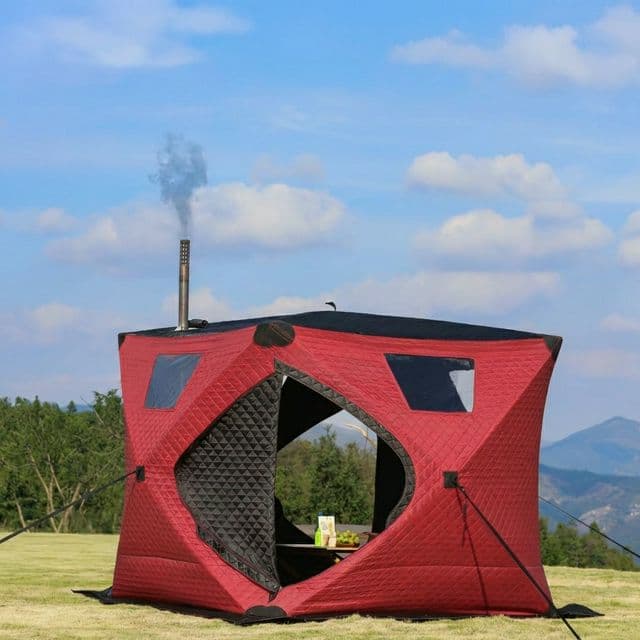
Portable tent sauna setup with clean and minimal environment
Use as baseline visual for low-clutter indoor placement and airflow planning.

Backyard tent sauna installation
Outdoor placement can improve ventilation but still needs weather and power boundary checks.
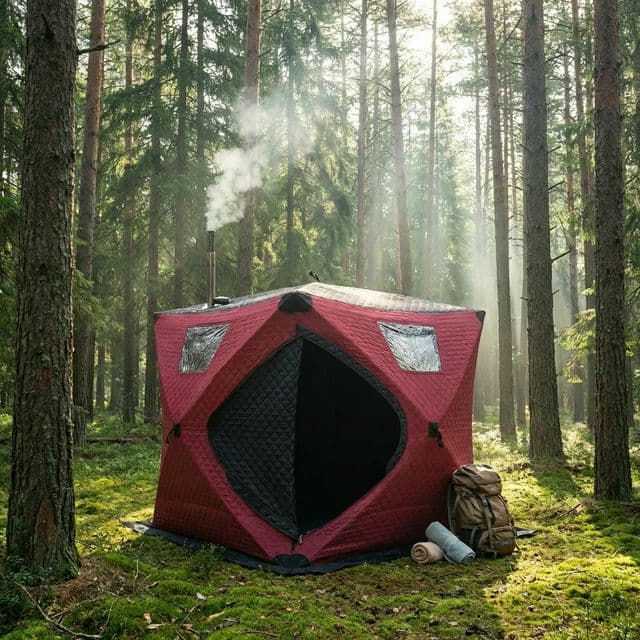
Tent sauna in pine forest summer environment
Environment affects cool-down logistics and hydration recovery routines.

Tent sauna setup on a rainy day
Humidity and post-session drying discipline become more important in wet climate conditions.
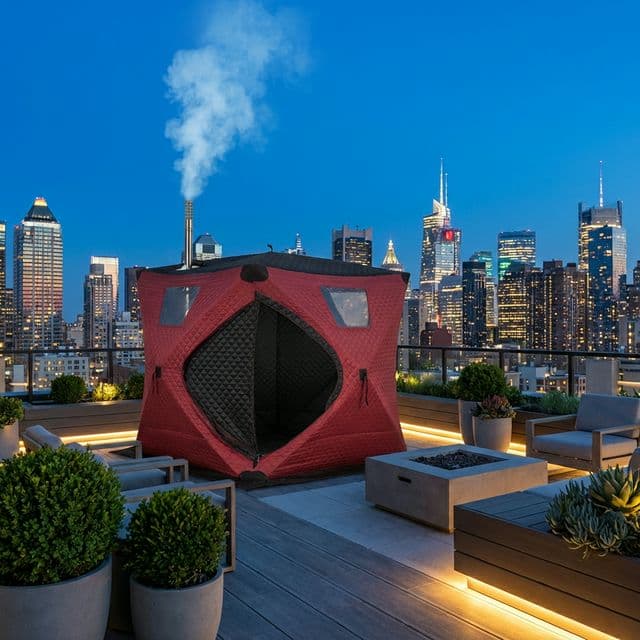
Tent sauna on rooftop city view
Urban installs should include neighbor safety clearances and outlet load checks.
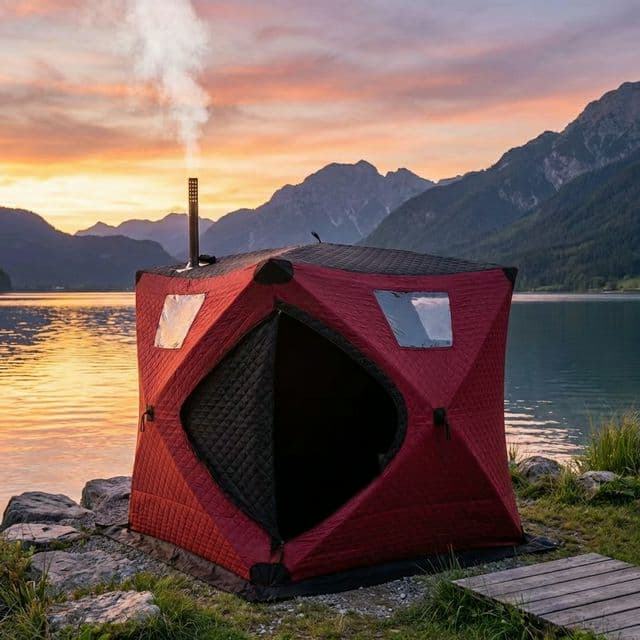
Lakeside portable tent sauna scene
Recovery context can improve adherence if hydration and temperature transitions are controlled.
Need a manual detox-fit review before purchase?
Send your checker band, hydration plan, and any risk-profile context to [email protected]. We will return a conservative next-step recommendation you can execute.
15 decision-focused questions grouped by intent
Next step: move from score to execution
This page is an operational planning resource, not medical advice. Use the checker output, risk matrix, and source log to define a conservative pathway, then request a manual review via email.