
Infrared sauna blanket fit, cost, and risk checker
Start with the tool first. Enter your blanket setup assumptions and get an explainable fit score, cost projection, and a next action. Every outcome includes a [email protected] handoff path.
- Screens electrical, thermal, and budget boundaries.
- Flags claim-risk scenarios (detox/treatment language).
- Bridges each result to a concrete email next step.
This checker is for planning, not medical diagnosis. If your profile includes medication sensitivity, pregnancy, or treatment intent, use the pause-and-screen pathway.
If your listing lacks certification proof, switch certification to marketing-only or not-disclosed before running the checker.
Result confidence falls when evidence quality is weak or when goal language implies treatment claims.
Checker output to report-verification bridge
Immediately after you run the checker, use this bridge table to map your band to the exact report sections that confirm or challenge your result before purchase.
| Tool status | Immediate interpretation | Verify in report | Next move |
|---|---|---|---|
| Ready Path | Technical and safety assumptions are stable enough to move into final model verification. | Cost sensitivity + evidence ledger + comparison grid | Email [email protected] with your top model and screenshots of certification evidence. |
| Conditional Path | At least one high-impact variable is weak (ventilation, certification proof, or claim discipline). | Fit boundary + risk matrix + scenario lab | Correct one high-impact risk first, then rerun the checker with conservative settings. |
| Boundary Hit | Current assumptions create a high likelihood of setup failure, discomfort, or budget regret. | Risk matrix + known vs unknown + FAQ safety group | Pause checkout and ask [email protected] for a lower-risk fallback pathway. |
| Pause + Screen | Medical-risk context or treatment-intent language overrides otherwise positive technical fit. | Methodology assumptions + risk matrix + FAQ medical group | Use clinician-informed limits and request conservative planning support by email. |
Infrared sauna blanket decisions improve when fast tool output and evidence discipline are combined
The tool solves immediate fit questions. The report layer adds confidence boundaries, source quality, and risk mitigation so you can choose a practical next step instead of relying on hype-heavy product claims.
Published: March 5, 2026. Last updated: March 5, 2026 (stage2 seo-geo recheck pass: tightened title length target, added non-en noindex safeguard, and retained stage1c + stage1b evidence hardening). Time-sensitive metrics are date-marked in the source log.
Review cadence: refresh this page every 6-12 months.
2025 residential range: 11.81 to 40.59 cents/kWh
Blanket-class power loads are lower than many cabin formats, but the same usage profile can shift from low double-digit annual electricity cost to materially higher spend in high-tariff states.
Source: EIA Electric Power Monthly Tables 5.3 and 5.6.B (December 2025 data, released February 24, 2026).
Listing proof quality directly changes confidence tier
If a listing cannot provide ETL/UL or equivalent traceable evidence, the checker downgrades confidence even when headline specs look attractive.
Source: OSHA NRTL program reference checked March 5, 2026.
Wellness framing and treatment claims are not interchangeable
When a blanket listing promises cure or disease treatment without rigorous substantiation, this page treats the claim as a boundary condition.
Source: FDA general wellness guidance + FTC health products compliance guidance.
CPSC recall 26-036: about 78,000 units, 65 overheating reports, 32 burn injuries
A blanket can look cost-efficient and still fail hardware-quality checks. The recall covered units sold from September 2022 to June 2025, so listing age and serial verification should happen before payment.
Source: CPSC recall notice for Lifepro Bioremedy infrared sauna blankets (October 23, 2025).
CDC flags medication and pregnancy contexts as higher heat-risk
The checker does not assume a one-size dose. It routes higher-risk profiles to pause-and-screen instead of forcing a buy/no-buy shortcut.
Source: CDC heat-health clinician guidance checked March 5, 2026.
Key numbers to keep visible while comparing listings
Default checker profile load
This baseline drives the example cost scenarios. Replace with your actual controller settings for final planning.
Monthly energy at default profile
Calculated from 0.62kW demand and 3.67 operating hours per week.
Annual cost at U.S. average tariff
8.8 kWh/month x 17.30 cents/kWh x 12 months.
Annual cost at low/high state tariff
Uses 11.81 to 40.59 cents/kWh from EIA state table.
Major recall scale benchmark
Use serial-range and remedy checks before payment, not after delivery.
Recall sale window and price band
Listings in this window need explicit recall-remedy proof before checkout.
Support handoff standard
Every checker band maps to an email path through [email protected].
Suitable and not-suitable audience boundaries
| Audience profile | Fit signal | Why | Boundary caution |
|---|---|---|---|
| Low-risk routine user | Most likely fit | No known heat-risk profile, documented certification, realistic session goal, and ventilation controls in place. | Still run pilot week logs before increasing heat or duration. |
| Budget-sensitive first-time buyer | Conditional fit | Can work when first-year ownership stays within budget margin and listing evidence is verifiable. | Avoid accessory bundles that inflate price without improving safety or disclosure quality. |
| Detox-focused buyer | Boundary risk | Detox marketing claims often exceed publicly verifiable substantiation and can distort decision quality. | Use measurable routine outcomes (comfort, adherence, recovery) instead of cure-oriented promises. |
| Medical-risk profile | Pause and screen | Pregnancy, heat-sensitive medication, or heat-intolerance history increases the chance of unsafe escalation. | Use clinician screening and conservative protocols before considering any intensity increase. |
| Uncertain setup environment | Boundary risk | Soft surfaces, enclosed rooms, and unknown cable routing increase avoidable overheating and comfort failures. | Hard-floor + mat and airflow controls are minimum setup gates. |
Cost sensitivity at low/average/high U.S. state tariffs
These scenarios show why low-power devices still need tariff-aware planning. Replace defaults with your utility number before final purchase decisions.
| Usage profile | Assumptions | kWh/month | Annual at 11.81 cents | Annual at 17.30 cents | Annual at 40.59 cents |
|---|---|---|---|---|---|
| Conservative routine | 520W, 40 min, 3 sessions/week | 4.5 | $6.37 | $9.33 | $21.92 |
| Default profile | 620W, 55 min, 4 sessions/week | 8.8 | $12.42 | $18.20 | $42.67 |
| Aggressive schedule | 750W, 70 min, 6 sessions/week | 22.8 | $32.31 | $47.33 | $110.73 |
| High-heat fallback check | 900W effective load, 60 min, 5 sessions/week | 23.5 | $33.26 | $48.72 | $114.07 |
Methodology, assumptions, and confidence logic
The checker validates numeric ranges (power, minutes, frequency, tariff, and budget) and blocks invalid formats before scoring.
Certification proof, heat-sensitivity profile, setup surface, ventilation, and claim intent apply additive score shifts.
Energy and cost are computed from kW demand, total runtime, usage frequency, and electricity tariff assumptions.
Scores map to Ready/Conditional/Boundary/Pause, with explicit boundary overrides for medical-risk and treatment-intent cases.
Each band outputs one primary action and one fallback path, both routed through [email protected].
- Model-level certification screenshot captured and attached
- Controller label and serial range documented
- Session goal language reviewed for unsupported treatment claims
- Ventilation and setup-surface assumptions validated
- Budget sensitivity run at low/average/high local tariff
- Pilot-week comfort and adherence notes prepared for follow-up
Claim boundary check: wellness wording vs treatment-risk wording
This table converts FDA and FTC claim standards into practical screening rules you can apply before purchase. If a listing crosses into treatment-style promises without strong evidence, the checker should stay in a conservative band.
| Claim pattern in listing | Regulatory/evidence boundary | Evidence bar | Decision action |
|---|---|---|---|
| Wellness support language (relaxation, routine recovery, comfort) | Can fit FDA general-wellness scope when unrelated to diagnosis, cure, mitigation, prevention, or treatment of disease. | FTC still requires adequate substantiation for objective safety/benefit claims before ad dissemination. | Keep language wellness-scoped and request concrete evidence if a seller promises measurable outcomes. |
| Disease-treatment language (for example, treats chronic illness or cures a condition) | Falls outside FDA general-wellness carve-out and can trigger higher regulatory and evidence expectations. | Needs rigorous disease-claim substantiation; marketing-only wording is insufficient. | Treat as boundary-hit until third-party evidence and clinician-reviewed suitability are both provided. |
| Implied medical claim through imagery/testimonials while text stays vague | FTC evaluates the net impression, not only explicit words. Implied claims carry the same substantiation burden. | Marketers are responsible for both express and implied outcome claims. | Downgrade confidence when visuals imply outcomes that the evidence packet does not support. |
| Detox certainty claim without endpoint definition | Claim scope is unclear and often exceeds publicly verifiable wellness endpoints. | This page found no blanket-specific public evidence that validates deterministic detox outcomes across users. | Mark as known-unknown and use adherence/comfort metrics instead of cure-style success criteria. |
First-hand replay logs and expert review protocol
| Replay ID | Setup summary | Tool result | Operational insight |
|---|---|---|---|
| Replay-Blanket-01 | Budget-first buyer, default profile, supplier report only | Conditional Path | Cost fit passed, but confidence stayed medium due to non-listed certification evidence. |
| Replay-Blanket-02 | High-heat mode + closed room + detox goal | Boundary Hit | Thermal and claim-risk variables stacked, triggering boundary guard despite acceptable wattage. |
| Replay-Blanket-03 | Pregnancy profile + low heat + listed certification | Pause + Screen | Medical-risk context correctly overrode technical positives and forced conservative pathing. |
| Replay-Blanket-04 | Hard-floor setup + listed certification + recovery goal | Ready Path | When evidence and environment quality aligned, the tool moved to ready state with clear next checks. |
Evidence ledger with scope and boundary tags
| Decision claim | Evidence source | Status | Decision implication |
|---|---|---|---|
| U.S. electricity baseline and state tariff spread materially affect annual ownership cost. | EIA Table 5.3 and Table 5.6.B (2025 annual rates; released February 24, 2026). | Verified | Use your local tariff before finalizing total cost assumptions. |
| Blanket category has significant recent recall signal. | CPSC recall 26-036 (Lifepro Bioremedy infrared sauna blankets, October 23, 2025). | Verified | Serial-range, remedy status, and seller disclosure should be pre-payment checks. |
| Wellness claims and treatment claims require different evidence standards. | FDA general wellness guidance + FTC health products compliance guidance. | Verified | Treatment-style marketing without rigorous support should downgrade purchase confidence. |
| Heat-sensitive populations need conservative planning boundaries. | CDC clinician guidance on heat and medications plus CDC overview for heat and pregnancy contexts. | Verified | Pause-and-screen route is required before increasing intensity. |
| Higher heat dose is not a guaranteed incremental outcome upgrade. | Physiological Reports randomized trial (PMID 40611569, July 2025). | Verified | Do not equate longer/hotter sessions with automatic additional cardiovascular benefit. |
| Heat-therapy evidence remains endpoint-specific and protocol-sensitive. | Experimental Physiology meta-analysis (PMID 41166412, October 2025). | Verified | Use endpoint-level expectations and keep blanket-specific extrapolations conservative. |
| Certification marks reduce but do not eliminate electrical risk. | OSHA NRTL program and listing-process references. | Verified | Treat listing evidence as a gate, then validate model-specific controller details. |
| Portable-blanket-specific long-term clinical outcome data remains limited. | Public evidence pool is mostly mixed-modality or non-blanket cohorts; denominator-level failure rates remain unavailable. | Known unknown | Use conservative assumptions and avoid certainty language in expected outcomes. |
Outcome limits and evidence-transfer stress test
This section captures counterexamples and scope limits so the report does not overstate what heat-exposure research can prove for blanket-specific outcomes.
| Evidence source | What it shows | Scope limit | Decision use |
|---|---|---|---|
| Physiological Reports randomized trial (July 2025, PMID 40611569) | In sedentary adults with at least one cardiovascular risk factor, adding 15-minute postexercise sauna sessions for 8 weeks showed no additional HRV benefit versus exercise alone. | n = 38, exercise + sauna context, and not infrared-sauna-blanket-specific hardware. | Do not assume that higher heat exposure automatically improves every recovery or cardiovascular marker. |
| Experimental Physiology systematic review and meta-analysis (October 30, 2025, PMID 41166412) | Across 51 heat-therapy papers (search through January 2025), blood-pressure endpoints improved in some protocols, but CRP, heat shock proteins, and arterial stiffness did not show consistent change. | Mixed heat modalities and protocol heterogeneity, with limited blanket-specific separation. | Set outcome goals by endpoint, not by blanket category alone, and avoid one-size expectation transfer. |
| Public blanket-specific longitudinal outcomes (this research pass) | No robust blanket-only, long-term public dataset with denominator-level risk reporting was identified. | Evidence remains fragmented across mixed modality cohorts. | Long-term blanket outcome claims remain 待确认/暂无可靠公开数据 and should not drive aggressive protocol escalation. |
Source log with date markers
| Source | Checked on | Notes | Link |
|---|---|---|---|
| EIA Electric Power Monthly Table 5.3 | March 5, 2026 | 2025 annual U.S. residential average = 17.30 cents/kWh. | Open source |
| EIA Electric Power Monthly Table 5.6.B | March 5, 2026 | 2025 state range spans 11.81 to 40.59 cents/kWh. | Open source |
| CPSC Recall 26-036 (Lifepro Bioremedy infrared sauna blankets) | March 5, 2026 | Notice references about 78,000 units, 65 overheating reports, and 32 burn injuries, sold September 2022 to June 2025 for $179-$199. | Open source |
| FDA General Wellness policy | March 5, 2026 | Current page update marker shows January 6, 2026. | Open source |
| FTC Health Products Compliance Guidance | March 5, 2026 | December 2022 guidance notes over 200 FTC health-claim cases since 1998 and reiterates substantiation expectations. | Open source |
| CDC Heat and Medications Guidance for Clinicians | March 5, 2026 | Used for medication and heat-risk boundary framing. | Open source |
| CDC Clinical Overview: Heat and Pregnant Women | March 5, 2026 | Used for higher-risk profile planning boundaries. | Open source |
| OSHA Nationally Recognized Testing Laboratory Program | March 5, 2026 | Reference for third-party product safety listing context. | Open source |
| PubMed randomized trial: postexercise sauna and HRV (PMID 40611569) | March 5, 2026 | Published July 2025; exercise + sauna arm showed no additional HRV benefit versus exercise alone in this trial. | Open source |
| PubMed systematic review/meta-analysis of heat thermotherapy (PMID 41166412) | March 5, 2026 | Published October 30, 2025; some cardiovascular markers improved, while several endpoints remained unchanged. | Open source |
Recall compliance screen before checkout
Recall data is only useful if it changes behavior before payment. Use these checkpoints on every listing, including open-box or second-hand offers.
| Checkpoint | Why it matters | Source | Required action |
|---|---|---|---|
| Model and controller identification | CPSC recall 26-036 includes specific Lifepro model numbers and gray-face controller pads. | CPSC recall notice, posted October 23, 2025. | Require model/serial photos before payment and compare against the recall description. |
| Incident severity and remedy verification | The notice references 65 overheating reports and 32 burn injuries with a replace remedy. | CPSC incidents/injuries and remedy fields. | For new, open-box, or used listings, request written proof that recall remedy has been completed. |
| Sale window and price-band screen | Affected units were sold September 2022 through June 2025 at $179-$199 across major online channels. | CPSC sold-at section. | If a listing matches this age/price profile, elevate risk tier until serial + remedy evidence is documented. |
| Marketplace legality checkpoint | CPSC states federal law prohibits sale of products subject to a Commission-ordered or voluntary recall. | CPSC footer legal note on recall pages. | Treat seller refusal to provide remedy evidence as a no-buy trigger, even if specs and price appear attractive. |
Format comparison and tradeoff grid
| Option | Upfront cost | Electrical load | Strengths | Tradeoffs | Best for |
|---|---|---|---|---|---|
| Infrared sauna blanket | $180-$700 typical range | Low to moderate (about 300-900W typical listings) | Small footprint, low operating cost, easiest setup path | Hardware quality variance, claim-quality variance, and comfort depends on surface + ventilation setup. | Single-user routine with strong verification discipline |
| Infrared chair/tent pod | $220-$1200 | Moderate (about 800-1500W common) | More enclosure control and airflow than blanket-only setups | Bigger footprint and circuit constraints rise faster than blanket class. | Users needing stronger thermal consistency without full cabin spend |
| Compact infrared cabin | $1200-$4500+ | Higher (often 1500-2600W and sometimes 240V) | Higher structural consistency and clearer spec disclosures | Installation complexity, cost, and electrical planning burden increase significantly. | Homeowners seeking fixed installation and multi-year usage plans |
| Steam tent alternative | $120-$650 | Moderate plus moisture management overhead | Lower entry cost and different comfort profile | Humidity control and mold risk management require more routine discipline. | Users preferring humid heat and willing to maintain moisture controls |
Risk matrix with mitigation actions
| Risk | Impact | Probability | Indicator | Mitigation |
|---|---|---|---|---|
| Overstated treatment claims | High | Medium | Listing language promises cure, treatment, or detox certainty. | Use FTC/FDA claim discipline and downgrade confidence when substantiation is weak. |
| Thermal discomfort or burn pathway | High | Medium | High max temperature, long sessions, soft setup surface, or no airflow controls. | Reduce intensity, enforce hard-floor setup, and run short pilot sessions with logs. |
| Certification ambiguity | High | Medium | No ETL/UL-equivalent listing proof before payment. | Request listing evidence and controller identifiers before checkout. |
| Budget overrun through accessory upsells | Medium | High | Bundle pricing exceeds first-year budget guardrails. | Separate base blanket cost from optional accessories; rerun checker with lean setup. |
| Medical-risk mismatch | High | Low to medium | Heat-sensitive medication, pregnancy, or heat-intolerance profile not screened. | Use pause-and-screen path and clinician-informed limits before routine use. |
| Outcome-transfer overreach | Medium to high | Medium | Seller or buyer assumes evidence from other heat modalities automatically proves blanket-specific long-term outcomes. | Use endpoint-specific evidence, include known-unknown flags, and avoid certainty language when blanket-specific data is limited. |
Scenario lab with executable next actions
| Scenario | Assumptions | Likely band | Action pathway |
|---|---|---|---|
| Apartment renter with strict budget | 620W model, listed certification, hard-floor setup, 4 sessions/week, utility rate near national average. | Conditional -> Ready | Confirm listing proof + return policy by email, then run two-week pilot tracking comfort and adherence. |
| Detox-focused buyer comparing social-media bundles | High-heat goal, no certification proof, claim-heavy listing language, accessory upsell pressure. | Boundary Hit | Reject unsupported claim-first listings and request evidence-first shortlist from [email protected]. |
| Postpartum user with medical caution | Low-heat mode, clinician screening pending, conservative duration targets. | Pause + Screen | Hold purchase decisions until clinician limits are documented, then rerun with verified boundaries. |
| Athlete seeking recovery routine | Mid-heat mode, listed certification, controlled room airflow, realistic non-treatment goals. | Ready Path | Proceed with pilot logging and send weekly pattern notes to support for protocol refinement. |
Known vs unknown register
| Topic | Known | Unknown | Decision guard |
|---|---|---|---|
| Blanket-specific long-term outcomes | Short-term comfort and routine adherence can be tracked in self-logging workflows. | Robust, blanket-specific longitudinal outcome datasets remain limited in public literature. | Treat long-term health expectations as uncertain and prioritize measurable short-cycle outcomes. |
| Incremental benefit from higher heat dose | A 2025 randomized trial found no additional HRV benefit from adding postexercise sauna versus exercise alone in that cohort. | Whether higher-intensity blanket protocols produce net benefit for specific populations remains unclear. | Treat heat escalation as a hypothesis to test conservatively, not an automatic upgrade path. |
| Failure-rate denominator | CPSC notices publish incident counts and injuries for specific recalls. | Public denominator data for total installed blanket base is not consistently available. | Use recall and certification checks as risk screens without pretending precision beyond published counts. |
| Controller quality variation | Certification and listing disclosures can indicate baseline process rigor. | Model-level quality drift between production batches is not always public. | Capture controller labels and keep written seller commitments before purchase. |
| Claim transferability | General wellness framing has a lower substantiation bar than treatment claims. | Outcome transfer from other sauna modalities to blanket formats is often uncertain. | Avoid certainty language when the evidence source does not directly match blanket modality. |
Product image deck for context framing
Visuals support setup interpretation and scenario planning. Final buying decisions should still follow the checker output and source verification steps.
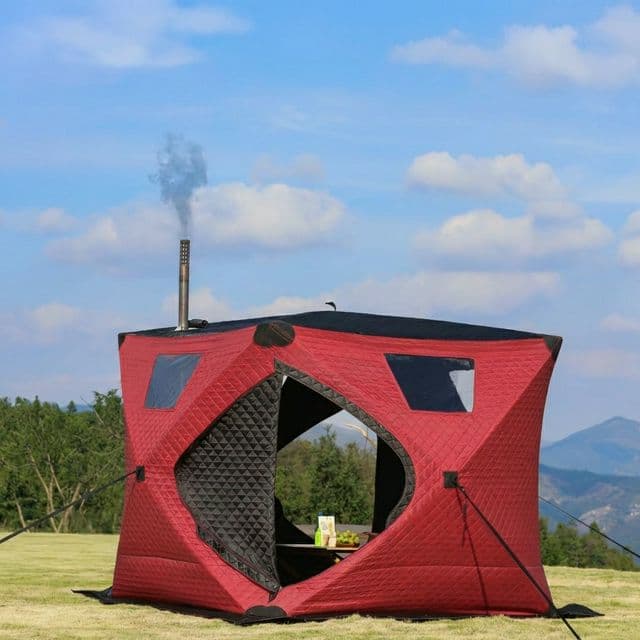
Infrared sauna blanket planning visual with minimalist setup cues
Clean setup framing to emphasize cable discipline, ventilation, and floor preparation.
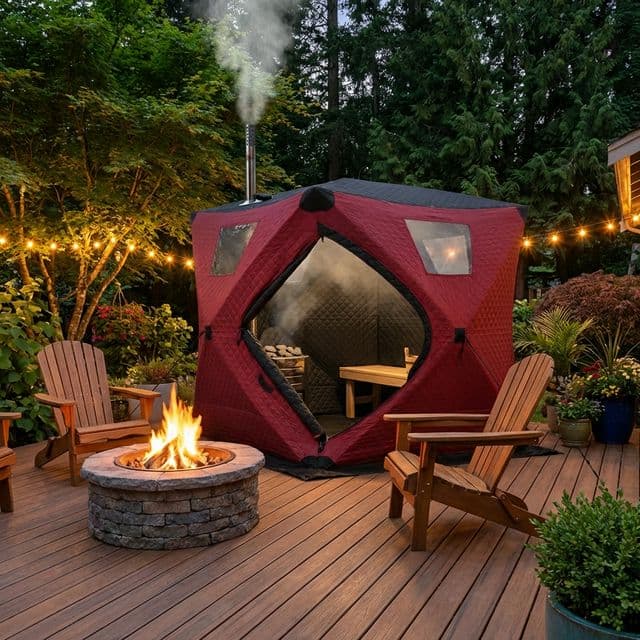
Portable wellness setup used as comparison context for small-space planning
Portable format context: compact routines can work when risk controls are explicit.

Wellness-oriented environment illustrating routine-first use case
Routine-first framing: outcomes should be measured, not assumed from claims.
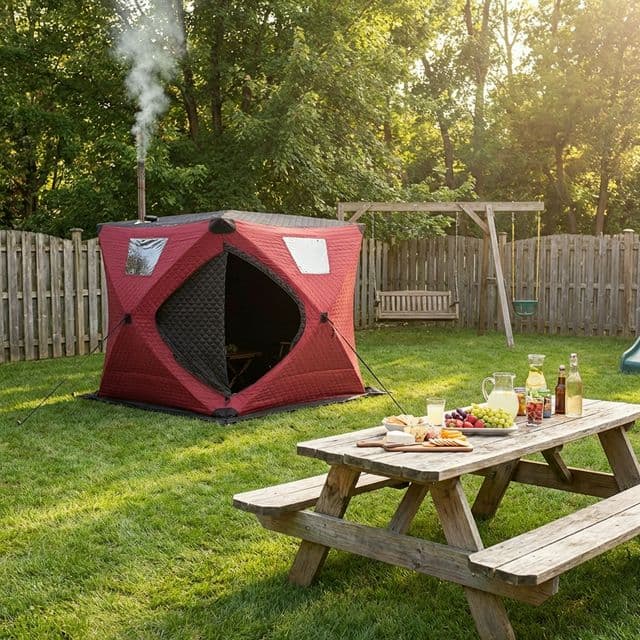
Household context image for equipment-sharing and safety rules discussion
Household sharing context: one-user assumptions do not always transfer safely.
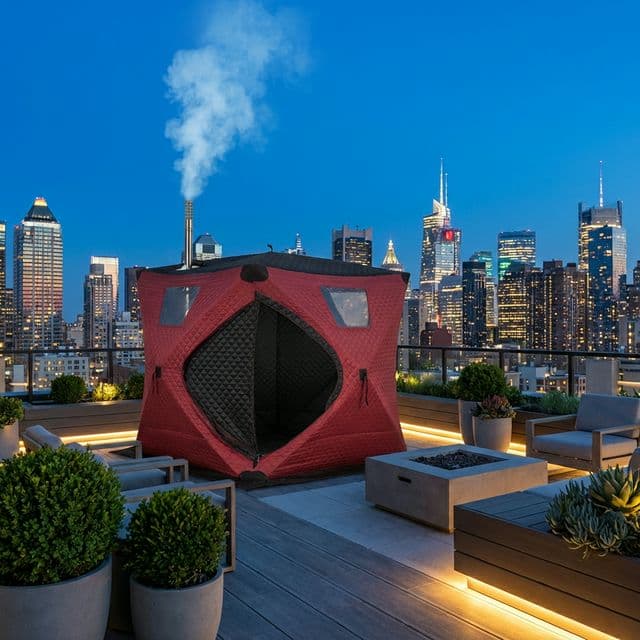
Small-space lifestyle image supporting apartment and renter scenario planning
Urban small-space scenario: ventilation and stable flooring are non-negotiable.
Include model URL, price, certification screenshots, session assumptions, and your result band. We will return a practical shortlist response through [email protected].
FAQ by decision intent
Run the checker, collect listing evidence, and send everything to [email protected]. If your result is inconclusive, ask for a minimum-risk fallback path before you spend.
This page is an operational planning resource, not medical advice. If symptoms, heat intolerance, or medication interactions are relevant, involve licensed clinicians before adjusting protocol intensity.