
What is an infrared sauna? Run the 60-second starter checker
This tool turns the definition question into an executable decision. It maps your format, session plan, and risk profile to a clear explanation, cost projection, and next-step action.
Included: definition clarity, starter dosage framing, and actionable next steps for each output state.
Not included: medical diagnosis, local-code approval, or device-level safety certification validation.
If results are unclear, send your assumptions to [email protected] for a manual screening path.
Tool output to report verification bridge
After the checker returns a band, use this bridge to decide which report sections to review before acting on any purchase or routine decisions.
| Tool status | Immediate interpretation | Verify in report | Next move |
|---|---|---|---|
| Definition Ready | You have a practical definition and starter profile that can move into product screening. | Key numbers + comparison grid + risk matrix | Email [email protected] with two preferred formats and your checker output. |
| Needs Clarification | Core understanding exists, but at least one assumption (dose, risk, or proof) is weak. | Who it fits + evidence ledger + scenario lab | Tighten one major assumption and rerun before committing to hardware or routines. |
| Boundary Hit | Current assumptions cross conservative starter boundaries for heat exposure or infrastructure. | Who should pause + risk matrix + known vs unknown | Reduce temperature/dose assumptions and request a minimum-risk fallback path. |
| Pause + Screen | Risk profile currently overrides normal planning until individualized screening is complete. | Who should pause + FAQ safety group | Use clinician-informed boundaries and avoid unsupervised escalation. |
What is an infrared sauna? A decision definition, not just a glossary sentence
This page answers the definition question with an executable workflow. The tool resolves immediate uncertainty; the report validates limits, tradeoffs, and evidence quality before next actions.
Published: May 8, 2026. Last updated: May 8, 2026 (stage1-primary + stage1b evidence expansion round + stage1c self-heal + stage2 seo-geo closure pass). Review cadence: 6-12 months (or sooner on material source changes). Time-sensitive rows include explicit date markers in the source log.
Single URL hybrid architecture
Tool layer + report layer in one route
Immediate checker output and deep evidence context stay connected to reduce decision drift.
Evidence-first source policy
Medical, regulatory, and safety sources time-stamped
Every high-impact claim in this page maps to a source log row with date markers.
Boundary-first UX
Every output includes a next-step or fallback action
No raw score dead-end. Inconclusive or boundary states return minimum executable alternatives.
Manual support handoff
All CTA paths route to [email protected]
Users can move from tool output to human review without losing context or assumptions.
Lower ambient heat than many traditional dry-sauna setups
Mayo Clinic describes infrared sauna outcomes being delivered at lower air temperatures than regular saunas, which can improve tolerance for some users.
Source: Mayo Clinic expert answer updated September 13, 2024 and checked May 8, 2026.
CDC/NIOSH: severe heat illness can escalate rapidly
Heat-stroke warnings still apply. Lower ambient temperature does not eliminate dehydration, dizziness, or symptom-escalation risk.
Source: CDC/NIOSH heat-related illnesses page (updated 2026) checked May 8, 2026.
CPSC recalls include 78,000 blanket units and 1,000 hybrid sauna rooms
Definition-level understanding should include safety-screen behavior before purchase: model ID, hazard type, remedy path, and serial checks.
Source: CPSC recall numbers 26-036 and 26-040, both dated October 23, 2025.
FDA general wellness guidance refreshed January 6, 2026
Infrared sauna can fit wellness-support use. Disease-treatment claims require stronger regulatory and evidence scrutiny than marketing copy usually provides.
Source: FDA General Wellness guidance document issued January 6, 2026.
OSHA: CE marking alone does not satisfy NRTL-required contexts
For U.S. workplace-like electrical assurance contexts, product-level NRTL pathway clarity matters more than generic imported conformity marks.
Source: OSHA NRTL FAQ and SHIB guidance, checked May 8, 2026.
EIA Feb 2026: residential average 17.65¢/kWh (+7.4% YoY)
EIA reports a wide contiguous-state spread (8.87¢ to 27.61¢/kWh). Default cost assumptions should be stress-tested against local utility data before purchase.
Source: U.S. EIA Electricity Monthly Update (February 2026, released April 23, 2026).
FTC: competent and reliable scientific evidence standard
FTC guidance states randomized controlled human clinical trials are generally the substantiation experts would expect for health-benefit claims; replication increases confidence.
Source: FTC Health Products Compliance Guidance (December 2022), checked May 8, 2026.
ACOG: best not to use saunas or hot tubs early in pregnancy
ACOG notes core-temperature rise from sauna or hot tub exposure can harm the fetus, so default starter routines should not override individualized clinical advice.
Source: ACOG Ask ACOG FAQ, published and last reviewed September 2021, checked May 8, 2026.
Known-unknown register applied to every claim cluster
When evidence is incomplete, this page labels uncertainty instead of converting ambiguity into false certainty.
Source: TentSaunaSupply hybrid review protocol, May 2026.
Key numbers that change beginner decisions
These are directional decision anchors. Replace any national proxy with local or model-specific evidence where available.
CPSC recall event A (infrared blanket class)
Lifepro recall listed 65 overheating reports including 32 burn injuries (Recall 26-036).
Open sourceCPSC recall event B (hybrid room class)
Sauna360 recall listed 7 bench-collapse reports including one head/neck injury (Recall 26-040).
Open sourceHeat emergency escalation marker
CDC/NIOSH identifies heat stroke as a fast-escalation medical emergency requiring immediate response.
Open sourceHydration baseline for heat exposure
NIOSH heat hydration fact sheet frames this as a practical prevention baseline under heat load.
Open sourceRegulatory framing update
General wellness positioning remains distinct from disease-treatment claims and regulated therapeutic intent.
Open sourceU.S. electricity benchmark context
EIA reports +7.4% year-over-year and a large contiguous-state spread from 8.87¢ to 27.61¢/kWh, so local tariff overrides generic assumptions.
Open sourceEvidence-volume boundary
Systematic review evidence is heterogeneous and does not establish a universal advantage of one sauna type across all outcomes.
Open sourcePregnancy safety checkpoint
ACOG links prolonged early-pregnancy sauna/hot-tub exposure to birth-defect risk via core-temperature elevation.
Open sourceCertification screening rule
OSHA guidance notes that non-NRTL marks alone do not meet OSHA standards that require NRTL approval.
Open sourceMechanism comparison: infrared vs traditional thermal paths
| Dimension | Infrared sauna | Traditional sauna | Known boundary |
|---|---|---|---|
| Heat delivery mode | Radiant emitters warm body surfaces and nearby air with lower ambient-room heating than many traditional setups. | Room air is strongly heated and transfers heat through surrounding hot-air exposure. | Perceived intensity still varies by hydration, tolerance, session dose, and enclosure design. |
| Humidity profile | Usually lower humidity than steam-room formats; exact humidity depends on enclosure and ventilation. | Dry-sauna formats remain low humidity; steam-room formats intentionally add high moisture. | Consumers often blur infrared, dry, and steam categories in one mental model, which causes setup mistakes. |
| Electrical footprint | Ranges from low-load blanket and tent classes to dedicated-circuit cabin classes. | Higher-output fixed heaters are common in full-room installations. | Power assumptions are model-specific and cannot be inferred from marketing names alone. |
| Primary buyer question | Can I start safely with my current room, power, and tolerance profile? | Can I support higher room heat, installation burden, and ongoing maintenance? | The better first decision is often readiness and risk fit, not brand or claim language. |
| Spectrum terminology boundary | Consumer listings often use near/mid/far labels; one clinical review summary cites near 0.7-1.4 μm, mid 1.4-3.0 μm, and far 3.0-100 μm bands. | Traditional dry or steam formats are usually not labeled by infrared wavelength bands. | Many sellers do not publish panel-level emission verification, so spectrum labels can stay unverified at model level. |
Who infrared sauna definitions usually fit
| Audience profile | When it can fit | When it does not fit | Mitigation |
|---|---|---|---|
| Beginner seeking practical definition before purchase | Wants a conservative starting protocol, checks model proof, and accepts wellness-support positioning. | Expects immediate disease-treatment outcomes from marketing claims alone. | Use source log + evidence ledger to separate supportable claims from overreach. |
| Small-space home user | Has predictable airflow, clear placement plan, and can maintain post-session dry-out habits. | No ventilation path or shared cluttered placement around heated components. | Prioritize lower-load formats and enforce keep-clear + dry-out routine. |
| Cost-sensitive buyer | Uses realistic electricity rate assumptions and compares runtime cost by format before buying. | Uses only headline purchase price and ignores energy/runtime differences. | Use the tool cost output and rerun with local utility rate and usage scenarios. |
| Evidence-focused user | Accepts that outcome confidence varies across endpoints and populations. | Treats mixed evidence as universal certainty for all users and goals. | Use known-vs-unknown register and scenario lab before scaling routine. |
Who should pause before using a standard starter path
| Boundary condition | Why pause is needed | Minimum executable path |
|---|---|---|
| Pregnancy or postpartum risk context | Heat-exposure sensitivity requires individualized thresholds beyond generic starter plans. | Use pause-and-screen output and follow clinician-reviewed boundaries first; ACOG advises avoiding sauna/hot-tub use early in pregnancy. |
| Medication-linked heat sensitivity | Heat tolerance can shift materially by medication class and dosing profile. | Run conservative session doses and seek professional screening before escalation. |
| Aggressive treatment-intent expectations | Disease-treatment claims need stronger substantiation than most product pages provide. | Reframe plan to wellness-support scope and request evidence-backed alternatives. |
| Unverified electrical or certification status | Model identity and compliance uncertainty can increase hardware and safety risk. | Pause purchasing and request model-level proof before payment. |
Methodology and assumption chain
The checker is deterministic: same inputs produce the same output band. Confidence changes with uncertainty and verification depth.
Tool inputs translate broad keyword intent into a specific decision lens: basics, comparison, first-session plan, or safety screening.
Output: Decision lens + baseline assumptions
Session frequency, duration, temperature, and format power are normalized into runtime energy and cost signals.
Output: Monthly energy + cost estimate
Risk profile and dose extremes can force boundary or pause states regardless of otherwise positive signals.
Output: Definition band + boundary note
Verification depth, uncertainty notes, and claim-substantiation quality (for example FTC health-claim standards) determine confidence and next-step action quality.
Output: Confidence level + uncertainty ledger
Every output state maps to a direct support email action and a fallback path to avoid decision dead ends.
Output: Primary CTA + fallback CTA
Evidence ledger with confidence and boundary notes
| Claim used on this page | Evidence base | Confidence | Current limit |
|---|---|---|---|
| Infrared sauna delivers outcomes at lower ambient air temperatures than regular sauna. | Mayo Clinic expert answer on infrared sauna benefits. | High | Mayo statement is explanatory, not a universal protocol for every user or enclosure. |
| Heat emergencies can escalate quickly during heat overload. | CDC/NIOSH heat-related illness page with heat stroke escalation markers. | High | Occupational guidance still requires adaptation for home-use behavior and monitoring quality. |
| Hydration pacing should be explicit in heat protocols. | NIOSH hydration fact sheet with short-interval intake baseline. | Medium-high | Hydration needs vary by body size, climate, medication, and workload. |
| Recent sauna-adjacent recalls justify model-level screening. | CPSC recalls 26-036 and 26-040 (October 23, 2025). | High | Recall event counts are directional signals, not full installed-base failure rates. |
| Wellness claims and therapeutic claims require distinct handling. | FDA General Wellness guidance (issued January 6, 2026). | High | Guidance scope is policy clarity, not a blanket authorization for medical outcome claims. |
| CE-only labeling can be insufficient in NRTL-required contexts. | OSHA NRTL FAQ and SHIB021610 guidance PDF. | Medium-high | Requirement context varies by setting; users still need model-specific applicability checks. |
| Health-benefit marketing claims need stronger substantiation than anecdotal proof. | FTC Health Products Compliance Guidance (competent and reliable scientific evidence standard). | High | FTC principles are claim-governance standards, not a product-specific safety certification. |
| Cost realism depends on current and local electricity pricing. | U.S. EIA Electricity Monthly Update with February 2026 residential average and state spread. | High | National averages are directional. Local time-of-use tariffs and seasonal pricing can materially change costs. |
| Pregnancy-related heat exposure should be treated as a hard gate. | ACOG Ask ACOG advice on sauna/hot-tub use early in pregnancy (published/reviewed September 2021). | Medium-high | ACOG advice is broad pregnancy guidance, not an infrared-format-specific dosing protocol. |
| Clinical outcome evidence remains mixed across sauna formats and endpoints. | 2018 systematic review: 40 studies total, 25 infrared, heterogeneous methods and outcomes. | Medium | Study designs are heterogeneous and many samples are small, limiting strong causal claims. |
Alternatives and tradeoff grid
| Option | Definition angle | Setup burden | Power path | Boundary | Best-for scenario |
|---|---|---|---|---|---|
| Infrared sauna blanket | Personal low-load wrap format | Low | Typically under 1 kW class | Recall/overheat checks and skin-contact tolerance | Starter experimentation with strict dose control |
| Portable infrared sauna tent | Compact enclosure + plug-in emitter system | Low to medium | Approx. 1.0-1.6 kW class | Ventilation and room-layout discipline | Home users needing low-friction setup |
| 120V infrared cabin | Fixed enclosure with moderate home-power demand | Medium | Approx. 1.5-2.2 kW class | Circuit headroom and placement permanence | Regular users wanting more stable sessions |
| 240V infrared cabin | Higher-output fixed-format infrared room | Medium to high | Dedicated 240V path common | Install readiness + permit/electrical scope | Frequent users with prepared infrastructure |
| Traditional dry sauna | Room-air-heating dominant model | Medium to high | Often higher-output heater class | Heat-intensity tolerance and infrastructure cost | Users preferring strong ambient heat environments |
| Steam sauna / steam room | High-humidity thermal environment | High | Steam generator + moisture management | Condensation, maintenance, and mold-control burden | Users prioritizing humidity-driven experience |
Risk matrix with mitigation actions
| Risk | Probability | Impact | Mitigation path |
|---|---|---|---|
| Misreading definition as guaranteed medical effect | Medium-high | High | Keep outcomes in wellness-support scope unless strong therapeutic evidence and professional guidance are present. |
| Dose escalation before tolerance baseline is known | Medium | High | Start with conservative frequency and duration; log symptoms and hydration before scaling. |
| Ignoring recall or model-identity details | Medium | High | Check recall number, model number, serial range, and remedy instructions before purchase and post-delivery. |
| Electrical mismatch between format and home circuit | Medium | High | Validate circuit path against model requirements and avoid extension-cord operation for heater loads. |
| Heat-risk profile not screened | Medium | High | Use pause-and-screen path when pregnancy, medication heat sensitivity, or known intolerance is present. |
| Cost assumptions drift from local utility reality | Medium | Medium | Rerun tool with local tariff and realistic weekly usage before purchase decisions. |
| Ventilation and dry-out protocol ignored | Medium | Medium-high | Set explicit post-session cooldown and dry-out routine to reduce humidity persistence risk. |
| Overconfidence from shallow source checking | High in fast shopping flow | Medium-high | Move from quick scan to balanced/strict verification before checkout. |
| Treating pregnancy heat exposure as a routine-use scenario | Low to medium | High | Default to pause-and-screen and require clinician-reviewed boundaries before any routine starts. |
| Accepting disease-treatment claims without substantiation standards | Medium-high | High | Ask for competent and reliable scientific evidence and be skeptical of single-study or testimonial-only claims. |
Scenario lab: practical pathways and outcomes
Assumptions: Portable tent format, 3 sessions/week, moderate temperature, no known heat-risk profile.
Process: Runs starter checker, compares tent and blanket costs, then verifies recall status before shortlist.
Output: Needs clarification -> improved to definition ready after lowering temperature and tightening verification depth.
Recommended move: Send final assumptions to [email protected] before purchase.
Assumptions: High target temperature, long sessions, treatment-intent framing from marketplace claims.
Process: Checker hits boundary state and flags evidence uncertainty + claim-overreach risk.
Output: Boundary hit with fallback route emphasizing conservative dose and claim discipline.
Recommended move: Reframe to wellness-support goal and rerun with lower heat and shorter sessions.
Assumptions: Frequent use target, high-output format, no verified dedicated-circuit plan.
Process: Tool indicates higher runtime cost and infrastructure uncertainty.
Output: Needs clarification with high-impact check list focused on circuit and certification proof.
Recommended move: Pause deposit until model manual and electrical path are verified.
Assumptions: Moderate session plan but potential heat-response variability due to medication context.
Process: Tool routes to safety-heavy notes and conservative pacing recommendations.
Output: Pause-and-screen or boundary state depending on dose assumptions.
Recommended move: Use clinician-reviewed thresholds before increasing routine intensity.
Known vs unknown register
| Topic | Status | Why it matters | Interim decision rule |
|---|---|---|---|
| Universal best temperature by health goal | Unknown in reliable public consensus | Readers often expect one perfect setting; outcomes vary by individual tolerance and protocol. | Start in conservative bands and adjust only with symptom and recovery tracking. |
| Installed-base failure denominator for all infrared formats | Unknown in a single public dataset | Recall incident counts alone cannot produce precise category-wide failure rates. | Use recall data as directional risk signal and verify model-level identity before buying. |
| Direct transferability of workplace heat guidance to home routines | Partially known | CDC/NIOSH guidance is strong for heat physiology but not a full home-protocol blueprint. | Use guidance conservatively and escalate only when personal tolerance is confirmed. |
| Long-term disease endpoint effects across populations | Mixed evidence | Benefit expectations can drift into treatment assumptions not supported for all users. | Keep disease-treatment claims outside default decisions unless specialist evidence is available. |
| Certification interpretation by non-technical consumers | Frequently misread | Shoppers can over-trust labels that do not satisfy intended safety context. | Confirm traceable certification path and ask for model-specific proof before checkout. |
| Pregnancy-specific infrared sauna dose protocols | No reliable public consensus protocol | Users may incorrectly assume routine beginner settings are acceptable across all pregnancy contexts. | Treat pregnancy as pause-and-screen by default and use clinician-specific thresholds. |
| Model-level spectrum verification (near/mid/far claims) | Frequently unavailable in public listings | Marketing labels may not match independently verifiable panel-emission data. | Request model documentation and do not rely on spectrum claims alone for buying decisions. |
| Dermatologic benefit certainty for infrared sauna | Insufficient targeted public clinical evidence | Interest and claims can grow faster than robust evidence for skin-specific outcomes. | Treat skin-related claims as provisional unless high-quality, endpoint-specific studies are provided. |
Source log with timestamps
| Source | Last checked | How it is used |
|---|---|---|
| Mayo Clinic infrared sauna expert answer | May 8, 2026 | Definition framing and lower-temperature explanatory context. |
| CDC NIOSH heat-related illnesses | May 8, 2026 | Heat emergency boundary markers and symptom-response guidance. |
| CDC NIOSH hydration fact sheet (2017-126 PDF) | May 8, 2026 | Hydration pacing baseline used for conservative heat protocols. |
| CPSC recall 26-036 (Lifepro sauna blanket) | May 8, 2026 | Recent burn-hazard recall evidence and event counts. |
| CPSC recall 26-040 (Sauna360 hybrid sauna) | May 8, 2026 | Bench-collapse hazard context and model-level screening signal. |
| FDA General Wellness guidance document (Jan 6, 2026 PDF) | May 8, 2026 | Regulatory boundary between wellness framing and therapeutic claims. |
| FDA guidance listing page | May 8, 2026 | Official guidance index and current publication context. |
| OSHA NRTL FAQ | May 8, 2026 | Certification-mark interpretation and CE/NRTL distinction context. |
| OSHA SHIB021610 PDF | May 8, 2026 | Statement that CE-only marks do not satisfy OSHA standards requiring NRTL approval. |
| U.S. EIA Electricity Monthly Update (February 2026 end-use table) | May 8, 2026 | Residential electricity benchmark and state-spread context for cost assumptions. |
| FTC Health Products Compliance Guidance | May 8, 2026 | Health-claim substantiation standard and evidence-quality boundary. |
| ACOG Ask ACOG: sauna or hot tub early in pregnancy | May 8, 2026 | Pregnancy heat-exposure caution boundary used in pause-and-screen paths. |
| Systematic review: Clinical Effects of Regular Dry Sauna Bathing | May 8, 2026 | Evidence-volume context, mixed-quality limitations, and adverse-event reporting boundary. |
| PMC dermatology trend note on infrared sauna interest | May 8, 2026 | Market-interest vs evidence-density mismatch signal for skin-focused claims. |
| IEC 60335-2-53 standard scope listing page | May 8, 2026 | Electrical-safety standard identifier for sauna heating appliances and infrared units. |
Product image deck for setup-context validation
These visuals are used to cross-check footprint assumptions and practical usage context before choosing a format.
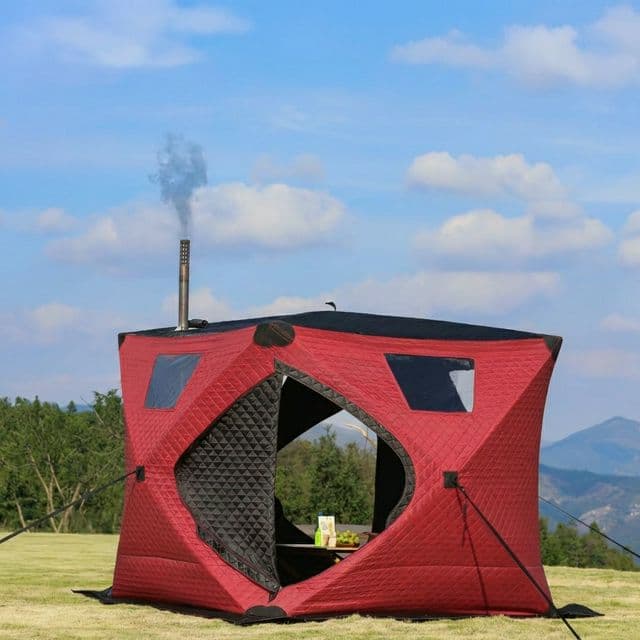
Compact enclosure reference for users mapping what an infrared sauna setup can look like in a constrained room.
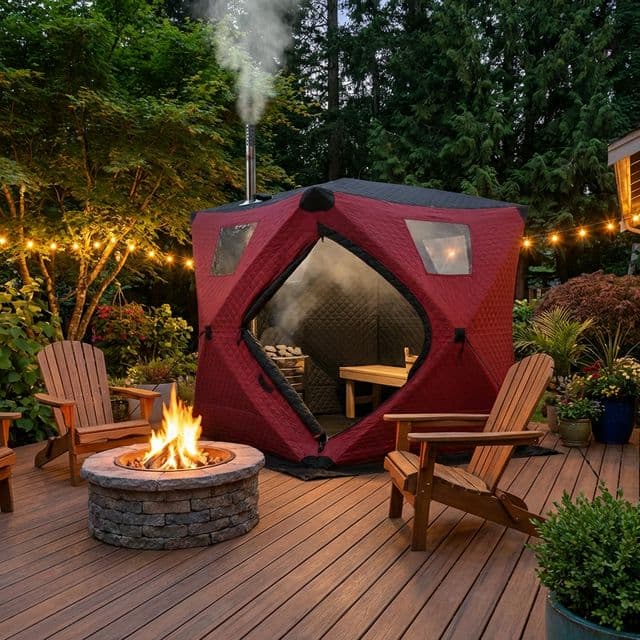
Illustrates practical home placement context for first-time routine planning.
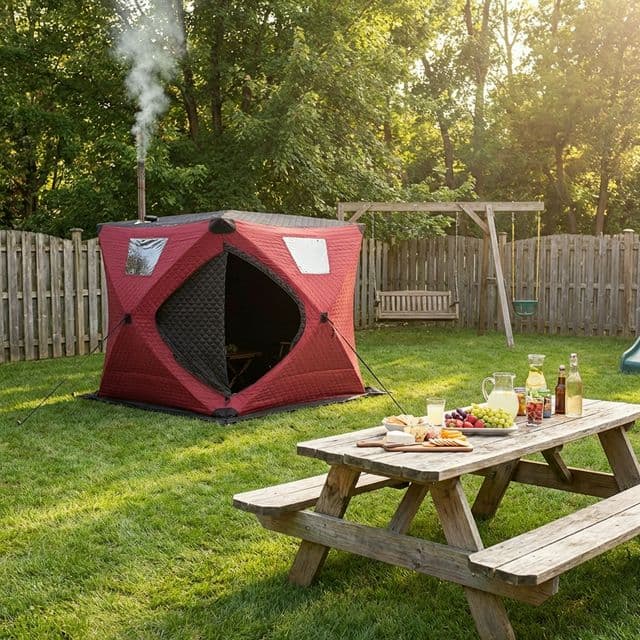
Shared-use scenario emphasizing supervision and session-boundary discipline.
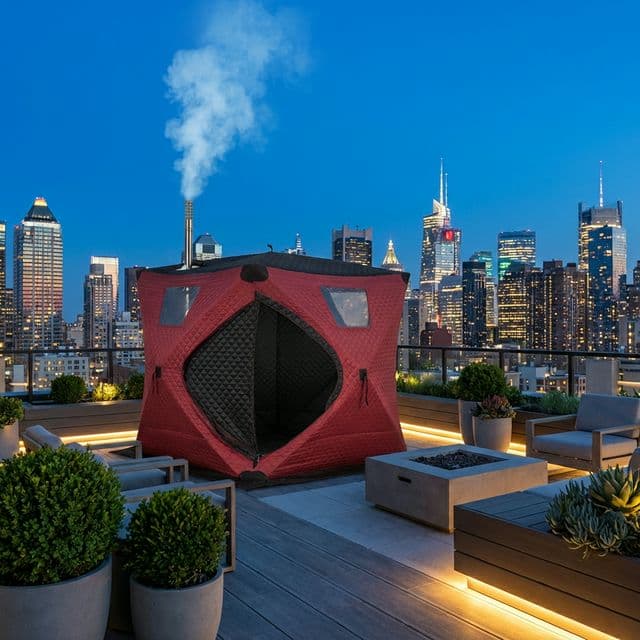
Urban footprint reference for users comparing portability and storage constraints.
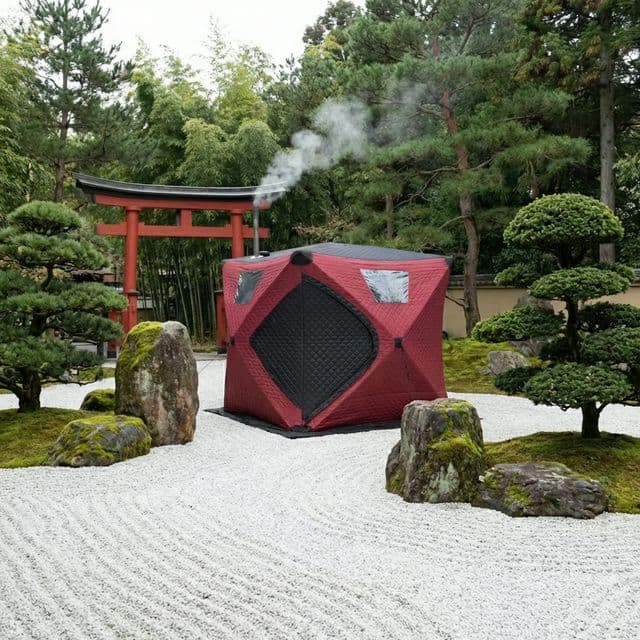
Useful for explaining wellness-support framing without therapeutic overreach.
Send your checker output, preferred format, and safety profile to [email protected]. We will return a practical next-step path, risk notes, and alternative options when boundaries are hit.
Frequently asked decision questions
Email [email protected] with your checker output. We will reply with a fit summary, risk controls, and a practical first-week plan.