
Check space, power, moisture risk, and operating cost before buying a 2 person steam sauna
This tool gives you an immediate fit score and the next action to take. The report sections below explain data sources, risk boundaries, and trade-offs so you can make a defensible purchase decision.
Tool output to report verification bridge
Run the planner first. Then use this bridge to verify your result with the relevant report sections before spending money.
Mobile tip: swipe tables horizontally to view all columns and source details.
| Tool status | Immediate interpretation | Verify in report | Next move |
|---|---|---|---|
| Strong Fit | You have enough space ratio, circuit headroom, and moisture controls to proceed with model-level comparison. | Comparisons + risk matrix + evidence ledger | Email support with two preferred models and your panel details for final fit confirmation. |
| Conditional Fit | At least one boundary sits near failure: room envelope, drainage, circuit margin, or budget. | Methodology + known vs unknown + scenario lab | Run conservative assumptions and request a boundary checklist before placing an order. |
| Not Fit Yet | Current setup is likely to fail on moisture safety, installation feasibility, or recurring ownership burden. | Risk matrix + mitigation tracks + evidence boundaries | Pause checkout and request lower-load alternatives or staged upgrades by email. |
Stage1b content-gap audit and patch log
This pass focuses on decision quality and evidence reliability. Gaps are either closed with data-backed upgrades or left explicitly marked.
Mobile tip: swipe tables horizontally to view all columns and source details.
| Gap area | Previous weakness | Stage1b upgrade | Status |
|---|---|---|---|
| Moisture-control thresholds were too generic | Early copy warned about humidity risk but did not include concrete ventilation and dry-out numbers. | Added ASHRAE 62.2 bathroom exhaust baseline (50 cfm intermittent or 20 cfm continuous) plus CDC humidity (<=50%) and 24-48h dry-out thresholds. | Closed |
| Electrical planning lacked model-level anchors | Generic wattage bands did not show how real manufacturer specs map to breaker and ceiling constraints. | Added Kohler and MrSteam spec triangulation table (kW/amp/volume/ceiling) and tool warnings for >8 ft ceilings in enclosed setups. | Closed |
| Recall discussion lacked severity detail | Safety notes referenced recalls but omitted incident and injury counts, which weakens risk prioritization. | Added CPSC recall severity data (Lifepro: 65 overheating reports/32 burn injuries; Sauna360: 7 bench failures/1 reported injury). | Closed |
| Code adoption variability was implicit | Page did not clearly state that local jurisdictions can enforce different NEC editions and amendments. | Added NFPA AHJ boundary guidance and explicit checklist step to confirm local enforcement edition before final wiring scope. | Closed |
| National permit cost/lead-time benchmark | Users asked for a single nationwide install-timeline number, but source quality was inconsistent. | Marked as unresolved: no reliable nationwide public dataset found in this pass. Added minimum executable fallback (collect two electrician + permit quotes before purchase). | Open - evidence insufficient |
Stage1c review self-heal gate
Release gate passes only when blocker and high issues are zero. Medium and low issues can remain if they do not affect safety, accuracy, or tool completion flow.
Count: 0
No blocker issues remained after tool-state and boundary-note checks.
Count: 0
All high-priority trust gaps were patched in stage1b with explicit evidence and risk tables.
Count: 1
One medium issue remains: nationwide permit-cost benchmark is still evidence-limited and intentionally marked unresolved.
Count: 0
Mobile table hinting and anchor offset polish were applied in this pass.
What matters most for a 2 person steam sauna decision
The planner gives immediate feasibility. This report layer adds source-backed trust: measurable constraints, risk boundaries, evidence quality, and fallback actions when the result is not conclusive.
Published: February 19, 2026. Last updated: February 19, 2026. Time-sensitive claims are date-stamped in the evidence ledger.
24-42 sq ft practical envelope
Two-person steam setups need service clearance, door swing, and hose/pipe allowance. Skipping clearance is the fastest route to a failed install.
1.5kW portable vs 4.5-6.0kW fixed
Portable units often run on 120V. Enclosed steam cabins generally need dedicated 240V service, which can trigger panel and wiring upgrades.
NEC is enforced at AHJ level, not as a single federal rule
State and municipal editions can differ. Treat online wiring templates as preliminary until local AHJ and licensed electrician scope are confirmed.
Moisture plan is a go/no-go gate
Steam comfort depends on managing condensation after every session. Exhaust + drainage discipline usually matters more than premium finish upgrades.
$6-$115 per month modeled range
Electricity cost scales with heater size, warmup minutes, and local utility rates. A single average number can hide a large monthly spread.
CPSC recalls in Oct 2025 reported burn and structural injuries
Burn incidents, overheating recalls, and heat-vulnerability conditions are current risk vectors. Treat medical and electrical boundaries as first-order checks.
Key numbers and boundary benchmarks
Mobile tip: swipe tables horizontally to view all columns and source details.
| Dimension | Benchmark value | Decision implication | Source reference |
|---|---|---|---|
| Appliance cost formula baseline | (Wattage x hours) / 1000 = kWh | Use this formula to verify model claims and avoid inflated monthly-cost assumptions. | US DOE Energy Saver (Apr 24, 2012) |
| US residential electricity benchmark | 17.78 cents/kWh (Nov 2025) | This is a planning baseline only; local utility tariffs can be materially higher or lower. | US EIA Electricity Monthly, Table 5.6.A (released Jan 26, 2026) |
| State electricity spread context | 11.93-40.20 cents/kWh (Nov 2025 range) | A single national average can hide >3x spread, which shifts ownership economics. | US EIA Table 5.6.A state set (accessed Feb 19, 2026) |
| Bathroom local exhaust baseline | 50 cfm intermittent or 20 cfm continuous | If you cannot meet this baseline, steam moisture load usually remains a reliability blocker. | ASHRAE 62.2-2022 Addendum e (Apr 28, 2023) |
| Home humidity control threshold | <=50% RH target | Steam sessions can temporarily exceed this level, so post-session dehumidification and exhaust are mandatory controls. | CDC Mold guidance (last reviewed Sep 26, 2024) |
| Wet-material dry-out window | Within 24-48 hours after flooding or heavy wetting | Slow dry-out is a practical mold-risk trigger and should be treated as a purchase blocker. | CDC Mold guidance (last reviewed Sep 26, 2024) |
| Tap-water scald safety baseline | 120F setpoint; burns can occur in 2s at 150F and 6s at 140F | Steam-adjacent households with children or older adults should control hot-water setpoints and test outlet temperatures. | US CPSC Publication 5098 (accessed Feb 19, 2026) |
| Recent sauna-category burn recall signal | 65 overheating reports, 32 burn injuries, ~78,000 units | Recall severity can be material even in consumer wellness categories; pre-purchase recall checks are mandatory. | CPSC Lifepro recall (Oct 23, 2025) |
| Recent sauna-category structural recall signal | 7 bench-failure reports, 1 reported injury, ~1,000 units | Mechanical integrity risks are not limited to heaters and wiring; verify bench and enclosure recalls before installation. | CPSC Sauna360 recall (Oct 23, 2025) |
| Residential generator electrical anchor | 5kW/40A and 7kW/50A examples at 240V | Many enclosed steam generators sit far above shared-branch capacity and should be treated as dedicated-circuit projects. | Kohler Steam Spec Guide (2022 edition, accessed Feb 19, 2026) |
| Heat acclimatization ramp principle | Begin acclimatization at least 1-2 weeks in advance | Session load should increase gradually rather than jumping into high-frequency schedules. | NIOSH heat stress guidance (last reviewed Jul 11, 2024) |
| NEC enforcement variability boundary | State and municipal enforcement editions can differ | Do not rely on a single wiring answer online; verify with local AHJ plus licensed electrician before purchase. | NFPA NEC overview (accessed Feb 19, 2026) |
| CO poisoning burden context | >400 deaths, >100,000 emergency visits, >14,000 hospitalizations annually (US) | Any combustion-adjacent setup should be treated as high-impact risk if alarms or venting are weak. | CDC Carbon Monoxide Poisoning Basics (updated Jan 12, 2026) |
| Heat-vulnerability guidance for pregnancy | Pregnant users have elevated heat illness risk | Medical-risk household profiles should override default usage plans. | CDC Heat and Pregnancy guidance (last reviewed Jun 25, 2024) |
| Evidence-transfer limitation for steam claims | Major cohort evidence is primarily Finnish dry-sauna context | Do not treat generalized sauna benefit claims as guaranteed steam-sauna outcomes. | Age and Ageing Finnish cohort (2017, PMID: 27932366) transfer limits |
Code and safety checkpoints before model commitment
These are practical go/no-go checkpoints derived from standards, public-health guidance, and regulator notices. If one checkpoint is unresolved, keep your purchase status conditional.
Mobile tip: swipe tables horizontally to view all columns and source details.
| Checkpoint | Source-backed threshold | Applicability boundary | If failed | Source |
|---|---|---|---|---|
| Bathroom/local steam-space exhaust capability | 50 cfm intermittent or 20 cfm continuous | Applies to bathrooms or steam-adjacent rooms with tubs, showers, spa, or similar moisture load. | If this airflow baseline is not achievable, treat enclosed steam plans as not-fit until ventilation scope is fixed. | ASHRAE 62.2-2022 Addendum e (Apr 28, 2023) |
| Household humidity rebound discipline | Keep RH <=50% and dry wet materials within 24-48 hours | Applies after each high-moisture cycle and during leak/flood recovery. | If RH or dry-down cannot be controlled, reduce cadence and add mechanical dehumidification before purchase. | CDC Mold guidance (last reviewed Sep 26, 2024) |
| Scald exposure boundary | 120F target setpoint; severe burn times accelerate above 130F | Applies to mixed-use bathrooms and households with children, older adults, or reduced sensation. | If measured outlet temperature is above 120F, add mixing controls and revise usage protocol before routine steam sessions. | US CPSC Publication 5098 (accessed Feb 19, 2026) |
| Enclosed generator electrical branch readiness | Dedicated 240V branch is common in mainstream residential steam generator specs | Applies to enclosed generator formats, not low-power portable steam tents. | If no dedicated branch quote exists, freeze model commitment and request electrician scope first. | Kohler Steam Spec Guide + MrSteam Residential IOM (accessed Feb 19, 2026) |
| Code edition and AHJ verification | No single national enforcement edition; state/municipal adoption can differ | Applies to every fixed installation with electrical or plumbing modification. | If local enforcement edition is unknown, classify result as conditional and confirm AHJ requirements before checkout. | NFPA NEC overview (accessed Feb 19, 2026) |
Spec triangulation: marketplace claims vs source documents
This table converts high-level shopper language into model-level electrical and sizing constraints. It reduces under-scoped install plans before checkout.
Mobile tip: swipe tables horizontally to view all columns and source details.
| Source set | Spec sample | Decision implication | Boundary note | Confidence |
|---|---|---|---|---|
| Kohler Invigoration Steam Spec Guide | K-5525-NA: 5kW, 240V, 40A, max 84 cu ft; K-5526-NA: 7kW, 240V, 50A, max 112 cu ft. | Two-person enclosed setups can move quickly from appliance shopping into dedicated-circuit and panel-capacity planning. | Guide uses <=8 ft ceiling baseline and states dedicated 240V circuits; taller rooms need upsized selection. | High (manufacturer primary documentation) |
| MrSteam Residential IOM (MS series) | MS90E: ~6kW, 27A at 240V/1PH, room 0-71 cu ft; MS150E: ~6.25kW, 27A, room 72-107 cu ft. | Published amp draw and room-volume cutoffs are tighter than many listing-page summaries. | Manual calls for separate circuit breaker and treats 8 ft ceiling as baseline sizing assumption. | High (manufacturer installation manual) |
| SereneLife portable steam product listing snapshot | Example SKU: 1600W, 120V portable sit-in steam format. | Portable category can stay on lower-load circuits, but thermal output, enclosure quality, and durability vary widely. | Single-vendor snapshot only; broader portable-spec distribution remains pending confirmation. | Medium (single product source, not full market census) |
Applicable and non-applicable user profiles
The same product can be a strong fit for one household and a poor fit for another. Use this matrix before comparing finishes or add-ons.
Space, utility, and humidity-control constraints all clear baseline thresholds for repeatable use.
Move to model shortlist and send specs for manual validation.
One or more constraints may be solvable but require explicit mitigation before purchase.
Run the scenario lab and request a staged upgrade plan by email.
Core safety and reliability boundaries are not met, so forcing a purchase raises failure probability.
Pause checkout and move to lower-load alternatives until constraints are solved.
Product visuals for expectation alignment
Visual references help with layout expectations, but final buying decisions should still rely on measured specs, utility readiness, and moisture-management constraints.
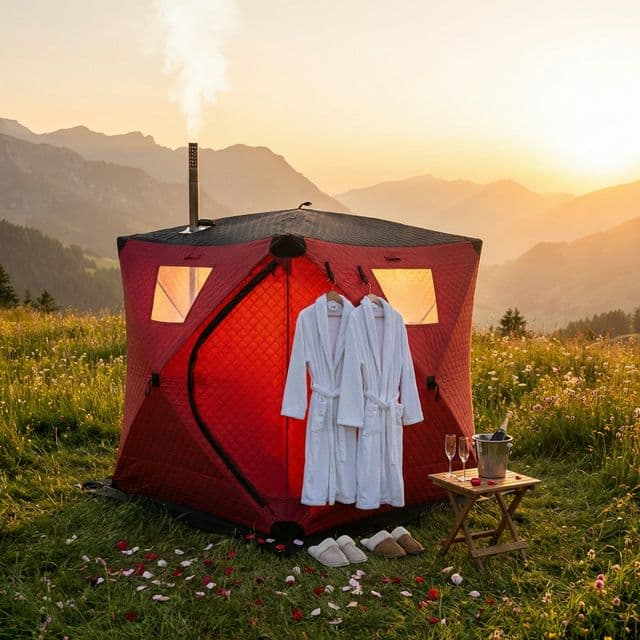
Use visuals to verify seat layout expectations, but always validate measured dimensions from spec sheets.
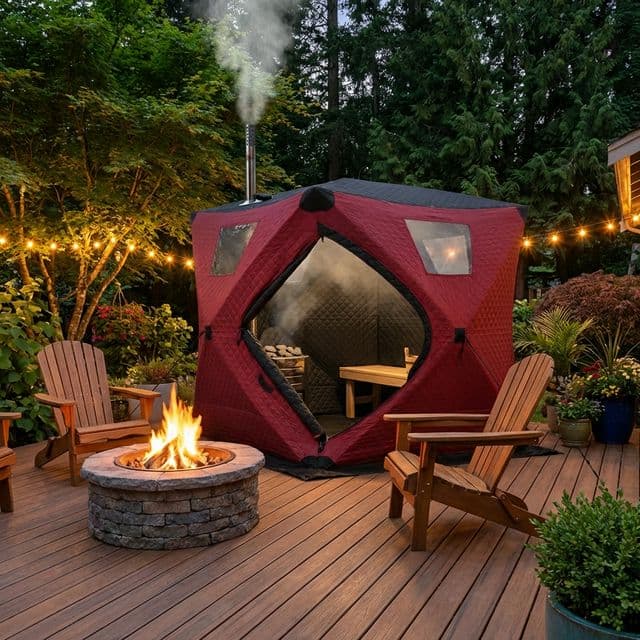
Outdoor-adjacent placements need stronger moisture management and weather-protected electrical routing.
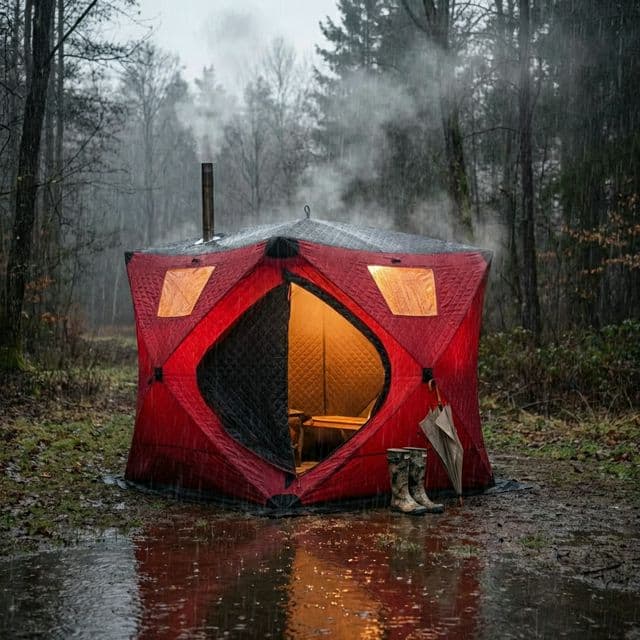
Humidity comfort can feel great during use but still create post-session condensation risk in enclosed rooms.
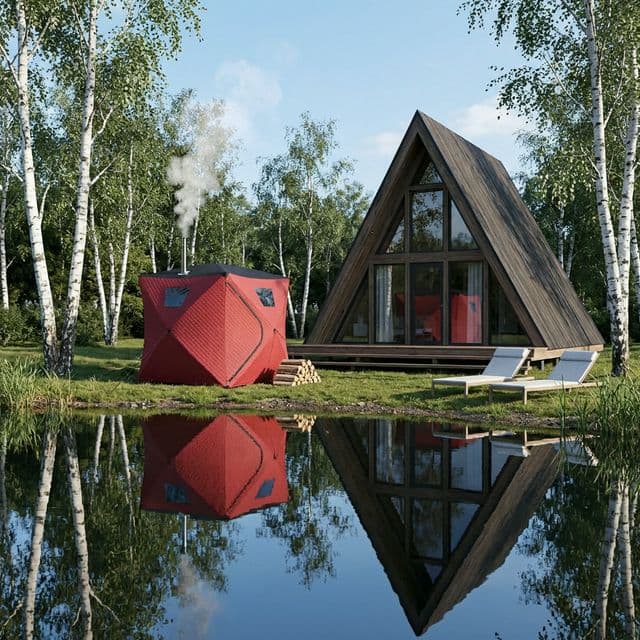
Cabin formats typically raise electrical and drainage requirements compared with portable steam options.
Methodology and scoring logic
The tool is deterministic for the same inputs. It combines measurable constraints (space, power, cost) with boundary penalties for humidity, drainage, and setup-risk assumptions.
Convert room dimensions, clearance, usage frequency, and utility rates into a deterministic planning profile.
Output: Standardized fit input set
Match selected setup profile against required footprint and electrical headroom, then apply boundary penalties.
Output: Space + power feasibility score
Apply moisture-control and drainage penalties, adjusted by session frequency and ceiling profile.
Output: Humidity risk index (0-100)
Calculate baseline and warmup-adjusted monthly energy spend using user electricity rate assumptions.
Output: Cost range with warmup sensitivity
Map final fit band to a concrete next action and publish uncertainty notes where evidence transfer is limited.
Output: Actionable decision with transparent limits
Evidence ledger with source links
Time-sensitive and risk-sensitive claims are tied to explicit sources, date context, and confidence notes. Evidence gaps that remain unresolved in this pass are explicitly marked in the known versus unknown table.
Mobile tip: swipe tables horizontally to view all columns and source details.
| Source | Date context | How used in this page | Confidence | Link |
|---|---|---|---|---|
| US DOE Energy Saver | Apr 24, 2012 (formula reference) | Used for appliance energy formula baseline to keep operating-cost math auditable. | High (formula-level reference) | Open source |
| US EIA Electricity Monthly Table 5.6.A | Released Jan 26, 2026 (Nov 2025 data) | Used for national and state electricity rate benchmarks in cost-sensitivity sections. | High (official statistics) | Open source |
| ASHRAE 62.2-2022 Addendum e | Approved Apr 28, 2023 | Used for bathroom/local exhaust baselines (50 cfm intermittent or 20 cfm continuous). | High (standards body source) | Open source |
| CDC Mold health guidance | Last reviewed Sep 26, 2024 | Used for humidity <=50% boundary and 24-48h dry-out requirement in moisture risk gating. | High (public-health guidance) | Open source |
| CDC Carbon Monoxide Poisoning Basics | Updated Jan 12, 2026 | Used for high-impact combustion-adjacent risk context in the risk matrix. | High (public-health dataset) | Open source |
| CDC Heat and Pregnancy guidance | Last reviewed Jun 25, 2024 | Used for medical-risk boundary reminders in applicability and FAQ sections. | High (medical guidance) | Open source |
| US CPSC tap water scald publication (5098) | Accessed Feb 19, 2026 | Used for household scald boundary numbers (120F recommendation and burn-time context). | High (regulatory safety guidance) | Open source |
| CPSC recall: Lifepro Bioremedy sauna blankets | Recall date Oct 23, 2025 | Used for severity calibration: 65 overheating reports including 32 burn injuries. | High (incident-level recall data) | Open source |
| CPSC recall: Sauna360 Tylö hybrid saunas | Recall date Oct 23, 2025 | Used for mechanical-failure risk context: 7 bench failures with reported injury. | High (incident-level recall data) | Open source |
| NIOSH heat stress recommendations | Last reviewed Jul 11, 2024 | Used for acclimatization timeline and progressive load-ramp recommendations. | Medium-high (occupational guidance, adapted for consumer planning) | Open source |
| Kohler Steam Specification Guide | 2022 edition (accessed Feb 19, 2026) | Used for residential generator sizing anchors (kW/amp/volume) and dedicated-circuit baseline. | High (manufacturer primary specification) | Open source |
| MrSteam Residential Installation Manual | Accessed Feb 19, 2026 | Used for separate breaker requirement, 8 ft ceiling baseline, and model-level current draw examples. | High (manufacturer installation documentation) | Open source |
| NFPA NEC overview | Accessed Feb 19, 2026 | Used to disclose that NEC enforcement differs by state/municipality and must be confirmed with AHJ. | Medium-high (code authority guidance page) | Open source |
| Age and Ageing Finnish sauna cohort | Published Dec 2016 (PMID: 27932366; accessed Feb 19, 2026) | Used for evidence-transfer limits because this commonly cited cohort is a Finnish dry-sauna context rather than direct steam-sauna evidence. | Medium (observational cohort; transfer limits disclosed) | Open source |
Two-person steam format comparison table
Mobile tip: swipe tables horizontally to view all columns and source details.
| Decision dimension | Portable steam | Compact steam shower | Prefab steam cabin | Risk signal |
|---|---|---|---|---|
| Typical heater load | 1.2-1.5kW | 4.5kW | 6.0kW | Underpowered circuit = trip risk or installation failure |
| Typical utility requirement | 120V / 15A-20A | 240V / 30A | 240V / 30A-40A | No dedicated 240V often means upgrade cost surprise |
| Practical footprint with clearance | 24-28 sq ft | 30-36 sq ft | 36-42 sq ft | Ignoring clearance creates maintenance and moisture traps |
| Moisture management burden | Medium (dry-out routine) | High (drain + exhaust) | High (drain + exhaust + cleaning cadence) | No routine = elevated mold and reliability risk |
| Modeled monthly energy cost | $6-$28 | $28-$78 | $38-$115 | Warmup and local rates can push top-end higher |
| Ceiling-height sensitivity | Low to medium | Medium (often sized at 8 ft baseline) | High (volume jump can require upsizing) | Ignoring ceiling assumptions can under-size the generator |
| Typical pre-purchase compliance burden | Lower (confirm outlet safety + moisture routine) | Higher (electrical + exhaust + drainage + permit) | Higher (electrical + structural + moisture + permit) | Skipping compliance checks increases delay, rework, and return risk |
| Best fit profile | Budget-sensitive or flexible-space users | Fixed indoor retrofit with utility margin | Users prioritizing enclosure comfort and throughput | Wrong format selection causes ownership fatigue |
Risk matrix and mitigation actions
This matrix focuses on real failure modes that change buy/no-buy outcomes. Each risk includes a practical mitigation path.
Mobile tip: swipe tables horizontally to view all columns and source details.
| Risk | Probability | Impact | Trigger | Mitigation |
|---|---|---|---|---|
| Electrical under-capacity for chosen heater load | Medium to high | High | Circuit headroom <= 0.4kW or no dedicated 240V for fixed steam enclosures. | Request licensed panel/load check before checkout. Treat missing quote as a stop condition. |
| Persistent condensation and moisture damage | Medium | High | No drain path plus weak exhaust routine across repeated weekly sessions. | Upgrade to reliable exhaust + drainage plan and enforce post-session dry-down SOP. |
| Ventilation baseline miss for enclosed steam use | Medium | High | Bathroom/steam-space exhaust cannot reliably meet approximately 50 cfm intermittent (or 20 cfm continuous) equivalent. | Treat as not-fit until mechanical ventilation scope is documented and tested. |
| Heat-vulnerable user profile mismatch | Low to medium | High | Pregnancy, unresolved cardiovascular risk, or known heat intolerance without clinical clearance. | Pause routine usage plan and obtain clinician guidance before adoption. |
| Overconfidence from broad wellness claims | Medium | Medium | Treating generalized sauna benefits as guaranteed outcomes for all steam setups. | Use evidence boundaries table; prioritize measurable installation and safety constraints first. |
| Ownership drop-off due to hidden maintenance load | Medium | Medium | Ignoring setup, cleanup, and dry-out workload when planning high weekly frequency. | Model realistic routine time in scenario lab and reduce session cadence initially. |
| Post-purchase recall blind spot | Low to medium | Medium to high | No periodic recall checks after purchase and installation. | Run CPSC model check before purchase and repeat quarterly. |
| Code-edition mismatch with local enforcement | Medium | Medium to high | Scope is planned using generic online wiring advice without confirming AHJ-enforced NEC edition and amendments. | Confirm local enforcement edition first, then align electrician quote and model selection to that edition. |
| Scald exposure in mixed-use bathroom | Low to medium | High | Hot-water outlet temperature remains above conservative household safety setpoint. | Verify outlet temperatures, adjust setpoint/mixing controls, and apply child/elderly-safe operating routine. |
Risk note: this page is decision support, not electrical or medical advice.
Use licensed professionals for installation decisions and clinicians for heat-vulnerability concerns. Treat unresolved high-impact risks as purchase blockers.
Scenario lab: applied decision examples
Assumptions: 28 sq ft usable area, no floor drain, shared 15A branch, target 4 sessions/week.
Likely outcome: Portable steam option may stay conditional; fixed 4.5kW+ enclosure is generally not fit without upgrades.
Next step: Request support checklist for low-load format and moisture mitigation before purchase.
Assumptions: 34 sq ft usable area, dedicated 240V/30A, portable drain tray, fan-assisted exhaust.
Likely outcome: Compact steam shower can be strong fit if drainage and maintenance cadence are explicit.
Next step: Send utility quote and planned model dimensions for final verification.
Assumptions: 40+ sq ft area, strong ventilation, fuel storage available, winter use planned.
Likely outcome: Feasible but with wider cost/labor variance and stronger safety-monitoring requirements.
Next step: Validate combustion safety and recurring maintenance burden before committing.
Assumptions: Condo building, enclosed 240V steam target, local AHJ edition not yet confirmed, electrician lead times unclear.
Likely outcome: Technical feasibility may exist, but purchase timing and budget remain conditional until enforcement edition and permit queue are validated.
Next step: Collect two licensed quotes plus AHJ confirmation before selecting final model or delivery date.
Assumptions: Adequate power and room, but limited cleanup tolerance and shared household usage.
Likely outcome: Technical fit can pass while ownership adherence fails due to moisture-management workload.
Next step: Start with lower cadence and scale only if dry-out routine remains sustainable.
Known versus unknown decision boundaries
Mobile tip: swipe tables horizontally to view all columns and source details.
| Category | What is known | What is still uncertain | Decision rule |
|---|---|---|---|
| Known with high confidence | Heater demand, footprint ranges, electricity rate math, and circuit constraints are measurable. | Real-world comfort preference and maintenance adherence differ by household behavior. | Base purchase decisions on measurable constraints first; treat comfort claims as secondary. |
| Known but variable | Operating cost model is directionally reliable when usage assumptions are realistic. | Warmup duration and seasonal heat-loss can widen monthly variance meaningfully. | Use baseline + sensitivity range, not one static monthly number. |
| Evidence-limited transfer zone | Published sauna-health literature provides context for heat exposure, often from dry-sauna cohorts. | Direct steam-sauna outcomes for every household profile are still limited in high-quality public datasets. | Avoid guaranteed-outcome claims and prioritize individual safety clearance where needed. |
| Operational unknowns before purchase | Install feasibility is strongly correlated with utility and drainage readiness. | Exact upgrade cost and lead time vary by electrician availability and local code context. | Require written upgrade scope before final model commitment. |
| Public-data gap (explicitly unresolved) | No reliable nationwide open dataset was confirmed in this pass for permit-fee and lead-time distribution specific to residential steam-sauna installs. | Benchmarking a single "national average" for permit/electrical timeline remains pending confirmation. | Mark timeline as conditional and use two local quotes plus AHJ confirmation as the minimum executable fallback. |
Freshness and maintenance cadence
Cost modeling remains current for this release window but should be refreshed quarterly.
Ventilation and dry-down thresholds are stable references, but installation details still require local verification.
Always run a fresh model-level recall lookup immediately before purchase and repeat during ownership.
Local AHJ editions and amendments can differ, so wiring and permit assumptions should be revalidated per jurisdiction.
Ready for a model-level recommendation?
Send your room dimensions, utility profile, and preferred steam format to support
We will map your planner result to a practical shortlist and flag boundary risks before purchase.