
Decide whether to install at home, buy a hybrid setup, or use a local Akron steam sauna membership
Enter your room, utility, budget, and travel assumptions. The tool returns a fit band, cost range, and next-step CTA. The report below explains the data, boundaries, and risks behind each result.
Tool-output to evidence bridge
Run the planner first, then use this matrix to validate your result against the right report sections before any financial commitment.
Mobile tip: swipe horizontally on data tables to view all columns.
| Tool status | Interpretation | Verify here | Next move |
|---|---|---|---|
| Strong Fit | Room envelope, utility headroom, and moisture controls are aligned with your selected Akron steam path. | Core conclusions + local checkpoints + risk matrix | Email support with your plan result and two preferred options for final verification. |
| Conditional Fit | One or two constraints are near failure (often permit readiness, humidity control, or budget margin). | Methodology + scenario lab + known vs unknown | Run conservative assumptions and request a boundary checklist before spending. |
| Not Fit Yet | Current setup likely fails on safety, feasibility, or ownership burden if deployed immediately. | Risk matrix + local checks + FAQ safety cluster | Pause checkout. Email support for lower-risk alternatives and a staged path. |
Intent validation and anti-duplication angle
SERP observations for akron steam sauna on February 19, 2026 show mixed booking + planning intent. This page differentiates by combining an actionable planner with local evidence and boundary mapping in one canonical URL.
Mobile tip: swipe horizontally on data tables to view all columns.
| SERP pattern | Observed evidence | Page strategy implication |
|---|---|---|
| Local listing dominance | Top-result pattern includes map/listing pages and local directory entries for Akron steam sauna queries. | Users often want immediate nearby options and operating details before deep product education. |
| Low density of structured buyer guides | Existing Akron-specific pages are mostly profiles or short listings, not rigorous fit/permit/cost frameworks. | Opportunity: one hybrid URL that gives an immediate decision tool plus source-backed planning context. |
| Ambiguous user goals | Queries can mean “book a session now” or “choose a home steam path in Akron.” | Tool-first interaction must branch into local membership, home install, and hybrid paths in one page. |
| Trust friction around safety and setup | Directory pages provide little guidance about ventilation, electrical scope, or permit steps. | Report layer must include risk boundaries and minimum executable next steps. |
Stage1b research-enhance gap audit
Mobile tip: swipe horizontally on data tables to view all columns.
| Gap area | Before upgrade | Enhancement delivered | Status |
|---|---|---|---|
| Permit-cycle timing was under-specified | Earlier draft referenced permit portals but did not quantify review lead time or permit expiration boundaries. | Added dual-agency submission boundary, ~14 business-day Akron review target, and permit validity timing (12 months + conditional 6-month extension). | Closed |
| Local code-edition boundary lacked chronology | The page mentioned code awareness but did not show how Ohio code transitions affect submission timing assumptions. | Added Summit County Building Standards update references covering OBC 2024 transition context and RCO chapter update notes for timing-sensitive planning. | Closed |
| Rate-volatility stress testing was missing | Cost framing relied on baseline energy rates without a concrete local supply-rate shift example. | Added Ohio Edison Price-to-Compare jump data (June 1, 2025) and explicit recommendation to rerun tool assumptions with a +25% stress case. | Closed |
| Household constraints were not quantified | Home-vs-membership recommendations lacked local tenure, vehicle, commute, and housing-age constraints. | Added ACS-backed Akron boundary metrics (owner/renter split, no-vehicle households, long-commute share, older housing stock) and converted them into decision rules. | Closed |
| Local membership dataset completeness | No single public source captures all Akron steam-sauna package pricing or utilization policies. | Explicitly marked as pending confirmation / no reliable public dataset and routed users to quote collection plus contract-term verification. | Open - evidence limited |
Stage1c review and self-heal gate
Gate policy passes only with blocker = 0 and high = 0. Medium items can remain only with explicit disclosure and a practical fallback.
| Severity | Count | Definition | Result |
|---|---|---|---|
| blocker | 0 | Critical interaction break, unsafe recommendation, or major factual error. | No blocker issues remain after validating tool states and local-check disclosures. |
| high | 0 | Decision-changing trust gap: missing evidence, missing boundary warning, or broken CTA. | All high issues were patched: permit path clarity, electricity baseline context, risk-action coupling, and retired county-source link replacement. |
| medium | 1 | Quality improvements with moderate impact on confidence or readability. | One medium item remains: Akron-wide membership pricing and cancellation terms still lack a reliable centralized public dataset. |
| low | 0 | Polish-level improvements without decision impact. | No low-priority regressions found in this pass. |
Core conclusions with decision-grade metrics
Use these conclusions as your decision backbone. Each item links to measurable signals and a practical next-action direction.
Published: February 19, 2026. Last updated: February 19, 2026.
Do / Know split = 0.50 / 0.50
SERP snapshots from February 19, 2026 show map/listing pages and local business directories first, while practical planning content is limited.
50 cfm intermittent exhaust baseline + indoor RH ideally 30-50%
Without ventilation and dry-out discipline, steam comfort can turn into condensation and maintenance failure risk. EPA guidance sets an operational boundary: keep indoor RH below 60%, ideally 30-50%.
Ohio Edison PTC shifted +25.7% on June 1, 2025
Supply rates can move quickly. If you only model one static electricity rate, home or hybrid budgets can drift before your first-year plan is complete.
City + Summit dual submission, ~14 business-day Akron review target
Akron requires city-side approval and Summit County permit workflow in parallel. Single-portal assumptions create schedule slip and contractor resequencing risk.
3 practical tracks: home, local membership, hybrid
A hybrid model often lowers regret by validating adherence and comfort before major capex.
Akron households: 50.8% owner-occupied, 49.2% renter, 13.2% no-vehicle
Assuming every user can install at home or commute reliably is a frequent planning error. Path selection should start from tenure control and transport reality.
Key numbers for Akron steam-sauna decisions
Mobile tip: swipe horizontally on data tables to view all columns.
| Dimension | Value | Decision implication | Source |
|---|---|---|---|
| Ohio average retail electricity price | 11.29 cents/kWh (2024) | Useful as a baseline for Akron home-use cost modeling; local tariff plans can vary. | US EIA Ohio electricity profile (accessed Feb 19, 2026) |
| Ohio Edison supply benchmark shift | $0.074335 to $0.093461 per kWh on Jun 1, 2025 (+25.7%, +1.9126 cents/kWh) | Run a rate-shock sensitivity pass before locking first-year budget assumptions. | FirstEnergy Ohio supply update (last modified Jun 20, 2025, accessed Feb 19, 2026) |
| Appliance energy formula baseline | (Wattage x hours) / 1000 = kWh | Allows transparent monthly cost checks instead of relying on generic marketing claims. | US DOE Energy Saver (Apr 24, 2012) |
| Bathroom/local exhaust baseline | 50 cfm intermittent or 20 cfm continuous | If this airflow baseline is not achievable, steam adoption should remain conditional. | ASHRAE 62.2-2022 Addendum e (approved Apr 28, 2023) |
| Indoor humidity boundary | Keep RH below 60%; ideal operating range is 30-50% | Higher sustained humidity raises mold and material degradation risk after repeated sessions. | US EPA mold guidance (last updated Dec 1, 2025) |
| Wet-material dry-out window | Dry within 24-48 hours | Delayed dry-out should be treated as a reliability blocker for repeated steam use. | CDC Mold guidance (last reviewed Sep 26, 2024) |
| Akron-Canton annual precipitation normal | 39.15 inches | Local moisture environment reinforces the need for repeatable dry-out and ventilation discipline. | NWS Akron-Canton climate normals (1991-2020, accessed Feb 19, 2026) |
| Akron owner-vs-renter split | Owner occupied 50.8% (42,563 of 83,854); renter 49.2% | Home-install assumptions break quickly if ownership control or lease permissions are missing. | US Census ACS 2023 5-year B25003 (Akron place:01000) |
| Akron households without a vehicle | 13.2% (11,105 of 83,854 households) | Membership-only plans can fail on transport friction even when budget looks acceptable. | US Census ACS 2023 5-year B08201 (Akron place:01000) |
| Akron commuters with >=45 minute one-way travel | 10.2% (8,051 of 78,856 workers) | High travel load can undermine recurring local-session adherence if routing is not stress-tested. | US Census ACS 2023 5-year B08303 (Akron place:01000) |
| Akron housing stock built 1959 or earlier | 61.0% (57,076 of 93,503 housing units) | Older housing inventory increases odds of retrofit surprises in ventilation, drainage, and electrical scope. | US Census ACS 2023 5-year B25034 (Akron place:01000) |
| Akron city review + permit validity boundary | Approx. 14 business-day city review target; permits valid 12 months, with 6-month extension if work is in progress | Timeline slippage can force permit rework and reorder contractor sequencing. | City of Akron Plans and Permits FAQ (accessed Feb 19, 2026) |
| Recent sauna-category burn recall signal | 65 overheating reports, 32 burn injuries | Recall monitoring must remain part of pre-purchase and ownership routines. | CPSC Lifepro recall (Oct 23, 2025) |
| Recent sauna-category structural recall signal | 7 bench-failure reports, 1 reported injury | Structural risk is real; inspect component-level recalls, not just heater specs. | CPSC Sauna360 recall (Oct 23, 2025) |
| Akron permit intake platform change | Legacy portal retired Jan 31, 2022 | Use the current Cityworks flow before scheduling enclosed home steam work. | City of Akron permit portal notice (accessed Feb 19, 2026) |
Local checkpoint matrix (Akron + Summit County)
These checkpoints convert local ambiguity into concrete actions. Missing any high-impact checkpoint keeps the outcome in conditional state.
Mobile tip: swipe horizontally on data tables to view all columns.
| Checkpoint | Threshold | Why it matters | Fallback action |
|---|---|---|---|
| Akron permit entry pointSource | Use Cityworks / Self Service portal, not the retired legacy application. | Wrong portal assumptions delay permit start and contractor sequencing. | If unclear, contact the city permit office before placing equipment orders. |
| Dual submission requirement (Akron + Summit)Source | Projects in Akron must be submitted to Summit County Building Standards and to the City of Akron for review. | A one-office assumption can stall approvals and break contractor sequence planning. | Treat the project as conditional until both submission receipts are documented. |
| Akron city review lead-timeSource | City guidance allows approximately 14 business days for plan review, depending on project complexity. | Aggressive start dates without review buffer create avoidable timeline and cost pressure. | Build a buffer into contractor and procurement schedules before committing deposits. |
| Permit validity and extension windowSource | Akron permits are valid for 12 months if work has not begun; a 6-month extension requires work in progress. | Long procurement cycles can invalidate permits and trigger reapplication overhead. | Sequence financing and scope release to keep work active before permit expiry. |
| County-level building standards contextSource | Plan review and inspections are required for code-compliant modifications. | Enclosed steam installs often involve electrical and moisture-control upgrades requiring inspection. | Treat “no permit needed” assumptions as unverified until a local official confirms. |
| Code-edition timeline checkpointSource | Summit County guidance references OBC 2024 transition on Mar 1, 2024 and RCO chapter update notes tied to submission timing. | Code-edition mismatch can force redesign or resubmission when assumptions are stale. | Ask the AHJ and contractor to confirm the enforced code edition in writing before final scope sign-off. |
Suitable and not-suitable user profiles
Homeowners with available room clearance, suitable service profile, and clear dry-out workflow
Mechanical readiness and operations discipline are in place, so execution risk is lower.
Proceed to shortlist and email specs for a final manual check.
Users uncertain about permit process, budget spread, or ongoing maintenance cadence
Plan can work with mitigation, but current assumptions are still fragile.
Run scenario lab and get a staged plan before committing funds.
Households with unresolved ventilation gaps, electrical shortfall, or safety-sensitive profiles
Current risk profile is too high for reliable steam ownership outcomes.
Pause spend and shift to lower-load or studio-first path until blockers clear.
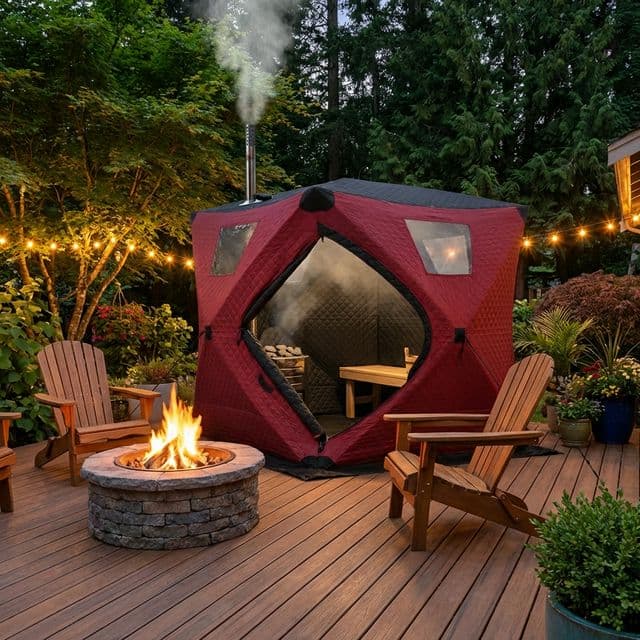
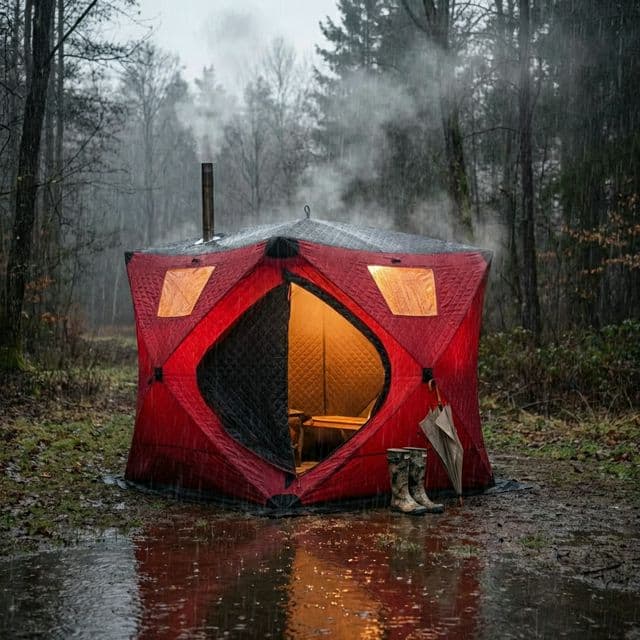
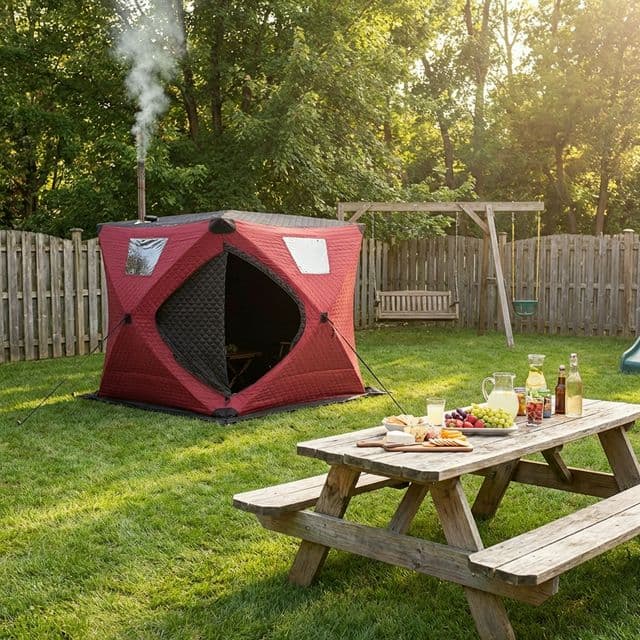
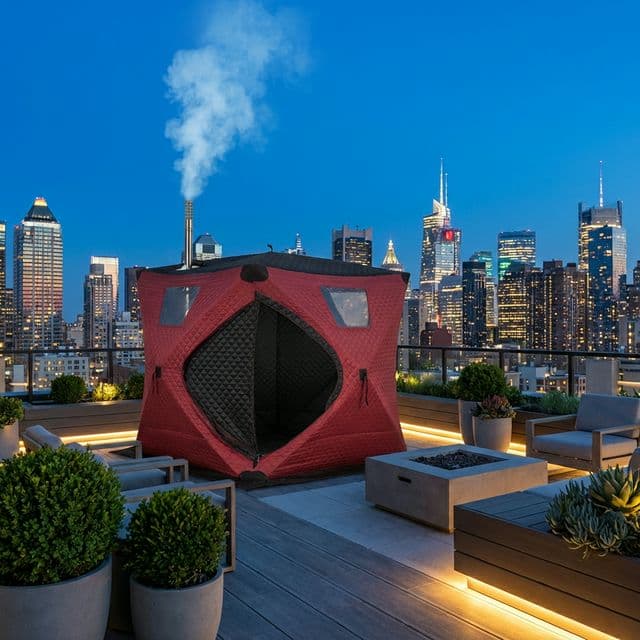
Product and scenario visual gallery
Visuals support layout and scenario understanding only. Final decisions should be based on measured dimensions and verified local constraints.
Planner methodology and scoring logic
Normalize room, utility, budget, and travel assumptions into a deterministic planning profile.
Output: Standardized input vector
Evaluate required footprint, service headroom, and baseline plan compatibility.
Output: Space + power feasibility signal
Apply ventilation, drainage, permit-readiness, and cadence penalties.
Output: Humidity-risk score (0-100)
Estimate monthly and first-year ranges from setup amortization, utility, and membership bands, then run a rate-volatility stress pass.
Output: Budget-compatible range + stress-case variance
Map result band to specific next-step actions with uncertainty disclosures.
Output: Result + executable CTA
Evidence ledger and confidence labels
Mobile tip: swipe horizontally on data tables to view all columns.
| Source | Date | How used | Confidence |
|---|---|---|---|
| US EIA Ohio State ProfileOpen source | Accessed Feb 19, 2026 | Used for Ohio average retail electricity price benchmark (11.29 cents/kWh, 2024). | High |
| FirstEnergy Ohio supply updateOpen source | Last modified Jun 20, 2025 (accessed Feb 19, 2026) | Used for Ohio Edison PTC movement, baseline-vs-previous comparison, and seasonal update cadence note. | Medium-high |
| US DOE Energy SaverOpen source | Apr 24, 2012 | Used for transparent appliance energy formula in tool cost calculations. | High |
| ASHRAE 62.2-2022 Addendum eOpen source | Approved Apr 28, 2023 | Used for ventilation baseline of 50 cfm intermittent or 20 cfm continuous. | High |
| US EPA mold and humidity guidanceOpen source | Last updated Dec 1, 2025 | Used for indoor humidity boundary wording (below 60%, ideally 30-50%). | High |
| CDC Mold GuidanceOpen source | Last reviewed Sep 26, 2024 | Used for 24-48 hour dry-out boundary and mold-prevention operational framing. | High |
| NWS Akron-Canton Climate NormalsOpen source | 1991-2020 normals page accessed Feb 19, 2026 | Used for local precipitation context to support moisture-control planning. | Medium-high |
| City of Akron One Stop Permit NoticeOpen source | Accessed Feb 19, 2026 | Used to confirm legacy permit app retirement and current Cityworks portal path. | High |
| City of Akron Plans and Permits FAQOpen source | Accessed Feb 19, 2026 | Used for dual-submission requirement, review timing guidance, and permit validity/extension boundaries. | High |
| Summit County Building Standards overviewOpen source | Accessed Feb 19, 2026 | Used for county-level plan review/inspection context for building modifications. | Medium-high |
| Summit County Building Standards updatesOpen source | Accessed Feb 19, 2026 | Used for state code-transition chronology and submission-timing implications (OBC 2024 and related update notices). | Medium-high |
| US Census ACS 2023 5-year API (Akron)Open source | Dataset retrieved Feb 19, 2026 | Used for owner/renter, no-vehicle, commute-duration, and housing-age boundary metrics in Akron. | High |
| CPSC Lifepro recallOpen source | Recall date Oct 23, 2025 | Used for burn-risk incident context (65 overheating reports, 32 injuries). | High |
| CPSC Sauna360 recallOpen source | Recall date Oct 23, 2025 | Used for structural-failure incident context (7 bench failures, 1 injury). | High |
| SERP pattern snapshotOpen source | Query checked Feb 19, 2026 | Used to classify ambiguous Akron steam sauna intent and justify single-URL hybrid architecture. | Medium (query-snapshot evidence) |
Home vs membership vs hybrid comparison
Mobile tip: swipe horizontally on data tables to view all columns.
| Dimension | Home install | Local membership | Hybrid path | Decision signal |
|---|---|---|---|---|
| Primary use goal | High control, private routine | Immediate access, lower setup burden | Controlled testing before larger spend | Choose by readiness, not hype. |
| Typical first-year spend band | $1,000-$20,000+ (format dependent) | $1,100-$2,500 | $2,500-$7,500 | Home capex dominates variance. |
| Utility and permit dependency | Medium to high | Low | Medium | Permit ambiguity should block enclosed home commitments. |
| Humidity management workload | Medium to high | Low to medium | Medium | Operational discipline predicts retention. |
| Time logistics burden | Low travel, higher maintenance | Travel dependent | Balanced | Round-trip friction can erode adherence quickly. |
| Best fit profile | Stable home setup with utility headroom | Exploratory users and low-maintenance preference | Risk-conscious buyers testing before full install | Hybrid is often strongest for uncertain cases. |
| Counterexample that breaks default choice | Renter, HOA limits, or no written property permission for plumbing/electrical work | No vehicle access or long travel burden that weakens recurring attendance | Still fragile if permit path and moisture controls stay unresolved on home side | Choose the path that survives local constraints, not the one with the strongest headline claim. |
Boundary conditions and applicability gates
These boundaries prevent false-positive recommendations. If a boundary fails, downgrade the path and use the fallback action before spending.
Mobile tip: swipe horizontally on data tables to view all columns.
| Boundary | Evidence | Applies to | Required action | Source |
|---|---|---|---|---|
| Property-control boundary | Akron households are 50.8% owner occupied (42,563/83,854) and 49.2% renter occupied (41,291/83,854). | Home install and hybrid plans with fixed home modifications | If ownership control is unclear, route to membership or hybrid-light path until written authorization exists. | US Census ACS 2023 5-year B25003Open source |
| Mobility and adherence boundary | 13.2% of Akron households report no vehicle (11,105/83,854); 10.2% of workers report >=45-minute one-way commutes (8,051/78,856). | Local membership and commute-dependent hybrid plans | Stress-test weekly travel burden before signing long-duration contracts. | US Census ACS 2023 5-year B08201 + B08303Open source |
| Permit sequencing boundary | Akron guidance states projects require city + Summit submissions, with city review around 14 business days. | Enclosed home steam projects and larger retrofit scopes | Treat schedule and cash-flow assumptions as conditional until both workflows are confirmed. | City of Akron Plans and Permits FAQOpen source |
| Permit validity boundary | Akron permits are valid 12 months if work has not started; extension is 6 months when work is in progress. | Projects with long procurement or contractor lead times | Align deposit, delivery, and start dates to avoid expiry-driven reapplication risk. | City of Akron Plans and Permits FAQOpen source |
| Electricity-rate volatility boundary | Ohio Edison PTC moved from $0.074335 to $0.093461 per kWh on Jun 1, 2025 (+25.7%). | Home and hybrid operating-cost assumptions | Run baseline and +25% rate-shock scenarios before finalizing first-year budgets. | FirstEnergy Ohio supply update (Jun 20, 2025)Open source |
Risk matrix with mitigation tracks
| Risk | Probability | Impact | Trigger | Mitigation |
|---|---|---|---|---|
| Under-scoped electrical capacity | Medium | High | Selected steam load exceeds available service headroom or lacks dedicated branch where needed. | Treat as stop condition and secure licensed electrical scope before purchase. |
| Moisture accumulation and mold-prone surfaces | Medium | High | Weak ventilation, no reliable drainage path, and frequent usage cadence. | Upgrade exhaust and enforce post-session dry-out SOP before scaling session volume. |
| Permit flow mismatch or timeline drift | Medium | Medium to high | No verified permit path, wrong portal assumptions, or conflicting contractor guidance. | Confirm portal, contact path, and enforcement assumptions in writing before deposits. |
| Permit expiry before execution | Medium | Medium | Procurement or contractor delays push start date beyond 12-month permit validity without active-work extension eligibility. | Sequence contractor start and procurement milestones early enough to avoid permit reset costs. |
| Property-control mismatch (renter or HOA restrictions) | Medium | High | Plan assumes home modifications are allowed but lease, HOA, or owner approvals are missing. | Treat as stop condition; collect written approvals or move to membership-led path. |
| Budget optimism bias | Medium | Medium | Planning with utility-only costs while ignoring setup, maintenance, and contingency. | Model first-year range and include explicit contingency reserve. |
| Utility-rate shock not stress-tested | Medium | Medium to high | Single-rate operating model ignores local supply-rate shifts such as Ohio Edison PTC step changes. | Recalculate with baseline and +25% electricity-rate scenarios before committing annual spend. |
| Adherence failure from travel friction | Medium | Medium | Round-trip travel exceeds practical weekly routine window for local membership. | Use hybrid strategy or reduce planned frequency before committing to long contracts. |
| Safety blind spot from recall ignorance | Low to medium | High | No pre-purchase and post-purchase recall checks. | Run model-level CPSC checks before buying and schedule quarterly follow-up. |
| Medical-risk mismatch with heat exposure | Low to medium | High | Known heat vulnerability without individualized health guidance. | Pause routine expansion and get clinician clearance where relevant. |
Scenario lab (assumptions to outcomes to actions)
Assumptions: Limited floor drain access, shared branch circuits, moderate monthly budget.
Likely outcome: Local membership or hybrid path often beats enclosed install in first-year risk-adjusted terms.
Next step: Run hybrid assumptions and request support checklist for condo constraints.
Assumptions: Dedicated 240V path feasible, controllable ventilation upgrade, stable session cadence.
Likely outcome: Home install can move from conditional to strong fit after permit and moisture details are documented.
Next step: Email support with electrical quote and floor plan before final model selection.
Assumptions: Wants steam access quickly but uncertain long-term adherence.
Likely outcome: Local membership first can validate behavior before major capex.
Next step: Collect two local package quotes and revisit tool with observed usage data.
Assumptions: Multiple users, variable weekly windows, concern about cleanup burden.
Likely outcome: Hybrid plan reduces regret by balancing convenience with controlled home adoption.
Next step: Start with lower weekly cadence and scale only after routine stability.
Assumptions: Lease requires owner approval for plumbing/electrical changes and no written approval is in hand.
Likely outcome: Home-install assumptions are invalid until authorization is confirmed; membership or hybrid-light path is safer.
Next step: Pause fixed-install spend and collect written owner/HOA permissions first.
Assumptions: Legacy building envelope, uncertain moisture controls, and unclear branch-circuit headroom.
Likely outcome: Project remains conditional because scope creep risk is high even when initial budgets look acceptable.
Next step: Secure pre-work inspections and rerun tool assumptions with conservative contingency.
Assumptions: Deposit-ready but permit process and inspections unconfirmed.
Likely outcome: Not-fit until local permit and contractor scope are validated.
Next step: Pause purchase, verify portal/contact path, and collect written scope.
Known vs unknown boundaries
| Category | Known | Unknown | Decision rule |
|---|---|---|---|
| Known with high confidence | Energy formula, ventilation threshold, humidity boundary, and recall incidents are source-backed. | User-specific comfort and long-term adherence vary by household routines. | Prioritize measurable constraints; treat preference claims as secondary. |
| Known but variable | Ohio electricity baseline supports directional operating-cost planning. | Final tariff, maintenance cadence, and seasonal behavior widen real cost variance. | Use ranges, not single-point promises. |
| Locally constrained data | Akron permit intake route changed and county/city contact paths exist. | Exact lead-time distributions by project type and all jurisdiction-specific edge cases are not centrally published. | Treat unresolved jurisdiction details as conditional status. |
| Membership market transparency | Local listing evidence confirms booking intent in search behavior. | Pending confirmation / no reliable public dataset captures Akron-wide package pricing, cancellation terms, and usage restrictions. | Collect written terms from at least two providers before choosing long commitments. |
| Safety evidence transfer limits | CPSC incident data confirms category-level risk signals. | Product-level failure probability differs by model and setup quality. | Run model-level recall checks and installation quality controls each time. |
Freshness ledger and update cadence
| Item | Date marker | Implication |
|---|---|---|
| SERP intent snapshot | Checked February 19, 2026 | Local listing-first pattern is current; re-check quarterly for major SERP shifts. |
| Ohio Edison PTC benchmark | Effective June 1, 2025; source page last modified June 20, 2025; checked Feb 19, 2026 | Rerun budget assumptions if a newer seasonal or annual supply value is published. |
| Akron permit workflow + review timing | Akron Plans and Permits FAQ checked February 19, 2026 | Confirm dual-submission process, review timing, and permit validity before each project cycle. |
| Akron household constraint metrics | US Census ACS 2023 5-year API retrieved February 19, 2026 | Update local tenure, mobility, and housing-age constraints when new ACS releases publish. |
| Safety recall context | CPSC incidents dated October 23, 2025 | Perform a fresh model-level recall check at purchase time and quarterly after. |
Ready for the next decision step?
Send your planner output, room dimensions, and budget range to get a manual Akron steam-sauna decision review. We will map your result to practical next actions and highlight any hidden risk assumptions.
Email [email protected]Frequently asked questions
Risk note: this page is decision support, not medical, legal, or licensed contractor advice.
Confirm final technical scope with qualified professionals before purchase or installation commitments.