
Outdoor Steam Sauna route checker for real-world buyers
Search results use outdoor steam sauna for multiple very different products. This checker separates engineering reality from label confusion, then points you to the next action and the evidence sections that justify it.
Route clarity
Distinguishes true steam-room builds from traditional outdoor sauna listings and portable test routes.
Outdoor constraints
Weights freeze exposure, generator protection, drainage, and dry-out discipline before recommending a path.
Humidity boundaries
Shows when your humidity goal requires a sealed steam room and when water-on-rocks steam is the safer answer.
Results will appear here with a route recommendation, build band, energy estimate, and the evidence section you should read next.
This page is intentionally not a duplicate of the generic outdoor sauna page or the indoor steam sauna page. Its only job is to resolve the label confusion inside outdoor steam sauna and show which product category is actually defensible for the current buyer.
Review cadence: revisit this route every 6-12 months or sooner if residential steam-generator manuals, power-price benchmarks, or route constraints materially change.
Tool bridge
How to interpret each result state
The tool solves the immediate route question. This table tells you which report layer to read next so the result becomes decision-grade instead of just UI output.
Swipe tables horizontally on smaller screens to read every route column and source note.
| Status | What it means | Read next | Action |
|---|---|---|---|
| True Steam Candidate | The current utility, drainage, generator-protection, and dry-out stack is strong enough to keep a real outdoor steam-room path alive. | Route map + evidence ledger + risk matrix | Send your enclosure dimensions, drain plan, and generator location to support before any deposit is paid. |
| Traditional Sauna Route | The outdoor ritual still makes sense, but the buyer is better served by a traditional outdoor sauna than by forcing a fragile steam-room build. | Terminology table + route comparison + scenarios | Compare traditional outdoor cabins next and treat “steam” as water-on-rocks steam instead of steam-room saturation. |
| Pilot First | The category can still be worth testing, but current assumptions are too thin for a clean permanent outdoor build. | Scenarios + known-vs-unknown + FAQ buying group | Trial a lower-commitment route first, then rerun the checker with real site constraints. |
| Pause and Fix Boundaries | Health, utility, or moisture blockers currently outweigh the shopping case even if listings look attractive. | Risk matrix + evidence ledger + FAQ safety group | Close the blocker first, then return to route selection once the plan is materially safer. |
Summary
The page in one screen
If you only have a minute, these are the four decisions this page is built to accelerate.
This query is label-confused
Search results use outdoor steam sauna for at least three different realities: true steam rooms, traditional outdoor saunas with water-on-rocks steam, and low-commitment portable products.
The build burden is not symmetrical
A real outdoor steam room needs a sealed wet-room envelope, floor drain, protected generator placement, no HVAC devices inside the room, and freeze planning. A traditional outdoor sauna does not inherit all of those constraints.
Tool-first is the right architecture
The user usually needs an immediate route answer before they need long-form education. The report then explains why that answer should be trusted.
The safe answer is often “less steam”
If the goal is outdoor ritual rather than true steam-room humidity, a traditional outdoor sauna or trial route often produces a better real-world outcome with less rework.
SERP snapshot
What the search results are actually doing today
Task 1.1 and 1.2 in this change were resolved by checking how the market currently interprets the keyword and using that to define the page angle.
The current query pattern is not pure research. It is a blended commercial SERP where category pages, seller pages, editorial rankings, and UGC all appear early.
That tells us the page must first answer which route should I pursue? instead of starting with a long generic explanation of sauna terminology.
It also tells us how to avoid duplication: this page resolves the gap between “outdoor sauna” and “steam room” rather than trying to re-cover generic backyard sauna planning or indoor steam-room design.
Anti-duplication angle
This URL is the category-clarification page for buyers who search outdoor steam sauna but may actually need one of three different solutions.
Swipe tables horizontally on smaller screens to read every route column and source note.
| Pos. | Result | Type | What it proves |
|---|---|---|---|
| 1 | My Sauna World outdoor sauna collection | Commerce / category | Uses outdoor-sauna shopping language while still surfacing “outdoor steam sauna” terminology. |
| 2 | Northern Saunas outdoor steam saunas collection | Commerce / category | Shows the market using steam language for outdoor sauna collections, not only for sealed steam rooms. |
| 3 | Fortune best outdoor saunas (2026) | Editorial / listicle | Confirms editorial roundups also map the query into buyer-comparison behavior, not pure education. |
| 4 | Reddit: outdoor traditional sauna with a steam generator | UGC | Makes the terminology confusion explicit: users often mix traditional outdoor saunas and true steam-generator builds. |
| 5 | Kuhl outdoor sauna guide | Editorial guide | Demonstrates that content pages also use “outdoor steam sauna” loosely while explaining the category broadly. |
| 6 | Sunray Outdoor Traditional page | Commerce / manufacturer | Another live seller example where outdoor traditional saunas are described with steam-sauna language. |
Key numbers
The numbers that actually change the recommendation
These conclusions are the evidence backbone for both the tool and the later decision sections. Each one now ties to a directly reviewable source.
The SERP is still commerce-led and terminology-loose
4 of the first 6 visible results are commerce or seller-led pages
That is why the page must answer route fit first, then educate. The market is not waiting for a pure glossary definition before asking for a purchase decision.
Source: Firecrawl + Brave search snapshot for `outdoor steam sauna`, captured March 22, 2026A true steam room is a sealed wet-room build, not just an outdoor shell
MrSteam: full enclosure + gasketed door recommended + floor drain + no HVAC devices inside the steam room
This is the clearest engineering line between a true outdoor steam room and a generic outdoor sauna listing that simply promises “steam.” If you cannot build a sealed wet-room envelope, the outdoor steam-room route is already compromised.
Source: MrSteam residential steambath generator systems manual, accessed March 22, 2026Steam-line distance is layered, not a single magic number
Steamist: 25 ft standard; MrSteam sizing chart: up to 60 ft of insulated steam piping
Residential outdoor steam-room planning only works when the protected generator location is physically close enough to the enclosure. Runs over 25 ft move into manual-review territory, and runs over 60 ft are outside the current MrSteam sizing-chart assumption.
Source: Steamist LT installation guide + MrSteam residential manual, accessed March 22, 2026Outdoor envelope losses can force a larger generator than buyers expect
Steamist sizing guide: exterior wall x1.1/x1.2; 9 ft ceiling x1.15; 10 ft ceiling x1.3; skylight/outside window = next size up
This is a practical counterexample to “the shell looks small so the generator can stay small.” Outdoor pavilions, windows, and taller ceilings often push the project into a higher-kW and higher-cost class.
Source: Steamist Steam Generator Sizing Guide, accessed March 22, 2026Operating-cost intuition can be wrong without a benchmark
EIA March 10, 2026 STEO: U.S. residential electricity price forecast is 18.0 cents/kWh for 2026
At that benchmark, this page’s default modeled annual electricity cost is about $210 for a true outdoor steam room, about $251 for a traditional outdoor sauna, and about $35 for a portable trial path. Installed cost and maintenance are still a separate question.
Source: EIA Short-Term Energy Outlook: Electricity, coal, and renewables, released March 10, 2026Health context can override the route score
CDC guidance refreshed September 18, 2025 and June 25, 2024
Pregnancy, medication interaction, and other clinician-managed heat-risk contexts are route-screening variables, not preference settings.
Source: CDC Heat and Medications guidance + CDC Heat and Pregnancy guidance, accessed March 22, 2026Standard residential steam-line target
25 ft
Steamist treats 25 feet as the standard residential steam-pipe ceiling and asks for insulation when the pipe exceeds 10 feet.
Steamist LT installation guideManual-review run-length ceiling
60 ft insulated
MrSteam’s residential sizing chart allows up to 60 feet of insulated steam piping; longer runs need factory review instead of default planning.
MrSteam residential manualExterior-wall multiplier
x1.1 to x1.2
Steamist increases adjusted room volume for one or two exterior walls, which matters because backyard enclosures almost always carry more outdoor-facing surface than indoor steam showers.
Steamist sizing guideHeight penalty
x1.15 at 9 ft / x1.3 at 10 ft
Steamist says optimum performance is at 8-foot ceilings, with 10 feet as the maximum. Taller backyard rooms often need more kW than the footprint alone suggests.
Steamist sizing guideDry-out window
24-48 hours
EPA uses this as the practical limit for drying wet materials before mold risk escalates.
EPA mold and moisture guide2026 U.S. residential power benchmark
18.0 cents/kWh
EIA’s March 10, 2026 Short-Term Energy Outlook gives the current official benchmark for comparing modeled operating cost when you do not yet know your local tariff.
EIA Short-Term Energy OutlookHard-water service cadence
Every 2 months or more often
MrSteam says hard-water areas should flush the generator more frequently and consider water treatment or AutoFlush because scale can damage the unit.
MrSteam residential manualDecision routes in this page
3
True outdoor steam room, traditional outdoor sauna, or portable trial path. The whole point of this URL is separating those paths.
Route model used in this page
Current operating-cost benchmark
Using this page's default use pattern of 4 sessions per week and 25 steam minutes per session, plus the U.S. Energy Information Administration's March 10, 2026 residential benchmark of 18.0 cents/kWh, the modeled electricity cost looks like this. This table is about power only, not installed cost, descaling, insurance, or builder labor.
Swipe tables horizontally on smaller screens to read every route column and source note.
| Route | Modeled monthly electricity | Modeled annual electricity | Decision note |
|---|---|---|---|
| True outdoor steam room | 97.4 kWh/month | ~$210/year | Higher kW does not automatically mean higher annual electricity cost if warmup is shorter and the envelope is well matched. |
| Traditional outdoor sauna | 116.0 kWh/month | ~$251/year | This is the counterexample many buyers miss: a traditional route can still cost more to run if the warmup profile is longer. |
| Portable steam tent / pilot path | 16.0 kWh/month | ~$35/year | The pilot path keeps energy cost low, but it does not answer durability, weather exposure, or long-term comfort. |
Fit audience
Who this page is really for
This is not a generic sauna glossary page. It exists for a specific decision pattern.
Best fit for this page
Buyers who specifically want outdoor humidity or “steam” and need to know whether they are shopping for the wrong product class before they spend real money.
Who should slow down
Anyone with exposed utility space, no drain strategy, unresolved freeze exposure, or pregnancy / medication heat-risk flags should treat this as a screening page, not a green light.
What success looks like
You leave this page knowing the correct route, the most important boundary for that route, and exactly what to email for a manual review.
Route map
Separate the market labels from the engineering reality
This is the core comparison layer that makes the page meaningfully different from the generic outdoor sauna route.
Terminology clarification table
Swipe tables horizontally on smaller screens to read every route column and source note.
| Label used online | What it usually means | Evidence | Decision impact |
|---|---|---|---|
| Outdoor steam sauna | Often a traditional outdoor sauna where you can pour water on rocks to create bursts of steam. | Current seller collections and editorial lists frequently use steam language while still describing traditional outdoor sauna products. | Do not assume the phrase means a true steam room with a generator and sealed humidity envelope. |
| Outdoor steam room | A high-humidity enclosure with a steam generator, protected utility placement, drain planning, and tighter moisture control. | MrSteam and Steamist installation guidance focuses on generator placement, distance, and protection rather than on simple outdoor-sauna shell features. | This is the expensive, infrastructure-heavy route that many generic listings do not actually represent. |
| Portable outdoor steam sauna | A temporary or lower-commitment format used to test the category rather than to build a permanent backyard steam room. | Current search results and marketplace patterns mix portable products into the same decision space. | Useful when budget, storage, and uncertainty are high, but not a substitute for a permanent sealed steam build. |
Three-route comparison
Swipe tables horizontally on smaller screens to read every route column and source note.
| Route | Humidity profile | Utility and build stack | Climate stance | Best fit | Wrong when |
|---|---|---|---|---|---|
| True outdoor steam room | Dense steam-room humidity in a sealed enclosure | Dedicated 240V path, protected generator location, short run, drain | Most fragile route in freeze climates without protected utility space | Owners who explicitly want real steam-room conditions and can build the moisture / utility stack correctly | No drain, exposed generator, or “just use the outdoor sauna shell” assumptions |
| Traditional outdoor sauna | Hot air with water-on-rocks steam bursts | Electric or stove path; fewer steam-room-only utility dependencies | Usually better aligned to year-round outdoor shells | Most buyers who say “steam” but actually want an outdoor sauna ritual with occasional steam | You need sustained steam-room humidity and are unwilling to settle for traditional loyly |
| Portable steam tent / pilot path | Temporary or lower-scale humidity test route | Often 120V-compatible and lower budget | Seasonal or storage-dependent, not a permanent weather-exposed structure | Testing demand, routine, and tolerance before committing to a fixed backyard build | You want a permanent outdoor structure or expect high winter durability without pack-down |
Steam-room envelope and sizing penalties
This is the missing layer that most category pages skip. It turns vague buyer assumptions into concrete residential installation boundaries that can be checked before any quote is treated as real.
Swipe tables horizontally on smaller screens to read every route column and source note.
| Common buyer assumption | What current manuals say | Why it changes the route | Source |
|---|---|---|---|
| “An outdoor shell is enough for a real steam room.” | MrSteam says the steam room must be completely enclosed with full walls, door, floor, and ceiling; a gasketed door is recommended; a floor drain should be provided; and no heating, venting, or air-conditioning devices should be installed inside the steam room. | This is why many backyard concepts belong in the traditional outdoor sauna route instead. A true outdoor steam room is a wet-room project, not a generic cabin with extra humidity. | MrSteam residential manual |
| “If I have a utility room, the steam run can be any length.” | Steamist says steam pipe should not exceed 25 feet and should be insulated if it exceeds 10 feet. MrSteam’s residential sizing chart allows up to 60 feet of insulated steam piping. | Run length is a layered boundary: under 25 feet is the cleanest residential path, 25-60 feet is manual-review territory, and over 60 feet is outside the current default sizing assumption. | Steamist LT installation guide + MrSteam residential manual |
| “Windows, exterior walls, and ceiling height barely matter.” | Steamist multiplies adjusted room volume for exterior walls and taller ceilings, and says skylights or outside windows should push you to the next larger generator. Skylights and outside windows should be double-pane and sealed from the inside. | Glass-heavy or pavilion-style backyard builds can jump up in kW and budget even when the footprint looks modest. | Steamist sizing guide |
| “Water quality can wait until after I buy.” | MrSteam says the water supply should be tested before installation. Poor water quality can damage the generator, hard-water areas need more frequent draining, and AutoFlush is recommended for longevity. | If your water is hard and you have no realistic service path, the fixed steam-room route carries more maintenance burden than the page’s broad budget band suggests. | MrSteam residential manual |
Method
How the checker makes its recommendation
The tool is not a black box. These are the signals and why they carry weight.
Swipe tables horizontally on smaller screens to read every route column and source note.
| Signal | Why it matters | How the page uses it |
|---|---|---|
| Search-result pattern | Shows whether the query is really shopping-led, editorial-led, or terminology-confused. | This page uses a tool-first hero because today’s SERP still pushes the user toward buying decisions immediately. |
| Generator protection and distance | Separates a real steam-room project from a mislabeled outdoor sauna listing. | Protected generator placement and run distance get heavy weight in the checker for true steam-room recommendations, with the tool now asking for estimated steam-line run length directly. |
| Steam-room envelope rules | A true steam room needs a sealed wet-room build, not only a backyard shell that looks premium in photos. | The report now distinguishes between post-session dry-out planning and prohibited HVAC hardware inside the steam room itself. |
| Heat-loss multipliers | Exterior walls, skylights, outside windows, and taller ceilings can change generator size and project economics. | The report uses current Steamist sizing multipliers to explain when a visually modest outdoor enclosure is still a large steam-room load. |
| Drainage + dry-out stack | Steam-room humidity without a moisture plan creates rework risk faster than many buyers expect. | No-drain and weak dry-out states drag the true steam-room route score down sharply. |
| Humidity intent | A buyer who wants saturated steam-room humidity is solving a different problem from a buyer who only wants steam bursts on rocks. | The checker uses humidity goal to decide whether a traditional outdoor sauna is actually the better real-world answer. |
| Climate exposure | Freeze exposure changes utility, maintenance, and generator-protection feasibility. | Deep-freeze environments penalize the true steam-room path unless the utility space is strongly protected. |
| Health sensitivity | Heat-risk context can invalidate otherwise attractive route logic. | Pregnancy and heat-sensitive conditions can force a pause result even when budget and space look workable. |
| Operating-cost benchmark | Users compare route-level energy cost more intelligently when the page anchors to a current official residential electricity-price baseline. | The report converts the page-default use pattern into annual electricity estimates using EIA’s March 10, 2026 U.S. residential benchmark of 18.0 cents/kWh. |
Evidence
Evidence ledger and trust boundaries
The report layer is here to show why the route answer is credible, where the evidence still stops, and exactly which document or page each conclusion comes from.
Swipe tables horizontally on smaller screens to read every route column and source note.
| Source | Used for | Freshness | Limitation |
|---|---|---|---|
| Firecrawl + Brave search snapshot | Current SERP intent pattern and evidence that the query remains commerce-led but terminology-loose. | Captured March 22, 2026 | SERP layout changes over time and is not a regulator-grade engineering source. |
| MrSteam residential steambath generator systems manual | Complete enclosure requirement, gasketed door recommendation, floor drain, no HVAC inside the steam room, indoor-only generator placement, feedwater testing, hard-water maintenance cadence, and 60-foot insulated steam-pipe sizing-chart note. | Accessed March 22, 2026 | Vendor-authored installation guidance, but still primary-source documentation for equipment constraints. |
| Steamist LT residential installation guide | 25-foot standard steam-line ceiling, insulation note for runs over 10 feet, no shutoff valve or valleys in the steam line, and indoor dry non-freezing installation rule. | Accessed March 22, 2026 | Vendor installation guide, not a comparative market dataset. |
| Steamist Steam Generator Sizing Guide | Exterior-wall, ceiling-height, and skylight/outside-window multipliers that explain why many outdoor concepts need more generator than buyers expect. | Accessed March 22, 2026 | Sizing guidance is vendor-authored, so it should anchor route feasibility rather than act as a neutral product ranking source. |
| EIA Short-Term Energy Outlook: Electricity, coal, and renewables | Current official benchmark for 2026 U.S. residential electricity price at 18.0 cents/kWh. | Released March 10, 2026 | This is an operating-cost benchmark only. It does not normalize local tariffs or installed project cost. |
| EPA A Brief Guide to Mold, Moisture and Your Home | 24-48 hour dry-out window and below-60% humidity boundary. | Accessed March 22, 2026 | Applies broadly to moisture control, not specifically to outdoor steam-room products. |
| CDC Heat and Medications guidance | Medication-related heat-risk screening logic in the tool and FAQ. | Reviewed September 18, 2025; accessed March 22, 2026 | Clinical guidance, not a product-use dataset. |
| CDC Clinical Overview of Heat and Pregnancy | Pregnancy-related pause boundary in the tool and report. | Reviewed September 18, 2025; accessed March 22, 2026 | Safety-screening guidance rather than a direct sauna-product study. |
| CPSC portable-heater safety guidance | Wall-outlet rule, extension-cord avoidance, and 3-foot clearance behavior. | Accessed March 22, 2026 | Generic heat-appliance safety guidance, not outdoor-steam-room-specific evidence. |
| Current seller collection pages | Terminology examples showing that the market still labels traditional outdoor saunas as “steam” products. | Accessed March 22, 2026 | Seller-owned pages should be used for label-pattern evidence, not as neutral product-quality proof. |
Risk matrix
The risks that most often break the route
At minimum, the page had to cover misuse risk, cost risk, and scenario mismatch. This is that layer.
Swipe tables horizontally on smaller screens to read every route column and source note.
| Risk | Trigger | Why it matters | Safer move |
|---|---|---|---|
| Generator freeze or weather exposure | Trying to place the steam generator outdoors or in an unconditioned utility zone | This directly conflicts with manufacturer installation guidance and can break the steam-room route before operating details even matter. | Move the generator into conditioned, dry utility space near the enclosure or abandon the true steam-room route. |
| No drain plan | Buyer wants true steam-room humidity but treats the floor like a dry outdoor cabin | Condensate-heavy use without drainage turns steam into a moisture-management problem, not a wellness upgrade. | Add floor-drain planning or switch to a traditional outdoor sauna route. |
| Weak dry-out routine | Open-door-only drying or no realistic wipe-down / post-session dehumidify sequence | EPA guidance makes delayed drying a material mold-risk boundary. | Upgrade to fan-based or dedicated post-session exhaust / dehumidify workflow before pursuing a humidity-heavy route. |
| Buying the wrong category | Treating “outdoor steam sauna” marketing language as proof of a real steam-room build | This creates the most common duplicate-cost mistake: buying a traditional outdoor sauna shell when you really wanted steam-room behavior. | Use the route table first and request manuals or installation packets before paying. |
| Underpowered fixed build | Trying to run a fixed outdoor steam-room concept on a shared or weak outlet path | Utility mismatch creates rework, quote drift, or unsafe improvisation. | Confirm dedicated-circuit capacity or downshift to a portable trial route. |
| Glass-heavy or tall enclosure penalty | Outdoor pavilion design adds exterior walls, outside windows, skylights, or 9-10 ft ceilings without resizing the generator | The room may look compact on paper yet still need a larger steam generator and a higher budget tier once official sizing multipliers are applied. | Recalculate adjusted room volume before buying. If the generator tier jumps beyond budget, switch to a traditional outdoor sauna route. |
| Bad steam-line geometry | Steam line includes shutoff valves, valleys, or a long uninsulated run to the enclosure | Condensate can block steam delivery, reduce output, and create a hotter, riskier maintenance path. | Keep the run short, pitch it correctly, insulate runs over 10 feet, and treat anything beyond 25 feet as a manual-review case. |
| Hard-water maintenance surprise | No water test, no drain-service plan, and a fixed steam-room purchase in a hard-water area | Scale can reduce generator efficiency and shorten equipment life even when the initial route choice looked financially sensible. | Test feedwater before installation and budget for periodic draining, treatment, or AutoFlush instead of assuming maintenance is trivial. |
| Health-boundary override | Pregnancy, medication heat sensitivity, or clinician-managed heat risk | A route that looks affordable may still be the wrong next step. | Pause the shopping path and move the discussion into clinician + support review. |
Scenarios
Route examples grounded in real constraints
These are not fictional lifestyle vignettes. Each one exists to show how the recommendation changes when one boundary moves.
Scenario
Backyard owner with sealed utility access
10 x 12 pad, dedicated 240V / 40A, conditioned utility room behind the enclosure, 18-foot steam-line run, sloped floor drain, and full dry-out routine.
This is one of the few profiles where a true outdoor steam room can be defended rather than merely imagined.
Next step: Request manual review of generator distance, enclosure details, and local freeze controls before collecting bids.
Scenario
Cold-climate buyer who mainly wants the outdoor ritual
Deep-freeze climate, no protected generator room, no drain plan, but strong interest in an outdoor wellness ritual and occasional steam.
Traditional outdoor sauna is usually the better route because it matches the desired experience without importing fragile steam-room assumptions.
Next step: Compare traditional outdoor cabins and keep the term “steam” grounded in water-on-rocks reality.
Scenario
Budget-constrained trial buyer
Low four-figure budget, no permanent yard commitment yet, and uncertain tolerance for frequent steam sessions.
A pilot route is safer. Permanent outdoor construction would convert curiosity into expensive rework too early.
Next step: Test the category first, then rerun the checker with real routine and storage experience.
Scenario
Glass-heavy backyard pavilion concept
Stylized outdoor room with one exterior wall, an outside window, and a 9-foot ceiling, but a budget set by the raw footprint only.
This is the classic under-scoped steam-room brief. Official sizing multipliers can move the project into a larger generator tier and erase the expected cost advantage.
Next step: Resize the generator using adjusted room volume first. If the revised budget breaks, move back to a traditional outdoor sauna route.
Scenario
Heat-sensitive household
Good yard, workable budget, but pregnancy or medication-related heat-risk concerns remain unresolved.
The route should pause regardless of how attractive the infrastructure looks on paper.
Next step: Use clinician guidance first, then bring the clarified boundary back into a manual support review.
Known vs unknown
What the page knows and what it refuses to fake
The goal is useful direction with explicit uncertainty, not false precision.
No public, regulator-grade dataset currently normalizes outdoor steam-room ownership outcomes for this exact query cluster. That is why the page recommends routes and boundaries instead of promising universal installed-price or failure-rate precision.
- No regulator-grade public dataset isolates failure rates for true outdoor steam-room ownership in backyard settings.
- No national installed-cost benchmark normalizes outdoor steam-room quotes across climate, drain scope, and utility-room complexity.
- Vendor pages are useful for terminology and manual rules, but they do not answer comparative long-term reliability on their own.
- Search engines still mix traditional outdoor saunas, steam rooms, and portable products under one phrase, so category confusion remains high.
- Local freeze strategy, code enforcement, HOA rules, and insurance acceptance remain property-specific and cannot be normalized by one source set.
Images
Context visuals for route planning
Per project requirements, this page includes product-image library visuals. They support spatial thinking but are not direct proof of a specific outdoor steam-room build.
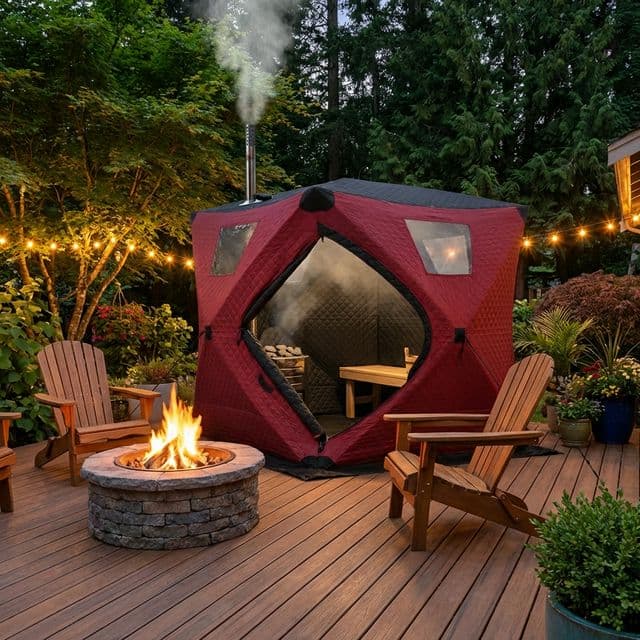
Backyard sauna concept for outdoor steam planning
Backyard context visual for route planning. This is a concept image from the product-image library, not a verified true steam-room install.
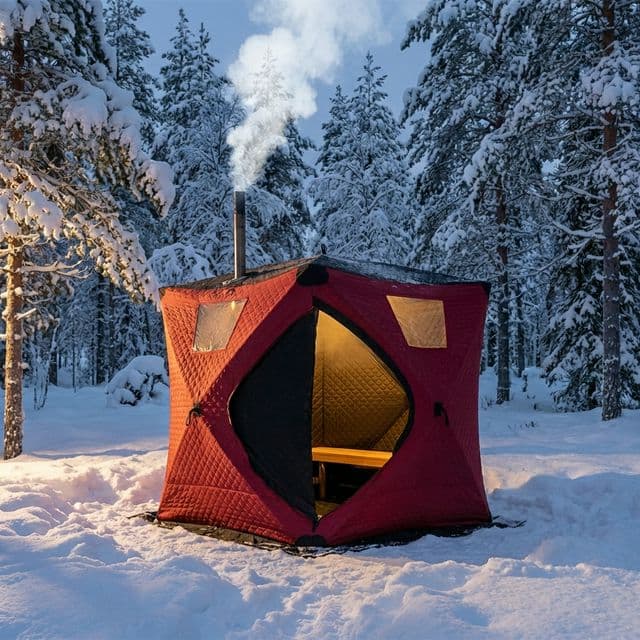
Winter outdoor sauna setting used to illustrate freeze exposure
Freeze exposure matters more for protected generator and dry-out planning than most buyer pages admit.
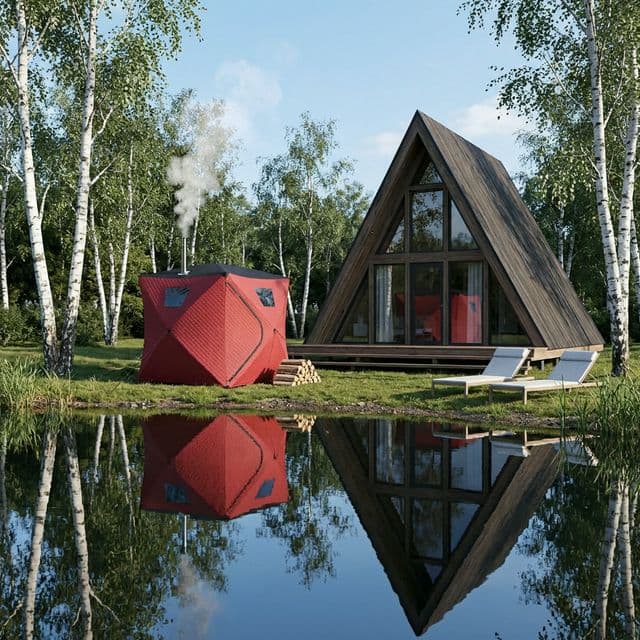
Cabin-style outdoor sauna visual for traditional outdoor route
Traditional outdoor cabins are often the better answer when buyers really want ritual + occasional steam instead of full steam-room humidity.
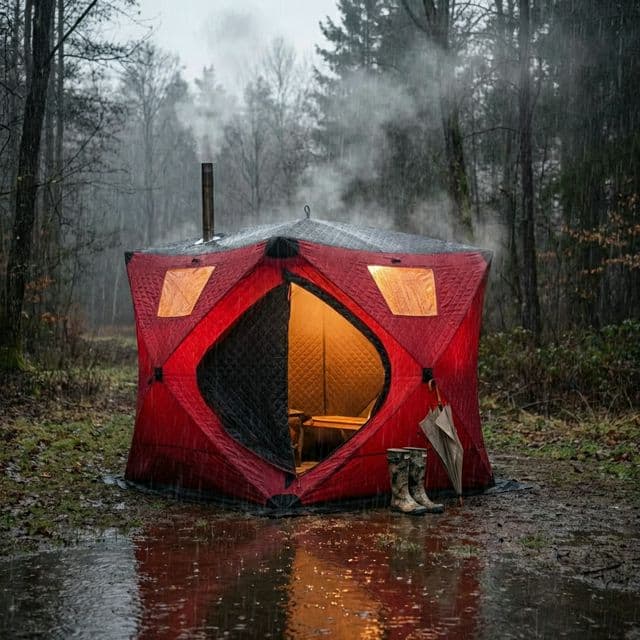
Rainy outdoor sauna scene used for moisture-boundary context
Moisture and dry-out routines remain part of the decision even when the enclosure looks comfortable in wet weather.
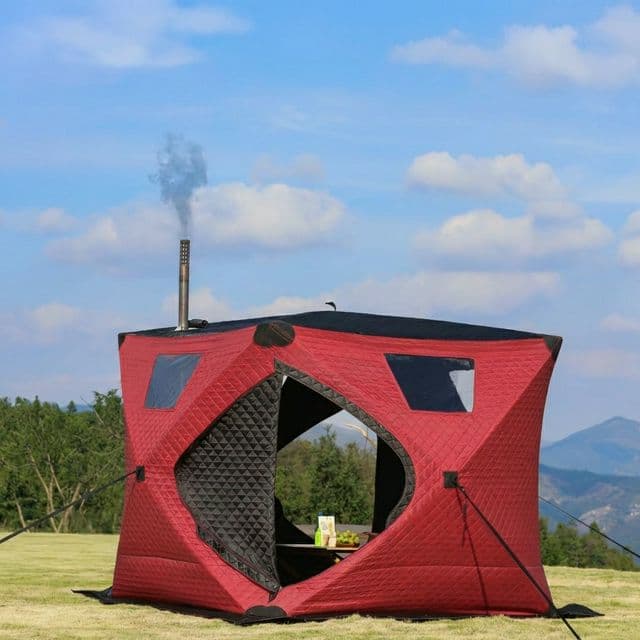
Clean sauna setup visual used for dry-out and maintenance context
A clean-looking setup does not prove the underlying drain, ventilation, or utility path. Use visuals as context, not proof.
FAQ
Decision questions that block purchase confidence
Grouped by route, installation, and safety so the FAQ solves buying friction instead of turning into a glossary.
Need a human read on the route before you buy?
Email the tool result, your site photo, and the exact product URLs you are considering. We will tell you whether the current plan still looks like a true outdoor steam room, a traditional outdoor sauna, or a trial-first path.
Include these items
- Tool score + route result
- Site dimensions and climate context
- Drain / generator / circuit constraints
- Listing URLs or builder packet