
Portable Steam Sauna: Tool-First Decision Page
Start with the tool to get an immediate readiness result, then use the report sections to verify source evidence, boundary conditions, and next actions before purchase.
Published
April 12, 2026
Updated
April 12, 2026
Primary keyword
portable steam sauna
Support
Update scope: stage1-primary launch + stage1b evidence reinforcement + stage1b deep-enhance refresh (CPSC Recall 26-385 + IRS 25C/25D boundary + EPA maintenance baseline) + stage1c blocker/high self-heal verification + stage2 seo-geo closure pass.
Portable Steam Sauna Fit Planner
Check whether a portable steam setup actually fits your home, not just the product listing. This planner weighs room area, fold-away storage, branch-circuit headroom, dry-out discipline, and household risk before you spend.
Default profile: 18 sq ft room envelope, 9 sq ft fold-away storage, dedicated 15A circuit, four 25-minute sessions/week, and 17.30 cents/kWh.
Safety boundary: high heat-risk profiles should treat this tool as planning scaffolding only, not as a substitute for clinician guidance.
Tool output to report bridge
Use this bridge immediately after tool output. It maps each result state to verification sections and a next action.
| Tool status | Immediate interpretation | Verify in report | Next move |
|---|---|---|---|
| Ready Path | Core assumptions are stable enough to shortlist real products instead of browsing generic listings. | Key numbers + evidence ledger + comparison grid | Email support with your top two listings, outlet detail, and storage plan before paying. |
| Conditional Path | Portable steam sauna can work, but one weak boundary can still turn ownership into rework. | Fit boundaries + heat-dose + risk matrix + scenarios | Fix the weakest boundary first, then rerun the tool to confirm the score improves. |
| Boundary Hit | Current setup assumptions have high probability of breaker friction, damp storage, or routine drop-off. | Heat-dose + risk matrix + known vs unknown + FAQ | Pause checkout and downshift wattage, cadence, or footprint before buying. |
| Pause + Screen | Health-risk context overrides technical positives until individualized heat guidance is clear. | Method + risk matrix + FAQ safety group | Use conservative limits and complete clinician-informed screening before routine use. |
Worked example (deterministic rerun)
This sample run shows one reproducible planner pass using explicit assumptions. Use it as a calibration reference before replacing with your own numbers.
Checked on: April 8, 2026
- Room area: 18 sq ft
- Fold-away storage: 9 sq ft
- Circuit readiness: dedicated 15A
- Cadence: 4 sessions/week, 25 minutes/session
- Electricity input: 17.30 cents/kWh
- Dry-out routine: fan + dehumidifier
- Ready Path, score 92/100: Classic steam tent (1000-1200W)
- Runner-up 86/100: Compact steam pod (800-1000W)
- Third option 82/100: Premium steam tent (1500W class)
- Result supports a buy-shortlist only when outlet certainty and post-session dry-out remain stable.
- Up-sizing to higher wattage is still conditional on listing-proof quality and recurring moisture control.
- This sample is reproducible because the planner is deterministic for the same inputs.
What this keyword actually needs to answer
These conclusions are decision-focused and source-timed, so you can move from score to action without relying on vague marketing copy.
Review cadence: refresh this page every 6-12 months, or sooner when safety recalls, utility-rate baselines, or clinical guidance updates materially change decision boundaries.
April 8, 2026 SERP audit: product listings and shopping cards dominate, with limited consistent disclosure on maintenance and safety details
Most ranking pages optimize for quick purchase. They rarely surface listing proof, recall status, moisture workflow, and maintenance burden clearly enough for low-risk decisions.
Source: Live SERP audit for "portable steam sauna" checked April 8, 2026.
EPA (updated April 1, 2026): use bathroom ventilation during and after wet use; if RH stays above 60%, apply a specific dehumidification strategy
Portable format does not remove moisture physics. If post-session recovery plan is missing, ownership reliability drops even when product specs look acceptable.
Source: EPA Biological Contaminants and Indoor Air Quality (updated April 1, 2026) plus EPA/CDC mold-control timing references.
OSHA NRTL FAQ: CE marking is unrelated to U.S. OSHA requirements; CPSC extension-cord hazard list flags missing wire-size, strain-relief, polarization, or continuity protections
For U.S.-market electric heat products, treat traceable listing proof and accessory integrity as gating criteria. Badge-only listings or weak accessory paths should be downgraded.
Source: OSHA NRTL FAQ and CPSC extension-cord business guidance, accessed April 8, 2026.
CPSC 2026 recall cohorts range from about 1.2 to 177.8 incident reports per 10,000 recalled units depending on denominator quality, and CPSC warning 26-363 says male-to-male extension cords should never be used
Raw incident counts can hide denominator effects. Normalize recall cohorts when units are published, and treat warning-only accessory hazards as hard-stop boundaries even when a denominator is unavailable.
Source: CPSC Recalls 26-385, 26-328, 26-250, 26-349 and CPSC News Release 26-363 (March 31, 2026), checked April 12, 2026.
Mayo Clin Proc review (2018) is mostly Finnish dry-sauna context; a 2023 CAD trial (PMID 37650138) reported no improvement in brachial artery flow-mediated dilation after 8 weeks
Portable steam tents run different heat and humidity conditions. Health-benefit claims should remain directional and uncertainty-tagged unless protocol-matched evidence exists.
Source: Mayo Clin Proc review (2018, DOI 10.1016/j.mayocp.2018.04.008) + PubMed trial record (PMID 37650138), checked April 8, 2026.
CDC NIOSH heat illness page: untreated heat stroke can move body temperature to about 106F within 10-15 minutes; CDC pregnancy clinician page notes risk even after one day above the local 95th-percentile mean temperature
Medication interaction, pregnancy, and heat intolerance can override technical fit scores. Routine use should include stop triggers and clinician-informed limits before escalation.
Source: CDC NIOSH heat-stress illnesses page (updated March 3, 2026) and CDC pregnancy clinician overview (reviewed September 18, 2025), checked April 8, 2026.
CDC NIOSH acclimatization page (updated March 3, 2026): acclimatization usually needs 7-14 days; for new exposure the schedule starts at no more than 20% on day 1 with no more than +20% each day
Home portable-steam use is not an occupational protocol, but this is still a practical conservative boundary when users do not have individualized heat planning.
Source: CDC NIOSH acclimatization recommendations page (updated March 3, 2026), checked April 8, 2026.
NWS heat-index example: 96F at 65% RH maps to a 121F heat index; NWS/NIOSH also note heat index is a screening model (shade + light wind assumptions, with full-sun conditions adding up to 15F)
Portable steam users can under-read stress if they only watch room temperature. Practical controls should combine humidity-aware heat interpretation, shorter session ramps, and symptom-based stop rules.
Source: NWS Heat Index page + CDC NIOSH Heat Safety Tool guidance + OSHA heat guidance, checked April 8, 2026.
CPSC GFCI Fact Sheet: GFCIs reduce electrocution risk in vulnerable wet locations; test after installation, at least once a month, and after power failure
Portable steam setups can run in moisture-heavy rooms. If outlet protection is unknown, add a GFCI verification step before normal use.
Source: CPSC GFCI Fact Sheet (Pub. 099 / 092010), checked April 8, 2026.
CPSC Warning 26-353 (March 26, 2026): pre-November 2020 PurSteam PS-510/PS-550 and black PS-550 units should be stopped immediately; CPSC cites at least 109 reports and at least 40 burn injuries while noting no agreed recall remedy for those cohorts
Used or old-inventory purchases need a manufacturing-date and warning-status check, not only a “has this model ever been recalled” check.
Source: CPSC Warning 26-353 and CPSC Recall 26-250 relationship, checked April 12, 2026.
CPSC Recall 26-385 (April 9, 2026): about 1.7 million units, 206 steam/hot-water escape reports, and 161 burn injuries
Because this cohort was published after the prior April 8 data checkpoint, risk calibration should include it before users treat steam-related hazards as stable or historical.
Source: CPSC Recall 26-385 (published April 9, 2026), checked April 12, 2026.
IRS Form 5695 (2025) + IRS OBBB page: 25C and 25D are not allowed after Dec 31, 2025; 2025 25C structure used 30% credit with category caps and listed categories that do not explicitly include sauna equipment
Portable steam buyers should not underwrite a 2026 purchase with assumed federal home-energy credits unless current IRS guidance explicitly restores or changes eligibility.
Source: IRS Instructions for Form 5695 (2025) and IRS One Big Beautiful Bill provisions page, checked April 12, 2026.
EPA home humidifier guidance (last updated May 21, 2025): daily tank refresh, clean every third day, and avoid indoor RH above 50% while humidifying
This is not a model-specific sauna manual, but it provides a conservative floor for steam/water-path maintenance when listing instructions are incomplete.
Source: EPA Use and Care of Home Humidifiers (last updated May 21, 2025), checked April 12, 2026.
Key numbers
Use these as planning baselines before replacing with your exact room, utility, and listing-level details.
U.S. residential electricity baseline
17.45 cents/kWh
January 2026 national residential average used as a neutral starting input.
Source: EIA Table 5.3 (release March 24, 2026)
Electricity baseline freshness checkpoint
Next EIA update: April 23, 2026
EIA publishes monthly electric-power updates; cost assumptions should be refreshed after each release cycle.
Source: EIA Electric Power Monthly update page (checked Apr 8, 2026)
State stress-test spread
10.92-39.79 cents/kWh
January 2026 state-level range from North Dakota to Hawaii; use as downside/upside envelope.
Source: EIA Table 5.6.B (release March 24, 2026)
Indoor humidity boundary
Below 60% RH (ideal 30%-50%)
If post-session humidity cannot return below this boundary, moisture risk remains unresolved.
Source: EPA Mold Course Chapter 2 (updated Dec 1, 2025)
Ventilation execution boundary
During + after wet session
EPA explicitly recommends venting bathrooms during and after moisture-generating use; if RH stays above 60%, apply a specific dehumidification strategy.
Source: EPA Biological Contaminants page (updated Apr 1, 2026)
2026 steam-product incident signal
156 incidents / 50+ burns
CPSC Recall 26-328 (power steamers) adds fresh burn-risk calibration beyond older 2025 sauna-specific recalls.
Source: CPSC Recall 26-328 (published Mar 19, 2026)
Latest steam-adjacent recall signal
206 incidents / 161 burns
CPSC Recall 26-385 (published April 9, 2026) adds a post-April-8 update with a much larger unit denominator.
Source: CPSC Recall 26-385 (published Apr 9, 2026)
Normalized BISSELL recall signal
1.2 incidents + 0.9 burns / 10k recalled units
Computed from 206 incident reports and 161 burn injuries over about 1.7 million recalled units in Recall 26-385.
Source: CPSC Recall 26-385 denominator + injury counts (checked Apr 12, 2026)
Normalized 2026 recall signal range
1.2-177.8 incident reports / 10k recalled units
Derived from CPSC recall denominators (26-385, 26-328, 26-250, 26-349); warning-only cohorts remain non-computable due to denominator gaps.
Source: CPSC recalls published Feb-Apr 2026, checked Apr 12, 2026
2026 sauna-heater kit signal
12 overheating reports
CPSC Recall 26-349 (DIY sauna heater kits) shows continued fire-hazard exposure in adjacent home-sauna build paths.
Source: CPSC Recall 26-349 (published Mar 26, 2026)
Heat emergency escalation threshold
About 106F within 10-15 min
CDC NIOSH heat-stroke guidance supports adding explicit stop criteria instead of relying only on comfort perception.
Source: CDC NIOSH heat-stress illnesses page (updated Mar 3, 2026)
Heat acclimatization boundary
7-14 days with staged exposure
CDC NIOSH recommends a no-more-than-20%-per-day ramp for new heat exposure and warns that absences of one week or more can require reacclimatization.
Source: CDC NIOSH acclimatization page (updated Mar 3, 2026)
Humidity-amplified heat example
96F + 65% RH -> 121F heat index
NWS example shows why room temperature alone can understate heat burden in humid sessions.
Source: NWS Heat Index page (checked Apr 8, 2026)
Hydration guardrail for heat sessions
8 oz every 15-20 min; generally <=6 cups/hour
CDC NIOSH workplace heat guidance provides a conservative hydration boundary when users do not have individualized heat protocols.
Source: CDC NIOSH workplace recommendations (updated Mar 3, 2026)
Asthma-sensitive humidity target
Keep indoor RH under 50%
CDC asthma guidance adds a stricter threshold than the general 60% mold boundary and recommends checking more than once daily with a hygrometer.
Source: CDC Controlling Asthma page (published Jan 22, 2024)
GFCI test cadence
After install, monthly, and after outages
CPSC fact sheet timing helps convert “wet-room caution” into a repeatable electrical safety routine.
Source: CPSC GFCI Fact Sheet (Pub. 099 / 092010)
Dry-out completion window
24-48 hours
Wet materials should be cleaned and dried in this window to reduce mold risk.
Source: CDC mold guidance + EPA mold chapter
U.S. electrical-equipment residential fire context (2021)
56,200 fires / 610 deaths / 3,140 injuries
CPSC annual fire-loss estimates (sourced from USFA/NFPA data) reinforce strict branch and outlet discipline for high-watt heat products.
Source: CPSC Residential Fire Loss Estimates 2019-2021 (checked Apr 12, 2026)
Federal home-energy credit boundary
25C/25D not allowed after Dec 31, 2025
IRS 2025 instructions and IRS OBBB updates set a sunset boundary, so 2026 buyers should model credit as zero unless current-year IRS guidance changes.
Source: IRS Form 5695 (2025) + IRS OBBB provisions page (checked Apr 12, 2026)
Minimum maintenance baseline for water-path hygiene
Daily refresh + clean every 3rd day
EPA humidifier-care guidance provides a conservative fallback cadence when product listings omit complete maintenance instructions.
Source: EPA Use and Care of Home Humidifiers (updated May 21, 2025)
Evidence-confidence boundary
No regulator-grade failure-rate denominator
Public sources do not provide a robust national failure-rate dataset for portable steam sauna ownership outcomes (Pending confirmation / 暂无可靠公开数据).
Source: Stage1b deep-enhance evidence audit refresh (Apr 12, 2026)
Stage1b content-gap audit and closure
This audit lists where stage1-primary was weak, why it mattered, and what evidence-backed additions were applied in stage1b plus the April 12 deep-enhance refresh.
Mobile note: swipe tables horizontally for full columns.
| Gap found | Decision impact | Stage1b action | Verification status |
|---|---|---|---|
| Operating-cost assumptions needed a current national baseline and state stress-test spread. | Users could under-budget in high-rate states or over-reject in low-rate states. | Replaced with January 2026 EIA values: national baseline plus state spread for sensitivity checks. | Closed with EIA Tables 5.3 and 5.6.B (release March 24, 2026). |
| Moisture guidance lacked a runtime ventilation rule and dehumidification trigger. | Users might know humidity targets but still fail daily execution, causing repeat damp cycles. | Added EPA runtime boundary (ventilation during and after wet sessions) and the RH-above-60% dehumidification trigger, while preserving 24-48 hour dry-out windows. | Closed with EPA Biological Contaminants page (updated April 1, 2026) plus EPA/CDC mold references, checked April 8, 2026. |
| Electrical guidance said “avoid extension cords” but lacked hazard-screen detail. | Users could still use accessory chains with hidden cord-safety defects. | Kept OSHA CE-vs-U.S. boundary and added CPSC extension-cord hazard criteria as a checklist-level screen. | Closed with OSHA NRTL FAQ and CPSC extension-cord business guidance (checked April 8, 2026). |
| Incident calibration ended at 2025 and missed current-year updates. | Readers might treat risk framing as theoretical rather than current. | Added March 2026 CPSC recalls for power steamers and DIY sauna heater kits with incident and unit counts. | Closed with CPSC Recalls 26-328 and 26-349 (published March 19 and March 26, 2026). |
| Health guidance lacked explicit emergency-stop triggers and stronger transfer counterevidence. | Users could over-transfer benefits while underreacting to heat-risk escalation signals. | Added CDC heat-emergency thresholds and a 2023 CAD trial counterexample to complement Finnish dry-sauna evidence context. | Closed with CDC NIOSH heat-stress page + CDC pregnancy clinician page + PubMed trial (PMID 37650138), checked April 8, 2026. |
| Failure-rate precision was implied without a robust public denominator dataset. | Users may misread directional guidance as statistically precise probability. | Retained known-unknown boundary and explicitly labeled unresolved denominator fields as “Pending confirmation / 暂无可靠公开数据”. | Partially closed: no reliable regulator-grade public denominator dataset identified as of April 12, 2026. |
| Near-water outlet checks lacked an explicit GFCI verification cadence. | Users could pass general electrical checks while still missing wet-location shock protection failures. | Added a GFCI boundary with concrete test timing (after install, monthly, and after outages) and mapped it to risk and FAQ sections. | Closed with CPSC GFCI Fact Sheet (Pub. 099 / 092010), checked April 8, 2026. |
| Listing-proof language lacked anti-counterfeit and category-scope verification steps. | Buyers could misread any electrical mark as full approval for the exact product class. | Added OSHA SHIB-based workflow: verify mark authenticity, verify product-category scope, and contact the listed NRTL when uncertainty remains. | Closed with OSHA SHIB 021610 and OSHA NRTL FAQ, checked April 8, 2026. |
| Cadence planning lacked a measurable heat acclimatization ramp. | New or returning users could jump to peak session volume before tolerance is rebuilt. | Added CDC NIOSH acclimatization boundaries (7-14 day ramp, no-more-than-20%-per-day progression, and reset logic after week-long breaks). | Closed with CDC NIOSH acclimatization page (updated March 3, 2026), checked April 8, 2026. |
| Moisture guidance did not separate general mold control from asthma-sensitive households. | Asthma-prone users might stop at a weak threshold and still trigger symptoms. | Added CDC asthma-specific boundary (keep RH under 50% and monitor more than once daily with hygrometer) as a stricter fit condition. | Closed with CDC Controlling Asthma page (published January 22, 2024), checked April 8, 2026. |
| Incident sections showed counts but did not normalize by available denominators. | Readers could not compare signal intensity across recall cohorts or warning-only hazards. | Added a risk-signal calibration table with per-10,000 normalization where possible, explicit “not computable” labels for warning-only data, and the April 9, 2026 BISSELL cohort refresh. | Closed with CPSC Recalls 26-385/26-328/26-250/26-349 and CPSC News Release 26-363, checked April 12, 2026. |
| Heat-dose interpretation still leaned too heavily on room temperature and generic stop cues. | Users could underestimate physiological stress in humid sessions and overrun safe session plans. | Added humidity-amplified heat example (96F + 65% RH -> 121F heat index), model-limit disclosure, and a dedicated heat-dose guardrail section. | Closed with NWS Heat Index page + CDC NIOSH Heat Safety Tool + OSHA heat guidance, checked April 8, 2026. |
| Session safety lacked quantitative hydration and cooling boundaries. | Users could run longer sessions without practical fluid and cooldown guardrails, increasing heat-illness risk. | Added conservative hydration cadence (8 oz every 15-20 minutes, generally no more than 6 cups/hour) and fan-use boundary notes for hot indoor conditions. | Closed with CDC NIOSH workplace recommendations + CDC heat and pregnancy clinician overview, checked April 8, 2026. |
| Steam-product incident handling did not separate recall cohorts from warning-only cohorts. | Buyers could assume every high-risk cohort has a recall remedy path. | Added warning-only risk boundary for pre-November 2020 PurSteam cohorts and emphasized manufacturing-date verification for used/legacy inventory. | Closed with CPSC Warning 26-353 and CPSC Recall 26-250 relationship, checked April 8, 2026. |
| Electrical-risk language lacked household-scale loss context. | Branch/outlet precautions could be misread as optional rather than core decision gates. | Added CPSC annual residential fire-loss context for selected electrical equipment (USFA/NFPA sourced) and tied it to extension-cord and branch certainty boundaries. | Closed with CPSC Residential Fire Loss Estimates 2019-2021 (Table 4, 2021 selected electrical-equipment figures), checked April 12, 2026. |
| Risk calibration checkpoint missed a post-April-8 recall update. | Users could treat risk tables as complete while missing a larger April 2026 steam-adjacent cohort. | Added CPSC Recall 26-385 (published April 9, 2026) to key conclusions, key numbers, evidence ledger, and normalized risk-signal calibration. | Closed with CPSC Recall 26-385 (about 1.7M units, 206 incidents, 161 burn injuries), checked April 12, 2026. |
| Cost section lacked explicit federal-credit sunset boundaries for 2026 buyers. | Purchase decisions could be based on assumed tax credits that are no longer available, creating budget mismatch. | Added IRS 25C/25D sunset boundary with 2025 cap context and a zero-credit default for 2026 planning unless IRS guidance changes. | Closed with IRS Form 5695 instructions (2025) and IRS OBBB provisions page, checked April 12, 2026. |
| Maintenance guidance lacked a minimum water-path cleaning fallback for low-documentation listings. | Users could run infrequent cleaning routines that increase mineral buildup and hygiene risk. | Added EPA maintenance floor (daily water refresh, clean every third day, and humidity discipline) and mapped it into boundaries, risk matrix, and FAQ. | Closed with EPA Use and Care of Home Humidifiers (last updated May 21, 2025), checked April 12, 2026. |
Suitable / not suitable boundaries
Mobile note: swipe tables horizontally for full columns.
| Boundary | Suitable signal | Not suitable signal | Mitigation path |
|---|---|---|---|
| Post-session humidity recovery | Room humidity can recover below 60% RH after sessions (ideally back into 30%-50% baseline). | Humidity stays elevated above 60% or condensation persists on room surfaces. | Add active exhaust/dehumidification and reduce cadence until recovery is repeatable. |
| Ventilation runtime execution | Ventilation is planned during and after each wet session, with a clear follow-through routine. | No defined runtime plan for fans/windows, or humidity recovery relies on guesswork. | Set a fixed post-session ventilation routine and verify that RH returns to stable baseline. |
| Dry-out completion window | Enclosure, hoses, and textiles can be cleaned and dried within 24-48 hours. | Materials stay damp beyond the recommended window or are folded away wet. | Reserve a drying zone first or reduce usage cadence until drying is stable. |
| Water-path hygiene and mineral-control baseline | Water path is refreshed daily, cleaned at least every third day, and run with low-mineral/distilled water when possible. | Standing water, irregular cleaning cadence, or visible scale/film remains in tank and hose pathways. | Apply the EPA humidifier-care baseline as a minimum fallback and treat visible scale or odor as an immediate maintenance trigger. |
| Listing-proof quality | Seller can provide traceable U.S.-relevant listing evidence for the exact model. | Listing relies on badge-only language (for example CE-only) with no verifiable U.S. listing trail. | Request model-level proof before payment or move to listings with transparent documentation. |
| NRTL mark authenticity + scope match | Listing proof ties to a verifiable NRTL mark and a product-category scope that matches the sold model. | Mark identity is unclear, scope is unknown, or the seller cannot show category-appropriate listing evidence. | Cross-check the mark and scope against OSHA NRTL references, then contact the listed NRTL when proof remains ambiguous. |
| Near-water outlet protection (GFCI) | Wet-use outlet path is GFCI-protected and passes test cadence (after install, monthly, and after outages). | No GFCI confirmation exists or the GFCI test routine is unknown/failed. | Use a confirmed GFCI path before routine use and escalate unresolved outlet safety to a qualified electrician. |
| Extension-cord and accessory integrity | No extension-cord dependency for core heating load, or accessory path has verifiable safety characteristics and temporary-use discipline. | Power path depends on low-visibility extension cords, stacked strips, or unknown accessory quality. | Simplify to direct wall-outlet paths and remove accessory chains until safety quality can be verified. |
| High-watt electrical use practice | High-watt device path is known, plugs directly to wall outlet, and branch assumptions are verified. | Plan depends on extension cords/power strips or unknown shared heavy-load branches. | Use wall-outlet paths with known branch headroom and downshift wattage when uncertain. |
| Safety profile | No known heat-risk profile, or clinician-informed limits are already defined before routine use. | Medication, pregnancy, or intolerance risks exist without screening. | Use pause-and-screen workflow before routine usage decisions. |
| Heat acclimatization discipline | New or returning users ramp exposure over 7-14 days with explicit progression limits before full cadence. | Plan jumps directly to max session volume after inactivity or with no adaptation ramp. | Use the CDC NIOSH-style staged ramp (no-more-than-20%-per-day progression) and reset after week-long breaks. |
| Heat-dose interpretation + hydration protocol | Session planning uses humidity-aware heat interpretation and a conservative hydration cadence (about 8 oz every 15-20 minutes, generally no more than 6 cups/hour). | Plan uses room temperature alone, has no fluid protocol, or escalates session length without heat-load checks. | Shorten sessions, increase cooldown windows, and apply hydration guardrails before increasing cadence. |
| Hot-day fan and air-quality co-risk controls | For heat-sensitive users, fan use is paired with active cooling and not treated as sufficient in very hot indoor conditions; poor air-quality days are screened before sessions. | User relies on fan-only cooling when room heat is high or ignores AQI-sensitive conditions when respiratory or pregnancy risk flags exist. | Pause sessions during high heat/AQI stress windows and resume with cooler-room, lower-dose conditions. |
| Heat emergency-stop readiness | Users know stop triggers, cooling actions, and escalation steps for heat illness symptoms. | No defined response exists for confusion, hot dry skin, or rapid heat-escalation signals. | Pre-define stop criteria and emergency escalation steps before routine cadence increases. |
| Asthma-sensitive moisture control | When asthma triggers are relevant, RH is held under 50% with hygrometer checks more than once daily. | Room only meets generic sub-60% guidance while asthma symptoms remain sensitive to humidity. | Adopt stricter sub-50% RH targets and reduce cadence until humidity stability is repeatable. |
| Evidence-transfer boundary | User treats Finnish dry-sauna evidence as directional context, not portable steam proof. | Buyer assumes dry-sauna benefit studies automatically validate portable steam outcomes. | Start conservative and validate against personal response plus clinician advice when relevant. |
| Warning-only legacy steam-product inventory screening | Buyer checks manufacturing date and warning status, and avoids cohorts flagged by CPSC warning notices even when no recall remedy exists. | Used or old inventory is treated as safe because it is not in an active recall remedy process. | Require model/date proof before purchase and reject warning-flagged cohorts. |
Heat-dose guardrails and applicability limits
This section closes a key stage1b gap: translating heat evidence into practical session limits. It separates what is directly known, what is screening-only, and what should trigger conservative downshifts.
Mobile note: swipe tables horizontally for full columns.
| Signal | Data point | Decision boundary | Source timing |
|---|---|---|---|
| Humidity-amplified heat load | NWS example: 96F air temperature with 65% RH maps to a 121F heat index. | Do not interpret room temperature in isolation; humid sessions can carry high heat stress at lower thermometer readings. | NWS Heat Index page (checked April 8, 2026). |
| Heat-index model limitation | NWS/NIOSH: heat index is a screening model for shady, light-wind conditions; full sun can add up to 15F. | Use symptom triggers and conservative session ramps, because heat-index values are not complete physiological measurements. | NWS Heat Index page + CDC NIOSH Heat Safety Tool guidance (checked April 8, 2026). |
| Hydration dosing guardrail | CDC NIOSH heat recommendations: drink 8 oz every 15-20 minutes during heat exposure and generally avoid exceeding 6 cups/hour. | If users cannot maintain hydration and cooldown discipline, reduce session length/frequency before increasing heat dose. | CDC NIOSH workplace recommendations (updated March 3, 2026). |
| Hot-day fan and AQI boundary for sensitive users | CDC pregnancy clinician overview: fan use below 90F can help; above 90F a fan can increase body temperature. CDC also flags AQI above 100 for protective action. | For pregnancy or respiratory-risk contexts, pause or downshift sessions when heat and air-quality stress signals are elevated. | CDC heat and pregnancy clinician overview (reviewed September 18, 2025; checked April 8, 2026). |
Methodology and decision logic
The method keeps one sequence: calculate fit, test boundaries, validate evidence, then execute next action.
Treat the keyword as mixed intent: immediate tool output plus deeper trust verification.
Output: Single-URL hybrid architecture with tool-first flow
Tool score uses room, storage, branch certainty, cadence, and safety profile assumptions.
Output: Ready / Conditional / Boundary / Pause bands
Result bands are mapped to threshold-style conditions (humidity, dry-out timing, listing proof, and risk-screening).
Output: Use/not-use matrix and risk controls
Policy, safety, and utility data are time-stamped, then clinical evidence is filtered for applicability to portable steam conditions.
Output: Source ledger with date markers, applicability notes, and explicit uncertainty labels
Every state maps to a specific next action and support-email handoff.
Output: No dead-end outcomes after tool result
Recall/warning signals are normalized by published denominators when possible, and listing marks are checked for authenticity and category scope before payment.
Output: Risk-signal calibration table + NRTL/GFCI pre-buy verification boundaries
Before approving routine use, apply humidity-aware heat-dose interpretation, hydration guardrails, and warning-only cohort screens for legacy inventory.
Output: Safer cadence planning + explicit hard-stop rules for non-remedy warning cohorts
Before final purchase math, verify federal incentive applicability and check for recalls/warnings published after the last page checkpoint date.
Output: Budget assumptions and risk calibration stay current instead of freezing on stale guidance
Evidence ledger and source timing
Core conclusions are tied to official or primary sources with release/review dates. Rows marked as incomplete are intentionally flagged rather than filled with synthetic estimates.
Mobile note: swipe tables horizontally for full columns.
| Claim | Source | Source date | Checked on | Decision value |
|---|---|---|---|---|
| U.S. residential electricity baseline for cost modeling | EIA Table 5.3 | Released March 24, 2026 (January 2026 data) | April 8, 2026 | Provides neutral electricity baseline used in the report-level cost framing. |
| State-level electricity spread for stress testing | EIA Table 5.6.B | Released March 24, 2026 (January 2026 state values) | April 8, 2026 | Prevents false precision from single-rate assumptions. |
| Federal home-energy credit boundary for 2026 purchase math | IRS Instructions for Form 5695 (2025) | Current IRS instruction page (accessed April 12, 2026) | April 12, 2026 | Adds a tax-credit boundary: 25C/25D are not allowed after Dec 31, 2025 in current IRS guidance, and listed 25C categories do not explicitly include sauna equipment. |
| Legislative confirmation of 25C/25D sunset timing | IRS OBBB provisions page | Current IRS newsroom page (accessed April 12, 2026) | April 12, 2026 | Confirms expiry framing used in budget risk controls so buyers do not assume credits that are no longer available. |
| Ventilation runtime and dehumidification trigger | EPA Biological Contaminants and Indoor Air Quality | Updated April 1, 2026 | April 8, 2026 | Adds execution-level boundary: ventilate during/after wet sessions and use specific dehumidification strategy if RH stays above 60%. |
| Humidity boundary for indoor moisture control | EPA Mold Course Chapter 2: Moisture and Humidity | Updated December 1, 2025 | April 8, 2026 | Sets the quantitative indoor humidity boundary (below 60%, ideal 30%-50%) used in fit gates. |
| Minimum maintenance cadence for steam-water path hygiene | EPA Use and Care of Home Humidifiers | Last updated May 21, 2025 | April 12, 2026 | Provides practical fallback actions when listing manuals are incomplete: daily refill and wipe, clean every third day, keep humidity from exceeding 50%, and prefer low-mineral/distilled water. |
| Asthma-sensitive humidity target and monitoring cadence | CDC Controlling Asthma | Published January 22, 2024 | April 8, 2026 | Adds a stricter sub-50% RH threshold and recommends humidity checks more than once daily with a hygrometer for asthma-trigger contexts. |
| Dry and clean wet materials within practical mold-control window | CDC Mold and Your Health | Current CDC page (checked April 8, 2026) | April 8, 2026 | Supports the report-level 24-48 hour operational dry-out boundary. |
| No health-based mold standards for indoor air concentration thresholds | NIOSH Mold Testing and Remediation | Current NIOSH page (checked April 8, 2026) | April 8, 2026 | Justifies explicit uncertainty labeling and avoids fake precision in risk probabilities. |
| Heat and medication risk screening | CDC clinician heat + medications guidance | Reviewed September 18, 2025 | April 8, 2026 | Supports pause-and-screen override for risk profiles. |
| Pregnancy heat boundary reference with one-day high-heat signal | CDC heat and pregnancy overview | Reviewed September 18, 2025 | April 8, 2026 | Avoids treating pregnancy as a normal high-heat routine state and adds the one-day high-heat caution context. |
| Heat emergency-stop threshold | CDC NIOSH Heat-Related Illnesses | Updated March 3, 2026 | April 8, 2026 | Adds explicit escalation signal: untreated heat stroke can raise body temperature to about 106F within 10-15 minutes. |
| Heat acclimatization ramp and reset logic | CDC NIOSH Acclimatization Recommendations | Updated March 3, 2026 | April 8, 2026 | Provides a concrete adaptation boundary (7-14 days, day-1 20% exposure cap, and reset after week-long absence) for safer cadence escalation. |
| Humidity-amplified heat interpretation example and limits | NWS Heat Index | Current NWS safety page (checked April 8, 2026) | April 8, 2026 | Adds a concrete heat-load example (96F + 65% RH -> 121F index) and model-limit note (heat index assumes shade/light wind). |
| Heat index should be treated as a screening signal, not a full dose model | OSHA Heat Illness Prevention | Current OSHA page (checked April 8, 2026) | April 8, 2026 | Prevents false precision by reinforcing that heat-index calculations are a first-pass hazard indicator. |
| Hydration cadence and upper-bound guidance for heat exposure | CDC NIOSH workplace recommendations | Updated March 3, 2026 | April 8, 2026 | Adds practical fluid guardrails (8 oz every 15-20 minutes; generally no more than 6 cups/hour) for conservative session planning. |
| Hot-day fan and AQI boundaries for heat-sensitive contexts | CDC heat and pregnant women clinical overview | Reviewed September 18, 2025 | April 8, 2026 | Adds explicit decision triggers: fan use below 90F can help, while above 90F it can increase body temperature; AQI above 100 increases risk in sensitive groups. |
| Near-water electric protection and GFCI test cadence | CPSC GFCI Fact Sheet (Pub. 099) | Publication code 092010 (official CPSC fact sheet) | April 8, 2026 | Converts wet-location caution into a testable routine: verify GFCI protection after install, monthly, and after outages. |
| U.S. listing mark boundary (CE is not enough) | OSHA NRTL FAQ | Current OSHA FAQ | April 8, 2026 | Frames certification proof threshold for home-use electric products. |
| NRTL mark authenticity and category-scope verification | OSHA SHIB: Understanding NRTL Marks and Listings | Issued February 16, 2010 (OSHA bulletin) | April 8, 2026 | Adds anti-counterfeit workflow: verify mark identity, verify category scope, and contact the listed NRTL when uncertain. |
| Extension-cord hazard criteria for electrical accessory screening | CPSC Extension Cords Guidance | Published November 18, 2015 (official guidance page) | April 8, 2026 | Adds concrete hazard checks beyond generic “avoid extension cords” wording. |
| Warning-class accessory hazard in 2026 | CPSC News Release 26-363 | Published March 31, 2026 | April 8, 2026 | CPSC states there is no safe use for male-to-male cords; warning-class data still creates hard-stop boundaries even when denominator math is unavailable. |
| Household electrical-loss context for branch/outlet decisions | CPSC Residential Fire Loss Estimates 2019-2021 | Published May 2024 (2019-2021 estimates) | April 12, 2026 | Adds decision-weight context: 2021 residential structure fires from selected electrical equipment were estimated at 56,200 fires, 610 deaths, and 3,140 injuries. |
| Post-April-8 steam-adjacent burn-risk update | CPSC Recall 26-385 (BISSELL Steam Shot OmniReach/Omni) | Published April 9, 2026 | April 12, 2026 | Adds a large denominator cohort (about 1.7 million units) with 206 steam/hot-water reports and 161 burn injuries, keeping risk calibration current. |
| Recall-resale legality boundary for used-market decisions | CPSC recall legal notice | Current CPSC recall-page legal notice (accessed April 12, 2026) | April 12, 2026 | CPSC recall pages state federal law prohibits selling recalled products, adding a hard no-buy filter for unresolved used inventory. |
| 2026 steam-product incident signal | CPSC Recall 26-328 (900 Series Power Steamers) | Published March 19, 2026 | April 8, 2026 | Adds fresh incident counts (at least 156 incidents and over 50 burn injuries) to risk calibration. |
| Additional 2026 steam-product recall cohort for calibration | CPSC Recall 26-250 (PurSteam Elite + Mighty Lil) | Published February 5, 2026 | April 8, 2026 | Adds another 2026 denominator-backed cohort (about 194,400 units; 472 incident reports; 54 burn injuries) so risk signals are not anchored to one recall only. |
| Warning-only PurSteam legacy cohorts without recall remedy | CPSC Warning 26-353 | Published March 26, 2026 | April 8, 2026 | Separates warning-only high-risk cohorts from recall-remedy cohorts and adds a manufacturing-date verification requirement for used or legacy inventory. |
| 2026 sauna-heater kit incident signal | CPSC Recall 26-349 (DIY Cold Plunge sauna heater kits) | Published March 26, 2026 | April 8, 2026 | Shows ongoing fire-hazard exposure in adjacent DIY sauna build paths (12 overheating reports). |
| Recent category recall signal (burn injuries and incident volume) | CPSC Recall 26-036 | Published October 23, 2025 | April 8, 2026 | Preserves year-over-year continuity for burn-risk tracking in adjacent home-heat products. |
| Recent category recall signal (structural failure) | CPSC Recall 26-040 | Published October 23, 2025 | April 8, 2026 | Extends risk model beyond overheating to bench and structural stability events. |
| Clinical evidence context for sauna benefits | Mayo Clinic Proceedings sauna review | Published July 2018 | April 8, 2026 | Defines protocol context (mostly Finnish dry sauna) and prevents over-transfer to portable steam claims. |
| Counterexample for benefit transfer certainty | PubMed trial: Finnish sauna bathing and vascular health in CAD adults | Published September 2023 (PMID 37650138) | April 8, 2026 | Adds a randomized-trial counterexample where vascular markers did not improve after an 8-week Finnish sauna protocol. |
Option comparison grid (evidence-tagged)
Rows are labeled by confidence. Low-confidence rows indicate sparse or inconsistent public data and should be treated as pending listing-level verification.
Mobile note: swipe tables horizontally for full columns.
| Option | Capex range | Power path | Setup burden | Best for | Main tradeoff | Evidence confidence |
|---|---|---|---|---|---|---|
| One-person portable steam tent (consumer listing class) | Pending confirmation (no regulator-grade national price dataset) | Usually 120V single-plug class in sampled listings; verify model-level documents | Low | Solo home users who need a fold-away format and can maintain drying discipline | Convenience does not remove humidity, branch-certainty, and listing-proof requirements | Low-medium (market snapshots are fragmented; listing-level verification is required) |
| Power steam-product adjacent benchmark (CPSC Recall 26-328) | $130-$200 in recall listing context | Corded electric steam-product class | Low to medium | Users who want a lower-price baseline for heat/steam appliance risk calibration | Not a direct portable-sauna equivalent; use as adjacent incident benchmark only | High for recalled model details, low for direct transfer to sauna-tent outcomes |
| PurSteam adjacent benchmark (CPSC Recall 26-250) | $11-$35 in recall listing context | Corded handheld steam-product class | Low | Users who want a second denominator-backed steam-appliance cohort for risk calibration | Not a direct portable-sauna equivalent; incident history is useful for signal range, not direct transfer certainty | High for recalled model details, low for direct transfer to sauna-tent outcomes |
| PurSteam warning-only legacy cohorts (CPSC Warning 26-353) | N/A (warning cohort; purchase not recommended) | Legacy handheld steam-product models (pre-November 2020 cohorts) | Low hardware burden, high safety concern | Risk screening only; not a valid purchase candidate for new routines | CPSC warning indicates immediate stop-use and no agreed recall remedy for specific legacy cohorts, so inventory age and model-date verification become hard gates | High for warning facts, low for any safe-use transfer because cohort is stop-use flagged |
| DIY sauna heater kit path (CPSC Recall 26-349 context) | $400-$500 in recall listing context | Custom installation path with elevated electrical and thermal-control risk if poorly executed | High | Only for users intentionally choosing a custom-build path with strong electrical safety planning | Higher build complexity and fire-hazard exposure if safeguards are weak | High for listed recalled models, low for broader market extrapolation |
| Higher-load sauna room / hybrid units (non-portable class) | $6,000-$12,000 in CPSC recall listing context | 15A/20A 120V and 240V variants appear in recalled models | High | Stable long-term installations, not portable keyword intent | Useful as an upper-bound alternative when portable assumptions repeatedly fail | High for cited models, low for broader market extrapolation |
| Two-person portable steam claims | Pending confirmation (public data quality inconsistent) | Often marketed as portable but electrical assumptions vary widely | Medium to high | Only if household has verified multi-user demand and drying capacity | Evidence quality is weak across many listings; return and support friction can be high | Low (await listing-level verification before recommending) |
| Fixed steam room / steam shower conversion | No reliable national benchmark in this stage1b source set | Dedicated installation path with building-envelope implications | High | Homes with stable ownership horizon and verified retrofit feasibility | Outside primary portable intent; use when portable route repeatedly fails boundary checks | Low-medium (conceptually clear, pricing evidence incomplete) |
2026 risk-signal calibration table
This table converts available recall denominators into comparable signal intensity. Where a denominator does not exist, the row is explicitly marked as not computable instead of forcing fake precision. Latest row includes the April 9, 2026 CPSC cohort.
Mobile note: swipe tables horizontally for full columns.
| Source | Published | Denominator | Incident signal | Normalized signal | Transfer limit |
|---|---|---|---|---|---|
| CPSC Recall 26-385 (BISSELL Steam Shot OmniReach/Omni) | April 9, 2026 | About 1.7 million units | 206 reports of hot-water/steam escape, including 161 burn injuries | About 1.2 incidents and 0.9 burns per 10,000 recalled units | Steam-cleaner cohort, not a one-to-one portable-sauna failure rate; use for adjacent burn-signal calibration. |
| CPSC Recall 26-328 (Wagner 900 Series) | March 19, 2026 | About 700,000 units | At least 156 incidents; over 50 burn injuries | At least 2.2 incidents and over 0.7 burns per 10,000 recalled units | Recall-specific signal only; this is not a portable-sauna market failure rate. |
| CPSC Recall 26-250 (PurSteam Elite + Mighty Lil) | February 5, 2026 | About 194,400 units total | 472 hot-water expulsion reports; 54 burn injuries (including two second-degree burns) | About 24.3 incidents and 2.8 burns per 10,000 recalled units | Historical incidents span 2020-2024 and apply to travel steamers, not sauna tents. |
| CPSC Warning 26-353 (PurSteam warning-only legacy models) | March 26, 2026 | Warning class (no published unit denominator) | At least 92 malfunction reports and 17 steam-release reports, including at least 40 burn injuries in warning-only cohorts | Not computable from warning-only denominator gap | No CPSC recall remedy exists for these specific legacy cohorts; treat as hard-stop purchase filter. |
| CPSC Recall 26-349 (DIY sauna heater kits) | March 26, 2026 | About 675 units | 12 overheating reports; no fires or injuries reported | About 177.8 overheating reports per 10,000 recalled units | Very small denominator; treat as hazard-intensity flag, not cross-category ranking. |
| CPSC News Release 26-363 (male-to-male extension cords) | March 31, 2026 | Warning class (no unified denominator) | CPSC states these products should never be used and have no legitimate household use | Not computable from warning-only data | Warning-level evidence still creates hard-stop boundaries without denominator math. |
Risk matrix with mitigation paths
Mobile note: swipe tables horizontally for full columns.
| Risk | Probability | Impact | Mitigation | Fallback |
|---|---|---|---|---|
| Unknown branch-circuit headroom | Medium-high | High | Confirm exact outlet and breaker before use; keep core heating load on direct wall-outlet paths rather than extension-cord chains. | Downshift wattage tier, relocate to a known-safe branch, or pause purchase. |
| No GFCI confirmation for wet-use outlet | Medium | High | Confirm GFCI protection for wet-use circuits and run the test cycle after install, monthly, and after outages. | Pause routine use until outlet protection is verified or upgraded by a qualified electrician. |
| No ventilation runtime plan after wet sessions | Medium-high | High | Run ventilation during and after sessions, and add dehumidification when RH remains above 60%. | Cut session cadence until recovery is consistently controlled. |
| Humidity fails to recover below threshold after sessions | Medium-high | High | Use exhaust and dehumidification until indoor RH is below 60% and surfaces are dry. | Reduce cadence until drying cycle is repeatable. |
| Damp fold-away storage beyond dry-out window | Medium | High | Clean and fully dry enclosure parts within 24-48 hours before long storage. | Create a dedicated drying zone or pause routine. |
| Water-path hygiene drift (standing water + scale buildup) | Medium-high when manuals are sparse | Medium-high | Use a minimum maintenance fallback: empty and refill daily, clean tank/pathway at least every third day, and prioritize low-mineral/distilled water when practical. | If odor, visible film, or mineral scale persists, pause sessions and complete full cleaning/descaling before reuse. |
| Weak listing-mark or recall diligence | Medium | High | Require traceable U.S. listing evidence and current recall checks before payment. | Skip listings with unclear proof even when price is attractive. |
| Counterfeit or out-of-scope listing mark | Medium | High | Verify NRTL mark identity and product-category scope, and contact the listed NRTL if documentation is unclear. | Treat unresolved mark authenticity as a purchase blocker even when price and specs look attractive. |
| No emergency-stop trigger for heat illness | Medium | High | Define stop criteria and escalation actions before routine use (including same-day cooling and emergency response rules). | Treat unclear symptom interpretation as stop-and-screen rather than pushing through planned session targets. |
| Heat dose interpreted from temperature only | Medium-high in humid sessions | High | Use humidity-aware heat interpretation (for example NWS heat-index context) and cap early sessions until tolerance and recovery are stable. | If heat burden remains ambiguous, shorten sessions and increase cooldown intervals instead of escalating duration. |
| No hydration protocol during heat exposure | Medium | Medium-high | Apply conservative hydration guardrails (about 8 oz every 15-20 minutes; generally avoid exceeding 6 cups/hour) and pair with cooldown checks. | Reduce heat dose immediately when hydration/cooldown execution is inconsistent. |
| Over-ambitious usage cadence | High in first month | Medium-high | Start with conservative cadence and scale after adherence is proven. | Shrink target routine and prioritize sustainability over intensity. |
| Skipping acclimatization after inactivity | Medium-high for new/returning users | Medium-high | Use staged heat adaptation over 7-14 days with no-more-than-20%-per-day progression before full cadence. | If break is about one week or longer, treat the restart as a reacclimatization phase. |
| Health-risk mismatch | Medium | High | Use pause-and-screen mode for pregnancy, medication interaction, or known intolerance. | Hold usage escalation until individualized guidance is complete. |
| Fan-only cooling strategy in very hot indoor conditions | Medium for sensitive users | Medium-high | For pregnancy and heat-sensitive contexts, do not rely on fan-only cooling when room heat is high; use active cooling and lower heat-dose sessions. | Pause sessions during high indoor heat windows until a cooler environment is available. |
| Asthma-sensitive user relies on generic <60% RH threshold | Medium when trigger history exists | Medium-high | Use a stricter sub-50% RH target and monitor humidity more than once daily with a hygrometer. | Reduce cadence or change room until sub-50% recovery is repeatable. |
| Over-transfer of dry-sauna benefit evidence | Medium | Medium-high | Treat Finnish dry-sauna research as directional context, not direct proof for portable steam routines. | Use conservative cadence and outcome tracking until personal response is clear. |
| Expectation mismatch (multi-user vs one-person format) | Medium | Medium-high | Match format class to actual user count and cleanup capacity, not aspirational usage. | Either reduce expected usage or upgrade room and format intentionally. |
| Legacy steam-product purchase in warning-only cohort | Medium in second-hand/old inventory channels | High | Verify model identifiers and manufacturing-date windows against CPSC warning notices before purchase. | Treat unresolved cohort status as a hard no-buy even when price appears favorable. |
| Secondary-market purchase of recalled inventory | Medium in resale and marketplace channels | High | Cross-check model identifiers against current CPSC recall pages and require proof that the exact unit is not in an active recalled cohort. | If recall status cannot be resolved with verifiable model/date proof, block purchase and move to a traceable listing. |
| Assumed federal tax credit in 2026 purchase budget | Medium | Medium-high | Treat federal home-energy credit as zero in baseline purchase math unless current-year IRS guidance explicitly confirms eligibility for your case. | If final tax treatment remains unclear, pause checkout until tax guidance is confirmed and budget still works without the credit. |
Scenario lab (assumption-driven)
Premise: 18 sq ft usage area, 8 sq ft dry storage, 4 sessions/week, fan + dehumidifier available, and post-session RH returns below 60%.
Outcome: One-person portable steam tiers can land in conditional-to-ready if drying is completed within 24-48 hours.
Decision: Proceed only after outlet and drying workflow are confirmed as repeatable.
Premise: Strong daily-wellness ambition but no reliable post-session drying equipment.
Outcome: Boundary-hit is likely even when budget and electrical assumptions look acceptable.
Decision: Fix drying path first or shift to a less moisture-sensitive room.
Premise: Larger floor area, stronger circuit certainty, and consistent recovery to sub-60% RH.
Outcome: Portable setups can be scaled more safely, but listing-proof and recall checks remain gating requirements.
Decision: Use higher-output options only when portability still provides clear value over semi-fixed alternatives.
Premise: User previously tolerated sessions but plans to resume full cadence immediately after inactivity.
Outcome: Heat-mismatch risk rises because acclimatization can decay after about a week away from heat exposure.
Decision: Restart with a staged 7-14 day ramp instead of jumping to prior session volume.
Premise: Indoor room sits near 90F with elevated humidity and the local AQI is above 100.
Outcome: Heat-dose and respiratory stress can stack, especially for pregnancy or asthma-sensitive users.
Decision: Pause session plans for that day, cool the room first, and resume with a lower-dose schedule when conditions stabilize.
Premise: Room and electrical constraints may pass, but one intended user is pregnancy-risk sensitive.
Outcome: Pause-and-screen should override technical readiness.
Decision: Treat clinician guidance as gating step before routine planning.
Premise: Checkout math includes a federal credit offset, but no current-year IRS confirmation is documented.
Outcome: Actual out-of-pocket cost can be materially higher than planned if the credit is unavailable.
Decision: Re-run purchase math with zero-credit baseline and proceed only if budget remains acceptable.
Premise: Listing price looks attractive but model-date proof is unclear and seller cannot confirm production window.
Outcome: Warning-only cohort risk cannot be ruled out, so apparent savings carry a severe burn-injury downside.
Decision: Block purchase until model/date evidence clears warning status; otherwise choose a fully verifiable alternative.
Premise: High confidence in sauna literature but no adaptation plan for portable steam humidity profile.
Outcome: Decision quality is low because evidence transfer from dry sauna to portable steam is uncertain.
Decision: Treat benefit claims as hypothesis, start conservative, and track response before scaling.
Known vs unknown boundaries
| Knowledge state | Details | Decision use |
|---|---|---|
| Known now | January 2026 electricity baselines are published and usable for cost stress tests (national + state spread). | Model cost using EIA baseline and your local utility value before final selection. |
| Known now | EPA and CDC define humidity and dry-out boundaries for moisture risk control. | Use humidity recovery and 24-48 hour drying as go/no-go gates, not optional tips. |
| Known now | CDC NIOSH defines practical acclimatization boundaries (7-14 days, staged ramp, and reset after week-long gaps). | Treat cadence escalation as an adaptation process, not a fixed intensity target from day one. |
| Partially known | Heat-index references are useful for screening humid heat burden, but they remain model-based and not a full physiological dose measurement. | Use heat-index signals as conservative screening, then rely on symptom-based stop rules and staged dosing. |
| Known now | OSHA clarifies CE is not equivalent to U.S. listing context, and CPSC recalls show current category incidents. | Treat listing proof and recall checks as mandatory pre-buy steps. |
| Known now | Current IRS guidance indicates 25C/25D home-energy credits are not allowed after Dec 31, 2025. | Default 2026 portable-steam purchase math to zero federal credit unless current-year IRS guidance explicitly changes. |
| Partially known | Clinical sauna evidence is strongest for Finnish dry-sauna protocols and only directionally informative for portable steam use. | Do not over-transfer benefit claims without personal response checks and risk screening. |
| Unknown in public datasets | No regulator-grade national denominator dataset exists for portable steam sauna failure rates (Pending confirmation / 暂无可靠公开数据). | Avoid fake precision and mark probability outputs as directional. |
| Unknown in warning-only cohorts | CPSC warning notices can include incident/injury counts without a public unit denominator, so rate normalization remains unavailable. | Treat warning-only cohorts as hard-stop screens even when denominator-based ranking cannot be computed. |
| Partially known | GFCI guidance is clear at safety level, but exact installation/code obligations remain jurisdiction-specific. | Use GFCI as baseline safety gate, then validate final electrical compliance with local code enforcement. |
| Unknown until listing-level verification | Certification specifics, return friction, and support quality vary by seller listing. | Run listing-level proof checks before checkout. |
| Unknown until policy updates publish | Future federal legislation or IRS rule updates can change credit eligibility after this report update. | For future-year purchases, reconfirm IRS guidance at decision time instead of inheriting old assumptions. |
Product image deck (planning references)
These images are planning references for footprint and usage context, not guarantees of specific included accessories.
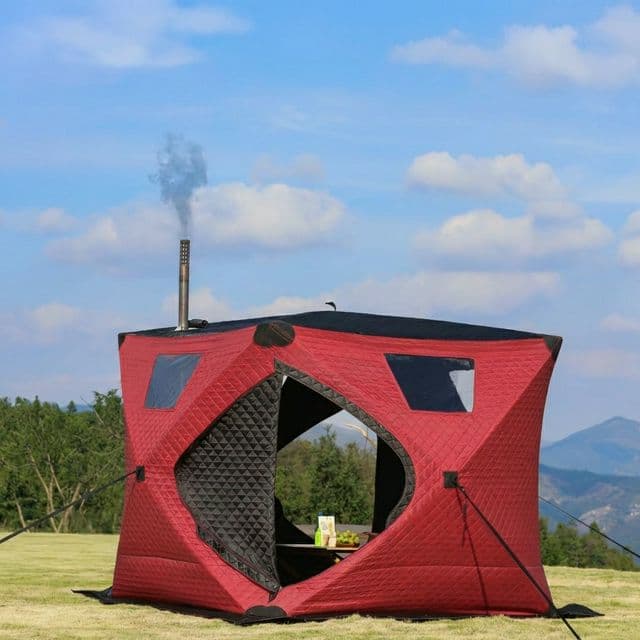
Portable steam sauna setup reference for compact fold-away planning
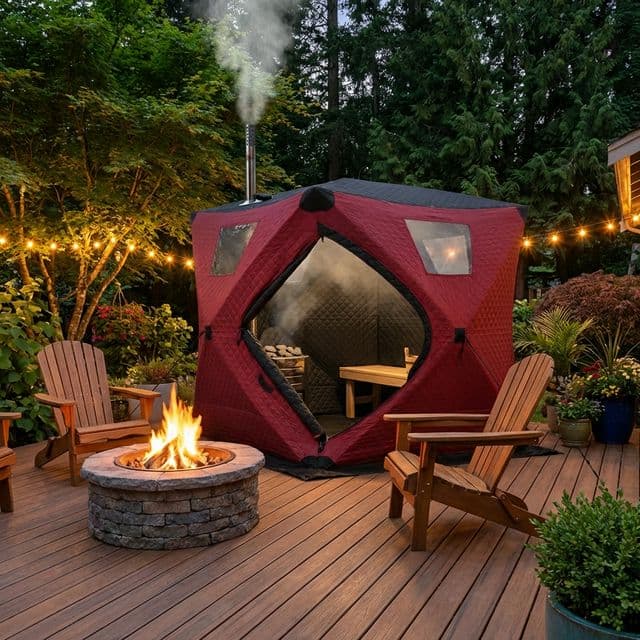
Portable steam sauna setup showing practical usage footprint considerations
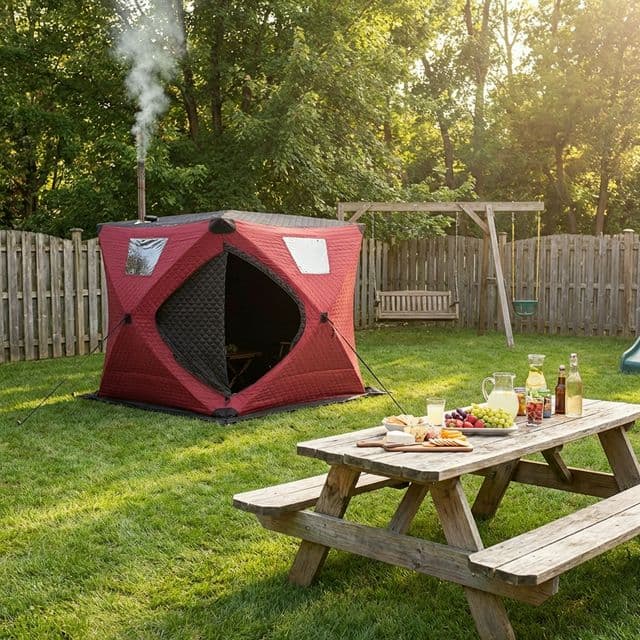
Portable steam sauna family usage scene highlighting multi-user expectation boundaries
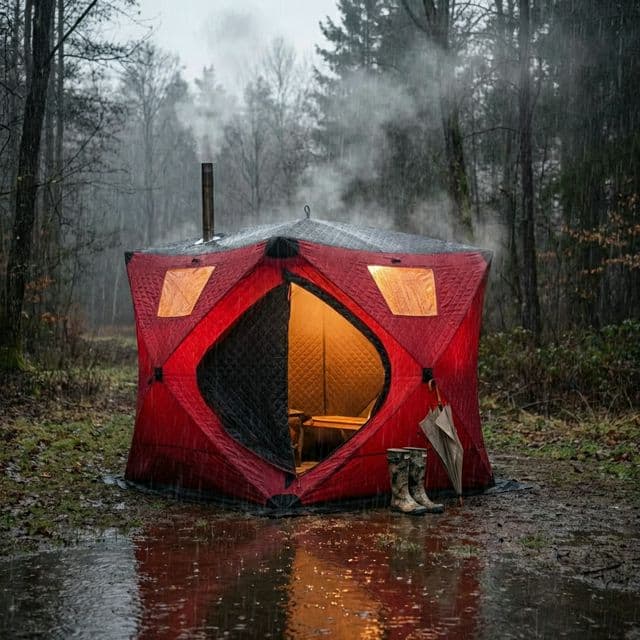
Portable steam sauna humidity-heavy context emphasizing dry-out and storage workflow
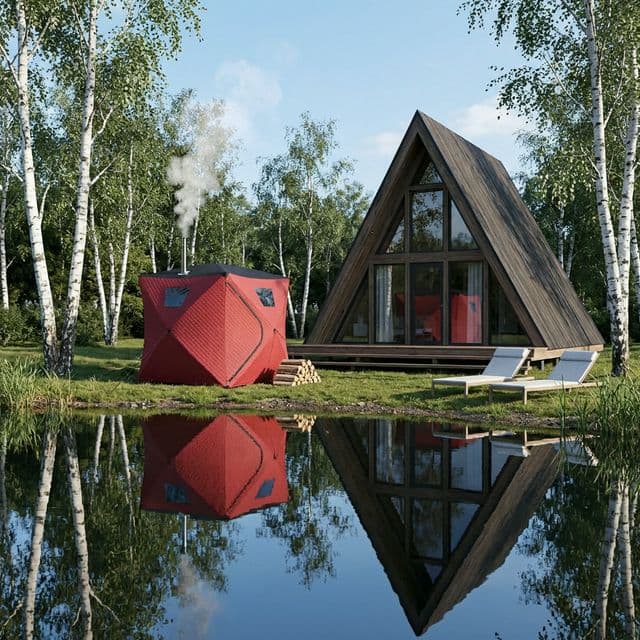
Semi-permanent comfort-oriented portable steam sauna placement reference
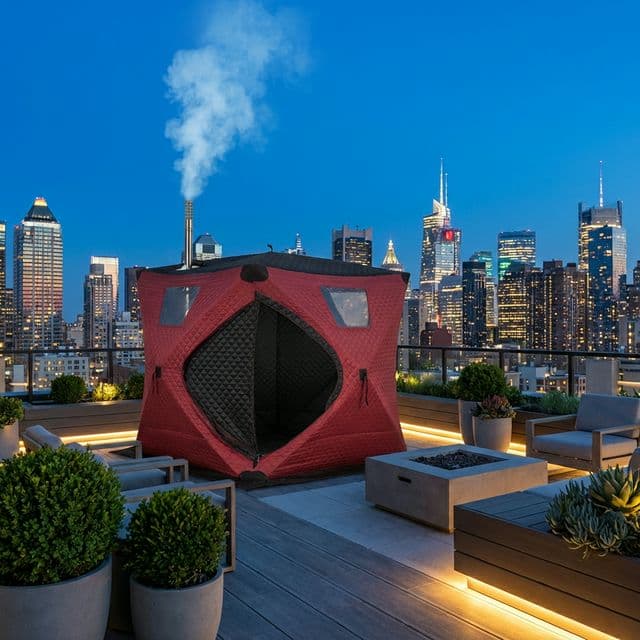
Urban portable steam sauna deployment scenario with limited-space constraints
Send your tool output, room area, storage details, and target product links. We will respond with a practical next-step plan.
FAQ
Do not treat a score alone as permission to buy. Verify outlet, drying, safety proof, and risk profile before checkout.
Disclosure: this page is informational and not medical advice. For heat-sensitive conditions, use clinician-guided boundaries.