
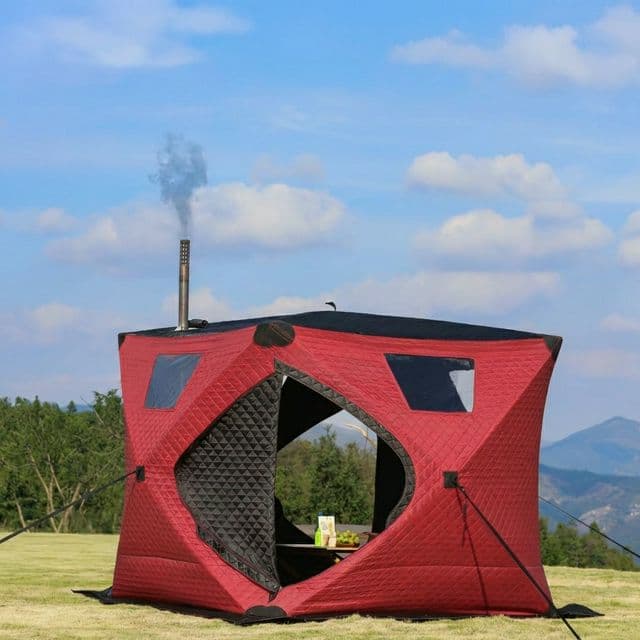
Sauna Tent Fabric Specifications: Thermal Retention, Oxford vs. Canvas, and CPAI-84 Compliance
An engineering and procurement guide to specifying sauna tent materials. Compare Oxford nylon vs. canvas, evaluate thermal retention layers, and understand CPAI-84 fire safety standards for B2B sourcing.
One-Line Decision
When sourcing commercial-grade or retail-ready sauna tents, fabric specification is the ultimate gating factor: prioritize multi-layer quilted Oxford fabrics with verifiable CPAI-84 flame resistance and non-leaching thermal certifications over generic single-layer canvas to minimize liability and maximize thermal efficiency.
Scope and Audience: This comprehensive engineering and procurement guide is designed for buyers, distributors, import managers, and product engineers. It covers material science boundaries, thermal retention performance, and strict compliance standards for sauna tent fabrics operating at internal temperatures up to 200°F (93°C).
1. The Engineering Challenge of Sauna Tent Fabrics
Portable sauna tents operate in extreme micro-environments. Unlike standard camping tents designed merely for weather resistance, a sauna tent must contain intense, rapid heat generation while managing internal humidity and remaining pliable in sub-zero exterior conditions. For procurement teams and product engineers, selecting the correct fabric is not an aesthetic choice; it is a critical safety and performance decision.
The core engineering challenges include:
- Thermal Stress and Degradation: The fabric must withstand continuous internal temperatures ranging from 150°F to 200°F (65°C to 93°C) without melting, warping, or compromising structural integrity.
- Chemical Stability (Off-Gassing): At high temperatures, inferior plastics and synthetic polymers can release volatile organic compounds (VOCs). A safe sauna tent fabric must remain chemically inert.
- Fire Safety (CPAI-84): Especially when paired with wood-fired stoves, the risk of stray embers and extreme stovepipe temperatures mandates strict flame-retardant properties.
- Thermal Retention (R-Value Proxy): The fabric must act as an effective insulator to reduce energy consumption (for electric heaters) or wood consumption, minimizing heat bleed into the cold outdoor environment.
Selecting the wrong material leads to rapid product failure, negative customer reviews regarding heat loss, and severe liability risks associated with melting fabrics or fire hazards.
2. Oxford Nylon vs. Traditional Canvas
When sourcing portable saunas, buyers generally face two primary fabric categories: Synthetic Oxford Nylons (often multi-layered) and Natural/Blended Canvas (cotton or poly-cotton). Understanding the material science behind each is paramount for matching the product to its intended market.
Traditional Canvas (Poly-Cotton Blends)
Historically, sweat lodges and early portable saunas utilized heavy canvas. Canvas is durable, breathable, and provides a traditional aesthetic.
- Thermal Dynamics: Canvas relies on its sheer thickness and density for insulation. However, because it is breathable, it allows heat and steam to escape more readily than sealed synthetic layers. To achieve high temperatures (190°F+), a canvas tent requires a significantly oversized heater.
- Moisture Management: Canvas absorbs moisture. In a sauna environment, this means the fabric becomes heavy and damp. If not dried meticulously before packing, it is highly susceptible to mold, mildew, and rot.
- Weight and Logistics: Heavy canvas (e.g., 10oz or 12oz) makes the tent exceedingly heavy, increasing shipping costs and making single-person setup difficult.
Oxford Nylon (210D, 300D, 600D)
Oxford fabric refers to a specific basket-weave structure that provides exceptional strength-to-weight ratios. In modern commercial sauna tents, Oxford nylon (or polyester) is the industry standard.
- Denier (D) Explained: The "D" stands for Denier, a measure of linear mass density of fibers.
- 210D: Lightweight, highly portable, excellent for rapid-deployment personal sauna tents.
- 300D: The sweet spot for commercial balancing of weight and durability.
- 600D: Heavy-duty, extremely abrasion-resistant, ideal for rental fleets or semi-permanent backyard installations.
- Thermal Dynamics: Oxford nylon is typically used as the inner and outer shell of a quilted structure. The fabric itself is often treated with a polyurethane (PU) coating or a reflective aluminum lining to bounce radiant heat back into the cabin.
- Melting Point Safety: Standard nylon has a melting point of approximately 215°C to 220°C (419°F to 428°F). It can withstand continuous use at 80-120°C (176-248°F). Since a properly operating sauna tent maxes out around 93°C (200°F), high-quality Oxford nylon provides a massive safety margin, ensuring it will neither melt nor leach chemicals under normal sauna conditions.
- Moisture Management: Oxford fabrics, especially those with TPU (Thermoplastic Polyurethane) membranes, are completely waterproof and block steam escape, forcing the heat to remain trapped inside the structure.
Detailed Procurement Comparison Table
The following table breaks down the critical engineering specifications for procurement teams comparing single-layer canvas to various multi-layer Oxford configurations.
| Specification Category | Single-Layer Heavy Canvas | Multi-Layer 210D Oxford Quilt | Multi-Layer 600D Oxford Quilt | Procurement / Engineering Implication |
|---|---|---|---|---|
| Primary Material | 10oz - 12oz Cotton/Poly Blend | 210D Nylon/Polyester with TPU & Cotton core | 600D Nylon/Polyester with TPU & Cotton core | Multi-layer synthetics win on weight-to-insulation ratios, crucial for DTC shipping costs. |
| Thermal Heat Retention | Low to Moderate (Highly dependent on ambient temps) | High (Rapid heat-up, traps steam effectively) | Very High (Superior wind block and insulation) | Oxford quilts allow for smaller, more efficient heaters (reducing overall package cost). |
| Moisture Absorption | High (Prone to mold if stored damp) | Zero (Waterproof outer, wipe-dry inner) | Zero (Waterproof, highly abrasion resistant) | Synthetics eliminate post-sauna drying maintenance, heavily reducing warranty claims for mold. |
| Continuous Heat Limit | ~300°F (149°C) | 212°F - 248°F (100°C - 120°C) | 212°F - 248°F (100°C - 120°C) | Both comfortably exceed the 200°F (93°C) sauna maximum. Must ensure stovepipe jacks use specialized silicone/fiberglass. |
| Fire Retardancy Potential | Requires heavy chemical treatment; wears off over time | Can be intrinsically woven or permanently coated for CPAI-84 | Can be intrinsically woven or permanently coated for CPAI-84 | Treated canvas degrades; treated Oxford maintains compliance longer. |
| Weight per Square Meter | ~340g - 400g+ | ~250g - 300g (including insulation) | ~400g - 450g (including insulation) | 210D is ideal for pop-up portables; 600D is better for premium heavy-duty models. |
| Tear Strength & Abrasion | Excellent | Good | Outstanding | For rental fleets, 600D drastically extends the asset lifecycle. |
| Supplier Verification | MSDS for chemical treatments | CPAI-84 Certificate (Composite test) | CPAI-84 Certificate (Composite test) | Demand third-party lab reports explicitly matching the PO fabric weight. |
| Failure Risk (Boundary) | Rot/Mold in high humidity | TPU delamination if heat exceeds 120°C | TPU delamination if heat exceeds 120°C | Establish a strict QA boundary for maximum continuous temperature testing during prototyping. |
3. CPAI-84: The Non-Negotiable Fire Safety Standard
When evaluating suppliers, CPAI-84 compliance is a definitive pass/fail metric. CPAI-84 is a specification established by the Industrial Fabrics Association International specifically for testing the flame resistance of materials used in camping tents.
Why CPAI-84 Matters for Sauna Tents
Sauna tents—especially those utilizing wood-burning stoves—introduce live fire, extreme heat, and potentially rogue sparks into a confined fabric structure. If a stray ember lands on the exterior roof, or if a user accidentally brushes a hot coal against the interior wall, the fabric must not combust.
CPAI-84 testing ensures that:
- No sustained burning: The fabric must self-extinguish immediately after the ignition source is removed.
- No flaming drips: The fabric must not melt into flaming droplets, which can cause severe secondary burns to occupants.
- Limited char length: The damage to the fabric must be confined to a minimal radius around the ignition point.
The Procurement Risk
Importing and selling sauna tents without verifiable CPAI-84 certification exposes distributors to massive liability. In the event of an incident, the absence of this certification is a glaring indicator of negligence.
Actionable Advice: Do not accept a supplier's verbal assurance of "fireproof material." Demand the physical CPAI-84 laboratory test report. The report should explicitly list the fabric weight (e.g., 210D Oxford) and the specific layered configuration being tested.
4. Multi-Layer Insulation: Maximizing the R-Value Proxy
A single layer of nylon—no matter the denier—offers virtually zero thermal resistance. It acts as a windbreak and vapor barrier, but ambient cold will rapidly cool the tent through conductive heat transfer. To achieve true sauna temperatures in winter environments, the fabric must be engineered as a composite.
A commercial-grade sauna tent fabric typically utilizes a 3-layer or 4-layer quilt:
- The Outer Shell (e.g., 300D Oxford): Treated for UV resistance, CPAI-84 flame retardancy, and DWR (Durable Water Repellent) to shed snow and rain.
- The Moisture Barrier (TPU Film): A thin thermoplastic polyurethane layer that ensures absolute wind and water impermeability.
- The Thermal Core (Insulation Cotton/Fiberfill): A high-loft, lightweight synthetic cotton layer (typically 100g to 150g per square meter). This layer traps dead air, acting as the primary thermal break against the cold outdoor air.
- The Inner Shell (Reflective or standard Oxford): Often utilizing a heat-reflective lining, this layer bounces infrared heat back toward the occupants and resists the high-humidity steam environment.
This quilted architecture ensures that an electric or wood-fired heater is heating the air inside the tent, rather than continuously fighting to replace heat lost through the walls.
5. Engineering and Sourcing Checklist
For supply chain managers, procurement teams, and brand owners, utilize this checklist when evaluating a factory's sauna tent fabric specifications.
- Specify Denier by Application: Request 210D for ultra-light portable models, 300D for general consumer use, and 600D for premium, heavy-duty, or rental fleet models.
- Verify Melting Points: Confirm with the manufacturer that the synthetic fabric and any inner coatings are certified chemically inert and stable up to at least 248°F (120°C).
- Demand CPAI-84 Certification: Obtain the laboratory test report for flame retardancy. Ensure the test covers the exact multi-layer composite being purchased, not just the outer shell.
- Check Insulation Density: Specify the weight of the thermal cotton layer (e.g., 120gsm). Thicker insulation increases bulk but drastically improves cold-weather performance.
- Inspect the Stovepipe Jack Material: The fabric immediately surrounding the chimney hole must be a specialized high-temperature material (e.g., silicone-coated fiberglass), capable of withstanding 500°F+ (260°C+). Standard Oxford nylon will melt if in direct contact with a hot chimney.
- Audit the Seams: Ensure quilted seams are robust. In high-heat, high-humidity environments, weak stitching will unravel. Ensure zippers (preferably YKK) have thermal flaps to prevent heat bleed.
Supplier RFQ & Acceptance Fields (Action Checklist)
When submitting an RFQ (Request for Quotation) or finalizing a PO (Purchase Order) with a factory, ensure the following fields are explicitly documented to prevent specification fade:
- Outer Shell Spec:
[e.g., 300D Oxford Polyester, PU Coated, CPAI-84 treated] - Moisture Barrier Spec:
[e.g., 0.15mm TPU clear film] - Thermal Layer Spec:
[e.g., 150gsm non-glue needle-punched cotton] - Inner Shell Spec:
[e.g., 210D Oxford, WR treated, embossed] - Stove Jack Material Rating:
[e.g., Flame-retardant fiberglass, rated to 300°C] - Acceptance Criteria:
Visual seam inspection, 24-hour heat cycle test at 100°C without delamination, CPAI-84 third-party lab verification prior to shipping.
6. Frequently Asked Questions (FAQ)
How do I verify a supplier's CPAI-84 certificate is legitimate?
Always check the issue date, the testing laboratory (e.g., SGS, Intertek, or TUV), and ensure the fabric listed on the report matches your exact PO specification (e.g., "300D Oxford Polyester with TPU and 120g cotton"). You can often verify the report number directly on the testing laboratory's official portal. Never accept a heavily redacted or generic "fabric" certificate.
What is the acceptable tolerance for thermal cotton weight (gsm) during quality control inspections?
In mass manufacturing, a standard tolerance for thermal cotton is ±5% to ±10%. For a specified 150gsm cotton layer, expect an acceptable range of 135gsm to 165gsm. Anything lower compromises the tent's cold-weather R-value proxy, while anything higher can cause bulkiness and stitching stress.
Does 210D Oxford fabric provide enough insulation for winter use, or do I need 600D?
Denier (D) indicates the thickness of the outer nylon thread, not the insulation value. A 210D outer shell paired with a thick 150gsm thermal cotton core will insulate better than a 600D shell paired with no insulation. However, 600D provides vastly superior tear resistance against ice, branches, and heavy wind, making it better for harsh environments.
Will Oxford nylon off-gas or leach chemicals at sauna temperatures?
High-quality, purpose-built Oxford nylon (rated for continuous use at 120°C/248°F) will not melt or leach toxic VOCs at standard sauna temperatures (up to 200°F). However, cheap, non-certified tent materials repurposed from basic camping supplies may emit odors or warp. Always demand temperature certifications from your supplier.
Why do some manufacturers still use Canvas?
Canvas appeals to purists and those who prefer natural, breathable materials over synthetics. It has excellent intrinsic heat tolerance and a rugged, traditional aesthetic. However, for B2B distributors, the heavy weight, susceptibility to mold, and lower thermal retention without extreme thickness make it a niche choice compared to modern insulated Oxford synthetics.
7. Sources and References
The data and engineering principles discussed in this guide are grounded in established material science and regulatory standards:
- CPAI-84 Flammability Standard: The legacy tentage specification provides test methods for evaluating flame resistance of fabrics in camping tentage. Review ATA's CPAI-84 update notice.
- U.S. Consumer Product Safety Commission (CPSC): The CPSC sporting and camping equipment FAQ identifies CPAI-84 as a flammability testing protocol for general-use camping tents and notes that importers should ensure near-flame products are not highly flammable. Read the CPSC sporting and camping equipment FAQ.
- ASTM F3431: The current ASTM recreational camping tent flammability specification covers controlled small-flame test methods for tent materials and states that it is derived from CPAI-84. Review ASTM F3431.
- Advanced Textiles Association (ATA): The primary trade association for the specialty fabrics and technical textiles industry provides industry education and sourcing context for advanced textile buyers. Visit Textiles.org.
Start Sourcing Compliant, High-Performance Fabrics
At TentSaunaSupply, we do not compromise on material engineering. Our commercial and portable sauna tents are constructed using meticulously specified multi-layer Oxford fabrics that guarantee superior thermal retention, verifiable CPAI-84 fire safety compliance, and zero off-gassing at extreme temperatures.
Stop guessing on your supply chain liability. Whether you need lightweight 210D pop-ups for retail or heavy-duty 600D models for commercial deployment, we provide transparent spec sheets and scalable B2B fulfillment.
Contact our engineering and procurement team today to review our material certifications and discuss wholesale pricing for your next project.
Ready to upgrade your catalog? Compare procurement criteria in our sauna tent buyer guide or review shortlist risks in our best sauna tent evaluation report.
Author

Categories
More Posts
Infrared vs. Steam Portable Sauna Tents: Engineering Specifications and Procurement Guide
Compare infrared vs. steam portable sauna tents for B2B buyers and importers: heat transfer, electrical load, fabric risks, EMF testing, and supplier QA.
PFAS-Free Sauna Tent Manufacturing: Preparing for Global Chemical Bans in Textiles (2026-2027)
PFAS-free sauna tent manufacturing guide for B2B buyers: audit TOF risk, compare DWR options, and prepare for California and EU textile bans in 2026-2027.
Portable Sauna Market Update (2026-W14): Recall, Import eFiling Countdown, and EU Enforcement Signals
A 30-day, evidence-backed update translating CPSC recall action, U.S. import eFiling milestones, and EU Safety Gate enforcement data into practical buying, sourcing, and installation decisions.