
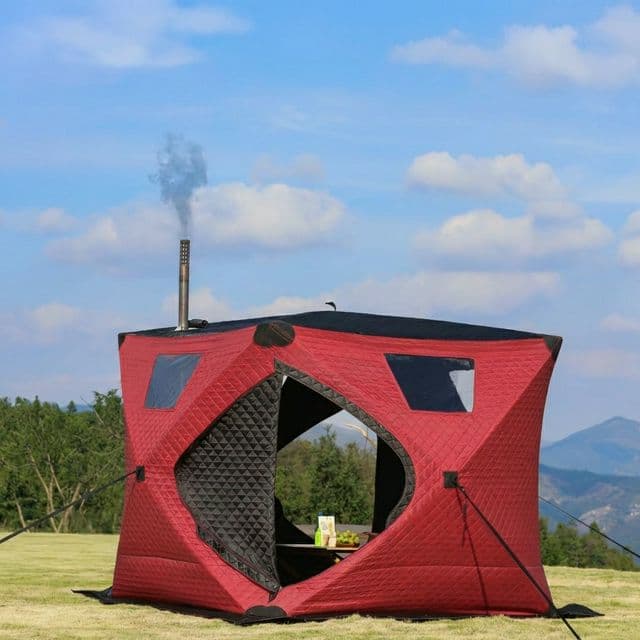
PFAS-Free Sauna Tent Manufacturing: Preparing for Global Chemical Bans in Textiles (2026-2027)
PFAS-free sauna tent manufacturing guide for B2B buyers: audit TOF risk, compare DWR options, and prepare for California and EU textile bans in 2026-2027.
One-Line Decision
For B2B procurement teams, continuing to import sauna tents coated with traditional PFAS-based Durable Water Repellents (DWR) carries imminent regulatory and financial risks; immediately audit your supply chain for Total Organic Fluorine (TOF) levels to ensure compliance with the 2026 EU REACH limits and the upcoming 2027 California 50 ppm threshold.
Scope and Audience: This comprehensive evaluation is engineered for B2B buyers, procurement teams, distributors, outdoor gear importers, and product engineers. It provides a deep dive into the regulatory landscape of Per- and polyfluoroalkyl substances (PFAS) in textiles, the engineering challenges of PFAS-free waterproofing in high-heat environments, and verifiable sourcing strategies.
Applicability and Limits: Regulatory details are based on published mandates up to July 20, 2026. This guide translates legal frameworks (e.g., California AB 1817, EU Regulation 2024/2462) into supply chain actions. It is not formal legal advice. Always consult with your compliance officer or a qualified trade attorney to verify exact customs requirements for your specific jurisdiction.
1. The End of the "Forever Chemical" Era in Outdoor Gear
For decades, the outdoor textile industry—including the manufacturing of portable sauna tents—relied heavily on Per- and polyfluoroalkyl substances (PFAS) to achieve unmatched water, oil, and dirt repellency. These fluorocarbons, particularly C8 and later C6 chemistries, formed the backbone of the Durable Water Repellent (DWR) finishes applied to Oxford nylons and canvas exteriors.
In a portable sauna tent application, DWR serves a critical dual function:
- External Protection: It prevents rain and environmental moisture from saturating the outer shell of an outdoor sauna.
- Internal Moisture Management: It helps prevent the fabric from absorbing internal steam condensation, forcing the water to bead up and run down to the floor mat rather than soaking the insulation layer.
However, PFAS are now universally recognized as "forever chemicals" due to their extreme persistence in the environment and human body. As a result, global regulators have initiated a sweeping crackdown on their presence in consumer textiles. For importers and distributors of sauna tents, this is no longer a future sustainability goal—it is a present-day operational crisis. Products that fail to meet new thresholds risk border seizure, marketplace bans, and severe corporate fines.
2. Global Regulatory Cliffs: 2026–2027
Procurement teams must align their ordering cycles with the enforcement dates of major global markets. Ignorance of the supply chain's chemical makeup is no longer a valid defense.
California AB 1817 and the 2027 Threshold Drop
California has historically led North American chemical regulation. AB 1817 already banned "intentionally added" PFAS in textile articles. However, the critical milestone for importers occurs on January 1, 2027.
- Current Standard: The permissible threshold for regulated PFAS (measured as Total Organic Fluorine, or TOF) is 100 parts per million (ppm).
- The 2027 Cliff: On January 1, 2027, this threshold drops aggressively to 50 ppm.
- The Procurement Risk: Many factories attempting "PFAS-free" production still use contaminated machinery or shared vats. While they may not intentionally add PFAS, cross-contamination often results in TOF levels between 60 ppm and 90 ppm. Tents that pass customs today will be illegal to sell in California by 2027 if they sit in a warehouse.
European Union REACH and PFHxA Restrictions
The EU employs a substance-specific and sweeping group-restriction approach under the REACH framework.
- Commission Regulation (EU) 2024/2462: This regulation directly targets undecafluorohexanoic acid (PFHxA), its salts, and related substances—the exact chemicals prevalent in modern C6 DWR coatings used on tents.
- Enforcement Timeline: As of October 10, 2026, strict limits of 25 parts per billion (ppb) for PFHxA and 1,000 ppb for PFHxA-related substances apply to clothing and related accessories. By October 10, 2027, these stringent limits are extended to all other textile articles, including outdoor tents and portable structures.
- The Procurement Risk: The EU’s limits are measured in parts per billion, requiring exceptionally clean manufacturing environments. A single batch of old DWR solution mistakenly applied to your sauna tents will trigger a Safety Gate alert and immediate market withdrawal.
3. Engineering Challenges of PFAS-Free Sauna Tents
Replacing C6 DWR isn't a simple swap. Sauna tents operate in an extreme environment: temperatures between 120°F and 140°F (49°C - 60°C), combined with either 100% saturated humidity (steam models) or intense radiant heat (infrared models).
When factories attempt to move to PFAS-free alternatives, they typically utilize one of three chemistries:
- Silicone-based finishes
- Polyurethane (PU) and Dendrimer finishes
- Hydrocarbon-based waxes
The "Wetting Out" Problem
Fluorocarbons are unique because they lower the surface energy of the fabric so drastically that neither water nor oil can stick. PFAS-free alternatives generally only repel water, not oil (like sebum from human skin or lotions). Over time, as users touch the inside of the sauna tent, body oils compromise the PFAS-free DWR. When the DWR fails, the fabric "wets out"—meaning water stops beading and instead saturates the outer nylon layer. While the internal TPU membrane will still stop the water from leaking entirely, a wetted-out tent loses its breathability, feels heavy, takes much longer to dry, and becomes highly susceptible to mold.
The Thermal Degradation Risk
Many early-generation PFAS-free coatings degrade rapidly when exposed to high temperatures. In an infrared sauna tent, where carbon heating panels can reach surface temperatures exceeding 180°F, an unstable silicone or hydrocarbon DWR can volatilize, off-gassing into the tent interior and ruining the waterproofing effect completely.
Engineering Mandate: Procurement teams must specify that the PFAS-free DWR applied to the fabric is thermally stable up to at least 212°F (100°C) without losing its hydrostatic resistance.
4. Quantitative Comparison: Legacy C6 DWR vs. PFAS-Free Alternatives
This table outlines the performance and compliance trade-offs when shifting a sauna tent manufacturing line from legacy chemicals to compliant alternatives.
| Engineering Dimension | Legacy C6 Fluorocarbon (PFAS) | Silicone-Based DWR (PFAS-Free) | Polyurethane/Dendrimer DWR (PFAS-Free) | Procurement & Quality Implication |
|---|---|---|---|---|
| Water Repellency (Initial) | Exceptional (AATCC 22 rating: 100) | Excellent (AATCC 22 rating: 90-100) | Excellent (AATCC 22 rating: 90-100) | All pass initial water bead testing. |
| Oil & Dirt Repellency | High | Very Low | Low | PFAS-free tents require stricter user cleaning protocols to prevent body oils from degrading performance. |
| Thermal Stability (Sauna Heat) | High (Stable > 300°F) | Moderate to High (Must specify high-temp grade) | Moderate (Risk of tackiness at > 160°F) | For Infrared tents, PU-based DWRs must be rigorously heat-tested to prevent stickiness. |
| Durability (Wash/Wipe Cycles) | Lasts 20-30 cycles | Degrades after 10-15 cycles | Degrades after 15-20 cycles | PFAS-free fabrics may require users to re-apply aftermarket DWR sprays sooner. |
| California 2027 Compliance | Fail (Illegal to import/sell) | Pass (< 50 ppm TOF possible) | Pass (< 50 ppm TOF possible) | Legacy inventory becomes dead stock in strict jurisdictions. |
| EU REACH Compliance (2026/27) | Fail (Triggers Safety Gate alerts) | Pass | Pass | Non-compliance risks immediate brand damage and EU market exclusion. |
| Cost Impact | Baseline | + 5% to 8% per yard | + 8% to 12% per yard | Buyers must absorb a slight raw material cost increase for verifiable clean chemistry. |
5. Sourcing Checklist: Securing a Compliant Supply Chain
Do not accept a supplier's verbal assurance or an unverified "eco-friendly" badge. Greenwashing in overseas manufacturing is rampant. If your company is the Importer of Record, you hold the legal liability for the chemical composition of the goods.
Execute this checklist before issuing any PO for 2026/2027 inventory:
- Demand Total Organic Fluorine (TOF) Testing: Do not just ask for "PFAS-free." Ask for a third-party laboratory report (e.g., from SGS, Intertek, or TÜV) stating that the Total Organic Fluorine content of the finished fabric is below 50 ppm.
- Verify Test Scope: Ensure the lab tested the finished fabric—meaning the Oxford cloth after the DWR coating, dye, and TPU lamination were applied. Testing raw yarn is useless.
- Audit Factory Cross-Contamination: Ask your supplier if they run PFAS-based fabrics for other clients on the same coating lines. If they do, demand proof of their vat-flushing and line-cleaning Standard Operating Procedures (SOPs). Residual C6 from a previous run can easily push your batch over the 50 ppm limit.
- Update Packaging and Marketing: Once compliance is verified, explicitly label your products and packaging as "PFAS-Free" and "C6/C8-Free." This is a major B2B and B2C selling point that justifies premium pricing.
- Revise User Manuals: Add instructions for the end-user on how to properly maintain a PFAS-free sauna tent. Emphasize wiping down body oils and suggest compatible, eco-friendly aftermarket waterproofing treatments.
- Check Accessory Components: Zippers, seam tapes, and carrying bags are also considered "textile articles" under many regulations. Ensure your supplier isn't using PFAS-free fabric but sewing it with PFAS-coated waterproof zippers.
6. Frequently Asked Questions (FAQ)
What happens if our current inventory is not PFAS-free?
In jurisdictions like California, products manufactured before the effective dates may sometimes have sell-through periods, but the exact grace period varies. However, major retailers are actively purging non-compliant products from their catalogs regardless of the law. You must plan to transition your supply chain entirely before the end of 2026 to avoid stranded assets.
Will a PFAS-free sauna tent leak?
No, assuming the tent utilizes a high-quality internal TPU (Thermoplastic Polyurethane) membrane. The external DWR prevents the outer fabric from soaking, but the internal TPU is what actually makes the tent physically waterproof and traps the steam. PFAS-free DWR simply means the outer shell might wet-out slightly faster under heavy rain, but the steam will remain contained.
How do I know if my current supplier uses PFAS?
If your supplier provides "waterproof" or "stain-resistant" Oxford nylon but cannot provide a recent TOF laboratory test, you should assume it contains PFAS (likely C6). Prior to 2024, C6 fluorocarbons were the absolute industry standard for outdoor gear.
Does the shift to PFAS-free fabrics affect the fire retardancy (CPAI-84)?
It can. The chemical interaction between new PFAS-free DWR finishes and standard flame retardants can alter the fabric's flammability profile. You must require your supplier to pass the CPAI-84 (or ASTM F3431) flammability test after the new PFAS-free chemistry has been applied.
Are there any exemptions for portable saunas?
Generally, no. Under California AB 1817, "outdoor apparel for severe wet conditions" has a temporary extension until 2028, but a portable sauna tent is classified as a textile article/equipment, not severe weather apparel. You must assume the January 1, 2027 deadline applies to your product.
7. Sources and References
To validate the compliance limits and transition timelines discussed in this guide, procurement teams must consult primary regulatory frameworks:
- California AB 1817: The legislative text detailing the prohibition of intentionally added PFAS in textile articles and the specific threshold reductions to 50 ppm by 2027. Review the Legislative Bill Text.
- European Commission Regulation (EU) 2024/2462: The official REACH amendment restricting PFHxA, its salts, and related substances in clothing, textiles, and footwear. Access the EUR-Lex permanent document.
- European Commission PFAS Pollution Overview: The official EU policy overview explaining why PFAS are being restricted, where water-repellent textiles fit, and why broad EU-wide controls are moving beyond substance-by-substance rules. Monitor European Commission PFAS policy.
Upgrade to a Future-Proof Supply Chain
Sourcing portable sauna tents is no longer just about evaluating fabric denier and heater wattage. Navigating the global phase-out of PFAS requires an OEM partner with sophisticated chemical management and rigorous third-party testing protocols.
At TentSaunaSupply, we have completely engineered PFAS out of our production lines. Our next-generation Oxford tent shells utilize advanced silicone-based DWR and hydrolysis-resistant TPU membranes that easily pass the strict 50 ppm TOF limits required for 2027 compliance.
Don't let your brand get caught with unsellable, non-compliant inventory. Secure your supply chain before the regulatory cliff.
Contact our engineering and procurement team today to request a technical spec sheet on our PFAS-free fabrics, review our SGS laboratory TOF test results, and discuss how we can transition your existing product line to compliant manufacturing.
Author

Categories
More Posts

Portable Sauna Market Update (2026-W14): Recall, Import eFiling Countdown, and EU Enforcement Signals
A 30-day, evidence-backed update translating CPSC recall action, U.S. import eFiling milestones, and EU Safety Gate enforcement data into practical buying, sourcing, and installation decisions.
Infrared vs. Steam Portable Sauna Tents: Engineering Specifications and Procurement Guide
Compare infrared vs. steam portable sauna tents for B2B buyers and importers: heat transfer, electrical load, fabric risks, EMF testing, and supplier QA.
Sauna Tent Fabric Specifications: Thermal Retention, Oxford vs. Canvas, and CPAI-84 Compliance
An engineering and procurement guide to specifying sauna tent materials. Compare Oxford nylon vs. canvas, evaluate thermal retention layers, and understand CPAI-84 fire safety standards for B2B sourcing.