
Steam Sauna for Sale Readiness Planner
Result states are decision aids, not permit or medical clearance. Confirm local code and personal health boundaries before heat escalation.
Include room dimensions, panel details, and planner score for faster review.
Tool output to report bridge
Use your checker result as a route state, then verify only the relevant report sections before moving money.
Mobile tip: swipe horizontally to view full comparison columns and source notes.
| Checker status | Interpretation | Verify in report | Immediate next move |
|---|---|---|---|
| Ready to Compare Models | Core room, power, and moisture assumptions are consistent enough to move into seller shortlist and contract checks. | Key numbers + offer proof + comparisons | Email [email protected] with two listings and your circuit details before checkout. |
| Conditional Plan | At least one blocker remains thin: breaker headroom, drainage, venting path, or written seller terms. | Fit/no-fit + risk matrix + scenarios | Close one high-impact gap first, then rerun the tool with conservative assumptions. |
| Not Ready Yet | Current inputs signal elevated rework or safety risk relative to the advertised listing urgency. | Risk matrix + known/unknowns + FAQ safety cluster | Pause payment and request a staged plan by email before reopening purchase. |
Report summary: buyer-level conclusions
These conclusions compress market, legal, and setup evidence into decision statements with explicit boundaries.
You can run the checker immediately and get an actionable result state, not just a long reading list.
After the tool result, the report layer gives dated numbers, sources, and boundaries for purchase decisions.
If you only need wellness reading and no buying action, use evidence-only pages first, then return when listing review starts.
Current SERP pattern remains commerce-first, but buyers still need evidence and guardrails before paying.
This page keeps tool interaction above the fold, then adds proof modules for shipping, billing dispute timing, and safety boundaries in the same route.
SERP intent review for "steam sauna for sale" completed April 24, 2026.
EIA table 5.6.B January 2026 range: 10.91 to 39.62 cents/kWh.
The same usage profile can vary by more than 3x in annual run cost before maintenance or HVAC effects.
U.S. EIA Electric Power Monthly tables 5.3 and 5.6.B (checked April 24, 2026).
Mail/Internet/Phone order rule: no stated ship time defaults to a 30-day shipment expectation; credit-application orders can shift to 50 days.
Missing written ship windows should downgrade confidence before any deposit or financing step.
FTC business guidance + 16 CFR 435.2 (checked April 24, 2026).
Reg Z billing-error process: consumer notice in 60 days, issuer acknowledgement in 30 days, and resolution within two billing cycles (max 90 days).
Dispute timing and coverage can change by payment rail, so checkout method is a decision input, not a checkout detail.
CFPB Regulation Z section 1026.13 and boundary note to Regulation E (checked April 24, 2026).
BASC references 50 cfm intermittent or 20 cfm continuous bathroom ventilation baselines; EPA advises controlling indoor humidity.
Steam sessions add moisture load that can outlast the session if ventilation and dry-out plans are weak.
DOE/PNNL BASC ventilation references and EPA humidity guidance, checked April 24, 2026.
CDC clinician guidance highlights medication classes that can raise heat-risk sensitivity.
Technical feasibility does not override physiology. Health-profile boundaries stay visible in tool outputs and FAQ.
CDC heat and medications clinician guidance (last reviewed September 18, 2025), checked April 24, 2026.
Action speed by score band
- 75-100: shortlist is reasonable, but keep shipping and warranty proof checks active.
- 54-74: hold payment and close one weak layer before moving money.
- 0-53: pause purchase and run minimum-upgrade path first.
Key numbers with date markers
Every numeric claim includes context and source timing to reduce planning drift and overconfidence.
Default U.S. electricity baseline
Use as neutral starting input before replacing with your utility tariff.
Source: EIA table 5.3, February 2026 (published April 23, 2026)
Observed state-rate spread
Utah to Hawaii spread can shift annual operating cost by more than 3x for similar usage.
Source: EIA table 5.6.B, January 2026 (released March 24, 2026)
No-shipping-time legal default
If no shipping time is promised, FTC guidance frames a 30-day baseline and delay/refund obligations.
Source: 16 CFR 435.2(a)(1) + FTC business guide (checked April 24, 2026)
Credit-application shipping allowance
If order receipt is tied to credit approval and no ship time is stated, FTC guidance allows a 50-day basis.
Source: FTC business guide on Mail/Internet/Phone order rule (checked April 24, 2026)
Billing-error consumer notice window
Charge issues should be documented and notified quickly to preserve formal dispute process.
Source: CFPB Reg Z section 1026.13(a) (checked April 24, 2026)
Issuer acknowledgement baseline
Reg Z sets an acknowledgement timeline and structured resolution process.
Source: CFPB Reg Z section 1026.13(c) (checked April 24, 2026)
Issuer resolution upper bound
Reg Z sets a two-cycle resolution target with a hard maximum of 90 days after notice receipt.
Source: CFPB Reg Z section 1026.13(c)(2) (checked April 24, 2026)
Ventilation baseline (bath context)
BASC guidance references ASHRAE 62.2 rates and notes shower-heavy bathrooms can need higher flow.
Source: PNNL BASC bathroom exhaust fan guidance (checked April 24, 2026)
Humidity-control target band
EPA mold guidance positions this as a control band to reduce persistent indoor moisture risk.
Source: EPA mold and moisture basics (checked April 24, 2026)
Recent federal recall signal
CPSC report includes two flame and six smoke incidents, which is enough to keep model/serial checks mandatory.
Source: CPSC recall notice (March 26, 2026)
Electricity-rate sensitivity scenarios
Same usage pattern, different rate context. Use this table before assuming headline price equals ownership cost.
Mobile tip: swipe horizontally to view full comparison columns and source notes.
| Setup class | Monthly energy | Electricity rate | Monthly cost | Annual cost | Boundary note |
|---|---|---|---|---|---|
| Compact steam shower class (4.5 kW) | 50.8 kWh | 10.91 cents/kWh (UT, Jan 2026) | $5.55 | $67 | Assumes 4 sessions/week, 22-minute active steam, 16-minute warmup, envelope factor 1.03. |
| Compact steam shower class (4.5 kW) | 50.8 kWh | 17.55 cents/kWh (US avg, Feb 2026) | $8.92 | $107 | Same usage assumptions; excludes standby, HVAC interaction, and fixed utility charges. |
| Compact steam shower class (4.5 kW) | 50.8 kWh | 39.62 cents/kWh (HI, Jan 2026) | $20.14 | $242 | Same load profile; illustrates price-region sensitivity before install or maintenance costs. |
| Custom steam room class (7.5 kW) | 102.6 kWh | 10.91 cents/kWh (UT, Jan 2026) | $11.19 | $134 | Assumes same weekly usage with 24-minute warmup class. |
| Custom steam room class (7.5 kW) | 102.6 kWh | 17.55 cents/kWh (US avg, Feb 2026) | $18.00 | $216 | Useful planning midpoint before local tariff replacement. |
| Custom steam room class (7.5 kW) | 102.6 kWh | 39.62 cents/kWh (HI, Jan 2026) | $40.64 | $488 | Highlights multiplicative effect of higher kW class plus high-rate region. |
Formula basis: tool default profile (4 sessions/week, 22-minute active steam). Scenario aid only, not a utility bill guarantee.
Fit and no-fit audience boundaries
Use this table to confirm whether the page workflow matches your current buying stage.
Mobile tip: swipe horizontally to view full comparison columns and source notes.
| Audience state | Profile | Why this page works | Caution |
|---|---|---|---|
| Best fit | Buyer with a live listing, rough room measurements, and circuit details ready. | Tool output can immediately route to shortlist vs hold, and report sections close evidence gaps fast. | Still verify written ship window, warranty language, and return terms before payment. |
| Conditional fit | Buyer has offer urgency but missing one core proof layer (power, drainage, or policy terms). | The page exposes the smallest actionable gap to resolve before spending. | Do not treat conditional output as purchase approval. |
| Poor fit right now | No room envelope data, no circuit clarity, and no written seller commitments. | The page can still provide a minimum information checklist. | Pause checkout and gather fundamentals first; otherwise rework risk stays high. |
| Safety-first path | Medication or pregnancy heat-risk profile is present. | Tool and FAQ keep health boundary visible even when listing looks attractive. | Escalate through clinician-informed thresholds before any routine change. |
Offer-proof checklist before payment
This is the minimum documentation layer to reduce surprises after checkout.
Mobile tip: swipe horizontally to view full comparison columns and source notes.
| Checkpoint | Ask seller for | Failure signal | Action |
|---|---|---|---|
| Listing identity | Exact model name, heater class, electrical requirement, and latest manual PDF link. | Specs differ between category page and checkout SKU page. | Request written clarification before payment. If no clarity, downgrade confidence band. |
| Shipping commitment | Written ship window, carrier type, delay process, and cancellation/refund path. | Only marketing language like “ships soon” without dates or terms. | Treat as verification gap and hold deposit until written policy is provided. |
| Warranty evidence | Coverage split (room shell vs heater vs parts), exclusions, claim workflow, and response window. | One-line warranty text with no claim process. | Assume higher post-sale risk and compare against sellers with complete policy docs. |
| Return and cancellation | Return window, restocking fee, freight-damage process, and refused-delivery handling. | Policy hidden or only visible after checkout. | Do not rely on generic “3-day cancellation” assumptions for online sales. |
| Payment protection | Invoice copy, statement descriptor, supported payment rails, and written dispute/escalation channel with timestamps. | Only irreversible payment rails (wire, app transfer) or no written dispute path. | Prefer rails with documented error-resolution workflow and preserve full records from day one. |
Rule scope and boundary map
This table separates what each rule controls from what it does not, so policy assumptions stay defensible.
Mobile tip: swipe horizontally to view full comparison columns and source notes.
| Rule | Applies when | Does not apply when | Timing signal | Buyer action |
|---|---|---|---|---|
| 16 CFR 435.2 (Mail/Internet/Phone order rule) | Online/mail/phone orders when shipping time is missing or delayed. | Does not guarantee instant cancellation rights; it governs shipment timing process. | 30-day default, or 50 days for certain credit-application orders. | Request written ship date, delay notice, and refund path before prepayment. |
| FTC cooling-off rule boundary | Covered door-to-door and temporary-location in-person sales where FTC rule conditions are met. | Most online, phone, and mail orders; no blanket 3-day ecommerce cancellation. | 3 business days only in covered sale contexts. | Do not rely on a universal 3-day cancellation assumption for listing checkout. |
| CFPB Reg Z 1026.13 (credit-card billing errors) | Credit-card billing errors with written notice and preserved records. | Some debit/prepaid transfer disputes can be routed under Regulation E instead. | Consumer notice within 60 days; issuer acknowledgement within 30 days; resolution within two cycles (max 90 days). | Treat checkout method as risk control, and keep timestamped evidence from first transaction step. |
Evidence status: rule text is public and date-stamped. Seller-level enforcement quality remains uncertain and is tracked in the known-vs-unknown register.
Methodology and assumptions
The checker is deterministic. These steps describe how tool output and report-layer decisions stay aligned.
Enter room envelope, budget, usage profile, and available circuit class. Keep assumptions realistic, not optimistic.
The checker maps space ratio, power headroom, moisture-risk penalties, and budget gap into one score and result band.
Use Ready / Conditional / Not Ready as routing states, not as marketing labels.
Run listing identity, shipping, warranty, return, and payment documentation checks before checkout.
If confidence is low, reduce assumptions (higher run time, lower circuit margin, stricter policy interpretation) and rerun.
Email [email protected] with result state and seller documents to convert uncertainty into next-step tasks.
Evidence ledger
Core claims are tied to dated sources or explicitly marked uncertain where denominator-quality public data is missing.
Why trusted: Official monthly public-energy release with dated table publication.
Used for: Cost cards, scenario sensitivity, and default tariff baseline in tool context.
Source: EIA Electric Power Monthly tables 5.3 and 5.6.B
Why trusted: EIA FAQ explains scope limits for average price comparisons.
Used for: Known/unknown table and rate-sensitivity boundary notes for local tariff replacement.
Source: EIA FAQ on average electricity pricing
Why trusted: FTC business guidance maps directly to enforceable timing language in 16 CFR 435.2.
Used for: Offer-proof checks and rule-scope table for prepayment diligence.
Source: FTC business guide + 16 CFR 435.2
Why trusted: FTC cooling-off explanatory guidance.
Used for: Rule-scope table, return-policy FAQ boundary, and risk-matrix notes.
Source: FTC cooling-off rule consumer guidance
Why trusted: Codified federal regulation text.
Used for: Payment-protection checks, key-number timelines, and payment-rail risk.
Source: CFPB / eCFR Regulation Z section 1026.13
Why trusted: CDC clinician-facing guidance with review date.
Used for: Tool interpretation notes and safety FAQ cluster.
Source: CDC heat and medications clinician guidance
Why trusted: Building-science and environmental-health references.
Used for: Methodology assumptions and moisture-risk mitigation steps.
Source: DOE/PNNL BASC + EPA humidity guidance
Why trusted: Federal recall bulletin with published unit count and incident details.
Used for: Risk-matrix recall checks and pre-activation checklist.
Source: CPSC sauna heater kit recall (March 26, 2026)
Why trusted: Known/unknown registry documents missing denominator datasets.
Used for: Explicit uncertainty marker in recommendations and FAQ.
Source: Known-vs-unknown decision register (this page) - evidence status: public data gap
Source log
Primary references used in this update. Open links directly to validate assumptions.
- EIA table 5.3 (U.S. average retail electricity price)
February 2026 value: 17.55 cents/kWh; table checked April 24, 2026.
- EIA table 5.6.B (state retail electricity prices)
January 2026 range includes 10.91 (UT) to 39.62 (HI); checked April 24, 2026.
- EIA FAQ on average electricity pricing
Used to mark national-average scope limits and tariff caveats; checked April 24, 2026.
- FTC business guide: Mail/Internet/Telephone Order Rule
Operational explanation of 30-day and 50-day shipment timing logic; checked April 24, 2026.
- eCFR 16 CFR 435.2
Primary regulatory text for shipment timing obligations; checked April 24, 2026.
- FTC: Cooling-Off Rule
Scope boundary showing why most ecommerce orders do not get universal 3-day cancellation; checked April 24, 2026.
- CFPB Regulation Z billing errors
60-day notice, 30-day acknowledgement, and <=90-day resolution boundaries; checked April 24, 2026.
- CFPB Regulation E error resolution
Included to flag payment-rail boundary where disputes may route outside Reg Z; checked April 24, 2026.
- CDC heat and medications clinician guidance
Clinician screening context for medication-related heat risk; checked April 24, 2026.
- DOE BASC bathroom ventilation guidance
Contains 20 cfm continuous / 50 cfm intermittent baseline with higher-flow caveat; checked April 24, 2026.
- EPA mold and moisture basics
Indoor humidity control target: below 60%, ideally 30%-50%; checked April 24, 2026.
- CPSC sauna heater recall notice
March 26, 2026 recall with unit count and incident detail; checked April 24, 2026.
Comparison grid: common buying paths
Use this as a decision table before assuming every discounted listing is equivalent.
Mobile tip: swipe horizontally to view full comparison columns and source notes.
| Option | Upfront band | Infrastructure demand | Key tradeoff | Best for |
|---|---|---|---|---|
| Portable steam tent (about 1.5 kW class) | Low to medium | Lowest power and space demand | Easiest start, but lower enclosure stability and shorter lifespan under heavy use. | Trial-stage users validating routine adherence before retrofit spend. |
| Compact steam shower retrofit (about 4.5 kW class) | Medium | 240V-class planning plus moisture controls | Balanced comfort and permanence, but requires tighter install discipline. | Homeowners with controlled bathroom envelope and predictable usage. |
| Prefab steam cabin (about 6.0 kW class) | Medium to high | Higher circuit and floor-load coordination | More stable experience but bigger install and policy risk if listing docs are weak. | Buyers with dedicated room and clear seller support workflow. |
| Custom tiled steam room (about 7.5 kW+ class) | High | Highest power, waterproofing, and contractor dependencies | Best long-term integration, highest budget and schedule exposure. | Projects with verified contractor team and conservative contingency budget. |
| Membership-first + delayed home install | Low immediate capex | No immediate home retrofit | Ongoing membership cost, but lower early rework risk. | Users with uncertain property constraints or compressed timeline. |
Risk matrix and mitigation map
Each risk includes early warning signals and a minimum mitigation action to stay executable.
Mobile tip: swipe horizontally to view full comparison columns and source notes.
| Risk | Probability | Impact | Early signal | Mitigation |
|---|---|---|---|---|
| Power mismatch | Medium | High | Model kW and breaker assumptions are vague or contradictory. | Require written electrical spec and compare with licensed electrician recommendation before purchase. |
| Moisture and ventilation failure | Medium | High | No clear fan capacity or dry-out workflow in plan. | Define exhaust and post-session dry-out routine before deciding format and budget. |
| Shipping-delay or freight mismatch | Medium | Medium to high | No dated shipping commitment or weak delay process. | Collect written ship window and delay/refund handling in advance. |
| Warranty leverage gap | Medium | Medium | Coverage appears broad in marketing but narrow in policy text. | Map room/heater/parts/labor coverage and claim process before payment. |
| Policy-assumption mismatch on cancellation | Low to medium | High | Buyer assumes universal 3-day cancellation for online checkout. | Use seller policy text and FTC scope boundaries, not blanket assumptions. |
| Payment-rail mismatch for dispute recovery | Medium | High | Checkout incentives push wire/app transfer while dispute terms remain vague. | Select a payment rail with documented error-resolution process and retain complete timestamps. |
| Tariff assumption drift | Medium | Medium | Only national-average electricity rate is used with no local bill cross-check. | Replace default rate with latest utility bill data before committing to model or usage plan. |
| Health-profile boundary ignored | Low to medium | High | Medication or pregnancy caution exists but session plan escalates anyway. | Pause escalation and align with clinician-informed threshold plan first. |
Scenario lab
Three concrete buyer scenarios show how assumptions change outcome bands and next actions.
Dedicated circuit confirmed, written ship window available, clear warranty split, and drainage plan present.
Next: Shortlist two offers and email [email protected] with tool output and policy screenshots.
Price is attractive but no explicit timeline, restocking fee details, or policy PDF.
Next: Hold payment, request written policy details, rerun tool with conservative assumptions.
Medication caution exists and dry-out workflow is undefined.
Next: Pause purchase. Resolve safety and moisture controls first, then retest with updated inputs.
Known vs unknown register
Unknowns are explicit so decisions stay conservative where public evidence is thin.
Mobile tip: swipe horizontally to view full comparison columns and source notes.
| Topic | Known | Unknown | Decision rule |
|---|---|---|---|
| Known: federal transaction timing rules | FTC and Reg Z provide dated procedural baselines for shipping and billing disputes. | Seller execution quality and responsiveness vary widely by store and channel, and some payment rails route disputes under different rules. | Prefer listings with explicit written process, timestamped support channels, and clear payment-rail dispute language. |
| Known: utility baseline and spread | EIA provides monthly national and state electricity-rate context plus guidance on average-price scope. | Your real tariff details (tiered rates, demand charges, seasonal blocks) can differ. | Replace default rate input with your latest bill before final commitment. |
| Known: heat-risk caution context | CDC clinician guidance identifies medication and physiological heat-risk groups. | Individual tolerance is not inferable from listing copy or generic wellness claims. | Treat personal safety profile as gating input, not an afterthought. |
| Known: recalls provide incident snapshots | CPSC recall notices report specific hazards and incident counts. | Public denominator datasets for all installed steam systems remain limited. | Use recalls as triage signal and verify model/serial coverage directly. |
| Known: many listing claims are incomplete | Category pages often emphasize price and lifestyle visuals over install constraints. | Unpublished exclusions and post-sale responsibilities can surface late. | Do not finalize purchase on category copy alone; validate docs and policies first. |
Product-image decision deck
Visuals support footprint, access, and environment checks while reviewing offers. Assets come from the project image library.
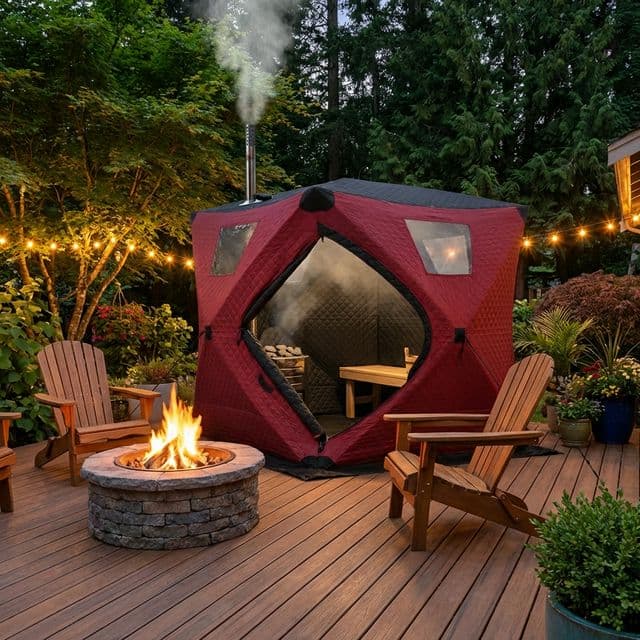
Use visual context to evaluate footprint, access path, and realistic setup envelope before checkout.
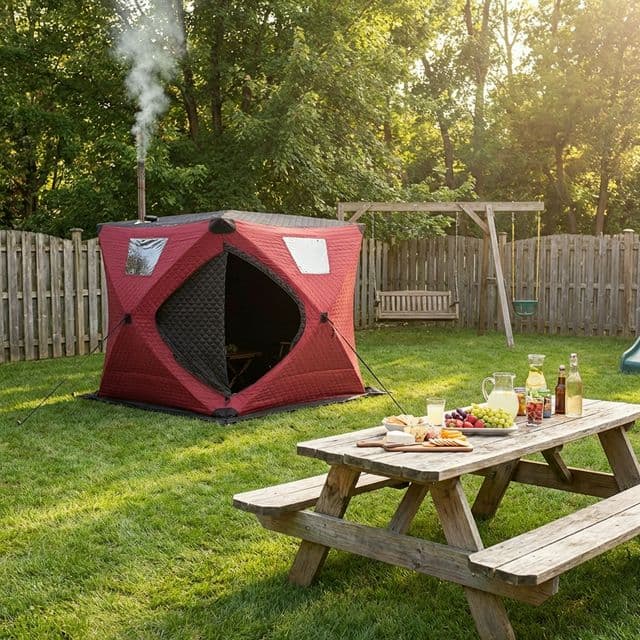
Household usage pattern affects runtime, moisture load, and maintenance cadence assumptions.
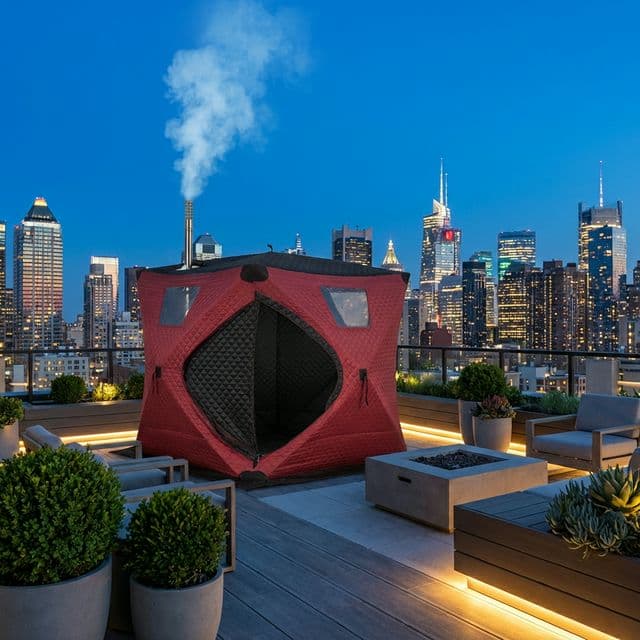
Urban installs often face tighter access, electrical, and management boundaries than listing copy implies.

Cabin-style setups can improve comfort but usually require stronger infrastructure proof.

Moisture-heavy environments require explicit dry-out and ventilation workflows beyond purchase decisions.
Email handoff for manual shortlist review
When score confidence is medium or low, send your checker output plus listing evidence for manual review.
Include these in your email: tool score state, room dimensions, circuit class, two listing links, shipping and warranty screenshots, and your target purchase date.
Decision FAQ
FAQs are grouped by buying intent so answers stay actionable and not glossary-only.
Steam Sauna For Sale Action Layer
Turn score output into a purchase-safe shortlist.
Tool-first routing is complete. If any uncertainty remains, send your evidence bundle to support before payment.
Published: April 24, 2026 | Last updated: April 24, 2026 (stage2 seo-geo closure pass: title precision, tap-target hardening, and SEO100 verification loop)
Review cadence: revalidate this page every 6-12 months, or sooner after major pricing, policy, recall, or regulatory changes.